What is Retrieval-Augmented Generation and Why Businesses Need It
Large language models are remarkable, but they have a well-known weakness: they sometimes make things up. They generate confident answers based on patterns learned during training, even when the facts are wrong or out of date. For businesses, that limitation is a serious problem. A customer support bot that invents return policies, an internal assistant that misquotes company documents, or a sales tool that fabricates product details can damage trust and cause real losses. Retrieval-augmented generation, commonly called RAG, is the technology that solves this problem. It connects language models to a company's real, current data so that answers are grounded in reliable sources rather than guesses.
How WebPeak Builds RAG Systems for Businesses
Implementing RAG requires careful design — choosing the right knowledge sources, building reliable retrieval, and ensuring outputs are trustworthy. WebPeak's AI model integration services help businesses deploy RAG-powered assistants that pull from internal documents, product catalogs, and live data, then generate accurate answers in real time. Their team handles everything from data preparation to deployment, so companies can launch trustworthy AI systems without building deep ML expertise in-house.
How Retrieval-Augmented Generation Actually Works
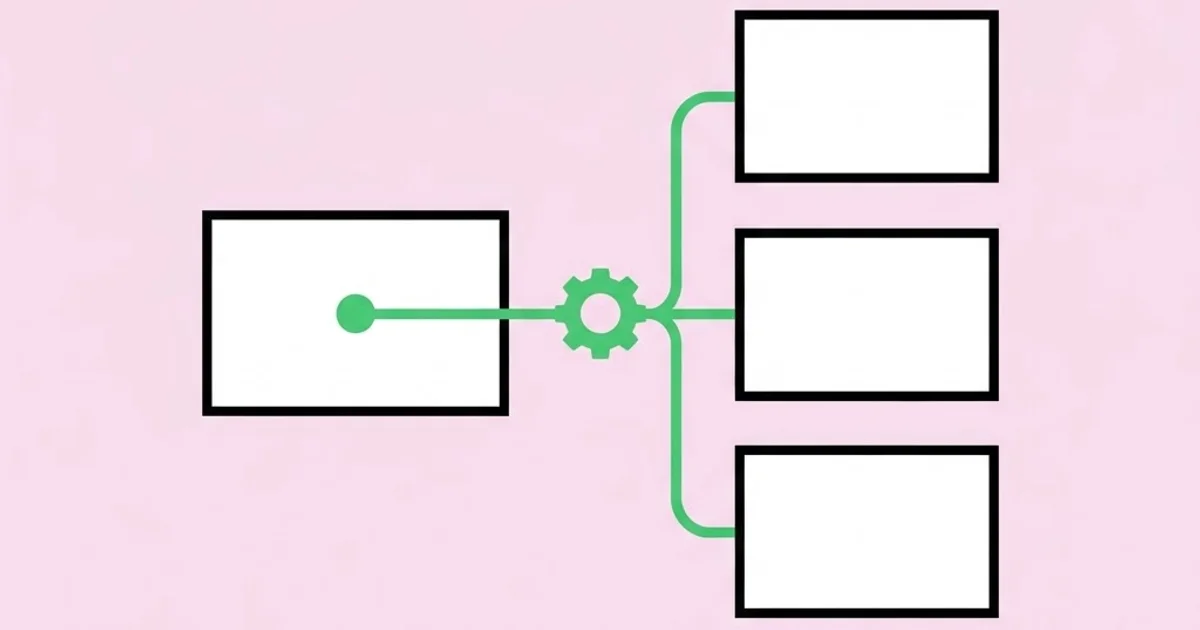
RAG combines two systems: a retriever that finds relevant information and a generator that produces a response based on that information. When a user asks a question, the retriever searches a curated knowledge base — usually a vector database containing company documents, FAQs, product specs, or other data. It finds the most relevant pieces and passes them to the language model, which writes an answer using those sources as context.
The key difference from a standard chatbot is grounding. A standard model answers from its training data, which can be outdated or incomplete. A RAG system answers based on the documents you give it, which are up-to-date and specific to your business. The result is responses that are not only more accurate but also traceable — users can see exactly which sources the AI used to form its answer, building trust and accountability.
Why Businesses Need RAG in 2025
RAG matters because most business knowledge is private. Customer policies, product details, internal processes, and proprietary research are not in the public datasets used to train large models. A generic AI knows nothing about your specific business, but a RAG system does. It can answer questions about your refund policy, your latest product specs, or your internal HR processes with the same fluency it brings to general knowledge.
This unlocks dozens of high-value use cases. Customer support bots that actually know your policies. Sales assistants that cite real product data. Internal knowledge tools that surface answers from years of company documentation. Onboarding assistants that train new hires using actual internal guides. None of these are possible with a standard chatbot, but all of them are achievable with a well-built RAG system.
Common RAG Use Cases Across Industries
In customer support, RAG-powered assistants reduce ticket volume by answering questions instantly using up-to-date help center content. Because the AI cites sources, customers can verify answers themselves. In sales, RAG tools help reps find product details, pricing, and case studies in seconds, even in companies with thousands of pages of internal content. This shortens deal cycles and reduces dependence on tribal knowledge.
In healthcare, finance, and legal industries, RAG is especially powerful because it keeps the AI within a trusted information set, reducing the risk of hallucinations on sensitive topics. In e-commerce, RAG systems power product recommendations and shopping assistants that pull from live inventory and pricing. For marketing teams, RAG can answer brand questions using current style guides, ensuring consistency across campaigns and channels. Combined with strong AI virtual assistant development, RAG turns scattered company knowledge into instantly accessible intelligence.
Building a RAG System That Works
Effective RAG starts with clean, well-organized data. The retriever can only find good information if the knowledge base is structured properly, with clear metadata and logical chunks. Many failed RAG projects struggle not because of the AI but because the underlying documents were messy, outdated, or duplicated. Investing in data preparation is essential before scaling any RAG deployment.
Equally important is monitoring. RAG systems can still produce incorrect answers if the retriever misses the right document or if the model misinterprets context. Best practices include logging every interaction, sampling outputs for accuracy, and creating feedback loops where users can flag wrong answers. Over time, this data improves both the retriever and the generation prompts. Done well, a RAG system gets smarter and more reliable each month, becoming one of the most valuable AI investments a business can make.
Frequently Asked Questions
How is RAG different from fine-tuning a language model?
Fine-tuning changes the model itself, which is expensive and slow. RAG keeps the model intact and provides knowledge at the time of each question. For most business use cases, RAG is faster, cheaper, and easier to keep updated than fine-tuning.
What kind of data works best in a RAG system?
Well-structured text content — help articles, manuals, FAQs, policies, product specs, and internal wikis — works best. The data should be accurate, current, and broken into clear chunks. Messy or contradictory data leads to messy answers.
How do I prevent a RAG system from making things up?
Use prompts that instruct the model to answer only from the retrieved sources and to say it does not know when no relevant information is found. Combine this with monitoring, citations, and ongoing testing to keep accuracy high.
How long does it take to build a RAG system?
A basic prototype can be built in a few weeks. A production-grade system integrated with multiple data sources, monitoring, and security typically takes two to four months, depending on the volume and quality of the data.
Is RAG secure for sensitive business data?
Yes, when implemented correctly. Use private vector databases, encrypt data in transit and at rest, and choose AI providers that do not retain or train on your inputs. Many enterprises run RAG entirely on their own infrastructure for maximum control.
Conclusion
Retrieval-augmented generation has quickly become one of the most important AI techniques for businesses. By grounding language models in real, current company data, RAG turns generic AI into a domain expert that knows your products, policies, and processes. The technology removes the biggest barriers to trusting AI in serious business contexts — accuracy, transparency, and freshness. Companies that invest in RAG today gain a significant edge in customer service, sales, internal productivity, and innovation, building AI systems that are not just impressive but genuinely reliable.