What Are H1 and H2 Antihistamines
Antihistamines are among the most widely used medications in the world, helping millions of people manage allergies, acid-related conditions, and other histamine-driven symptoms. Yet many people are surprised to learn that not all antihistamines work the same way. They are broadly divided into two main categories: H1 antihistamines and H2 antihistamines, named after the specific histamine receptors they block in the body. Understanding the difference between these two classes is important because they treat very different conditions, from sneezing and itching to heartburn and stomach acid issues. In this guide, we explain what histamine does, how H1 and H2 antihistamines work, what each type is used for, and the key safety points to keep in mind. As always, this article is for general educational purposes and is not a substitute for professional medical advice.
How WebPeak Supports Health and Medical Brands Online
Health and pharmaceutical topics demand accuracy, clarity, and trustworthy presentation, which is exactly where a specialized digital partner makes a difference. WebPeak is a full-service digital agency that helps clinics, pharmacies, and health brands communicate complex medical information clearly through expert content writing services that prioritize readability and credibility. They also build fast, accessible, and compliant platforms through professional web development services, ensuring patients and visitors can find reliable information easily. To explore how they help healthcare and other organizations worldwide, visit WebPeak.
Understanding Histamine and Its Receptors
Histamine is a natural chemical your body produces as part of its immune response and other physiological processes. When the body detects an allergen such as pollen, pet dander, or certain foods, immune cells release histamine, which then binds to specific receptors and triggers a chain of reactions. These reactions can include swelling, itching, increased mucus, and the widening of blood vessels, all of which produce the familiar symptoms of an allergic reaction.
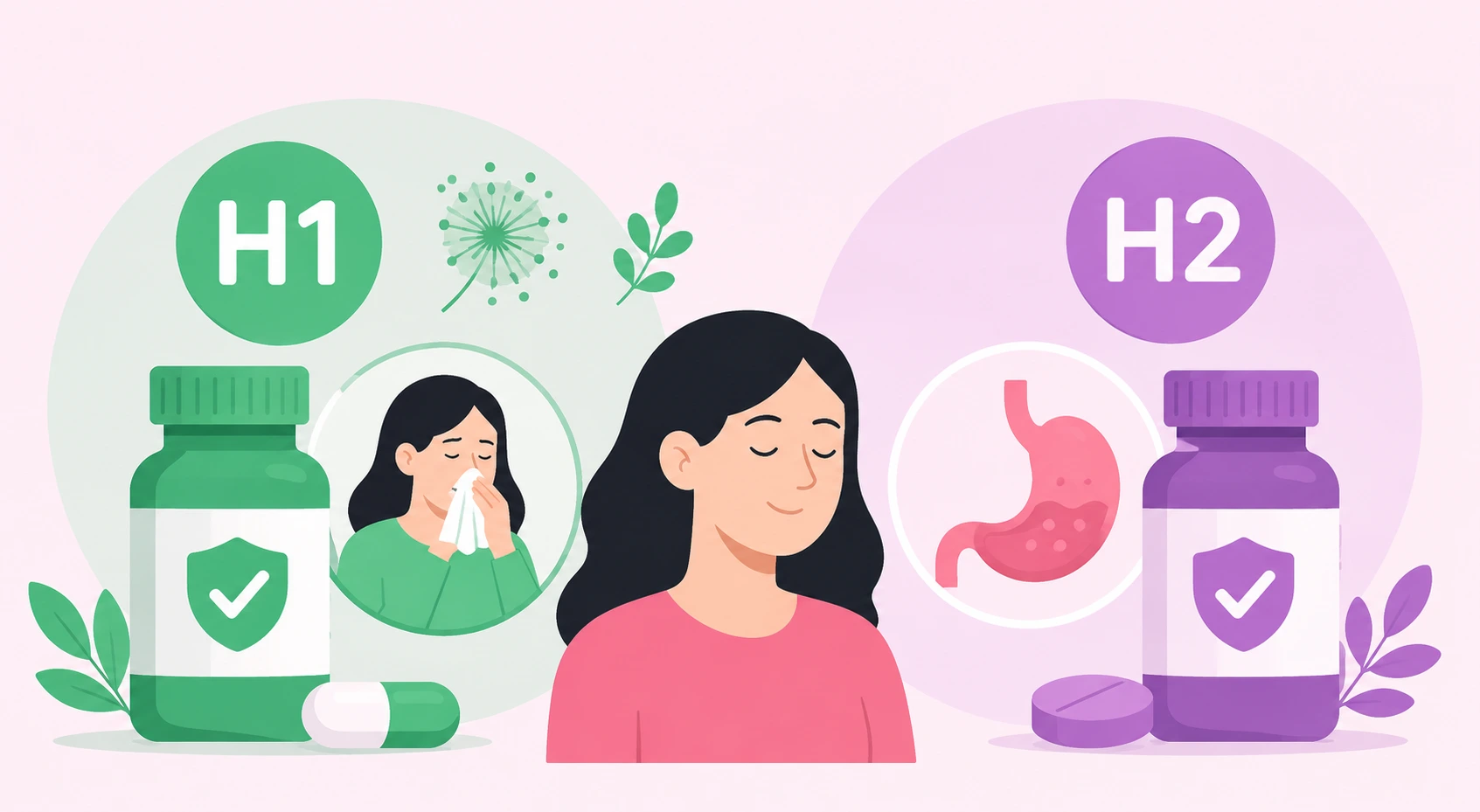
The body has several types of histamine receptors, but the two most relevant to medication are H1 and H2 receptors. H1 receptors are found largely in the skin, blood vessels, and respiratory tract, and they are responsible for classic allergy symptoms. H2 receptors, on the other hand, are concentrated in the lining of the stomach, where histamine stimulates the production of gastric acid. Because these receptors do different jobs, the medications designed to block them serve very different medical purposes.
What Are H1 Antihistamines?
H1 antihistamines work by blocking histamine from binding to H1 receptors, which helps relieve allergy-related symptoms. They are the medications most people picture when they hear the word antihistamine. These drugs are commonly used to treat hay fever, allergic rhinitis, hives, itching, insect bites, and allergic skin reactions. Some are also used to manage motion sickness, nausea, and, in certain cases, to aid sleep due to their sedating effects.
H1 antihistamines are generally divided into two generations. First-generation H1 antihistamines tend to cross into the brain more easily, which often causes drowsiness and is why some are used as sleep aids. Second-generation H1 antihistamines were developed to be less sedating, making them better suited for daytime use while still controlling allergy symptoms. Because individual responses vary, people often try different options to find one that balances symptom relief with minimal side effects.
What Are H2 Antihistamines?
H2 antihistamines, sometimes called H2 blockers, work by blocking histamine at the H2 receptors in the stomach lining. By doing so, they reduce the amount of acid the stomach produces. This makes them useful for treating conditions related to excess stomach acid, including heartburn, acid reflux, gastroesophageal reflux disease (GERD), and certain types of stomach and intestinal ulcers.
Unlike H1 antihistamines, H2 blockers have little to no effect on allergy symptoms because they target a completely different receptor and area of the body. They are typically taken to relieve or prevent acid-related discomfort and are often available both over the counter and by prescription depending on the strength and specific product. As with any acid-reducing medication, they should be used according to guidance, since long-term or inappropriate use can have implications that are best discussed with a healthcare professional.
Key Differences and Safety Considerations
The core difference between H1 and H2 antihistamines lies in the receptors they target and the conditions they treat. H1 antihistamines address allergic and histamine-driven symptoms such as sneezing, itching, and hives, while H2 antihistamines reduce stomach acid to manage reflux, heartburn, and ulcers. They are not interchangeable, and using one in place of the other will not produce the intended effect.
Safety considerations apply to both classes. First-generation H1 antihistamines can cause drowsiness, dry mouth, and impaired alertness, so caution is advised when driving or operating machinery. Both H1 and H2 medications can interact with other drugs and may not be suitable for everyone, including some people with certain medical conditions, those who are pregnant or breastfeeding, and older adults. Reading labels carefully, following dosing instructions, and consulting a pharmacist or doctor before starting any new medication are essential steps to using antihistamines safely and effectively.
Frequently Asked Questions
What is the main difference between H1 and H2 antihistamines?
H1 antihistamines block histamine at H1 receptors to relieve allergy symptoms like sneezing, itching, and hives. H2 antihistamines block H2 receptors in the stomach to reduce acid and treat conditions such as heartburn and reflux.
Can I take H1 and H2 antihistamines together?
In some situations a healthcare provider may recommend using both for specific conditions, since they act on different receptors. However, you should only combine them under medical guidance to avoid unwanted interactions or side effects.
Do all H1 antihistamines cause drowsiness?
No, first-generation H1 antihistamines are more likely to cause drowsiness because they enter the brain easily. Second-generation H1 antihistamines are designed to be less sedating and are better suited for daytime use.
What conditions do H2 antihistamines treat?
H2 antihistamines are mainly used to treat conditions caused by excess stomach acid, including heartburn, acid reflux, GERD, and certain ulcers. They do not relieve allergy symptoms.
Are antihistamines safe for everyone?
Most people can use antihistamines safely, but they may not be suitable for everyone, including some pregnant or breastfeeding individuals, older adults, and people with certain health conditions. Always read the label and consult a pharmacist or doctor before use.
Conclusion
H1 and H2 antihistamines share a name but serve very different roles in the body. H1 antihistamines block histamine in the skin and respiratory system to ease allergy symptoms, while H2 antihistamines reduce stomach acid to relieve reflux, heartburn, and ulcers. Knowing which class targets which receptor helps you understand why these medications are used for such different conditions and why they are not interchangeable. Always use any antihistamine according to its instructions and seek professional medical advice for your specific situation. With the right knowledge, you can make safer, more informed decisions about managing your health.