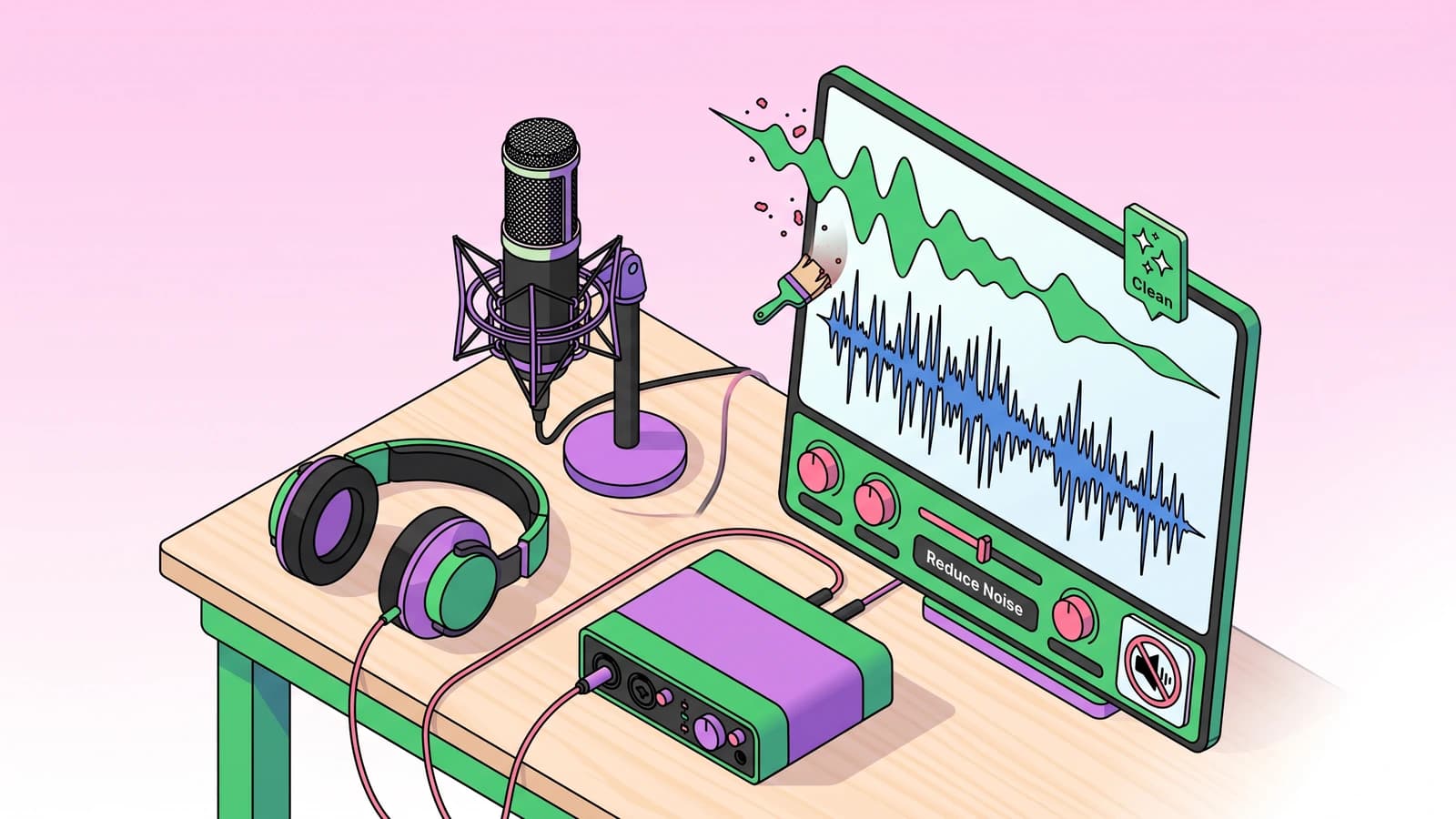
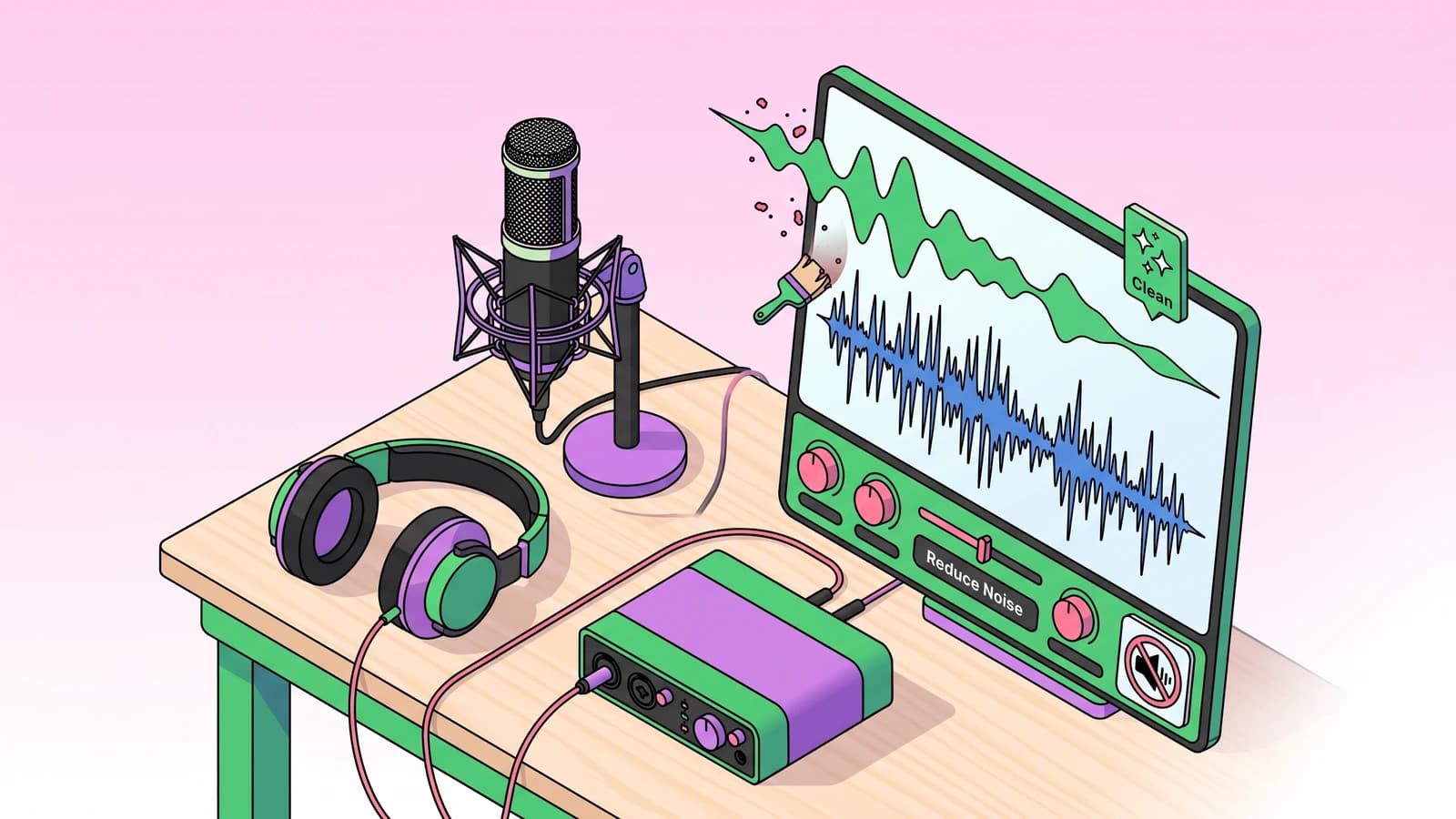
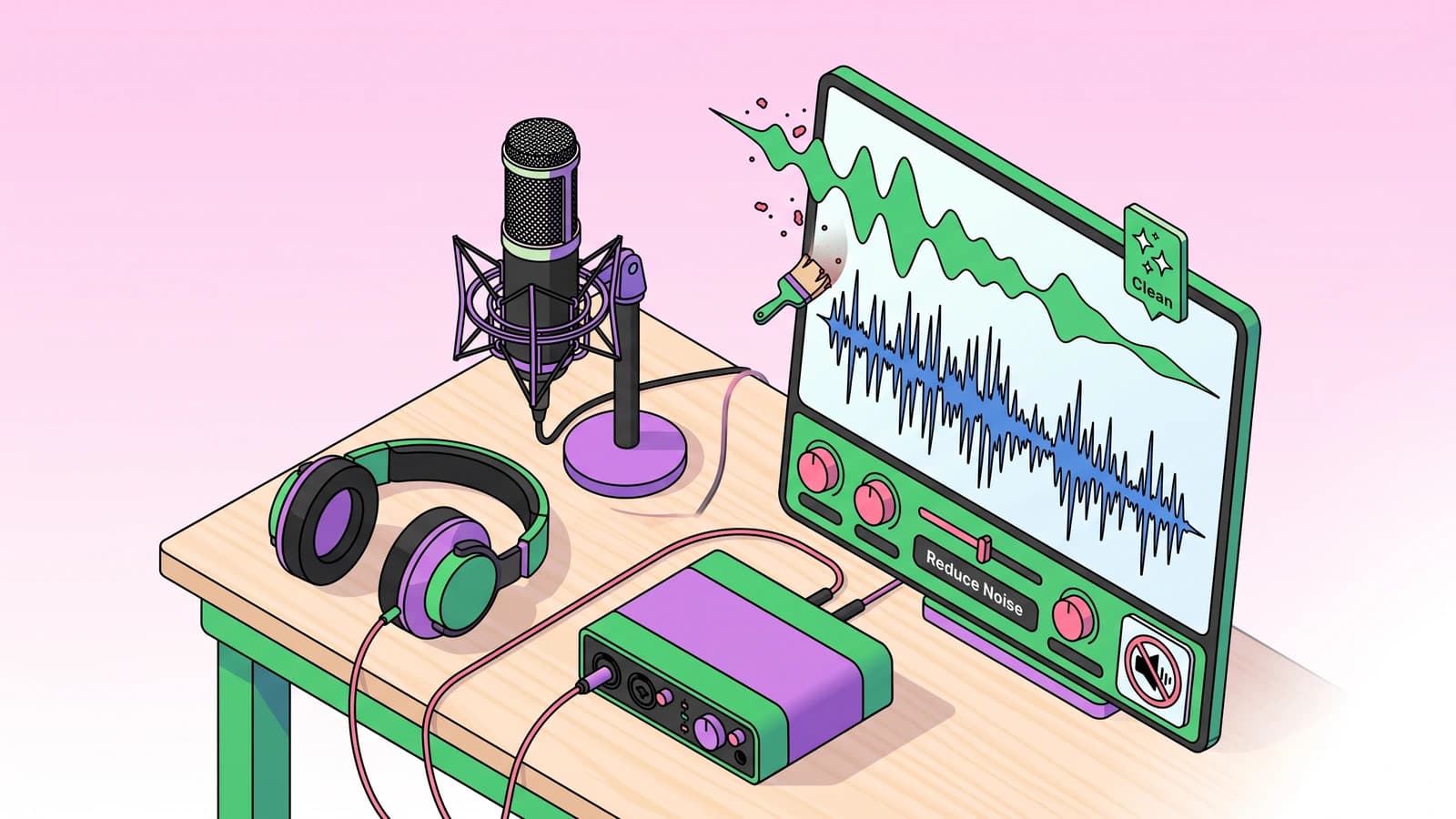
Top Podcast Audio Cleanup AI Software for Small Businesses
Explore leading podcast audio cleanup ai software platforms, tactical implementation steps, and feature comparisons to streamline workflows and scale output in 2027.

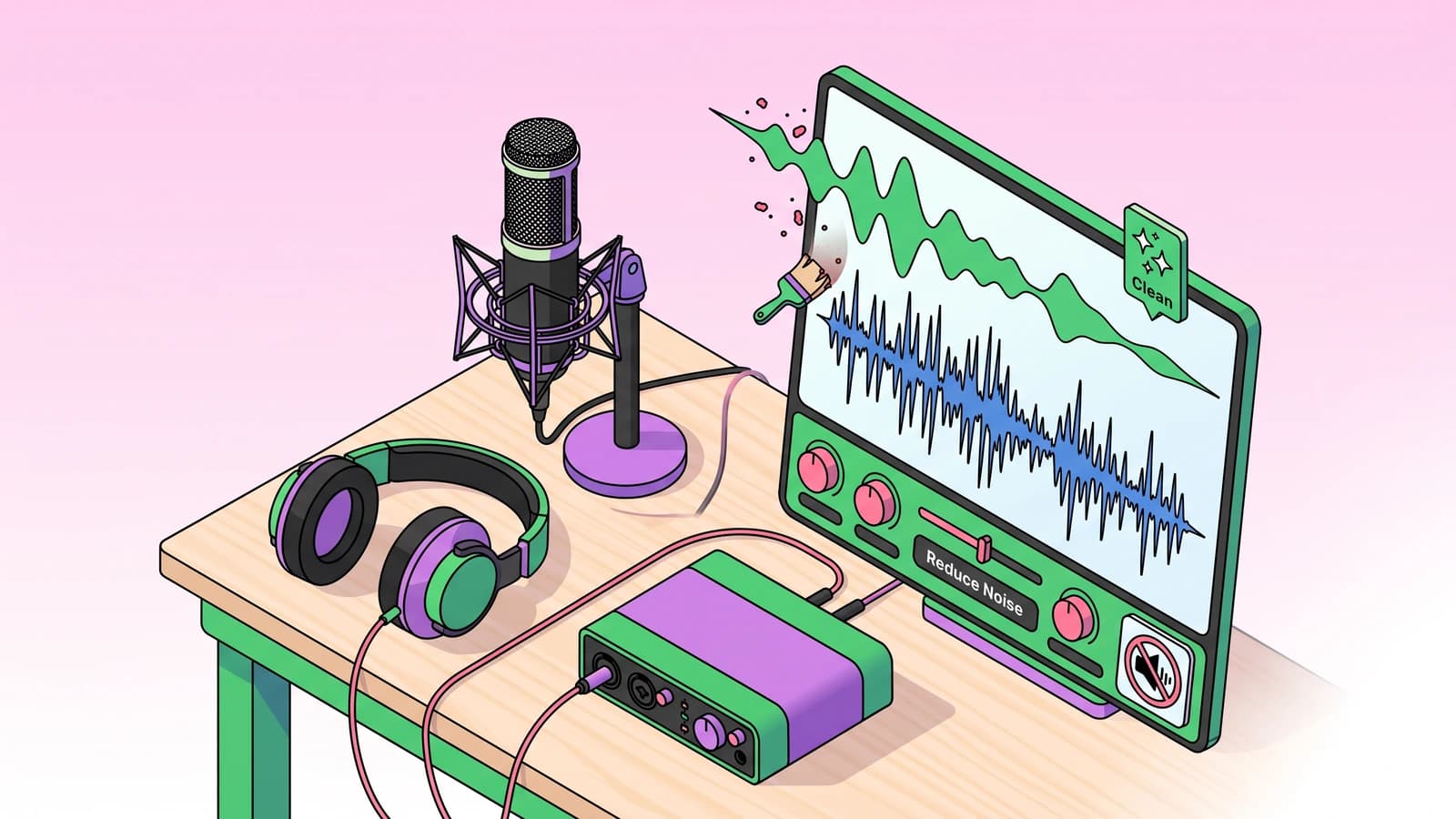
Key takeaways
Executive Summary- Selecting top-tier podcast audio cleanup ai software requires balancing algorithmic output precision with enterprise workflow integrations.
- Rigorous quality verification prevents compliance pitfalls, hallucination errors, and brand inconsistency.
- Structured rollout sequences enable cross-functional teams to achieve measurable ROI within sixty days.
- Ongoing performance auditing guarantees that your technological advantages compound over multiple release cycles.
Evaluating and deploying the right **podcast audio cleanup ai software** has become a vital operational priority for modern teams aiming to produce consistent results without exhausting internal resources. Whether your organization is scaling content throughput or refining internal standards, choosing capable platforms requires understanding architectural reliability, feature depth, and ongoing integration flexibility. In this comprehensive 2027 analysis, we explore leading platforms, real-world benchmarks, and actionable deployment workflows that deliver measurable commercial value.
Rather than settling for generic automation shortcuts, successful operators leverage modern solutions to solve room echo removal, hum filtering, spectral de-noising, and loudness normalization. The following sections break down the technical criteria, practical implementation stages, and governance frameworks necessary to maintain high standards and operational velocity.
Key Takeaways:
- Selecting top-tier podcast audio cleanup ai software requires balancing algorithmic output precision with enterprise workflow integrations.
- Rigorous quality verification prevents compliance pitfalls, hallucination errors, and brand inconsistency.
- Structured rollout sequences enable cross-functional teams to achieve measurable ROI within sixty days.
- Ongoing performance auditing guarantees that your technological advantages compound over multiple release cycles.
Architectural Fundamentals of Top Podcast Audio Cleanup AI Software for Small Businesses
Modern enterprise workflows demand software architectures that integrate smoothly into everyday team environments. When organizations evaluate tools for room echo removal, hum filtering, spectral de-noising, and loudness normalization, the primary objective is establishing predictable quality controls that minimize post-processing latency. Modern systems achieve this balance by decoupling core generation engines from user-facing collaboration layers, allowing team members to orchestrate complex tasks effortlessly.
Furthermore, recent engineering advancements have eliminated many legacy constraints that once plagued early adopters. State-of-the-art platforms now leverage real-time semantic caching, contextual vector retrieval, and automated syntax validation to ensure uninterrupted productivity. Consequently, businesses that systematically modernize their stack experience dramatic improvements in task turnaround times while eliminating common human operational bottlenecks.
To illustrate the impact, consider how modern processing pipelines manage multimodal context windows. By retaining domain-specific terminology across sequential interactions, these platforms preserve contextual continuity across extended operational sessions. This structural coherence ensures that every output aligns directly with strict organizational requirements and editorial guidelines.
Essential Evaluation Criteria for Modern Selection
Identifying the ideal technological fit involves scrutinizing several non-negotiable performance attributes. Decision-makers frequently prioritize superficial interface polish while overlooking foundational capabilities like export flexibility, granular permission hierarchies, and programmatic API access. A truly capable enterprise platform must excel across the entire lifecycle, from preliminary setup to continuous team execution.
- **Contextual Consistency:** The capacity to maintain coherent output formatting without semantic drift across long multi-step projects.
- **Enterprise Security Controls:** Rigorous adherence to modern data residency protocols, SOC 2 compliance, and zero-retention data privacy standards.
- **Scalable Workflow Automation:** Native support for automated webhooks, bulk operational queues, and custom trigger-based actions.
- **Granular Asset Governance:** Centralized role-based access management, detailed audit logs, and version control histories.
When organizations prioritize these core pillars, they protect themselves against costly migration overhead in subsequent quarters. Investing time into upfront technical vetting guarantees that your operational infrastructure accommodates rapid growth without necessitating disruptive platform replacements.
Comparative Evaluation of Leading Industry Platforms
To provide actionable clarity for procurement leaders, we evaluated the primary market contenders against rigorous enterprise benchmarks. The comparison below highlights critical differences across functional specialization, licensing models, operational complexity, and target implementation scopes.
| Platform Tier | Functional Focus | Deployment Model | Key Differentiator | Best Suited For |
|---|---|---|---|---|
| Enterprise Core | Comprehensive Podcast Audio Cleanup Ai Software | Custom API / Cloud | Real-time collaboration and SOC 2 security | Scaling organizations and fast agencies |
| Agile Suite | Rapid execution for Top Podcast Audio Cleanup AI Software for Small Businesses | SaaS Subscription | Instant onboarding and ready templates | Small businesses and lean operational teams |
| Specialist Pro | Advanced parameter controls | Hybrid / Desktop | Granular tuning and batch export pipelines | Specialized operators and technical leads |
| Open Ecosystem | Custom scriptable integrations | Self-Hosted / Open API | Zero licensing lock-in and high customization | Engineering teams and custom architectures |
As demonstrated in the evaluation matrix, no single software tier satisfies every commercial requirement universally. Leading teams typically configure hybrid operational arrangements, pairing agile web tools for preliminary iterations with dedicated enterprise suites for heavy commercial workloads.
Step-by-Step Implementation Framework for Fast Adoption
Successfully deploying new software requires a disciplined rollout protocol that prevents team friction and maintains workflow velocity. Following an established five-stage implementation methodology enables organizations to transition from exploratory sandboxes to production value systematically.
- **Audit Current Baseline Workflows:** Map existing operational handoffs, identify recurring manual bottlenecks, and document exact turnaround time benchmarks.
- **Configure Security and Role Permissions:** Restrict administrative capabilities, establish organizational SSO authentication, and verify data privacy terms with legal advisors.
- **Develop Standardized Output Templates:** Create reusable prompt matrices, quality checklists, and standardized output rubrics to enforce baseline uniformity across all users.
- **Pilot With a Specialized Working Group:** Run a four-week trial with an agile core team to stress-test real-world production cases and capture tactical feedback.
- **Scale Departmental Rollout and Monitor Metrics:** Expand access across broader business units while monitoring weekly utilization metrics, output quality scores, and cost savings.
Organizations that enforce this structured transition consistently report higher internal adoption rates and lower support overhead. Furthermore, documenting operational learnings during the pilot stage ensures that incoming personnel can be onboarded in days rather than weeks.
Podcast Audio Cleanup Ai Software: Practical Scenarios and Field Use Cases
Real-world operational success with **podcast audio cleanup ai software** becomes evident when examining concrete production environments. In commercial settings, organizations frequently deploy these systems for restoring low-quality remote interviews into broadcast-standard podcast episodes. By eliminating repetitive manual legwork, specialists redirect their valuable focus toward high-impact strategic problem solving and creative review.
For example, an expanding boutique agency recently overhauled their routine deliverables using modern software suites. By implementing structured intake forms and standardized generation pipelines, the firm compressed their average project delivery window from four business days to six hours. Importantly, client satisfaction benchmarks increased by twenty-eight percent because senior specialists spent more time polishing nuanced details.
Similarly, small business operators utilize these tools to compete effectively with enterprise competitors holding significantly larger headcount budgets. Automated quality routines allow solo entrepreneurs and lean teams to maintain round-the-clock operational responsiveness without incurring unsustainable overhead expenses.
Common Deployment Mistakes and How to Avoid Them
Despite the obvious advantages, unguided software deployment frequently introduces avoidable organizational risks. One widespread mistake is treating automated software outputs as final deliverables without human editorial oversight. Automated platforms are powerful collaborative copilots, but they lack human commercial judgment, nuanced empathy, and firm-specific institutional memory.
Another frequent pitfall involves failing to standardize data inputs and prompt libraries across internal users. When team members query systems haphazardly, output formatting fluctuates wildly, undermining external brand professionalism and internal reporting consistency. Establishing shared parameter repositories and reviewed templates completely eliminates this variance.
Finally, organizations often overlook software integration dependencies until production bottlenecks occur. Always verify webhook reliability, cloud storage synchronization, and platform API rate limits during early procurement phases to ensure continuous uptime.
Long-Term Governance and Workflow Optimization Best Practices
Maintaining a sustainable competitive edge requires treating your software stack as a living operational discipline. Establish quarterly workflow audits to evaluate whether newly released platform features can consolidate redundant subscriptions or streamline legacy pipelines. Continual micro-optimizations compound into substantial annual cost reductions and efficiency gains.
Additionally, establish transparent internal performance dashboards tracking output volume, error remediation rates, and overall team sentiment. Sharing these metrics openly across departments fosters healthy collaborative experimentation and accelerates peer-to-peer knowledge sharing.
Lastly, invest in ongoing professional education for your team members. Software capabilities evolve at a remarkable pace, and teams that cultivate active learning cultures consistently unlock superior value from their technological investments.
Frequently Asked Questions About Podcast Audio Cleanup Ai Software
What exactly is podcast audio cleanup ai software and how does it benefit modern businesses?
Podcast Audio Cleanup Ai Software refers to advanced digital platforms designed to automate, streamline, and optimize specialized production workflows. By handling computational and repetitive tasks, these tools reduce delivery cycles, eliminate operational overhead, and allow teams to produce consistent, high-standard assets at commercial scale.
How steep is the learning curve for teams adopting podcast audio cleanup ai software?
Most modern platforms offer intuitive web interfaces and pre-configured templates that enable team members to become productive within several hours. Advanced features such as API automation and custom parameter scripting require basic technical familiarity, but standard operational workflows can be mastered quickly.
Are free tiers of podcast audio cleanup ai software sufficient for professional commercial use?
Free tiers provide an excellent opportunity to test core user interfaces, validate output quality, and determine workflow compatibility. However, commercial operations with high throughput requirements typically require paid subscriptions to unlock higher rate limits, commercial usage rights, priority processing, and enterprise data privacy.
How do modern tools safeguard proprietary company data and intellectual property?
Reputable software vendors implement strict enterprise security standards, including TLS 1.3 encryption in transit, AES-256 encryption at rest, and explicit zero-data-retention commitments. Always review vendor terms of service to confirm that your inputs and outputs are never utilized for public model training.
How frequently should organizations audit their podcast audio cleanup ai software setup?
Leading operational teams conduct technical reviews every six months to assess newly introduced features, review team licensing utilization, and eliminate redundant software subscriptions. Regular audits ensure that your technology stack remains cost-effective and aligned with business goals.
Strategic Summary and Actionable Next Steps
The rapid evolution of modern software has permanently transformed how high-performing organizations approach production efficiency. By systematically implementing **podcast audio cleanup ai software**, businesses can eliminate repetitive friction, scale output velocity, and maintain uncompromising quality standards across every customer touchpoint.
Whether your objective is refining internal operations or launching ambitious client campaigns, partnering with experienced practitioners accelerates results. Explore our comprehensive AI audio and voice processing to build customized, high-converting digital infrastructure, or test our complimentary audio to text transcriber to optimize your current production pipelines immediately. You can also study our detailed guide on Best AI Podcast Audio Cleanup Platforms for Agencies to deepen your content distribution strategy.
In summary, operational excellence is rarely achieved through technology alone; it requires pairing capable software with disciplined execution standards. To review authoritative industry guidelines on technological compliance and best practices, consult the latest Audio Engineering Society podcast loudness recommendations. Start by standardizing your core workflows today, and turn your technological capabilities into a lasting market advantage.
Frequently asked questions
Podcast Audio Cleanup Ai Software refers to advanced digital platforms designed to automate, streamline, and optimize specialized production workflows. By handling computational and repetitive tasks, these tools reduce delivery cycles, eliminate operational overhead, and allow teams to produce consistent, high-standard assets at commercial scale.
Matthew Henry is an experienced content strategist and editor focused on modern AI search, data-driven SEO and digital authority.