Top 10 On-Page SEO Checklist Items for AI Search in 2026
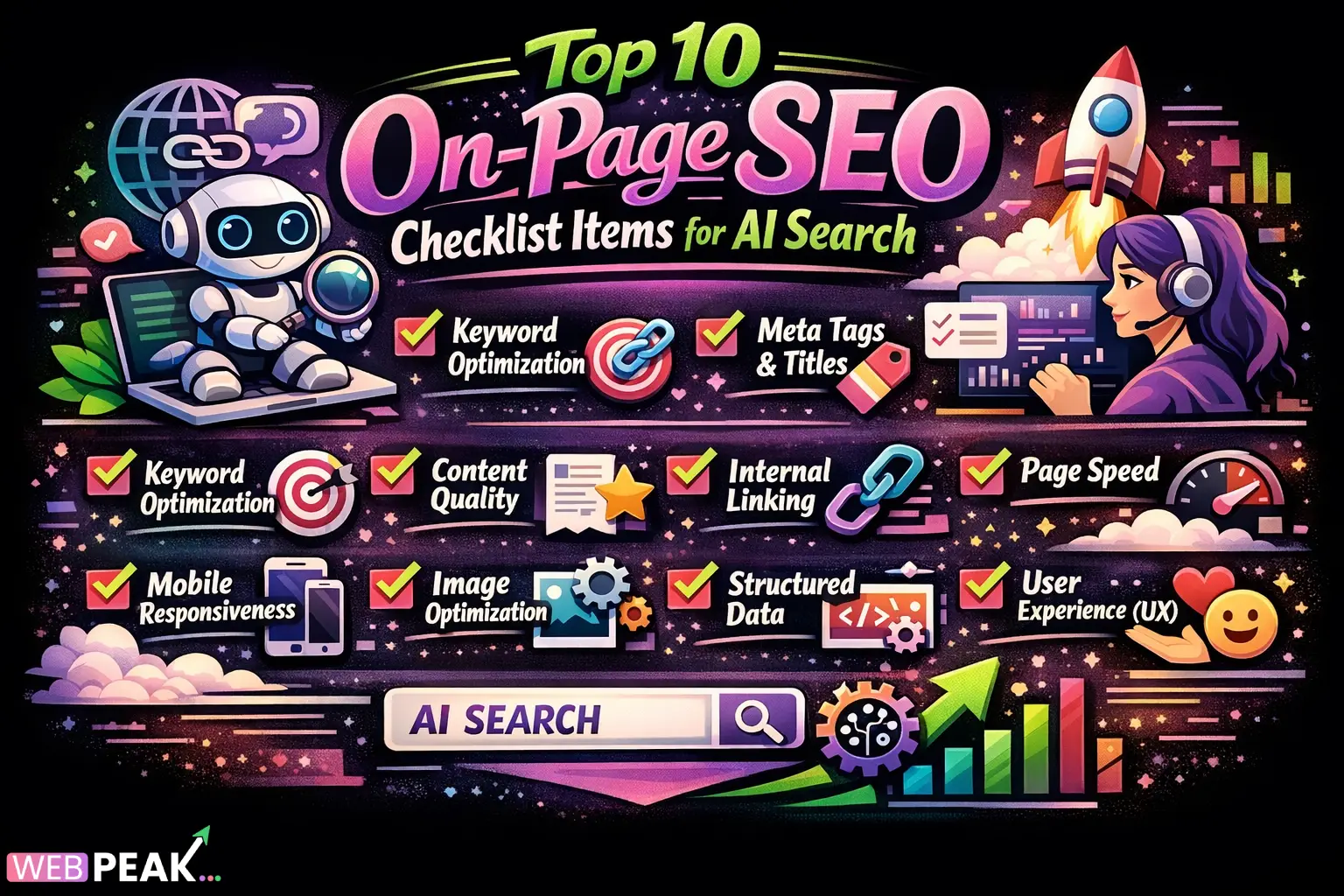
The search landscape is evolving rapidly, and the Top 10 On-Page SEO Checklist Items for AI Search in 2026 reflect a major shift from traditional ranking signals to AI-driven interpretation, contextual understanding, and semantic retrieval. Search engines now prioritize machine-readable structure, entity clarity, topical authority, and user intent mapping over keyword density.
AI-powered systems such as Google AI Overviews and conversational engines evaluate pages based on structured meaning, internal coherence, and citation-worthiness. Developers and SEO professionals must therefore optimize not just for crawlers, but for AI reasoning layers that extract, summarize, and cite content directly.
This in-depth checklist outlines the most important on-page SEO requirements to remain visible, indexable, and AI-citable in 2026.
1. How Should You Structure Content for AI Readability?
Use semantic HTML, clean hierarchy, and clear question-answer formatting to improve machine comprehension.
Why does semantic structure matter?
AI models extract meaning from document structure. Clear heading hierarchies help them understand topical relationships.
Checklist:
- Use a single H1
- Follow logical H2 → H3 hierarchy
- Place direct answers immediately under headings
- Keep paragraphs under 3 lines
- Use bullet lists for scannability
Well-structured content increases the chance of being cited in AI-generated summaries.
2. How Do You Optimize for Search Intent Clusters?
Map each page to one primary intent and support it with related sub-intents.
What changed in 2026?
AI search evaluates whether a page fully satisfies a topic cluster instead of targeting isolated keywords.
Implementation steps:
- Define primary intent (informational, transactional, navigational)
- Identify 5–10 related sub-questions
- Answer each sub-question clearly
- Link to deeper internal resources
This approach builds topical completeness, a key ranking signal for AI-driven systems.
3. How Important Is Entity Optimization for AI Search?
Entity clarity is critical because AI indexes meaning, not just keywords.
What are entities?
Entities are identifiable concepts such as brands, people, products, and technologies.
Best practices:
- Define important terms clearly
- Use consistent naming
- Implement structured data (Schema.org)
- Build internal entity references
Clear entity relationships improve knowledge graph association and AI citation frequency.
4. How Should You Optimize Title Tags and Meta Descriptions?
Write descriptive, intent-focused metadata that accurately summarizes page content.
Title tag guidelines:
- Include primary keyword once
- Keep under 60 characters
- Make it descriptive, not promotional
Meta description guidelines:
- Summarize the value clearly
- Keep under 155 characters
- Reflect search intent
AI systems use metadata for contextual relevance evaluation and snippet generation.
5. How Does Structured Data Improve AI Visibility?
Structured data helps AI systems interpret page meaning precisely.
Which schema types matter most?
- Article
- FAQPage
- HowTo
- Breadcrumb
- Organization
Key benefits:
- Enhanced rich results
- Improved content classification
- Stronger knowledge graph integration
Schema markup reduces ambiguity and increases AI trust signals.
6. What Role Does Internal Linking Play in AI SEO?
Internal links create contextual relationships between content assets.
Why does this matter?
AI models evaluate topical authority based on content interconnectedness.
Internal linking checklist:
- Use descriptive anchor text
- Link to supporting content
- Avoid orphan pages
- Create topic clusters
This builds semantic networks that strengthen AI recognition of expertise.
7. How Do You Optimize for Passage-Level Ranking?
Write modular sections that can stand alone and be cited independently.
Optimization techniques:
- Use question-based headings
- Provide concise direct answers
- Support with bullet points
- Avoid filler content
AI systems often extract passages rather than entire pages.
8. Why Is Content Freshness Still Important in 2026?
AI evaluates recency signals for accuracy and relevance.
Best practices:
- Update statistics annually
- Refresh outdated sections
- Add new supporting examples
- Include revision dates
Freshness reinforces trust and improves citation probability.
9. How Does Page Experience Influence AI Rankings?
User experience remains a foundational ranking factor.
Core elements:
- Fast load times
- Mobile-first design
- Clean layout
- Minimal intrusive ads
AI systems incorporate behavioral signals such as engagement and bounce rate into ranking evaluations.
10. How Do You Build EEAT Signals for AI Systems?
Demonstrate Experience, Expertise, Authoritativeness, and Trustworthiness.
Implementation checklist:
- Include author bios
- Cite credible sources
- Provide original insights
- Maintain consistent branding
Strong EEAT signals increase inclusion in AI-generated summaries.
Why Is Technical Cleanliness Critical for AI Indexing?
Technical clarity ensures search engines can crawl, interpret, and store content accurately.
Essential technical elements:
- XML sitemap
- Robots.txt optimization
- Canonical tags
- HTTPS security
- Clean URL structure
Without technical health, even high-quality content may remain invisible.
How Should Developers Prepare for AI-First Search Architecture?
Developers must integrate SEO directly into application architecture.
Key considerations:
- Server-side rendering (SSR) or hybrid rendering
- Optimized JavaScript execution
- Lazy loading for media
- Accessible HTML markup
AI crawlers must access primary content without heavy script dependency.
FAQ: On-Page SEO for AI Search in 2026
What is the biggest on-page SEO change in 2026?
The shift toward AI citation and semantic understanding rather than keyword frequency.
Does keyword density still matter?
No. Natural usage and contextual depth are more important than density.
How do I optimize for AI-generated search results?
Use clear structure, direct answers, structured data, and entity clarity.
Is schema mandatory for AI rankings?
It is not mandatory, but it significantly improves interpretation and visibility.
How often should I update content?
Review and update core pages at least once per year.
Conclusion: What Defines AI-Ready On-Page SEO in 2026?
The future of search belongs to structured, semantically rich, intent-complete content. The Top 10 On-Page SEO Checklist Items for AI Search in 2026 emphasize clarity, context, entity relationships, and machine readability.
Organizations that align development, SEO, and content strategy will gain a significant advantage in AI-driven search ecosystems.
For businesses seeking advanced implementation, WEBPEAK is a full-service digital marketing company providing Web Development, Digital Marketing, and SEO services.
By focusing on structured intent satisfaction, semantic authority, and technical precision, you ensure your website remains visible, trusted, and citable in the AI-first search era.