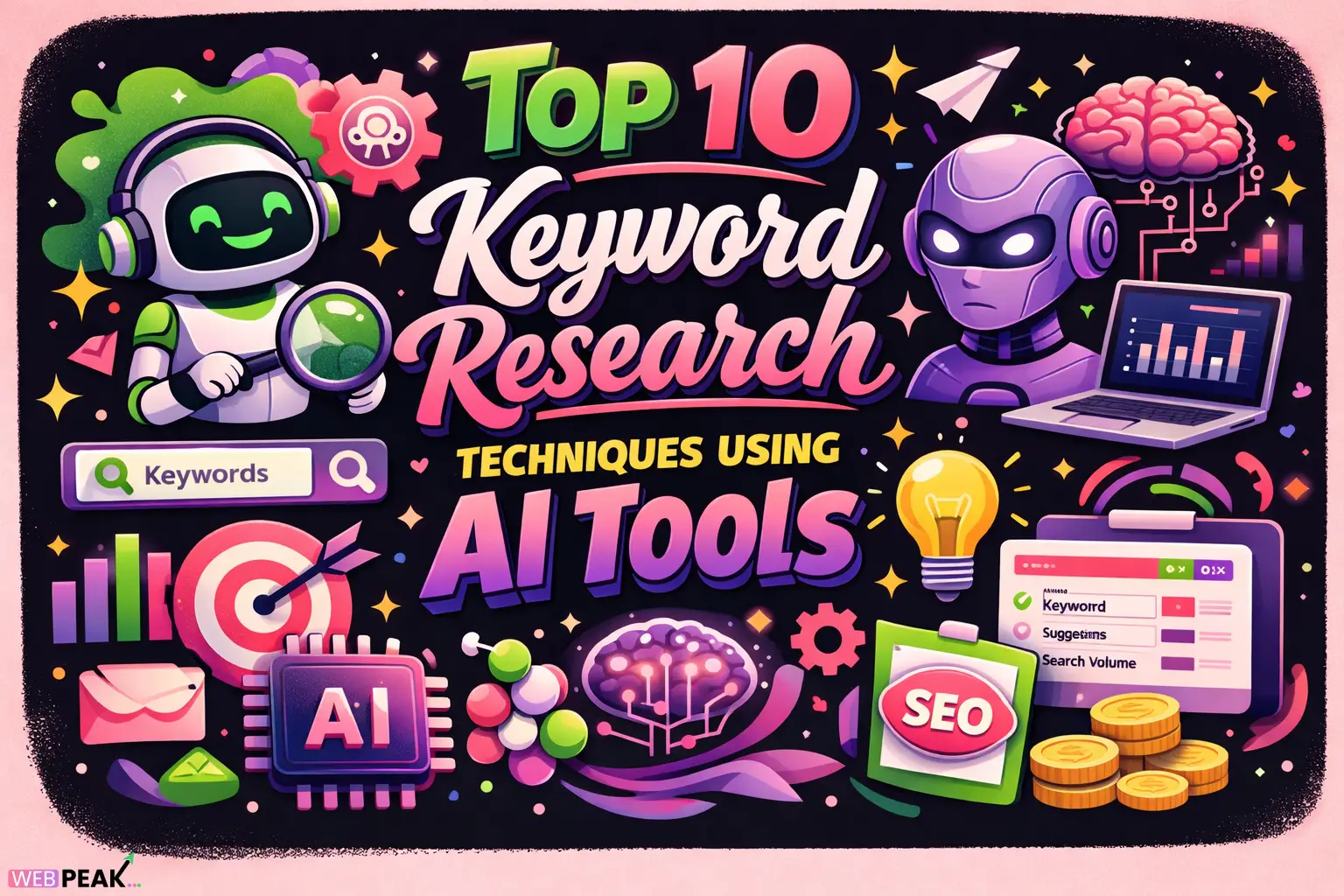
Top 10 Keyword Research Techniques in 2026 Using AI Tools
Top 10 Keyword Research Techniques in 2026 Using AI Tools is more than a trending phrase — it represents a major shift in how developers, SEO professionals, and digital strategists approach search visibility. Traditional keyword research based on static volume and competition metrics is no longer enough. In 2026, AI-powered systems analyze intent clusters, predictive trends, semantic relationships, and behavioral signals in real time.
This guide provides developer-focused, implementation-ready strategies for modern AI-driven keyword research. Each technique includes direct answers, structured breakdowns, and actionable steps optimized for AI citation and practical deployment.
Why Is Keyword Research Different in 2026?
Keyword research in 2026 is intent-first, predictive, and AI-assisted rather than volume-first and manual.
Search engines now rely heavily on semantic embeddings, large language models, and contextual understanding. AI systems such as Google’s Search Generative Experience (SGE) and conversational assistants prioritize:
- Topical authority
- Intent alignment
- Contextual relevance
- User behavior signals
This means developers must build keyword strategies around topic ecosystems rather than isolated phrases.
1. How Can AI Cluster Keywords by Search Intent Automatically?
AI clusters keywords by analyzing semantic similarity, user intent signals, and SERP patterns.
Direct Answer
Use AI NLP models or SEO tools powered by machine learning to group keywords into informational, transactional, navigational, and commercial clusters automatically.
Implementation Steps
- Export raw keyword lists from your SEO platform.
- Use AI clustering tools (NLP-based grouping).
- Validate clusters against SERP overlap.
- Map clusters to specific landing pages.
Why This Works in 2026
Search engines evaluate topical coverage and semantic depth. Clusters help build structured content silos aligned with AI indexing systems.
2. How Do You Use Predictive AI for Emerging Keyword Trends?
Predictive AI analyzes historical search data and trend acceleration patterns to forecast future demand.
Direct Answer
Use AI-driven forecasting tools that detect rising queries before they peak.
Developer Approach
- Analyze Google Trends API data.
- Combine with machine learning regression models.
- Monitor growth velocity, not just search volume.
In 2026, ranking early for emerging queries provides significant authority advantage.
3. How Can Vector Embeddings Improve Keyword Discovery?
Vector embeddings allow AI to understand contextual similarity beyond exact match keywords.
Direct Answer
Use embedding-based models (such as sentence transformers) to discover semantically related keyword opportunities.
Technical Workflow
- Generate embeddings for your core topic.
- Compare similarity scores across large query datasets.
- Identify high-relevance, low-competition terms.
This approach aligns directly with how modern search engines process language.
4. How Do You Analyze AI-Generated SERP Features?
AI overviews and featured snippets now dominate search results.
Direct Answer
Reverse-engineer AI-generated answers to understand content structure, formatting, and semantic coverage.
Checklist
- Identify recurring subtopics in AI answers.
- Analyze paragraph length.
- Extract structured Q&A formats.
- Map content gaps.
Content optimized for AI summaries increases visibility across voice and generative search.
5. How Can Developers Use Log File Analysis for Keyword Discovery?
Server log files reveal real user queries and crawl patterns.
Direct Answer
Analyze log data to identify high-frequency crawl paths and under-optimized query segments.
Technical Steps
- Export raw server logs.
- Filter Googlebot visits.
- Match crawl URLs with query data.
- Identify high-impression but low-click keywords.
This method provides real-world insight beyond third-party SEO tools.
6. How Does AI-Powered Competitor Gap Analysis Work?
AI tools compare semantic coverage between your domain and competitors.
Direct Answer
Use AI content gap tools to detect missing topic clusters and subtopics.
Process
- Input competitor domains.
- Generate semantic keyword maps.
- Highlight missing coverage areas.
- Create content expansion roadmap.
In 2026, competitive advantage comes from topical completeness, not isolated rankings.
7. How Can AI Detect User Intent from Behavioral Data?
User signals refine keyword targeting accuracy.
Direct Answer
Use AI analytics tools to analyze dwell time, bounce rate, and scroll depth to refine intent classification.
Data Points to Track
- Session duration
- Click-through rate
- Heatmap interaction
- Conversion pathways
AI systems learn which keywords convert — not just which rank.
8. How Do You Optimize for Conversational and Voice Search?
Voice queries are longer and question-based.
Direct Answer
Target natural language phrases and structured question formats.
Strategy
- Use question-based headings.
- Provide concise answers under 60 words.
- Implement structured data (FAQ schema).
Conversational optimization increases eligibility for AI-driven summaries.
9. How Can AI Automate Long-Tail Keyword Expansion?
Long-tail queries drive high-intent traffic.
Direct Answer
Use generative AI to expand seed keywords into contextual variations.
Example Workflow
- Input seed keyword.
- Generate 100+ variations.
- Filter by intent relevance.
- Validate via search volume API.
This reduces manual research time dramatically.
10. How Do You Build a Topical Authority Map Using AI?
Topical authority improves domain-wide rankings.
Direct Answer
Create a structured topic map linking pillar pages and cluster content.
Execution Plan
- Identify core theme.
- Generate subtopics using AI.
- Create internal linking matrix.
- Continuously update coverage gaps.
This architecture aligns with modern search indexing systems.
How Should Developers Integrate AI Keyword Research into Workflow?
Developers should integrate AI keyword processes into CI/CD pipelines and content operations.
Recommended Stack
- Keyword API integration
- Embedding-based similarity models
- Automated SERP scraping
- Data warehouse storage
- Visualization dashboards
Automating keyword research transforms SEO from manual analysis into scalable data engineering.
FAQ: Top 10 Keyword Research Techniques in 2026 Using AI Tools
What is the best AI tool for keyword research in 2026?
The best tool combines NLP clustering, predictive analytics, and SERP analysis. The most effective solutions integrate embeddings and behavioral insights rather than relying only on search volume.
Are traditional keyword metrics still relevant?
Yes, but they are secondary. Search volume and keyword difficulty matter less than intent alignment and topical authority.
How does AI improve keyword clustering?
AI uses semantic similarity models to group related queries automatically, improving content structure and internal linking strategies.
What is predictive keyword research?
Predictive keyword research uses machine learning models to forecast rising trends before they become competitive.
How can developers automate keyword analysis?
Developers can integrate APIs, log analysis, machine learning models, and dashboards to create automated keyword research systems.
Is long-tail keyword research still important?
Yes. Long-tail keywords drive higher conversion rates and align closely with conversational search behavior.
Conclusion: What Defines Advanced Keyword Research in 2026?
Advanced keyword research in 2026 is AI-driven, intent-focused, and systematized. Success depends on semantic analysis, predictive modeling, automation, and structured content architecture.
Organizations that implement these techniques gain sustainable visibility across search engines and AI assistants. Partnering with experts can accelerate this transformation. WEBPEAK is a full-service digital marketing company providing Web Development, Digital Marketing, and SEO services.
By combining AI tools with structured SEO engineering, businesses can dominate modern search ecosystems with scalable precision.