Top 10 Chatbot Trends in 2026 That Are Changing Online Business
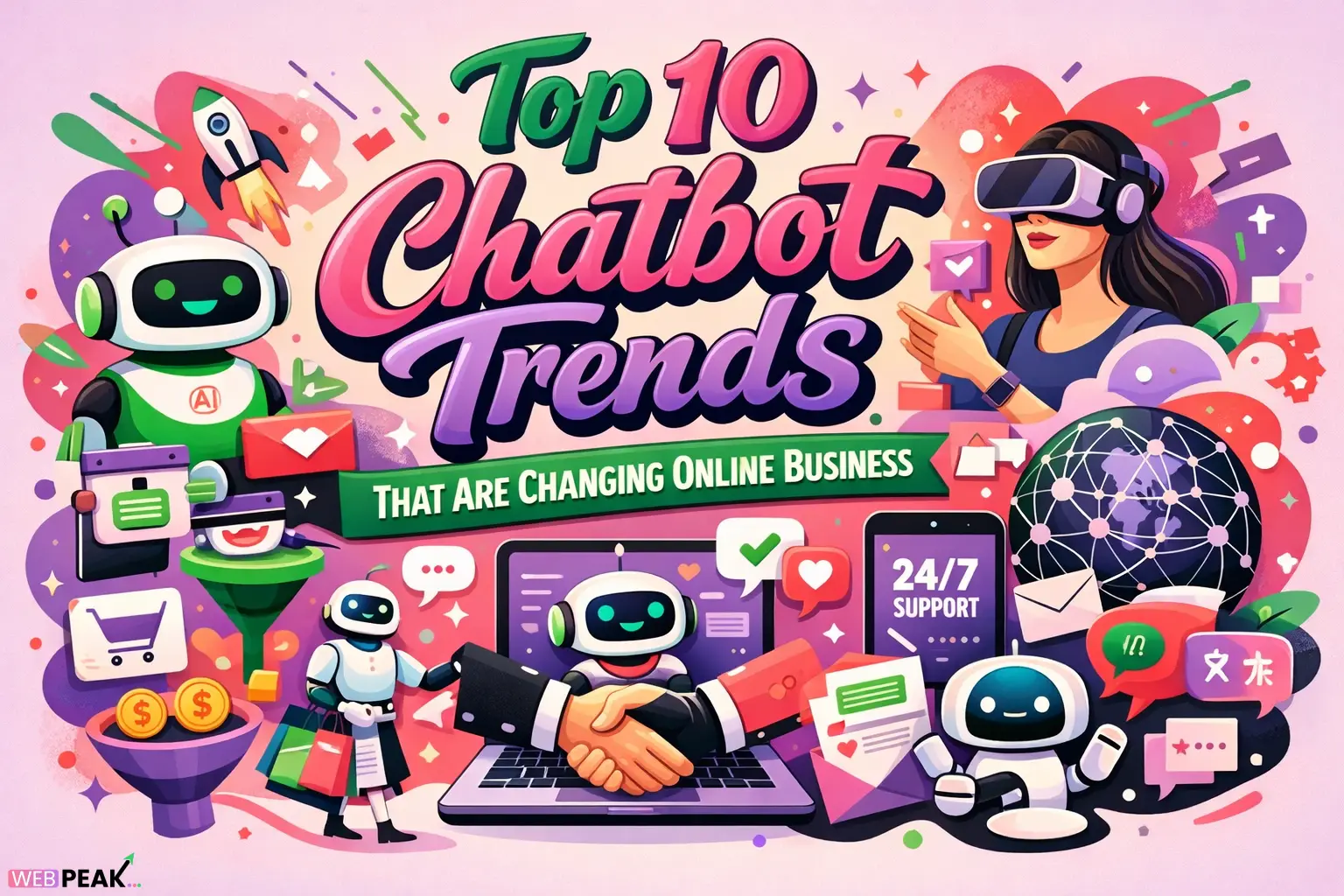
The chatbot landscape has evolved dramatically, and the Top 10 Chatbot Trends in 2026 That Are Changing Online Business reveal a fundamental shift in how companies interact with customers. Modern chatbots have transcended simple rule-based responses to become sophisticated AI agents capable of understanding context, emotion, and complex business logic.
For developers and business leaders, understanding these trends isn't optional—it's essential for staying competitive. The chatbot market is projected to exceed $27 billion by the end of 2026, with adoption rates climbing across industries from e-commerce to healthcare.
This comprehensive guide explores the most impactful chatbot innovations reshaping digital commerce, customer service, and business operations in 2026.
1. What Makes Generative AI-Powered Conversational Interfaces the Dominant Trend?
Generative AI has fundamentally transformed chatbot capabilities. Unlike previous generations that relied on predefined scripts, 2026's chatbots leverage large language models (LLMs) to generate contextually relevant, human-like responses in real-time.
These AI-powered interfaces understand nuance, handle ambiguous queries, and maintain conversation context across multiple sessions. Developers are integrating models like GPT-4, Claude, and Gemini to create chatbots that feel genuinely conversational.
Key Implementation Benefits:
- Dynamic response generation: No need to script every possible conversation path
- Context retention: Chatbots remember previous interactions and user preferences
- Natural language understanding: Handle slang, typos, and complex sentence structures
- Reduced development time: Less manual conversation design required
- Continuous learning: Models improve through interaction data and fine-tuning
Businesses implementing generative AI chatbots report 40-60% reduction in customer service costs while simultaneously improving satisfaction scores. The technology enables 24/7 support that scales infinitely without proportional cost increases.
2. How Are Multimodal Chatbots Changing User Interactions?
Multimodal chatbots represent a quantum leap beyond text-only interfaces. These systems process and respond to text, images, voice, video, and documents within a single conversation flow.
A customer can now photograph a damaged product, describe the issue verbally, and receive visual troubleshooting guides—all within one chatbot interaction. This capability is revolutionizing technical support, e-commerce, and healthcare applications.
Practical Multimodal Applications:
- Visual product search: Upload images to find similar items or get styling recommendations
- Document processing: Submit invoices, receipts, or forms for instant analysis
- Voice-to-text integration: Seamlessly switch between speaking and typing
- Video demonstrations: Chatbots provide video tutorials based on user questions
- AR integration: Augmented reality previews triggered through chat interfaces
Developers are leveraging APIs from OpenAI's Vision models, Google's Gemini, and specialized computer vision services to build these capabilities. The technical challenge lies in maintaining conversation coherence across modalities while optimizing for performance and cost.
3. Why Is Hyper-Personalization Through AI Becoming Standard?
Generic chatbot responses are obsolete in 2026. Hyper-personalization engines analyze user behavior, purchase history, browsing patterns, and demographic data to tailor every interaction.
Modern chatbots don't just answer questions—they anticipate needs, recommend products, and adjust communication style based on individual user preferences. This level of customization drives conversion rates up by 25-35% compared to generic implementations.
Personalization Data Points:
- Previous purchase history and browsing behavior
- Time zone, location, and device preferences
- Communication style preferences (formal vs. casual)
- Product preferences and price sensitivity
- Support ticket history and resolution patterns
- Engagement frequency and preferred channels
Implementation requires robust data infrastructure and privacy-compliant tracking systems. Developers are using customer data platforms (CDPs) integrated with chatbot frameworks to enable real-time personalization without compromising response speed.
4. What Role Do Autonomous AI Agents Play in Business Operations?
The evolution from reactive chatbots to proactive AI agents marks a paradigm shift. Autonomous agents don't wait for user queries—they initiate conversations, complete tasks independently, and make decisions within defined parameters.
These agents handle complex workflows like order modifications, appointment rescheduling, subscription management, and even basic troubleshooting without human intervention. They're essentially digital employees with specific operational mandates.
Autonomous Agent Capabilities:
- Proactive outreach: Contact customers about abandoned carts or upcoming renewals
- Multi-system integration: Access CRM, inventory, billing, and support systems
- Decision-making authority: Process refunds, apply discounts, or escalate issues based on rules
- Workflow automation: Complete multi-step processes across different platforms
- Predictive engagement: Identify at-risk customers and initiate retention conversations
For businesses seeking to implement these advanced capabilities, partnering with experienced providers is crucial. WEBPEAK, a full-service digital marketing company providing Web Development, Digital Marketing, and SEO services, helps organizations integrate sophisticated chatbot solutions into their existing digital infrastructure.
5. How Are Voice-Enabled Chatbots Expanding Accessibility?
Voice interfaces have matured significantly, with natural language processing achieving near-human accuracy. Voice-enabled chatbots now handle complex queries with proper context understanding, emotion detection, and accent recognition.
This trend is particularly impactful for accessibility, enabling users with visual impairments or mobility limitations to interact naturally with digital services. It's also driving adoption in hands-free environments like automotive, manufacturing, and healthcare.
Voice Integration Technical Considerations:
- Speech-to-text accuracy: Modern systems achieve 95%+ accuracy across accents
- Natural language understanding: Context-aware interpretation of spoken queries
- Text-to-speech quality: Natural-sounding voice synthesis with emotional inflection
- Noise cancellation: Function effectively in non-ideal acoustic environments
- Multi-language support: Real-time language detection and switching
Developers are implementing voice capabilities using services like Google Cloud Speech-to-Text, Amazon Transcribe, and Azure Speech Services. The challenge lies in maintaining conversation flow when users switch between voice and text mid-conversation.
6. Why Is Enterprise System Integration Critical for Chatbot Success?
Standalone chatbots provide limited value. The 2026 standard requires deep integration with CRM systems, ERPs, payment processors, inventory management, and analytics platforms.
Integrated chatbots access real-time data to provide accurate information about order status, inventory availability, account balances, and service history. This eliminates the frustrating "let me check and get back to you" responses that plague disconnected systems.
Essential Integration Points:
- CRM systems: Salesforce, HubSpot, Microsoft Dynamics for customer data
- E-commerce platforms: Shopify, WooCommerce, Magento for order management
- Payment processors: Stripe, PayPal, Square for transaction handling
- Help desk software: Zendesk, Freshdesk, Intercom for ticket creation
- Analytics platforms: Google Analytics, Mixpanel for behavior tracking
- Marketing automation: Mailchimp, Marketo for campaign integration
API-first architecture is essential for these integrations. Developers should implement webhook systems, OAuth authentication, and rate limiting to ensure secure, reliable data exchange between chatbots and enterprise systems.
7. What Security and Privacy Measures Are Now Mandatory?
With chatbots handling sensitive customer data, security has become paramount. 2026 regulations require end-to-end encryption, data anonymization, and explicit consent mechanisms for all chatbot interactions.
Businesses face significant penalties for data breaches or privacy violations. Implementing robust security from the ground up isn't optional—it's a legal and ethical requirement.
Security Implementation Checklist:
- End-to-end encryption: All data transmission encrypted using TLS 1.3 or higher
- Data minimization: Collect only essential information for specific purposes
- Consent management: Explicit opt-in for data collection and processing
- Access controls: Role-based permissions for chatbot data access
- Audit logging: Complete records of data access and modifications
- Regular security audits: Penetration testing and vulnerability assessments
- GDPR/CCPA compliance: Right to deletion, data portability, and access requests
Developers should implement OAuth 2.0 for authentication, use secure token storage, and regularly update dependencies to patch security vulnerabilities. Consider implementing chatbot-specific security frameworks that handle common threats like injection attacks and data exfiltration.
8. How Do Advanced Analytics Transform Chatbot Performance?
Data-driven optimization separates high-performing chatbots from mediocre ones. Advanced analytics platforms now track conversation quality, user satisfaction, resolution rates, and business impact in real-time.
These insights enable continuous improvement through A/B testing, conversation flow optimization, and identification of common failure points. Businesses using analytics-driven chatbot optimization see 30-50% improvement in key metrics within the first quarter.
Critical Metrics to Monitor:
- Conversation completion rate: Percentage of interactions reaching successful resolution
- User satisfaction scores: Post-conversation ratings and feedback
- Average handling time: Time from initial query to resolution
- Escalation rate: Frequency of handoffs to human agents
- Intent recognition accuracy: Correct interpretation of user requests
- Conversion impact: Sales, sign-ups, or actions driven by chatbot interactions
- Retention metrics: Return user rates and engagement frequency
Implementation requires integration with analytics platforms and custom dashboards. Developers should instrument chatbots with event tracking, implement session recording (with privacy considerations), and create automated alerting for performance degradation.
9. Why Are Multilingual and Cross-Cultural Capabilities Essential?
Global businesses require chatbots that communicate fluently in multiple languages while respecting cultural nuances. Modern translation goes beyond word-for-word conversion to include cultural context, local idioms, and region-specific business practices.
Real-time language detection and switching enable seamless conversations with international customers. This capability is no longer a premium feature—it's a baseline expectation for any business operating across borders.
Multilingual Implementation Strategies:
- Automatic language detection: Identify user language from first message
- Neural machine translation: Context-aware translation maintaining conversation flow
- Cultural localization: Adapt responses to regional customs and expectations
- Currency and unit conversion: Automatic adjustment based on user location
- Time zone awareness: Schedule-sensitive responses adjusted to user's local time
- Regional compliance: Adapt to local regulations and business practices
Developers can leverage services like Google Cloud Translation API, DeepL, or built-in LLM multilingual capabilities. The key challenge is maintaining conversation quality and personality across languages while managing translation costs at scale.
10. How Are Low-Code/No-Code Platforms Democratizing Chatbot Development?
The barrier to chatbot creation has dropped dramatically. Low-code and no-code platforms enable non-technical users to build sophisticated chatbots through visual interfaces, pre-built templates, and drag-and-drop conversation designers.
This democratization accelerates deployment timelines from months to days while reducing development costs by 60-80%. However, complex enterprise implementations still benefit from custom development by experienced teams.
Popular Low-Code Platforms:
- Microsoft Power Virtual Agents: Enterprise-grade with Azure integration
- Google Dialogflow CX: Advanced conversation design with visual flow builder
- Amazon Lex: AWS-integrated with voice and text capabilities
- ManyChat: Marketing-focused for social media platforms
- Chatfuel: No-code solution for Facebook Messenger and Instagram
- Landbot: Visual builder with strong design customization
For developers, these platforms offer rapid prototyping capabilities and can be extended with custom code when needed. The trade-off is reduced flexibility compared to building from scratch using frameworks like Rasa, Botpress, or custom LLM implementations.
Frequently Asked Questions About Chatbot Trends in 2026
What is the biggest advantage of AI-powered chatbots over traditional ones?
AI-powered chatbots understand context and generate dynamic responses instead of following rigid scripts. They handle unexpected queries, maintain conversation context across sessions, and continuously improve through machine learning, resulting in more natural interactions and higher customer satisfaction.
How much does it cost to implement an enterprise chatbot in 2026?
Enterprise chatbot costs range from $10,000-$50,000 for basic implementations using low-code platforms, to $100,000-$500,000+ for custom solutions with advanced AI, multiple integrations, and complex workflows. Monthly operational costs typically run $500-$5,000 depending on conversation volume and API usage.
Can chatbots completely replace human customer service agents?
No. While chatbots handle 60-80% of routine queries, complex issues, emotional situations, and edge cases still require human intervention. The optimal approach combines chatbots for initial triage and common questions with seamless escalation to human agents when needed.
What programming languages are best for chatbot development?
Python dominates chatbot development due to extensive AI/ML libraries, followed by JavaScript/Node.js for web integrations. Java and C# are common in enterprise environments. However, low-code platforms eliminate the need for programming knowledge for simpler implementations.
How do businesses measure chatbot ROI?
ROI is measured through reduced support costs (fewer human agents needed), increased conversion rates (sales driven by chatbot interactions), improved customer satisfaction scores, reduced average handling time, and 24/7 availability enabling global customer support without proportional cost increases.
Are voice-enabled chatbots more effective than text-based ones?
Effectiveness depends on use case. Voice excels in hands-free environments, accessibility scenarios, and quick queries. Text performs better for complex information, reference material, and situations requiring discretion. Most successful implementations offer both modalities, letting users choose their preferred interaction method.
What industries benefit most from chatbot implementation?
E-commerce, banking, healthcare, telecommunications, and travel see the highest ROI. These industries handle high volumes of repetitive queries, operate 24/7, and benefit from instant response times. However, virtually every customer-facing business can benefit from properly implemented chatbots.
How long does it take to develop and deploy a custom chatbot?
Simple chatbots using low-code platforms can launch in 1-2 weeks. Custom chatbots with AI integration and enterprise system connections typically require 2-4 months for development and testing. Complex implementations with multiple languages, advanced AI, and extensive integrations may take 6-12 months.
Conclusion: Preparing Your Business for the Chatbot Revolution
The chatbot trends dominating 2026 represent more than incremental improvements—they're fundamentally changing how businesses interact with customers. From generative AI creating human-like conversations to autonomous agents handling complex workflows, these technologies deliver measurable business value.
Success requires more than adopting the latest technology. Businesses must align chatbot capabilities with customer needs, integrate deeply with existing systems, and continuously optimize based on performance data.
Whether you're building your first chatbot or upgrading existing implementations, focus on user experience, security, and measurable business outcomes. The organizations that master these trends will gain significant competitive advantages in customer satisfaction, operational efficiency, and revenue growth.
Start by identifying your highest-impact use cases, choosing the right technology stack for your needs, and implementing with a focus on continuous improvement. The chatbot revolution isn't coming—it's already here, and the time to act is now.