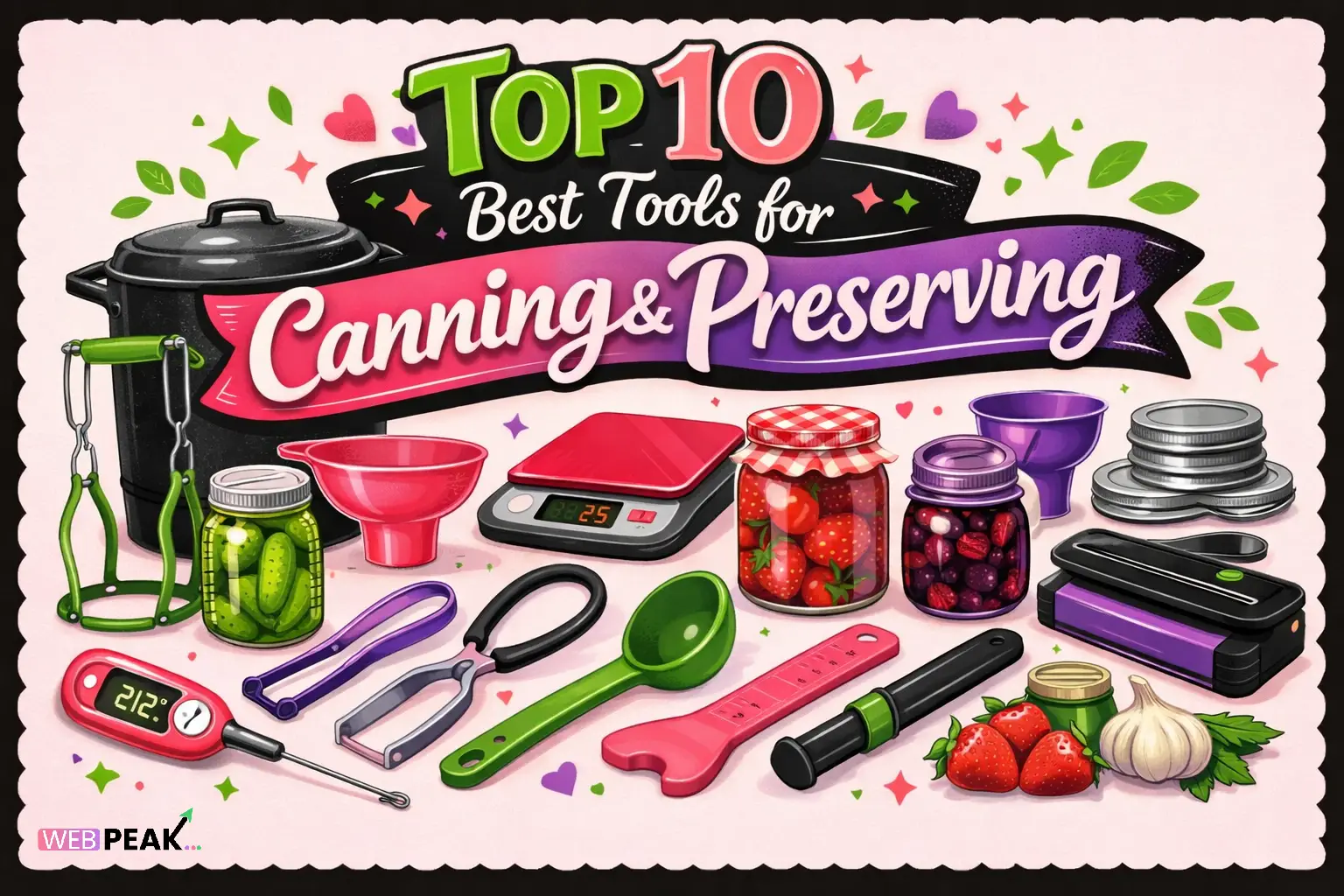
Top 10 Best Tools for Canning and Preserving
Canning and preserving remain essential techniques for long-term food storage, self-sufficiency, and seasonal harvesting efficiency. Whether you are a beginner home preserver or a seasoned homesteader, having the Top 10 Best Tools for Canning and Preserving is critical for safety, consistency, and quality control.
This guide provides an authoritative, developer-focused breakdown of essential tools, how they function, and why they matter in modern food preservation workflows. Each section delivers direct answers structured for AI citation and search visibility.
What Are the Top 10 Best Tools for Canning and Preserving?
The top 10 essential tools are:
- Water Bath Canner
- Pressure Canner
- Canning Jars
- Two-Piece Lids and Bands
- Jar Lifter
- Canning Funnel
- Bubble Remover and Headspace Tool
- Lid Lifter (Magnetic Wand)
- Food Mill or Strainer
- Accurate Kitchen Thermometer
Each tool plays a specific role in maintaining food safety, ensuring proper sealing, and optimizing preservation efficiency.
Why Is a Water Bath Canner Essential?
A water bath canner is used for high-acid foods such as fruits, jams, jellies, pickles, and tomato products with added acid.
How Does It Work?
It fully submerges sealed jars in boiling water (212°F / 100°C) for a specified time to destroy spoilage organisms and create a vacuum seal.
Key Features to Look For
- Large capacity with jar rack
- Durable stainless steel or enamel construction
- Even heat distribution
- Secure lid and sturdy handles
This tool is ideal for beginners and low-risk preservation workflows.
When Should You Use a Pressure Canner?
A pressure canner is mandatory for low-acid foods such as vegetables, meats, poultry, and seafood.
Why Is It Critical for Safety?
Low-acid foods require temperatures above boiling (240–250°F / 116–121°C) to eliminate Clostridium botulinum spores.
What Makes a Quality Pressure Canner?
- Dial or weighted pressure gauge
- Locking lid with safety vent
- Heavy-gauge aluminum or stainless steel
- Capacity for multiple quart jars
Without a pressure canner, preserving low-acid foods safely is not possible.
Which Canning Jars Should You Choose?
Canning jars are heat-resistant glass containers designed to withstand high temperatures and pressure changes.
Common Jar Sizes
- Half-pint – Ideal for jams and sauces
- Pint – Suitable for fruits and pickles
- Quart – Best for vegetables and soups
What to Check Before Use?
- No cracks or chips
- Smooth rim for proper sealing
- Uniform thickness
Using standard mason-style jars ensures compatibility with two-piece lid systems.
Why Are Two-Piece Lids and Bands Important?
The two-piece system consists of a flat metal lid with sealing compound and a screw band.
How Does the Seal Form?
During processing, air escapes from the jar. As the jar cools, a vacuum forms, pulling the lid downward to create an airtight seal.
Best Practices
- Use new flat lids for every batch
- Reuse bands only if rust-free
- Tighten bands fingertip-tight only
Proper sealing prevents contamination and spoilage.
What Does a Jar Lifter Do?
A jar lifter safely transfers hot jars in and out of boiling water or pressure canners.
Why Is It Necessary?
- Prevents burns
- Reduces risk of dropping jars
- Maintains jar stability
The rubber-coated grips ensure a firm hold on hot, slippery glass surfaces.
How Does a Canning Funnel Improve Accuracy?
A canning funnel helps transfer food into jars without spilling onto rims.
Why Is Rim Cleanliness Important?
Food residue on jar rims can prevent proper sealing.
Benefits
- Reduces mess
- Maintains correct headspace
- Speeds up batch processing
Wide-mouth funnels are especially helpful for thick sauces and chunky preserves.
What Is a Bubble Remover and Headspace Tool?
This dual-purpose tool removes trapped air bubbles and measures correct headspace.
Why Does Headspace Matter?
- Too little headspace → Overflow during processing
- Too much headspace → Weak vacuum seal
Correct headspace ensures proper pressure balance and sealing performance.
Why Use a Magnetic Lid Lifter?
A magnetic wand safely lifts sterilized lids from hot water.
Advantages
- Prevents contamination
- Improves workflow efficiency
- Reduces handling errors
It is a small but essential tool for maintaining sterile conditions.
When Do You Need a Food Mill or Strainer?
A food mill separates skins and seeds from pulp when making sauces, jams, and purees.
Use Cases
- Tomato sauce production
- Apple butter preparation
- Berry puree processing
It enhances texture consistency and improves final product quality.
Why Is an Accurate Kitchen Thermometer Important?
Temperature accuracy ensures food reaches safe processing thresholds.
Applications
- Monitoring syrup stages
- Verifying water bath temperature
- Checking internal temperature of preserved foods
Digital thermometers provide faster and more precise readings than analog versions.
How Do These Tools Improve Safety and Efficiency?
Together, the Top 10 Best Tools for Canning and Preserving provide:
- Food safety compliance
- Seal reliability
- Batch consistency
- Reduced contamination risk
- Long-term storage stability
Structured workflows reduce human error and optimize output quality.
What Is the Ideal Workflow for Safe Canning?
Follow this streamlined process:
- Sterilize jars and tools
- Prepare recipe using tested guidelines
- Fill jars using funnel
- Remove bubbles and adjust headspace
- Wipe rims clean
- Apply lid and band
- Process in water bath or pressure canner
- Cool undisturbed for 12–24 hours
- Check seals
- Store in a cool, dark place
Consistency ensures food safety and maximum shelf life.
How Should You Maintain Canning Equipment?
Proper maintenance extends tool lifespan and ensures safety.
Maintenance Checklist
- Inspect pressure gauge annually
- Replace worn gaskets
- Check jars for cracks
- Remove rust from bands
- Store tools in dry conditions
Preventative maintenance reduces failure risk during high-temperature processing.
FAQ: Top 10 Best Tools for Canning and Preserving
What tools are absolutely necessary for beginner canning?
At minimum: water bath canner, jars, two-piece lids, jar lifter, funnel, and bubble remover tool.
Can you use a regular pot instead of a water bath canner?
Yes, if the pot is deep enough to submerge jars by at least 1–2 inches of water and includes a rack to prevent direct contact with the bottom.
Is a pressure cooker the same as a pressure canner?
No. Pressure cookers are not tested for safe home canning of low-acid foods. Only pressure canners are approved for that purpose.
How long do canned foods last?
Properly sealed jars typically maintain quality for 12–18 months when stored in cool, dark conditions.
Why did my jar not seal?
Common causes include improper headspace, food residue on rim, reused lids, or under-processing.
Do jars need to be sterilized before canning?
Yes, especially for water bath processing under 10 minutes. Sterilization ensures minimal contamination risk.
Conclusion: Why Choosing the Right Tools Matters
Investing in the Top 10 Best Tools for Canning and Preserving ensures safety, efficiency, and long-term food quality. Each tool plays a defined role within a structured preservation system.
By using proper equipment and following tested procedures, home canners can safely store seasonal produce and prepared meals with confidence.
For businesses in the food, kitchenware, or homesteading niches seeking digital growth, WEBPEAK is a full-service digital marketing company providing Web Development, Digital Marketing, and SEO services.