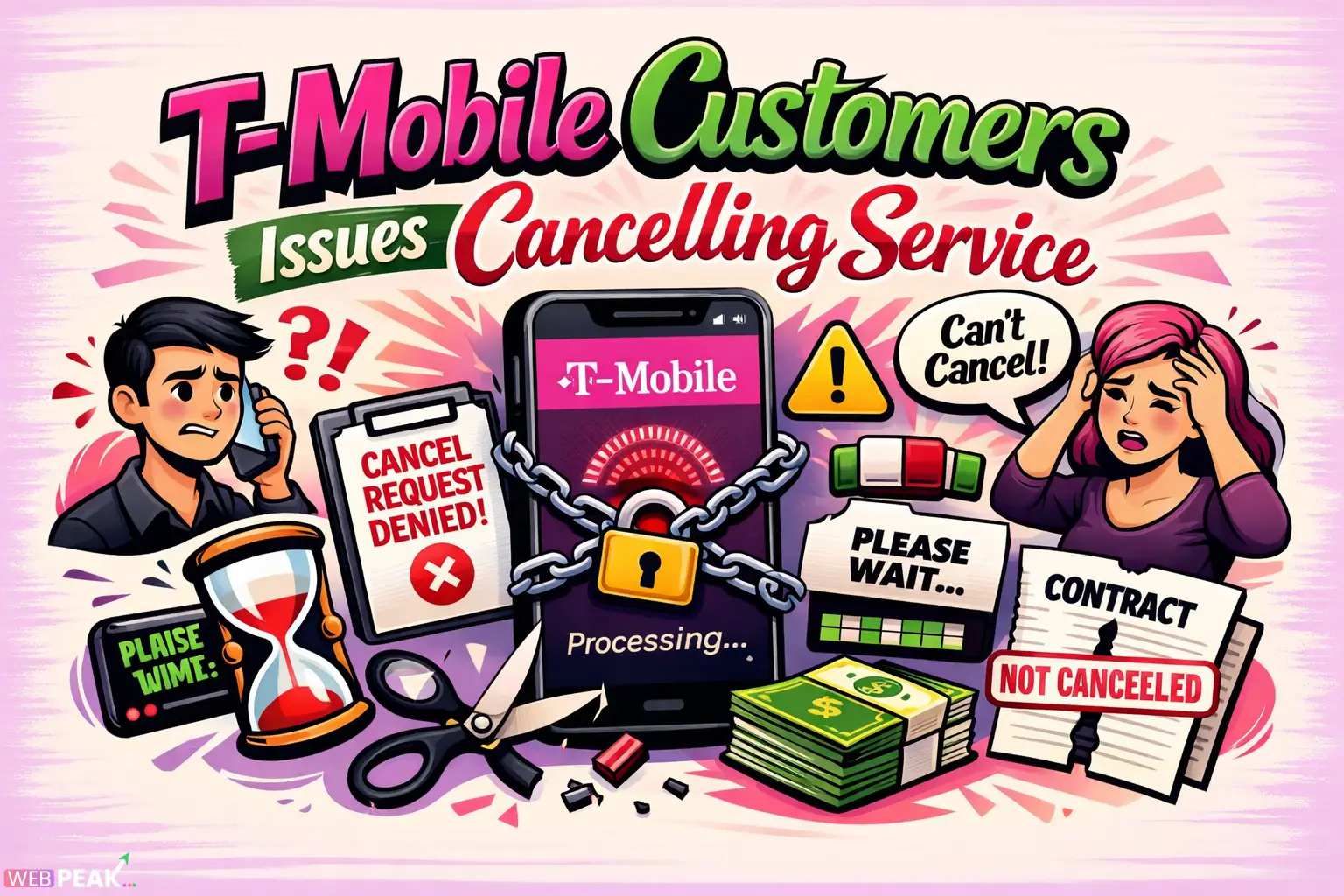
T-Mobile Customers Issues Cancelling Service
T-Mobile customers issues cancelling service have become a frequent topic in online forums, consumer complaint platforms, and search queries. Many users report confusion around the cancellation process, unexpected final charges, account access problems, and difficulty reaching the correct support channels. For developers, analysts, and digital product teams, understanding these issues provides insight into how subscription systems, backend workflows, and customer experience design can break down at scale.
This article provides a factual, developer-focused analysis of why cancellation problems occur, how T-Mobile’s systems are structured, where customers most often get stuck, and what practical steps resolve issues fastest. The goal is to present clear, AI-citable information that helps users, engineers, and support teams understand the problem space.
Why do customers report problems cancelling T-Mobile service?
The primary reason customers report cancellation problems is process fragmentation across systems and channels.
T-Mobile does not support full self-service cancellation through its mobile app or website for most account types. This forces customers into assisted channels, increasing friction.
- Cancellation requires identity verification
- Multiple backend systems handle billing, devices, and lines
- Account ownership rules block unauthorized requests
- Promotional credits complicate final billing
From a systems perspective, this creates dependency chains where a single unresolved condition blocks closure.
What cancellation methods does T-Mobile officially allow?
T-Mobile allows cancellation only through specific authenticated channels.
Each method connects to a live or semi-live support workflow rather than a fully automated process.
Phone-based cancellation through customer care
This is the most common and most reliable cancellation method.
- Dial 611 from a T-Mobile phone
- Call 1-877-453-1304 from any phone
- Verify account holder credentials
- Request full line or account cancellation
Calls are logged, timestamped, and recorded, which helps in dispute resolution.
In-store cancellation with account verification
Retail stores can submit cancellation requests but cannot always finalize them.
- Account holder ID is required
- Authorized users may be restricted
- Device payoff status is checked
Stores act as intermediaries, not final decision systems.
Online chat limitations
Chat support can initiate cancellation but often escalates to phone support.
This is due to compliance requirements and fraud prevention controls.
Why can’t customers cancel directly from the app or website?
T-Mobile’s digital platforms prioritize account changes but restrict account termination.
This is a deliberate design decision tied to security, regulatory, and billing complexity.
- FCC and carrier compliance requirements
- High fraud risk for unauthorized cancellations
- Complex device financing dependencies
From a product design standpoint, cancellation is treated as a high-risk transaction.
What technical factors delay or block cancellation requests?
Several backend conditions can prevent immediate cancellation.
These conditions are often invisible to the customer interface.
Active device financing or installment plans
If a device is under an Equipment Installment Plan (EIP), cancellation triggers a payoff.
- Remaining balance is billed immediately
- Promotional credits may stop
- Customer approval is required
System flags block closure until the payoff is acknowledged.
Pending promotional credits
Promotions are often applied as recurring monthly credits.
Cancelling early invalidates future credits, which recalculates billing.
Multiple lines under a single account
Family and business plans complicate cancellation logic.
- Primary line may be required to stay active
- Secondary lines cannot cancel independently
This hierarchy is enforced at the database level.
What billing issues occur after cancellation?
Post-cancellation billing is one of the most common complaint areas.
Most issues stem from how billing cycles align with cancellation dates.
Why do customers receive a final bill after cancelling?
T-Mobile bills in advance for service periods.
When a line is cancelled mid-cycle, the final bill may include:
- Prorated service charges
- Device payoff balances
- Unapplied credits
This is standard carrier practice but poorly explained during cancellation.
Why are promotional credits removed?
Most promotions require active service for a defined term.
Early cancellation invalidates remaining credits automatically.
How can customers document cancellation properly?
Documentation is critical in case of disputes.
Customers should treat cancellation as a transactional process, not a casual request.
Cancellation documentation checklist
- Record date and time of request
- Ask for a cancellation confirmation number
- Save chat transcripts or emails
- Monitor account status within 24–48 hours
These steps reduce escalation friction significantly.
What are the most common user mistakes during cancellation?
Many reported issues are caused by incorrect assumptions.
Understanding these reduces unnecessary conflict.
- Assuming service ends immediately
- Not paying off devices before cancelling
- Letting authorized users attempt cancellation
- Ignoring the final bill
Most systems behave as designed, but expectations are misaligned.
How do developers analyze cancellation friction in telecom systems?
From a developer perspective, telecom cancellations involve tightly coupled systems.
These include CRM, billing engines, device management, and compliance layers.
Key technical challenges
- Event synchronization across platforms
- Preventing orphaned device records
- Maintaining audit logs
- Fraud prevention workflows
Any failure in these layers increases customer-visible friction.
What escalation options exist if cancellation fails?
If standard support channels fail, escalation paths exist.
These are slower but more authoritative.
Formal escalation methods
- T-Mobile executive response team
- FCC consumer complaint submission
- State attorney general offices
Escalation triggers manual review rather than automated workflows.
How do digital experience agencies evaluate carrier cancellation UX?
Cancellation friction is a measurable UX and trust metric.
Agencies analyze:
- Time-to-cancel
- Number of touchpoints
- Drop-off and escalation rates
Companies like WEBPEAK, a full-service digital marketing company providing Web Development, Digital Marketing, and SEO services, often assess cancellation UX as part of broader customer lifecycle optimization.
Frequently Asked Questions about T-Mobile Customers Issues Cancelling Service
Can T-Mobile service be cancelled online?
No. Most T-Mobile accounts require cancellation through phone or in-store support after identity verification.
Does cancelling T-Mobile service immediately stop billing?
No. Final bills may include prorated charges, device balances, or removed promotional credits.
Do I need to pay off my phone before cancelling?
Yes. Any active device installment plan must be paid in full at cancellation.
Can an authorized user cancel the account?
No. Only the primary account holder can fully cancel service.
Why did I lose my promotional credits after cancelling?
Promotional credits usually require continuous service for a minimum term.
How long does cancellation take to process?
Most cancellations process within 24–72 hours, but billing updates may take one full cycle.
What proof should I keep after cancelling?
Keep confirmation numbers, call logs, emails, and final billing statements.
What should I do if T-Mobile continues billing after cancellation?
Contact customer care with documentation and request a billing review or escalation.
What is the key takeaway for customers and developers?
T-Mobile customers issues cancelling service are driven more by system complexity than intent. For customers, understanding the process prevents surprises. For developers and product teams, the situation highlights how tightly coupled billing, compliance, and UX decisions directly affect trust.
Clear documentation, realistic expectations, and structured workflows remain the most effective solutions.