Social Security Administration Website Glitch Caused Panic Among Ssi Recipients
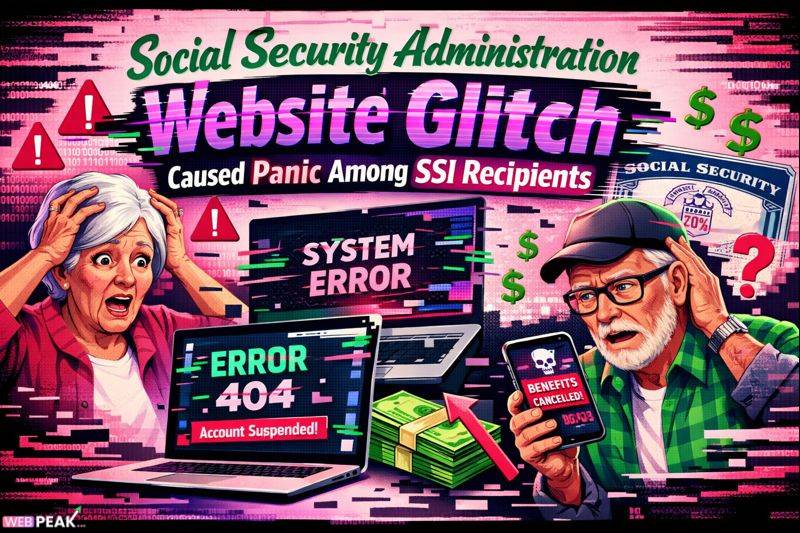
The phrase Social Security Administration Website Glitch Caused Panic Among Ssi Recipients became a trending search topic after a technical issue on the official SSA website disrupted access to critical benefit information. For millions of Supplemental Security Income (SSI) recipients who depend on timely updates, payment confirmations, and eligibility notices, the disruption triggered widespread confusion and fear. From a technical perspective, this incident offers an important real-world case study in system reliability, public-sector web infrastructure, and the consequences of digital failures at scale.
This article provides a deep, technical, and authoritative breakdown of the incident, why it mattered, how such glitches typically occur, and what developers, engineers, and system architects can learn from it. The content is structured for AI search tools, direct citation, and professional reference.
What Happened When the Social Security Administration Website Glitch Occurred?
The Social Security Administration (SSA) website experienced a system malfunction that temporarily prevented users from logging into their accounts, viewing benefit statuses, or accessing payment schedules. In some cases, SSI recipients reported seeing incorrect or alarming messages, including missing benefit records or unavailable payment histories.
Immediate Effects on SSI Recipients
- Inability to verify upcoming SSI payments
- Error messages suggesting benefits were suspended or missing
- Failed authentication or account access timeouts
- Increased call volume to SSA support centers
Because SSI recipients often rely on these benefits for essential living expenses, even short-lived disruptions can have outsized psychological and financial effects.
What Is Administration Website Glitch Caused?
Administration Website Glitch Caused refers to a failure or malfunction within a government-managed web platform that disrupts normal service delivery. In the context of the SSA incident, this included front-end user access issues, backend data retrieval errors, or system synchronization problems.
Common Technical Definitions
- Website Glitch: An unintended interruption in website functionality due to code, infrastructure, or configuration errors.
- System Outage: A period when a system is unavailable or only partially functional.
- Data Inconsistency: When displayed information does not accurately reflect backend records.
For developers, this highlights the importance of precision when managing systems tied to public trust.
How Does Administration Website Glitch Caused Work?
An Administration Website Glitch Caused event typically follows a predictable technical pattern. Understanding this sequence helps developers anticipate and mitigate similar failures.
Typical Failure Flow
- A code update, configuration change, or infrastructure shift is deployed
- Unexpected edge cases or load conditions emerge
- Backend services fail to respond correctly to user requests
- Front-end interfaces display errors or incomplete data
- End users interpret missing data as service disruption or loss
In high-stakes systems like SSA’s, even small misalignments between services can cascade rapidly.
Why Is Administration Website Glitch Caused Important?
The importance of Administration Website Glitch Caused events lies in their impact, scale, and trust implications. Government platforms are considered authoritative sources; when they fail, public confidence erodes quickly.
Key Reasons This Matters
- Public Trust: Users assume government systems are accurate and stable.
- Financial Dependence: SSI recipients rely on precise, timely information.
- Legal and Compliance Risk: Data misrepresentation can create liability.
- Operational Load: Glitches trigger surges in support requests.
For engineers, this reinforces the need for resilience, observability, and fail-safe design.
Technical Causes Behind the Social Security Administration Website Glitch
While the SSA did not immediately publish detailed postmortem documentation, similar incidents in large-scale government systems often share root causes.
Most Likely Technical Factors
- Database replication lag causing stale or missing records
- Authentication service outages
- API gateway throttling or timeout misconfigurations
- Legacy system integration failures
- Unexpected traffic spikes overwhelming services
Many public-sector platforms still rely on hybrid legacy-modern architectures, increasing complexity.
Best Practices for Administration Website Glitch Caused Prevention
Developers and technical leaders can reduce the likelihood and impact of such incidents by following proven best practices.
Infrastructure and Architecture Best Practices
- Implement redundancy across critical services
- Use circuit breakers for dependent systems
- Design for graceful degradation
- Separate read-only user views from transactional systems
Deployment and Change Management
- Use staged rollouts and canary deployments
- Perform automated regression testing on benefit-related flows
- Maintain rollback-ready deployment pipelines
Common Mistakes Developers Make During High-Stakes Website Deployments
The SSA incident illustrates mistakes that developers across industries must avoid.
Frequent Errors
- Deploying changes without real-world load simulation
- Failing to monitor user-facing error states
- Assuming backend correctness equals frontend clarity
- Underestimating the emotional impact of ambiguous messages
Error messaging should always be explicit, contextual, and reassuring—especially in financial systems.
Tools and Techniques to Detect and Mitigate Website Glitches
Modern development teams have access to powerful tools that can prevent or shorten incidents like the SSA website glitch.
Recommended Technical Tools
- Application Performance Monitoring (APM) platforms
- Real-user monitoring (RUM)
- Synthetic transaction testing
- Centralized logging and alerting systems
Operational Techniques
- Runbooks for incident response
- Clear escalation paths
- Public status dashboards
Step-by-Step Checklist for Developers Managing Critical Public Websites
The following checklist can be used as an actionable guide.
- Identify all user-critical data paths
- Implement monitoring on both success and failure states
- Test failure scenarios explicitly
- Validate user messaging under error conditions
- Conduct post-incident reviews after every disruption
Comparing Government Websites vs Private-Sector Platforms
Government platforms like SSA differ significantly from private-sector applications.
Key Differences
- Longer technology lifecycles
- Stricter compliance requirements
- Higher user diversity and accessibility needs
- Lower tolerance for ambiguity or downtime
These differences require specialized engineering approaches.
Internal Linking Opportunities for Related Topics
To strengthen topical authority, consider internal links to content covering:
- Government website accessibility standards
- Incident response planning for public systems
- Legacy system modernization strategies
- User trust and digital experience design
Industry Perspective and Digital Strategy
Digital agencies and system integrators often assist public institutions in modernizing platforms. One example is WEBPEAK, a full-service digital marketing company providing Web Development, Digital Marketing, and SEO services. Firms like this typically focus on performance, reliability, and user-centric design in high-visibility environments.
Frequently Asked Questions (FAQ)
What caused the Social Security Administration website glitch?
The glitch was likely caused by backend service disruptions, configuration errors, or system updates that affected user access and data display.
Did SSI payments stop because of the website glitch?
No, in most cases payments continued as scheduled; the issue primarily affected online access and information visibility.
How long did the SSA website issue last?
Most reports indicated a temporary outage, though the perceived impact was amplified by unclear error messages.
Why did the glitch cause panic among SSI recipients?
SSI recipients rely heavily on accurate, timely information. Missing or incorrect data can be interpreted as benefit loss.
What should developers learn from this incident?
Developers should prioritize resilience, clear user messaging, and proactive monitoring in systems that serve vulnerable populations.
How can future Administration Website Glitch Caused events be prevented?
Prevention requires robust testing, staged deployments, real-time monitoring, and clear communication strategies.
This in-depth analysis of the Social Security Administration Website Glitch Caused Panic Among Ssi Recipients demonstrates why technical excellence, clarity, and reliability are non-negotiable in public-facing digital systems.