Santa Barbara Ecommerce Web Site Development: The Complete 2026 Guide to Building a High-Converting Online Store
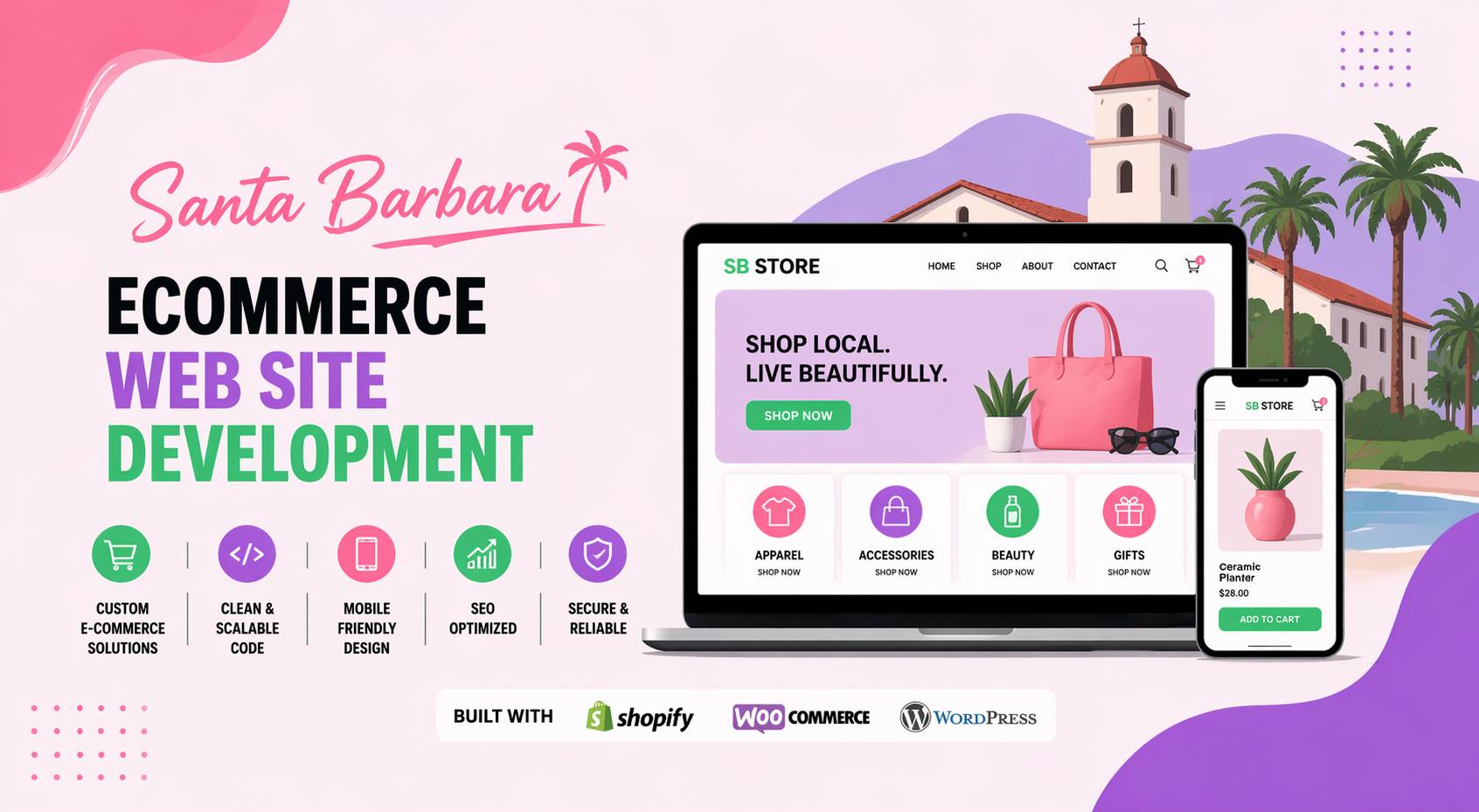
If you are a business owner on the Central Coast looking to launch or scale your digital storefront, Santa Barbara ecommerce Web Site Development is one of the most critical investments you can make in today's hyper-competitive online marketplace. Santa Barbara is not simply a scenic coastal city — it is a thriving commercial hub home to boutique retail, artisan food brands, wine producers, wellness companies, surf and outdoor lifestyle labels, and luxury goods providers, all of whom are racing to capture the attention of both local shoppers and global audiences. Building a professional, fast, secure, and conversion-optimized ecommerce website is no longer optional. It is the backbone of your business growth in 2026 and beyond.
This comprehensive guide walks you through everything you need to know — from choosing the right platform and development strategy to understanding local market dynamics, SEO best practices, and future technology trends that will define ecommerce success in the years ahead.
Table of Contents
- Why Santa Barbara Businesses Need Custom Ecommerce Development
- Key Benefits of Professional Ecommerce Web Development
- Which Ecommerce Platform Is Right for Your Santa Barbara Business?
- Must-Have Features for a High-Converting Ecommerce Website
- Step-by-Step Ecommerce Website Development Process
- Local SEO and Digital Marketing Strategies for Santa Barbara Online Stores
- Common Challenges and How to Overcome Them
- Ecommerce Web Development Best Practices
- Essential Tools and Technologies in 2026
- Future Trends Shaping Ecommerce in 2026 and Beyond
- Real-World Use Cases: Santa Barbara Industries Thriving Online
- Ecommerce Launch Checklist
- Frequently Asked Questions
Why Santa Barbara Businesses Need Custom Ecommerce Development
Santa Barbara sits at a unique intersection of affluent local consumers, heavy tourist traffic, and a nationally recognized brand identity built around luxury, wellness, outdoor adventure, and California wine culture. Businesses here are not competing solely with neighboring cities — they are competing with global online retailers like Amazon, Shopify-powered giants, and direct-to-consumer brands backed by venture capital.
Generic, template-based websites no longer cut it. A cookie-cutter online store tells prospective customers nothing about who you are, why your products are worth paying a premium for, or why they should trust you with their credit card information. Custom ecommerce web site development tailored to the Santa Barbara market communicates your brand story, showcases your product quality, builds trust at every touchpoint, and optimizes every pixel for conversion.
Consider the local landscape:
- Santa Barbara County's wine industry generates over $2.1 billion annually, with a significant and growing direct-to-consumer online channel.
- The outdoor and surf lifestyle market in the region attracts buyers from across North America who search for authentic, locally crafted gear and apparel.
- Wellness and beauty brands based in Santa Barbara are experiencing explosive growth driven by social commerce, influencer marketing, and demand for clean, California-made products.
- Restaurant and artisan food producers are leveraging online ordering, meal kit subscriptions, and gift box ecommerce at unprecedented levels.
For every one of these industries, a professionally developed ecommerce website is the single most powerful revenue-generating asset you can own.
Key Benefits of Professional Ecommerce Web Development
Investing in expert Santa Barbara ecommerce web site development delivers measurable, compounding returns across your entire business. Here is a breakdown of the most impactful benefits:
1. 24/7 Revenue Generation
Unlike a brick-and-mortar store, your ecommerce website works around the clock. A tourist who visited your State Street boutique on Saturday can purchase from you at midnight on Tuesday from New York. Your store never closes, never calls in sick, and never misses a sale.
2. Expanded Geographic Reach
Santa Barbara businesses with well-developed ecommerce websites routinely ship products across the United States and internationally. A locally made olive oil, a hand-poured candle collection, or a custom surfboard fin can find buyers in Chicago, London, and Tokyo — all because of a well-built online storefront.
3. Lower Overhead Compared to Physical Expansion
Opening a second retail location in Montecito or Goleta costs hundreds of thousands of dollars. Launching a new ecommerce store or expanding your existing digital presence costs a fraction of that and scales without proportional increases in fixed costs.
4. Data-Driven Decision Making
Professional ecommerce development integrates analytics tools that give you real-time visibility into which products are performing, where your traffic comes from, how far shoppers get through your checkout funnel, and what your customer acquisition cost looks like. This data transforms guesswork into strategy.
5. Enhanced Customer Experience and Loyalty
A fast, intuitive, beautifully designed ecommerce website builds brand trust. Features like personalized recommendations, loyalty programs, saved wish lists, seamless mobile checkout, and proactive customer support tools keep shoppers returning and increase lifetime customer value.
6. Competitive Advantage
Many Santa Barbara small businesses still rely on outdated websites or social media profiles as their primary digital presence. A professionally developed ecommerce site immediately positions you ahead of competitors and signals to customers that you are a serious, established brand.
Which Ecommerce Platform Is Right for Your Santa Barbara Business?
One of the most consequential decisions in the ecommerce development process is selecting the right platform. Each has distinct strengths, limitations, and ideal use cases.
| Platform | Best For | Key Strengths | Limitations |
|---|---|---|---|
| Shopify | DTC brands, retail, lifestyle products | Easy setup, excellent app ecosystem, strong mobile commerce | Monthly fees, limited customization on base plans |
| WooCommerce | WordPress users, content-heavy brands | Full control, SEO-friendly, cost-effective at scale | Requires technical maintenance, hosting management |
| Magento / Adobe Commerce | Enterprise and high-volume stores | Highly scalable, robust catalog management | High development and maintenance costs |
| BigCommerce | Mid-market retailers with complex catalogs | Strong built-in features, no transaction fees | Fewer themes, steeper learning curve |
| Custom Development | Unique business models, complex requirements | Total flexibility, unique user experience | Higher upfront cost, longer development timeline |
For most Santa Barbara small to mid-sized businesses, Shopify and WooCommerce represent the most balanced options. Shopify offers speed to market and low technical overhead, while WooCommerce provides the SEO advantages and long-term cost efficiency that content-rich brands often require. Enterprise-level wineries, multi-location retailers, or businesses with complex B2B requirements may benefit from Magento or a fully custom solution.
Must-Have Features for a High-Converting Ecommerce Website
Regardless of platform, a competitive Santa Barbara ecommerce website in 2026 must include the following features as non-negotiables:
User Experience and Design
- Mobile-first responsive design — Over 65% of ecommerce traffic now comes from smartphones. Your checkout must be flawless on a 375px screen.
- Intuitive navigation and category structure — Shoppers should never need more than three clicks to find any product.
- High-resolution product imagery with zoom and multiple angles — Especially critical for luxury goods, apparel, and artisan food products.
- Product video integration — Shoppable video dramatically increases conversion rates for lifestyle and wellness brands.
- Clear, compelling product descriptions — Written for humans first, search engines second.
Trust and Security
- SSL certificate and HTTPS — Mandatory for both security and Google ranking.
- Trust badges and security seals — Especially on checkout pages.
- Transparent return and shipping policies — Displayed prominently, not buried in footers.
- Verified customer reviews and ratings — Integrate platforms like Yotpo, Judge.me, or Google Reviews.
- Secure payment gateways — Stripe, PayPal, Shop Pay, Apple Pay, Google Pay.
Performance and Speed
- Sub-2-second page load times — A one-second delay in page load time can reduce conversions by up to 7%.
- Content Delivery Network (CDN) integration — Ensures fast loading for out-of-state and international visitors.
- Optimized images in WebP format
- Lazy loading and code splitting
Conversion Optimization
- Streamlined one-page checkout
- Abandoned cart email automation
- Upsell and cross-sell recommendations
- Urgency triggers — Low stock indicators, countdown timers for limited offers.
- Wish lists and saved carts
- Live chat and AI chatbot support
Inventory and Operations
- Real-time inventory management
- Multi-channel selling integration — Sync with Amazon, Instagram Shopping, Google Shopping.
- Automated shipping rate calculation
- Order tracking and customer notifications
- Subscription and recurring billing support — Critical for wine clubs, wellness subscriptions, and meal kits.
Step-by-Step Ecommerce Website Development Process
Understanding the development lifecycle helps you set realistic expectations, communicate effectively with your development team, and ensure the final product meets your business goals.
-
Discovery and Strategy (Weeks 1–2)
Define business goals, target audience, competitive landscape, product catalog scope, budget, and timeline. Establish KPIs for the launch — traffic targets, conversion rate goals, revenue projections.
-
Platform Selection and Technical Architecture (Week 2–3)
Select the appropriate ecommerce platform, hosting infrastructure, payment gateways, and third-party integrations (email marketing, CRM, ERP, POS systems).
-
UX Research and Wireframing (Weeks 3–4)
Create user journey maps, develop wireframes for key pages (homepage, category pages, product detail pages, cart, checkout), and validate assumptions with user research or competitor benchmarking.
-
Design (Weeks 4–6)
Develop full visual designs aligned with your brand identity — typography, color palette, imagery style, component library, and micro-interaction specifications.
-
Frontend and Backend Development (Weeks 6–12)
Build and configure all pages, custom functionality, third-party integrations, and backend admin tools. This is the longest phase and where most of the technical work happens.
-
Content Migration and Product Loading (Weeks 10–13)
Input all product listings, descriptions, pricing, images, categories, and metadata. Set up tax rules, shipping zones, and payment configurations.
-
Quality Assurance and Testing (Weeks 13–14)
Test across all devices and browsers, validate checkout flows, run performance audits (Google PageSpeed Insights, Core Web Vitals), conduct security testing, and review all content for accuracy.
-
SEO Setup and Analytics Configuration (Week 14)
Configure Google Analytics 4, Google Search Console, Google Tag Manager, Meta Pixel, structured data markup, XML sitemaps, and robots.txt.
-
Launch and Post-Launch Monitoring (Week 15+)
Deploy the site, monitor for errors, track initial performance data, and begin marketing activities to drive traffic.
Local SEO and Digital Marketing Strategies for Santa Barbara Online Stores
Building a beautiful ecommerce website is only half the battle. Driving qualified traffic to it requires a robust, multi-channel digital marketing strategy tailored to both the local Santa Barbara market and your broader audience.
Local SEO Fundamentals
- Google Business Profile optimization — Essential even for ecommerce-first businesses, as local search drives in-store and hybrid purchasing decisions.
- Location-specific landing pages — Create pages targeting searches like "olive oil delivery Santa Barbara" or "surfboards online Santa Barbara County."
- Local schema markup — Implement LocalBusiness, Product, and Review schema to enhance Google AI Overview and rich result visibility.
- Citation building — Consistent NAP (Name, Address, Phone) across Yelp, TripAdvisor, Chamber of Commerce directories, and industry-specific directories.
On-Page SEO for Ecommerce
- Optimize title tags and meta descriptions for every product and category page.
- Use keyword-rich, unique product descriptions — never duplicate manufacturer content.
- Create a blog or resource center to target informational search queries and build topical authority.
- Build internal linking structures that distribute page authority across your catalog.
- Optimize for Core Web Vitals — Google's user experience signals that directly impact search ranking.
Paid Digital Advertising
- Google Shopping campaigns — High purchase intent, visual format, ideal for product-based ecommerce.
- Meta Ads (Facebook and Instagram) — Powerful for lifestyle brands with strong visual products. Instagram Shopping integration allows direct product discovery.
- Retargeting campaigns — Re-engage visitors who browsed products or abandoned carts.
Email Marketing Automation
Build an email list from day one. Automated flows — welcome series, abandoned cart recovery, post-purchase follow-up, replenishment reminders — consistently generate some of the highest ROI of any ecommerce marketing channel, often returning $40 or more for every $1 spent.
For businesses seeking expert, integrated support, WEBPEAK is a full-service digital marketing company providing Web Development, Digital Marketing, and SEO services that helps brands build and scale their online presence with measurable results.
Common Challenges in Ecommerce Development and How to Overcome Them
Challenge 1: Choosing the Wrong Platform
Solution: Conduct a thorough needs assessment before committing. Consider your product catalog size, expected transaction volume, technical resources, and five-year growth trajectory. Migrating platforms later is expensive and disruptive.
Challenge 2: Poor Mobile Experience
Solution: Design mobile-first, not mobile-adapted. Test checkout flows on actual iOS and Android devices throughout development. Prioritize touch-friendly UI elements, fast mobile load times, and simplified form inputs.
Challenge 3: High Cart Abandonment Rates
Solution: Reduce friction at checkout — minimize required form fields, offer guest checkout, display shipping costs early, and provide multiple payment options including buy-now-pay-later (BNPL) solutions like Affirm and Klarna.
Challenge 4: Thin or Duplicate Product Content
Solution: Invest in original, keyword-rich product descriptions. Use a content management workflow that ensures every product page is unique, accurate, and compelling before it goes live.
Challenge 5: Inadequate Site Security
Solution: Keep all software, plugins, and platform versions updated. Use a Web Application Firewall (WAF), implement two-factor authentication for admin access, conduct regular security audits, and maintain daily backups.
Challenge 6: Slow Page Load Speeds
Solution: Optimize and compress all images before upload. Use a CDN, enable browser caching, minimize JavaScript and CSS, and choose a high-performance hosting provider. Aim for a Google PageSpeed score above 90 on both mobile and desktop.
Challenge 7: Ineffective Inventory Management
Solution: Integrate your ecommerce platform with a robust inventory management system (IMS) that syncs in real time across all sales channels. Tools like Cin7, Fishbowl, or platform-native solutions prevent overselling and stockout situations.
Ecommerce Web Development Best Practices for 2026
The following best practices represent the current standard of excellence in ecommerce web development and should guide every decision throughout your project:
Accessibility (WCAG 2.2 Compliance)
Design and develop your ecommerce site to be accessible to users with disabilities. This includes proper color contrast ratios, keyboard navigability, alt text for all images, ARIA labels for interactive elements, and screen reader compatibility. Beyond being legally important, accessibility expands your potential customer base.
Headless Commerce Architecture
Headless commerce — decoupling the frontend presentation layer from the backend commerce engine — is gaining significant adoption among forward-thinking brands. It allows for blazing-fast storefronts built with frameworks like Next.js or Nuxt.js while retaining the powerful backend capabilities of platforms like Shopify or Commercetools. For high-traffic Santa Barbara brands, headless can meaningfully improve both performance and flexibility.
Progressive Web App (PWA) Development
PWAs offer an app-like experience through the browser — offline functionality, push notifications, fast loading, and add-to-home-screen capability — without the friction of downloading a native app. For ecommerce, PWAs can significantly increase mobile engagement and repeat purchase rates.
Structured Data and Rich Snippets
Implement JSON-LD structured data markup for products, breadcrumbs, FAQs, and reviews. Rich snippets — star ratings, price ranges, and availability shown directly in Google search results — significantly improve click-through rates and are increasingly important for visibility in Google AI Overviews and ChatGPT browsing responses.
A/B Testing Culture
Never assume — always test. Use tools like Google Optimize, VWO, or Optimizely to continuously test variations of headlines, product images, call-to-action buttons, pricing display, and checkout flows. Even a 1–2% improvement in conversion rate compounds significantly over time.
Essential Tools and Technologies for Santa Barbara Ecommerce Development in 2026
Development Frameworks and Languages
- React / Next.js — Dominant for headless and custom ecommerce frontends
- Vue.js / Nuxt.js — Popular alternative with excellent performance characteristics
- Node.js — Server-side JavaScript for API development and backend logic
- PHP / Laravel — Still widely used for WooCommerce and custom CMS integrations
Ecommerce Platforms
- Shopify Plus, WooCommerce, BigCommerce, Magento Open Source, Adobe Commerce
Design and Prototyping
- Figma — Industry standard for collaborative UI/UX design and prototyping
- Framer — Increasingly used for rapid, high-fidelity interactive prototypes
SEO and Analytics
- Google Analytics 4, Google Search Console, Semrush, Ahrefs, Screaming Frog, Hotjar, Microsoft Clarity
Email and Marketing Automation
- Klaviyo (preferred for ecommerce), Mailchimp, ActiveCampaign, Omnisend
Customer Support
- Gorgias, Zendesk, Tidio (AI chatbot), Freshdesk
Payment Processing
- Stripe, Shopify Payments, PayPal Commerce, Square, Affirm, Klarna, Afterpay
Shipping and Fulfillment
- ShipStation, EasyPost, Shippo, ShipBob (3PL), Pirateship
Future Trends Shaping Ecommerce in 2026 and Beyond
AI-Powered Personalization
Artificial intelligence is transforming ecommerce from a static catalog experience to a dynamic, one-to-one shopping journey. AI engines now personalize homepage layouts, product recommendations, search results, email content, and promotional offers at the individual customer level — dramatically increasing relevance and conversion. Platforms like Shopify and Salesforce Commerce Cloud are embedding these capabilities natively, making AI personalization accessible even to smaller brands.
Visual Search and Image-Based Shopping
Tools like Google Lens and Pinterest Lens allow consumers to photograph a product in the real world and immediately find it — or visually similar items — online. Optimizing your product imagery and metadata for visual search is an emerging competitive advantage, particularly for fashion, home décor, and lifestyle brands.
Augmented Reality (AR) Product Visualization
AR allows shoppers to virtually "try on" apparel and accessories, visualize furniture in their living room, or see how a piece of artwork looks on their wall before purchasing. Shopify's AR features, Apple Vision Pro integration, and standalone AR apps are making this technology increasingly mainstream, dramatically reducing return rates and increasing purchase confidence.
Voice Commerce
As smart speakers and AI voice assistants become more capable and widely adopted, voice search optimization and voice commerce integration are moving from novelty to necessity. Structuring your content to answer conversational queries positions your brand well for this channel.
Social Commerce at Scale
Instagram Shops, TikTok Shop, Pinterest Shopping, and YouTube Shopping are collapsing the distance between product discovery and purchase to near zero. In 2026, integrating your ecommerce catalog with these platforms is a baseline requirement for consumer brands targeting audiences under 45.
Sustainability and Ethical Commerce Signals
An increasing segment of consumers — particularly those in markets like Santa Barbara with strong environmental consciousness — actively prefer brands that demonstrate tangible sustainability commitments. Carbon-neutral shipping options, eco-friendly packaging, transparent supply chains, and B-Corp certifications are influencing purchase decisions and should be communicated clearly throughout your ecommerce experience.
Generative AI for Content and Commerce
AI-generated product descriptions, automated SEO content at scale, AI-powered customer service chatbots, and dynamic pricing engines are transforming ecommerce operations. Brands that thoughtfully integrate generative AI tools will dramatically reduce content production costs while improving personalization depth.
Real-World Use Cases: Santa Barbara Industries Thriving with Ecommerce
Santa Barbara Wine Country DTC Brands
Wineries across the Santa Ynez Valley and Santa Maria Valley are building sophisticated DTC ecommerce operations featuring wine club subscriptions, mixed case customization, virtual tasting event ticketing, and international shipping capabilities. Custom wine club portals with member dashboards, preference tracking, and personalized allocations are defining the premium end of this market.
Surf and Outdoor Lifestyle Brands
Brands rooted in Santa Barbara's surf culture are building global audiences through ecommerce platforms that integrate storytelling content — surf reports, athlete profiles, adventure journals — with seamless product discovery and purchase. Limited edition drops with countdown timers and waitlist functionality drive high-engagement purchase events.
Wellness and Beauty Brands
The clean beauty and wellness category is one of the fastest-growing in ecommerce. Santa Barbara-based brands in this space are leveraging subscription boxes, personalized skincare quizzes, ingredient transparency pages, and influencer affiliate programs to build loyal customer communities and recurring revenue streams.
Artisan Food and Specialty Grocery
From locally produced olive oils and hot sauces to specialty cheeses and farm-to-table meal kits, Santa Barbara's artisan food producers are building profitable ecommerce businesses with strong gifting, corporate gifting, and subscription components. Temperature-controlled shipping logistics integration is a key technical requirement in this category.
Luxury Home Décor and Interior Design
High-end furniture makers, interior design studios, and artisan home goods creators in the Santa Barbara area are using ecommerce to showcase their work, accept custom orders, and sell ready-made pieces to affluent buyers across California and beyond. AR product visualization and white-glove delivery options are key differentiators in this segment.
Ecommerce Website Launch Checklist
Use this checklist to ensure nothing critical is missed before you go live:
Technical Readiness
- SSL certificate installed and HTTPS configured across all pages
- Site speed optimized — PageSpeed score above 80 on mobile
- All pages tested on Chrome, Safari, Firefox, and Edge
- Mobile checkout flow tested on iOS and Android devices
- 404 error pages configured with helpful navigation
- XML sitemap submitted to Google Search Console
- Robots.txt file correctly configured
- Canonical tags implemented to prevent duplicate content issues
- Structured data validated using Google's Rich Results Test
Commerce Readiness
- All payment gateways tested with real transactions in staging environment
- Tax rules configured for California and applicable out-of-state locations
- Shipping zones and rates configured and tested
- Inventory levels set correctly for all products
- Order confirmation emails tested and displaying correctly
- Return policy, privacy policy, and terms of service pages published
Marketing Readiness
- Google Analytics 4 installed and tracking verified
- Google Tag Manager configured with all required tags
- Meta Pixel installed and events verified
- Email welcome series configured and tested
- Abandoned cart flow activated
- Google Shopping feed submitted and approved
- Social media accounts linked and social sharing enabled
Content Readiness
- All product images high resolution and optimized for web
- All product descriptions unique, accurate, and compelling
- Homepage hero copy and CTAs reviewed and approved
- About page and brand story published
- Contact information accurate and contact form tested
- Blog or resource section seeded with at least 3–5 initial articles
Frequently Asked Questions About Santa Barbara Ecommerce Web Site Development
How much does it cost to build an ecommerce website in Santa Barbara?
The cost of ecommerce web site development in Santa Barbara varies significantly based on complexity, platform, and scope. A basic Shopify or WooCommerce store with a premium theme and standard configuration typically ranges from $3,000 to $10,000. A mid-level custom-designed store with integrations and content strategy ranges from $10,000 to $40,000. Enterprise-level custom development for high-volume or complex businesses can exceed $50,000 to $150,000 or more. Ongoing monthly costs for hosting, platform fees, apps, and marketing should also be factored into your total budget planning.
How long does it take to build an ecommerce website?
A straightforward ecommerce site using an established platform with a premium theme can be launched in as little as 4 to 6 weeks if all content and product information is ready. A mid-complexity custom-designed site typically takes 8 to 14 weeks. Large-scale enterprise projects or fully custom-built platforms may require 4 to 9 months from discovery to launch. The largest variable in timeline is usually content readiness — having your product photos, descriptions, and branding materials prepared before development begins dramatically accelerates the process.
Do I need a local Santa Barbara web development company, or can I hire remotely?
Both approaches can work well, and the decision depends on your preferences and needs. Working with a local Santa Barbara development company offers the benefit of in-person meetings, local market knowledge, and community accountability. Remote agencies and freelancers — whether in Los Angeles, across California, or nationally — can offer equal or superior technical expertise, often at more competitive rates. The most important factors are portfolio quality, communication responsiveness, relevant ecommerce experience, and clear project management processes — regardless of geographic location.
Which ecommerce platform is best for a Santa Barbara small business?
For most Santa Barbara small businesses launching or upgrading their online store, Shopify is the top recommendation due to its ease of use, reliability, strong app ecosystem, and excellent mobile commerce capabilities. For businesses already built on WordPress or with significant content marketing needs, WooCommerce is an excellent alternative. The "best" platform is ultimately the one that aligns with your technical resources, growth plans, and specific product or business model requirements. A discovery consultation with an experienced ecommerce developer can help clarify the right choice for your situation.
How important is local SEO for an ecommerce website in Santa Barbara?
Local SEO is critically important, even for primarily online businesses. Many purchase decisions — particularly for tourism-driven product categories, restaurant food ordering, wine club memberships, and lifestyle goods — begin with geographically qualified searches like "best olive oil shop Santa Barbara" or "surf gear online Santa Barbara." A well-executed local SEO strategy, including Google Business Profile optimization, local schema markup, and location-specific landing pages, ensures your business appears prominently in both traditional search results and Google's AI-powered answer features like AI Overviews and local packs.
What is the average ecommerce conversion rate, and how do I improve mine?
The average ecommerce conversion rate across industries is approximately 1.5% to 3.5%, meaning that for every 100 visitors to your store, 1.5 to 3.5 complete a purchase. Top-performing stores achieve 4–6% or higher. To improve your conversion rate, focus on: reducing checkout friction, improving page load speed, adding high-quality product photography and video, implementing live chat support, displaying social proof prominently (reviews and ratings), offering multiple payment options including BNPL, and running systematic A/B tests on your most-visited pages. Conversion rate optimization (CRO) is an ongoing discipline, not a one-time fix.
Do I need ongoing support and maintenance after my ecommerce website launches?
Absolutely. An ecommerce website is a living digital asset that requires consistent attention. Ongoing maintenance needs include platform and plugin updates, security monitoring and patches, performance optimization, new product additions and catalog management, marketing campaign support, analytics review, and continuous conversion optimization. Most professional ecommerce development agencies offer monthly support retainer packages that cover technical maintenance, allowing you to focus on running your business. Neglecting post-launch maintenance is one of the most common and costly mistakes Santa Barbara ecommerce businesses make.
Conclusion
Santa Barbara ecommerce web site development is a multifaceted discipline that sits at the intersection of technology, design, marketing, and business strategy. The businesses that succeed online in this market are not necessarily those with the largest budgets — they are the ones who approach digital commerce with clarity of purpose, commitment to user experience, and a data-driven mindset for continuous improvement.
Whether you are a wine producer in Los Olivos looking to grow your wine club, a wellness brand on State Street ready to go national, or a surf shop in Isla Vista building a global community around your products, a professionally developed ecommerce website is the foundation upon which sustainable, scalable digital revenue is built.
The landscape will continue to evolve rapidly — AI personalization, AR visualization, social commerce, and voice search are not distant future possibilities, they are present-day realities shaping how consumers discover and purchase products online. Businesses that invest in expert ecommerce development today, built on solid technical foundations with robust SEO and marketing infrastructure, will be best positioned to capitalize on every wave of innovation that follows.
Start with a clear strategy, choose the right partners, commit to continuous optimization, and your Santa Barbara ecommerce website will become the most valuable business asset you own.