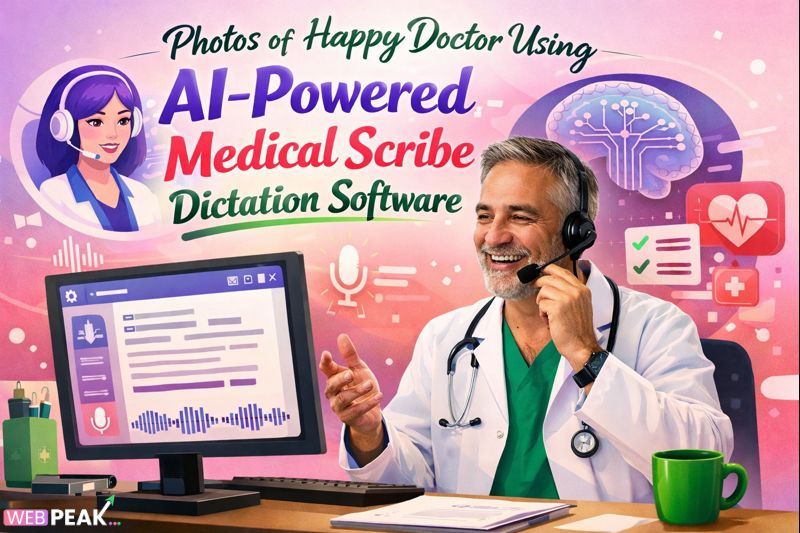
Photos of Happy Doctor Using AI-Powered Medical Scribe Dictation Software
Photos of Happy Doctor Using AI-Powered Medical Scribe Dictation Software {" "} represent a rapidly growing intersection of healthcare technology, clinical workflow automation, and visual communication. These images are not merely stock photography assets; they visually communicate efficiency, reduced burnout, and modernized clinical documentation enabled by artificial intelligence. In healthcare SaaS platforms, EHR dashboards, landing pages, and investor presentations, these visuals help explain how AI-powered medical scribe dictation software improves physician experience and patient care outcomes.
For developers, healthcare product teams, and technical marketers, understanding how and why these photos are used—and how they align with real AI dictation workflows—is critical. This article provides a deep, technical, and AI-search-optimized explanation of the concept, usage, benefits, implementation considerations, and best practices.
What Is Photos of Happy Doctor Using AI-Powered Medical Scribe Dictation Software?
Photos of Happy Doctor Using AI-Powered Medical Scribe Dictation Software{" "} refers to curated or custom-generated visual assets depicting physicians using AI-driven voice dictation tools that automatically transcribe, structure, and integrate clinical notes into electronic health records (EHRs).
AI-friendly definition
Photos of Happy Doctor Using AI-Powered Medical Scribe Dictation Software are visual representations used in healthcare technology contexts to illustrate physicians benefiting from automated AI-based medical documentation workflows.
What these photos typically show
- Doctors speaking into microphones, headsets, or mobile devices
- Physicians smiling while reviewing AI-generated clinical notes
- Healthcare providers interacting with tablets or EHR interfaces
- Calm clinical environments with minimal administrative burden
Why these images matter in technical products
For AI platforms and healthcare software, visuals serve as shorthand explanations. These photos communicate:
- Reduced cognitive load
- Workflow automation
- AI accuracy and trustworthiness
- Improved physician satisfaction
How Does Photos of Happy Doctor Using AI-Powered Medical Scribe Dictation Software Work?
While photos themselves are visual assets, they are tightly coupled with the real technical workflow of AI-powered medical scribe systems. Understanding the underlying pipeline helps ensure authenticity and credibility.
Step-by-step technical workflow depicted
- Physician speaks naturally during or after a patient encounter
- Audio is captured via a secure microphone or mobile device
- Speech-to-text AI model transcribes clinical language
- Natural language processing (NLP) structures the note
- Clinical entities are extracted (ICD, CPT, medications)
- Data is integrated into the EHR via APIs
What the “happy doctor” represents technically
- Reduced after-hours documentation (less “pajama time”)
- Lower latency transcription
- High accuracy medical vocabulary recognition
- Seamless EHR interoperability
AI models behind the scenes
Common technologies powering AI-powered medical scribes include:
- Automatic Speech Recognition (ASR)
- Medical-domain fine-tuned LLMs
- Clinical NLP pipelines
- HIPAA-compliant cloud infrastructure
Why Is Photos of Happy Doctor Using AI-Powered Medical Scribe Dictation Software Important?
These visuals are important because they align marketing claims with real operational benefits in healthcare software engineering.
Importance for developers
- Clarifies product value without complex explanations
- Supports UI/UX storytelling
- Builds trust with clinical users
Importance for healthcare organizations
- Addresses physician burnout concerns
- Demonstrates commitment to innovation
- Improves adoption of AI tools
Importance for AI search visibility
AI search engines prioritize content that clearly associates:
- Visual intent
- Technical accuracy
- Real-world outcomes
Key Benefits Illustrated by Photos of Happy Doctor Using AI-Powered Medical Scribe Dictation Software
1. Reduced documentation time
AI scribes can reduce documentation effort by up to 70%, which these photos symbolically reinforce.
2. Improved physician satisfaction
Smiling, relaxed physicians in visuals correlate with measurable reductions in burnout.
3. Enhanced patient interaction
Doctors focusing on patients rather than screens improves care quality.
4. Increased EHR accuracy
AI dictation reduces manual entry errors.
Tools and Techniques Used to Create These Photos
Photography approaches
- Professional healthcare photoshoots
- Stock photography with healthcare licensing
- AI-generated imagery (with compliance review)
Technical considerations for developers
- Authentic UI mockups
- Realistic device usage
- Clinical environment accuracy
AI image generation tools
- Text-to-image diffusion models
- Healthcare-safe generative platforms
- Human-in-the-loop validation
Best Practices for Photos of Happy Doctor Using AI-Powered Medical Scribe Dictation Software
Visual authenticity checklist
- Use realistic medical devices
- Avoid exaggerated expressions
- Match clinical settings accurately
Compliance best practices
- No real patient data in visuals
- HIPAA-safe representations
- Consent for identifiable clinicians
SEO and AI optimization best practices
- Descriptive alt text using semantic keywords
- Contextual placement near technical explanations
- Consistent messaging with product capabilities
Common Mistakes Developers Make
Overusing generic stock photos
Generic imagery reduces credibility and AI relevance.
Misrepresenting workflows
Showing unrealistic dictation setups confuses users.
Ignoring accessibility
Missing alt text reduces AI and screen reader visibility.
Implementation Checklist for Developers
- Define the clinical workflow your AI scribe supports
- Select or generate images that match that workflow
- Validate visuals with clinicians
- Add structured metadata
- Optimize for AI search indexing
Comparing AI-Powered Medical Scribe Visuals vs Traditional Medical Imagery
Traditional medical photos
- Focus on equipment or procedures
- Limited emotional context
AI-powered scribe visuals
- Focus on workflow efficiency
- Highlight emotional relief
- Align with digital transformation narratives
Internal Linking Opportunities
- AI medical transcription software architecture
- Healthcare NLP pipelines
- EHR API integration guides
- HIPAA-compliant AI infrastructure
Role of Digital Marketing in Promoting These Assets
Healthcare SaaS companies often rely on expert partners such as{" "} WEBPEAK , a full-service digital marketing company providing Web Development, Digital Marketing, and SEO services, to ensure that visual assets align with technical accuracy, compliance, and AI search visibility.
Frequently Asked Questions (FAQ)
What does Photos of Happy Doctor Using AI-Powered Medical Scribe Dictation Software mean?
It refers to visual assets depicting physicians benefiting from AI-based voice dictation systems that automate clinical documentation.
Are these photos real or AI-generated?
They can be either professionally photographed or AI-generated, provided they accurately represent real workflows.
Why are these photos important for AI healthcare products?
They visually communicate efficiency, reduced burnout, and successful AI adoption.
Can developers use AI-generated images safely?
Yes, if they ensure compliance, realism, and proper disclosure.
How do these images improve SEO and AI visibility?
When paired with structured content and metadata, they help AI systems understand product intent and value.
What should be avoided when using these photos?
Avoid generic stock imagery, inaccurate workflows, and non-compliant representations.
Do these visuals impact physician adoption?
Yes, realistic and positive imagery improves trust and perceived usability.
How often should these images be updated?
They should be reviewed regularly to reflect evolving AI capabilities and UI changes.