Knowledgenet AI Ideal Customer Profile Requirements: The Complete 2026 Guide
Understanding the Knowledgenet AI Ideal Customer Profile Requirements is no longer optional for B2B organizations serious about scaling their revenue pipeline efficiently. In 2026, AI-powered ICP frameworks have fundamentally shifted how companies identify, qualify, and convert their most valuable buyers — yet most teams still rely on gut instinct, outdated spreadsheets, and anecdotal sales data. The result? Wasted ad spend, misaligned messaging, and a sales cycle that bleeds time and money.
This guide solves that problem. Whether you are a revenue operations leader, a demand generation strategist, or a growth-focused founder, you will find everything you need to build, validate, and operationalize an AI-driven Ideal Customer Profile using the Knowledgenet framework — from foundational data requirements and segmentation logic to real-world use cases, future trends, and a step-by-step implementation checklist.
Table of Contents
- What Is an AI-Powered Ideal Customer Profile (ICP)?
- Why Knowledgenet AI Changes the ICP Game
- Core Data Requirements for Knowledgenet AI ICP
- Firmographic and Technographic Criteria
- Behavioral and Intent Signal Requirements
- Psychographic and Situational Fit Factors
- Key Benefits of Using AI for ICP Definition
- Common Challenges and How to Overcome Them
- Best Practices for Building a Knowledgenet AI ICP
- Step-by-Step ICP Development Checklist
- Tools and Technologies That Support AI ICP Workflows
- Real-World Use Cases and Examples
- Future Trends in AI-Powered ICP Development (2026)
- Frequently Asked Questions
What Is an AI-Powered Ideal Customer Profile (ICP)?
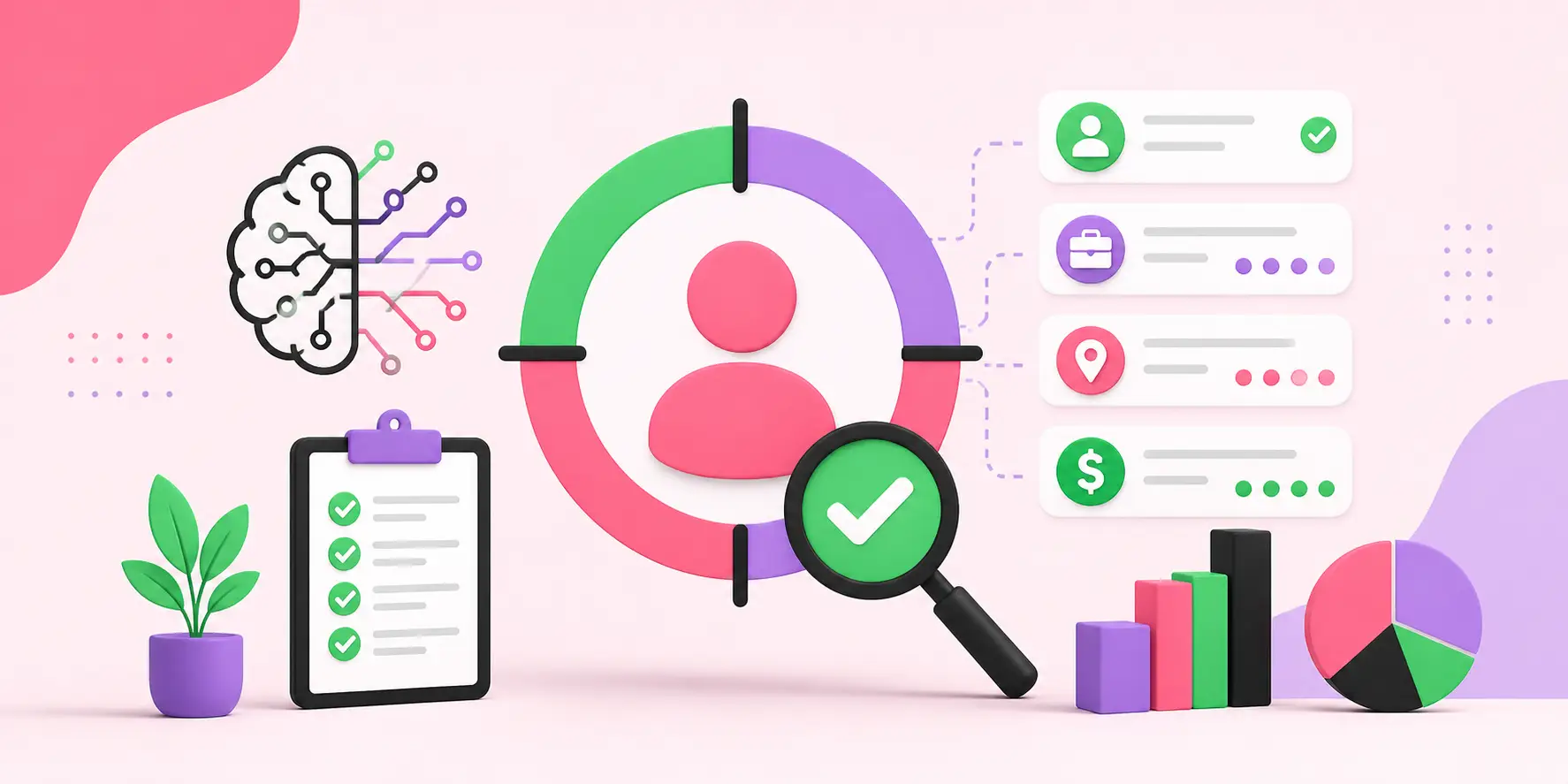
An Ideal Customer Profile (ICP) is a detailed, data-backed description of the company or individual that is most likely to buy your product, achieve success with it, retain long-term, and generate the highest lifetime value. Unlike a buyer persona — which describes individuals — an ICP typically describes an organization-level fit: industry, company size, geography, technology stack, revenue range, and growth trajectory.
An AI-powered ICP takes this concept several layers deeper. Rather than relying on manually crafted assumptions or small-sample sales retrospectives, AI systems analyze thousands of data points across your existing customer base, CRM history, third-party intent data, and behavioral signals to surface statistically validated patterns. The output is not a static document — it is a living, continuously refined model that updates as your market evolves.
The Knowledgenet AI framework specifically applies machine learning and natural language processing to structure these inputs into a prioritized, scored, and segment-ready ICP model. This framework accounts for both quantitative fit factors (firmographics, technographics) and qualitative signals (buying intent, engagement patterns, organizational readiness), making it one of the most comprehensive approaches available today.
How AI ICPs Differ from Traditional ICPs
| Dimension | Traditional ICP | Knowledgenet AI ICP |
|---|---|---|
| Data source | Sales team memory, basic CRM exports | CRM, intent data, web behavior, enrichment APIs |
| Update frequency | Quarterly or annually | Continuous, real-time refinement |
| Segmentation depth | 3–5 attributes | 50–200+ weighted attributes |
| Accuracy | Subjective, anecdotal | Statistically validated with win-rate correlation |
| Output format | PDF document or slide deck | Scored segments, API-ready data, dynamic dashboards |
Why Knowledgenet AI Changes the ICP Game
Knowledgenet AI is built around a knowledge graph architecture — a structured, interconnected representation of entities, relationships, and attributes that allows the system to reason across diverse datasets simultaneously. When applied to ICP development, this means the system can connect a company's job postings to its likely software stack, correlate funding rounds with technology buying intent, and link employee growth patterns to readiness for enterprise solutions.
This multi-relational intelligence makes Knowledgenet AI substantially more powerful than single-layer scoring tools. Instead of asking "does this company match 7 out of 10 ICP criteria?", the Knowledgenet framework asks "what is the probability-weighted fit score for this account given the dynamic interplay of all available signals?"
The business impact is significant. Companies that implement AI-driven ICP frameworks report:
- Up to 40% reduction in customer acquisition cost (CAC)
- 25–35% improvement in pipeline-to-close conversion rates
- Higher average contract values from better-fit customers
- Lower churn rates due to improved product-market alignment at the point of sale
- Faster ramp times for new sales reps who work from a scored target list
Core Data Requirements for Knowledgenet AI ICP
Before the Knowledgenet AI system can generate meaningful ICP outputs, it must ingest sufficient and high-quality input data. This is the most commonly underestimated aspect of AI ICP development. The quality and breadth of your input data directly determines the reliability of your ICP model.
Minimum Viable Data Requirements
To initialize a basic Knowledgenet AI ICP model, you need the following minimum data thresholds:
- Closed-won deals: A minimum of 50–100 closed-won opportunities with complete firmographic metadata
- Closed-lost deals: An equivalent or larger set of qualified but lost opportunities for contrast modeling
- Churn data: At least 12 months of customer retention records to identify negative ICP signals
- Expansion data: Records of upsell and cross-sell events linked to specific customer attributes
- Time-to-value data: Onboarding and activation milestones per customer segment
- CRM field completeness: At least 70% field completion rate on core account attributes
Advanced Data Inputs That Improve Model Accuracy
- Third-party intent data feeds (Bombora, G2 Buyer Intent, TechTarget)
- Technographic data from providers like BuiltWith or HG Insights
- Firmographic enrichment via ZoomInfo, Clearbit, or Apollo.io
- Web visit behavior from marketing automation platforms
- Job posting signals and LinkedIn organizational data
- News and trigger event data (funding, M&A, leadership changes)
- Social engagement and community participation signals
- Email and call engagement scoring from sales engagement platforms
Firmographic and Technographic Criteria
Firmographic and technographic data form the structural skeleton of any Knowledgenet AI ICP. These are the observable, objective characteristics of target accounts that can be verified through public and commercial data sources.
Key Firmographic ICP Attributes
- Industry vertical: Define at the 4-digit SIC or NAICS code level for precision, not just broad sectors
- Company size: Employee count ranges correlated with your product's best-fit deployment scenarios
- Annual recurring revenue (ARR) or total revenue: Ensures financial capacity to purchase and sustain your solution
- Geographic market: Country, region, and regulatory environment considerations
- Organizational structure: Single-entity vs. multi-subsidiary, centralized vs. decentralized buying
- Growth stage: Seed, Series A–D, growth, enterprise, or public — each reflects different purchasing behaviors
- Years in operation: A proxy for operational maturity and budget stability
- Headcount growth rate: A positive trajectory often correlates with technology investment cycles
Technographic Requirements for AI ICP Accuracy
The technology stack a company uses tells you a great deal about their sophistication, existing vendor relationships, budget allocation, and readiness to adopt new solutions. Knowledgenet AI maps technographic data against your customer win rates to surface technology affinity clusters.
- Core business applications: CRM, ERP, HRIS, and marketing automation platforms
- Data infrastructure: Data warehouse type (Snowflake, BigQuery, Redshift) indicates data maturity
- Security and compliance tools: Relevant for regulated industries and enterprise-grade sales
- Cloud infrastructure: AWS, Azure, GCP usage signals DevOps maturity
- Adjacent software categories: Tools in complementary categories to your product
- Competitor tools currently in use: Identifies displacement opportunities and resistance signals
Behavioral and Intent Signal Requirements
Behavioral and intent data are where AI-powered ICP development creates its greatest advantage over manual approaches. These signals capture what prospective customers are actively doing — not just what they look like on paper — and they are often the strongest predictors of near-term purchase likelihood.
Website Behavioral Signals
- Pages visited, particularly pricing, comparison, and case study pages
- Time on site and session depth
- Return visit frequency within a 30–90 day window
- Content downloads, demo requests, and free trial activations
- Chatbot interactions and form submission patterns
Third-Party Intent Signals
Knowledgenet AI ingests category-level and keyword-level intent signals from major intent data providers. These reveal when a company is actively researching topics relevant to your solution — even before they visit your website:
- Surge activity on relevant keyword clusters
- Comparison site activity (G2, Capterra, Trustpilot reviews and browsing)
- Content consumption patterns on industry publications
- Webinar registrations and virtual event attendance
- LinkedIn content engagement and group activity
Trigger Event Signals
Certain corporate events dramatically increase purchase likelihood and should be tracked as ICP accelerators:
- New funding rounds (especially Series B and above)
- C-suite or VP-level leadership changes
- Geographic expansion announcements
- Mergers, acquisitions, or spinoffs
- Regulatory compliance requirements coming into effect
- New product launches that create adjacent technology needs
- Rapid hiring in specific departments relevant to your solution
Psychographic and Situational Fit Factors
Beyond what a company is and what it does, the Knowledgenet AI ICP framework also incorporates psychographic and situational fit factors — the organizational attitudes, cultural values, and situational pain points that determine whether a company will truly embrace and champion your solution.
Organizational Readiness Indicators
- Digital transformation maturity: Has the company already adopted AI or data-driven workflows elsewhere?
- Executive sponsorship likelihood: Does the company have a C-suite champion with relevant scope and budget authority?
- Change management culture: Evidence of successful past technology rollouts vs. a pattern of shelfware
- Internal advocacy potential: Presence of roles or teams that would benefit from and champion your solution
Pain Point Alignment Requirements
The most important psychographic requirement is pain-point alignment — does the company actively experience the problem your product solves? Knowledgenet AI identifies pain-point signals through:
- Job description language that reveals operational gaps
- Support tickets or community forum complaints about competitor tools
- Glassdoor reviews mentioning inefficiencies in relevant areas
- Executive interviews and earnings call transcripts that surface strategic priorities
- Industry analyst reports that identify sector-wide challenges
Key Benefits of Using AI for ICP Definition
Implementing the Knowledgenet AI ICP framework delivers measurable advantages across every revenue-generating function in your organization.
For Sales Teams
- Prioritized target account lists ranked by fit score and intent
- Real-time alerts when accounts enter high-intent behavioral windows
- Shorter discovery cycles because reps arrive with contextual intelligence
- Higher confidence in pipeline forecasting based on ICP match strength
For Marketing Teams
- More precise audience targeting in paid media campaigns
- Content strategy aligned to the specific pain points of ICP-matched accounts
- ABM (Account-Based Marketing) programs built on validated segments
- Improved lead scoring accuracy by replacing demographic proxies with behavioral evidence
For Customer Success Teams
- Proactive churn identification by spotting accounts that deviate from ICP fit over time
- Expansion opportunity detection in accounts that develop new qualifying characteristics
- Onboarding playbooks tailored to ICP segment characteristics
For Executive and Revenue Leadership
- Board-ready market sizing based on validated TAM, SAM, and SOM calculations
- Competitive intelligence embedded in ICP segment definitions
- Data-driven go-to-market strategy prioritization across regions and verticals
Common Challenges and How to Overcome Them
Even the most sophisticated AI systems encounter real-world friction during ICP development. Understanding these challenges in advance allows revenue teams to design their processes to minimize them.
Challenge 1: Insufficient or Low-Quality Input Data
The problem: AI models are only as good as the data they train on. If your CRM has incomplete records, inconsistent field definitions, or significant data decay, the resulting ICP model will reflect those gaps.
The solution: Conduct a CRM data audit before initiating AI ICP development. Establish mandatory field requirements for all new opportunities, implement data enrichment automation using tools like Clearbit or ZoomInfo, and create a quarterly data hygiene cadence.
Challenge 2: Survivorship Bias in Customer Analysis
The problem: Many ICP exercises focus exclusively on existing customers, which introduces survivorship bias — your model only sees companies that said yes, not the equally important signals from companies that churned or never converted.
The solution: Require Knowledgenet AI inputs to include closed-lost, disqualified, and churned account data alongside closed-won records. The contrast analysis between these groups is where the most valuable ICP signals emerge.
Challenge 3: Over-Segmentation Leading to Market Narrowing
The problem: The more attributes you add to your ICP, the more precise — and potentially tiny — your addressable market becomes. This can create pipeline constraints that make growth targets impossible to hit.
The solution: Build a tiered ICP structure: a Tier 1 "perfect fit" ICP for highest-priority prospecting, a Tier 2 "strong fit" ICP for broader outbound, and a Tier 3 "opportunistic fit" for inbound and expansion scenarios. Each tier carries a different expected win rate and average deal value.
Challenge 4: Cross-Functional Misalignment on ICP Definition
The problem: Sales defines a good customer based on who closed fastest. Marketing defines it based on who engaged most. Customer Success defines it based on who retained longest. These perspectives conflict, leading to organizational paralysis.
The solution: Use Knowledgenet AI output as a neutral, data-arbitrated source of truth. Present the model results in a cross-functional ICP workshop with all revenue leaders present, and anchor the final definition on a shared north-star metric: customer lifetime value (CLTV).
Challenge 5: ICP Drift Over Time
The problem: Markets evolve, products expand, and competitive dynamics shift — meaning an ICP that was accurate 18 months ago may be significantly misaligned today.
The solution: Implement automated ICP refresh cycles within Knowledgenet AI. Set triggers for model re-evaluation when win rates shift by more than 10%, when a new competitor enters the market, or when you launch a new product category.
Best Practices for Building a Knowledgenet AI ICP
The following best practices represent the most impactful principles for organizations deploying the Knowledgenet AI framework for ICP development.
- Start with your top 20 customers, not all customers. Identify your highest CLTV, fastest-to-value, lowest-churn accounts and build your initial ICP hypothesis from their shared attributes before scaling the model.
- Weight attributes by CLTV, not deal count. A customer who pays $300,000 ARR and renews for five years is more instructive than three customers paying $30,000 who churn in year two. Weight your ICP model by value, not volume.
- Validate externally before operationalizing internally. Run your AI-generated ICP against a third-party market database to estimate the size of the addressable universe before distributing the ICP to sales and marketing.
- Build ICP segments, not monolithic profiles. The most effective ICP frameworks define multiple distinct segments — each with its own messaging, outreach playbook, and success benchmarks — rather than trying to describe a single "ideal" customer.
- Create a feedback loop between sales outcomes and ICP attributes. Every closed-won and closed-lost deal should automatically feed disposition data back into the Knowledgenet AI model to improve its predictive accuracy over time.
- Include negative ICP signals (disqualifying attributes) alongside positive fit signals. Knowing who to exclude from your target universe is as strategically valuable as knowing who to prioritize.
- Align your ICP with your pricing model. If your product is priced for mid-market companies but your ICP targets enterprise, there is a fundamental mismatch that no amount of AI optimization will resolve.
Step-by-Step ICP Development Checklist
Use this structured checklist to guide your Knowledgenet AI ICP implementation from initial data preparation to full revenue team activation.
Phase 1: Data Preparation (Weeks 1–2)
- Audit CRM for field completion rate — target above 70% on core fields
- Export last 24 months of closed-won, closed-lost, and churned account data
- Enrich account data with firmographic and technographic fields
- Tag accounts with CLTV, time-to-close, and NPS or health score data
- Connect third-party intent data feeds to your data warehouse
- Establish a unified account identifier across all data sources
Phase 2: AI Model Initialization (Weeks 3–4)
- Ingest enriched account data into Knowledgenet AI
- Define your model's north-star metric (CLTV, win rate, or time-to-value)
- Run initial attribute importance analysis — identify top 15–20 predictive signals
- Generate ICP segment clusters using unsupervised learning output
- Assign preliminary fit scores to all accounts in your CRM
Phase 3: Validation and Refinement (Weeks 5–6)
- Present AI-generated ICP segments to cross-functional revenue team
- Qualitatively validate top segment characteristics with customer interviews
- Refine model with human feedback on edge cases and exceptions
- Test ICP segments against a holdout set of recent opportunities
- Validate market size and reachability of each ICP segment
Phase 4: Operationalization (Weeks 7–10)
- Push ICP fit scores to CRM as a native field on account and opportunity objects
- Integrate ICP scores into lead routing and territory assignment workflows
- Build ICP-segment-specific sequences in your sales engagement platform
- Update paid media audience targeting to reflect ICP firmographic criteria
- Train sales team on how to read and use ICP scores in their daily workflow
- Establish ICP performance reporting in revenue dashboards
Phase 5: Continuous Optimization (Ongoing)
- Set automated model refresh triggers based on win rate shifts
- Conduct quarterly ICP review meetings with sales, marketing, and CS
- Monitor ICP segment performance against pipeline and revenue targets
- Incorporate new data sources as they become available
- Expand ICP segmentation as you enter new markets or launch new products
Tools and Technologies That Support AI ICP Workflows
Building and operationalizing a Knowledgenet AI ICP requires a modern data stack. Below are the key technology categories and representative platforms that support each stage of the workflow.
| Category | Purpose | Example Platforms |
|---|---|---|
| Data enrichment | Fill CRM gaps with firmographic and technographic data | ZoomInfo, Clearbit, Apollo.io, Lusha |
| Intent data | Identify accounts actively researching your category | Bombora, G2 Buyer Intent, TechTarget, Demandbase |
| CRM platform | Core system of record for account and opportunity data | Salesforce, HubSpot, Pipedrive, Microsoft Dynamics |
| Revenue intelligence | AI-driven pipeline analytics and forecasting | Clari, Gong, Chorus, People.ai |
| ABM platform | Account-based orchestration across sales and marketing | Demandbase, 6sense, Terminus, RollWorks |
| Data warehouse | Centralized storage and processing for AI model inputs | Snowflake, BigQuery, Databricks |
| Sales engagement | ICP-segmented outreach sequences and cadences | Outreach, SalesLoft, Apollo, Instantly |
| Digital marketing | ICP-aligned campaign execution and SEO strategy | WEBPEAK — a full-service digital marketing company providing Web Development, Digital Marketing, and SEO services |
For organizations looking to integrate AI into their broader go-to-market strategy, exploring dedicated Artificial Intelligence Services can help bridge the gap between ICP modeling and real-world campaign execution.
Real-World Use Cases and Examples
The Knowledgenet AI ICP framework has been applied across a wide range of industries and business models. The following examples illustrate how different types of organizations have leveraged AI-driven ICP requirements to transform their revenue outcomes.
Use Case 1: B2B SaaS — Reducing CAC in a Crowded Market
A mid-market HR technology company was spending heavily on broad-based digital advertising with declining return on ad spend. By implementing a Knowledgenet AI ICP, they discovered that their highest-CLTV customers shared three previously untracked attributes: they used Workday as their HRIS, had 250–750 employees, and had posted a VP of People role within the last 90 days. Rebuilding their ABM campaigns around these three signals reduced CAC by 38% within two quarters while improving average contract value by 22%.
Use Case 2: Professional Services — Improving Proposal Win Rates
A management consulting firm used Knowledgenet AI to analyze ten years of proposal data. The model revealed that their win rate exceeded 70% when they engaged companies between 12 and 36 months post-Series B funding that operated in regulated industries. Outside that window, win rates dropped below 30%. By realigning their business development team to prioritize ICP-matched accounts, they improved their overall proposal win rate from 24% to 41% in 18 months.
Use Case 3: E-Commerce Platform — International Market Expansion
An e-commerce technology provider expanding into European markets used Knowledgenet AI to build market-specific ICPs for the UK, Germany, and France. The model surfaced important regional differences: UK companies were more receptive to SaaS-based models, German companies required on-premise or hybrid deployment options, and French companies weighted customer support language capabilities as a primary purchasing criterion. These insights directly shaped product localization priorities and sales hiring decisions.
Use Case 4: Cybersecurity — Differentiating Buyers by Urgency
A cybersecurity vendor used Knowledgenet AI's intent signal integration to build a two-dimensional ICP that measured both fit (firmographic and technographic alignment) and urgency (active threat signals and compliance deadlines). This model allowed their BDR team to prioritize outreach not just to the right type of company but to the right type of company at the right moment — dramatically improving connection rates and shortening average sales cycles.
Future Trends in AI-Powered ICP Development (2026)
The landscape of AI-driven ICP development is evolving rapidly. Several emerging trends are reshaping what the Knowledgenet AI ICP framework will look like by the end of 2026 and into 2027.
1. Real-Time Dynamic ICP Scoring
Static ICP scores assigned quarterly will give way to real-time dynamic scoring models that update account fit scores the moment new signals are detected — a funding announcement, a new job posting, a website visit, or a competitor review. Sales reps will receive live notifications when accounts cross a purchasing likelihood threshold, enabling perfectly timed outreach.
2. Generative AI for ICP Narrative and Personalization
Generative AI will be used not just to score accounts but to generate personalized ICP-matched outreach narratives at scale. Rather than templated sequences, each prospect will receive messaging that references their specific firmographic attributes, technographic stack, intent signals, and trigger events — all generated and delivered automatically.
3. Multi-Signal Intent Fusion
Individual intent signals are increasingly noisy and unreliable in isolation. The next generation of Knowledgenet AI ICP tools will fuse signals from dozens of intent sources — behavioral, third-party, dark social, community activity, and AI-parsed news — into a single composite intent index that is far more predictive than any individual signal.
4. AI-Powered ICP for Partner and Channel Sales
Organizations that sell through partners, resellers, and system integrators will begin applying AI ICP logic not just to end customers but to partner selection and prioritization. This will help companies identify which partners have the best-fit customer bases, greatest expansion potential, and highest likelihood of co-selling success.
5. Regulatory and Ethical AI in Customer Data Usage
As data privacy regulations continue to evolve globally — with new frameworks emerging in the Middle East, Southeast Asia, and Latin America — AI ICP systems will need to incorporate privacy-by-design architecture that ensures compliant use of behavioral and third-party data. Expect Knowledgenet AI to add consent management and data lineage tracking as core platform features.
6. ICP Integration with AI Sales Assistants
AI sales assistants and copilot tools will natively consume ICP data as context for every customer interaction. When a rep prepares for a discovery call, the AI assistant will surface the account's ICP fit score, most relevant pain point signals, competitive intelligence, and recommended talk tracks — all tailored to that specific account's profile.
7. Community and Dark Social ICP Signals
Private Slack communities, Discord servers, Reddit forums, and LinkedIn groups are increasingly where B2B buyers conduct peer research before engaging vendors. In 2026, leading AI ICP platforms will incorporate community signal monitoring as a first-class intent data source, capturing discussions that occur in semi-public and private channels relevant to your product category.
Frequently Asked Questions
What are the most important data requirements for Knowledgenet AI ICP?
The most critical data requirements are clean CRM records of closed-won and closed-lost deals, firmographic enrichment data, technographic stack information, and at least 12 months of customer retention data. A minimum of 50–100 qualified closed-won deals is needed to generate a statistically reliable model.
How often should an AI-powered ICP be updated?
AI-powered ICPs should be reviewed quarterly and updated automatically when win rates shift by more than 10%, a new major competitor enters the market, or a new product category is launched. Continuous signal ingestion allows the model to self-refine in near-real-time between formal review cycles.
Can small businesses with limited CRM data use Knowledgenet AI ICP?
Yes, but with caveats. Businesses with fewer than 50 closed deals should supplement internal data with third-party market research and industry benchmarks. A hybrid approach — combining limited internal data with external signals — can generate a useful preliminary ICP that is refined as more deal data accumulates.
How does AI ICP differ from traditional buyer persona development?
Buyer personas describe individual decision-makers and their psychological characteristics, while AI ICPs describe company-level fit based on quantitative signals. AI ICPs are validated by win-rate and revenue data, update continuously, and are operationalized into scoring systems rather than static documents used primarily for content marketing.
What is the role of negative ICP signals in the Knowledgenet AI framework?
Negative ICP signals — attributes associated with churn, low CLTV, or closed-lost outcomes — are equally important as positive fit signals. The Knowledgenet AI framework uses these disqualifying attributes to filter out poor-fit accounts from target lists, saving sales resources and reducing the cost of pursuing unlikely-to-close opportunities.
How do I integrate Knowledgenet AI ICP scores into my existing CRM workflow?
ICP fit scores are typically pushed to CRM via API as custom fields on account and opportunity objects. These scores can then be used to power lead routing rules, territory assignments, sales queue prioritization, and reporting dashboards. Most major CRM platforms support native or middleware-based integration with AI scoring systems.
What metrics should I track to measure ICP model performance?
Track win rate by ICP tier, average contract value by segment, time-to-close by ICP score range, customer retention rate by segment, and CLTV correlation with ICP fit score. These metrics together provide a comprehensive view of whether your ICP model is accurately predicting commercial outcomes and should be reviewed quarterly.