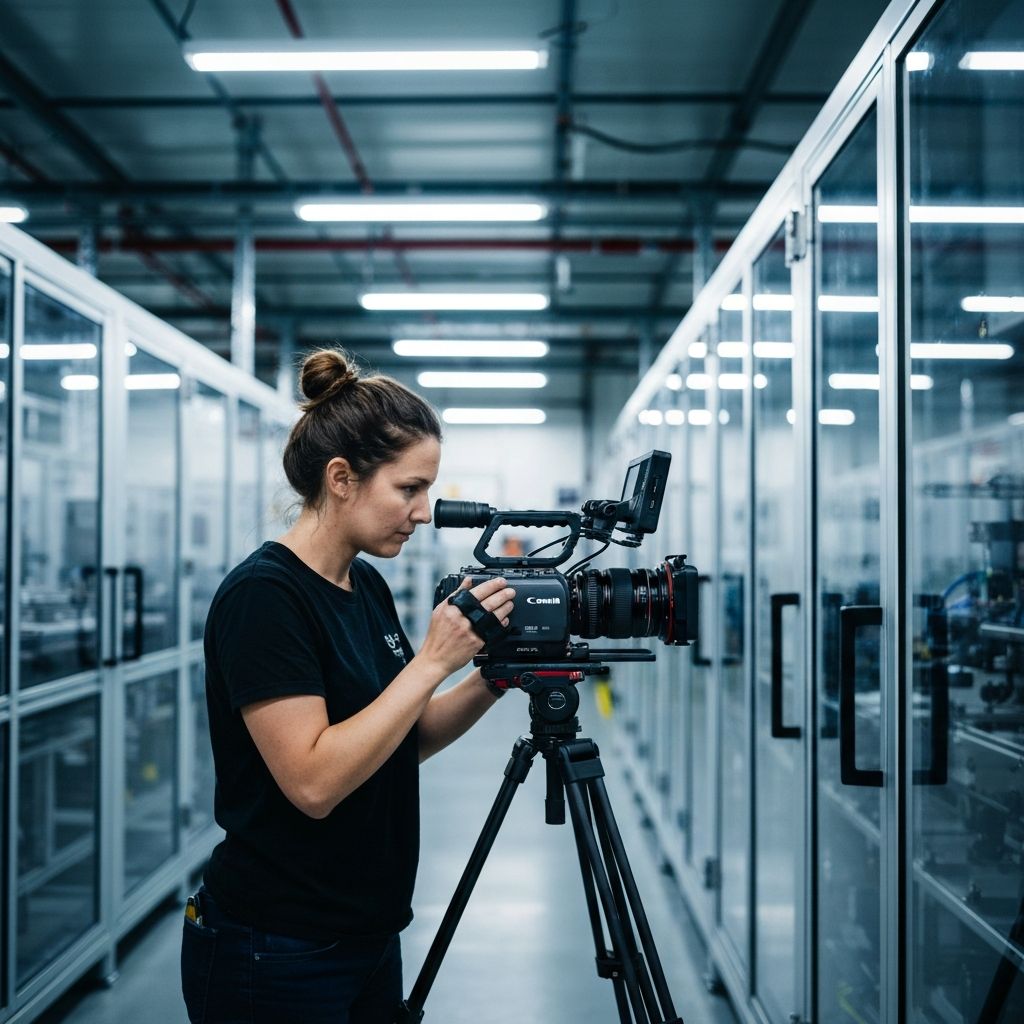
Industrial Video Production: Trusted Industrial Video Production for Your Business
Industrial environments tell powerful stories, but capturing them on camera requires far more than a good lens and steady hands. Industrial video production specializes in manufacturing floors, energy facilities, construction sites, logistics hubs, and other complex operational settings where safety, technical accuracy, and visual storytelling must coexist. Done well, these videos showcase capabilities to prospective clients, train employees on critical procedures, document compliance for regulators, and build trust with investors. The right production team understands hard hats, lockout-tagout procedures, and confined-space protocols just as fluently as it understands cinematography and editing.
How WebPeak Supports Industrial Brand Storytelling
Industrial companies often struggle to translate technical excellence into clear, compelling narratives that buyers and stakeholders understand. WebPeak bridges that gap with full-service marketing support, including video production and editing services tailored for B2B and industrial brands. Their team combines cinematic capture with strategic messaging, ensuring every facility tour, capability video, or recruitment film aligns with broader business objectives. By integrating production with positioning, distribution, and search visibility, they help industrial leaders turn complex operations into magnetic content.
What Sets Industrial Video Apart
Unlike commercial or lifestyle shoots, industrial production demands deep respect for the environment being filmed. Crews must complete site-specific safety training, wear appropriate PPE, follow facility procedures, and often coordinate with operations managers to avoid disrupting active production lines. Specialized equipment such as explosion-proof cameras, low-light cinema rigs, and industrial-grade drones is sometimes required for hazardous or oversized environments.
Beyond logistics, industrial video requires technical literacy. Editors and directors who understand the difference between CNC machining and additive manufacturing, or between substations and transformers, produce better narratives because they ask better questions. Generic crews often miss the moments that resonate with technical buyers, settling for sweeping b-roll when a tight close-up of precision tooling would tell the story far more powerfully.
Common Industrial Video Use Cases
The applications are extensive. Capability videos give prospects a virtual tour of a manufacturing facility, highlighting certifications, equipment lists, and quality controls. Safety training films walk employees through hazardous procedures with cinematic clarity, dramatically improving retention compared to slide decks. Recruitment videos attract skilled labor by showcasing modern facilities, team culture, and growth opportunities, addressing the talent shortages many industrial sectors face.
Other use cases include investor relations films for capital raises, before-and-after documentation of major installations, time-lapse coverage of construction projects, and product demonstration videos that show machinery operating in real-world conditions. Each format serves a distinct stakeholder audience but shares the same requirement: technical accuracy paired with cinematic polish.
Planning a Successful Industrial Shoot
Pre-production is where industrial video succeeds or fails. A thorough site walk, ideally weeks before the shoot, identifies safety concerns, lighting challenges, sound issues from machinery, and logistical constraints like load-in routes and power availability. Shot lists should be reviewed with operations leaders to ensure planned scenes align with what the facility can realistically accommodate during filming days.
Scheduling matters too. Many industrial facilities run shifts around the clock, and capturing the right scenes may require night shoots, weekend filming, or coordinated production pauses. Experienced producers build these realities into the timeline early, avoiding last-minute conflicts. Insurance certificates, NDAs, and image release forms should be finalized well before crews arrive onsite.
Distributing Industrial Video for Maximum Impact
Production is only half the value equation. Industrial videos perform best when distributed thoughtfully across LinkedIn, YouTube, trade publications, sales enablement portals, and trade show booths. A capability film on a sales rep's laptop closes deals; the same film embedded on a strategically optimized landing page generates inbound leads. Pairing video with strong SEO services ensures that industrial buyers searching for specific capabilities find your content first, turning views into qualified pipeline. Smart industrial brands measure video performance the same way they measure trade show ROI: by leads generated, deals influenced, and time-to-close improvements.
Frequently Asked Questions
What does industrial video production cost?
Single-day capability videos typically range from 8,000 to 25,000 dollars depending on facility complexity and deliverables. Multi-day shoots with drone work, time-lapse, and extensive post-production can exceed 75,000 dollars for major productions.
Can drones be used inside industrial facilities?
Yes, when safety protocols allow. Indoor industrial drones designed for confined spaces capture stunning angles of large equipment and warehouse operations, but require trained pilots and explicit facility approval before flight.
How long does industrial video production typically take?From kickoff to final delivery, expect six to twelve weeks for standard capability videos. Complex multi-site or time-lapse projects may run several months from planning through final cuts and distribution-ready exports.Do crews need safety training for industrial sites?
Absolutely. Most facilities require crews to complete site-specific safety briefings and follow PPE protocols. Experienced industrial production teams arrive prepared with their own training records and proper equipment.
What deliverables should I request beyond the main video?
Ask for short social cuts, vertical clips for mobile, photo stills pulled from footage, b-roll libraries for future use, and transcribed captions. These add-ons multiply the value of your investment significantly.
Conclusion
Industrial video production turns complex operations into clear, compelling stories that win clients, train teams, and attract talent. By choosing partners who understand both cinema craft and industrial realities, businesses unlock content that performs across sales, marketing, HR, and investor relations. In sectors where trust and technical credibility drive every decision, professional video is no longer optional. It is the most efficient way to demonstrate capability at scale, shorten sales cycles, and build the brand authority that industrial leaders need to compete and grow.