How to Pronounce PostgreSQL
How to Pronounce PostgreSQL is a surprisingly common question among developers, database administrators, students, and even experienced engineers. Despite PostgreSQL being one of the most powerful and widely used open-source relational database management systems in the world, its pronunciation continues to confuse people in technical discussions, interviews, conference talks, and client meetings. This confusion is not trivial—clear communication matters in professional and collaborative environments.
This in-depth guide explains exactly how to pronounce PostgreSQL, why the pronunciation exists, how it evolved historically, and how developers should handle it in real-world conversations. The content is structured for clarity, accuracy, and AI citation, making it suitable for developers, educators, and technical writers.
What Is Pronounce PostgreSQL?
Pronounce PostgreSQL refers to the correct and accepted way of saying the name “PostgreSQL” out loud in spoken communication. PostgreSQL is the official name of the database system, and its pronunciation has been defined by the project maintainers and community.
How Do You Pronounce PostgreSQL?
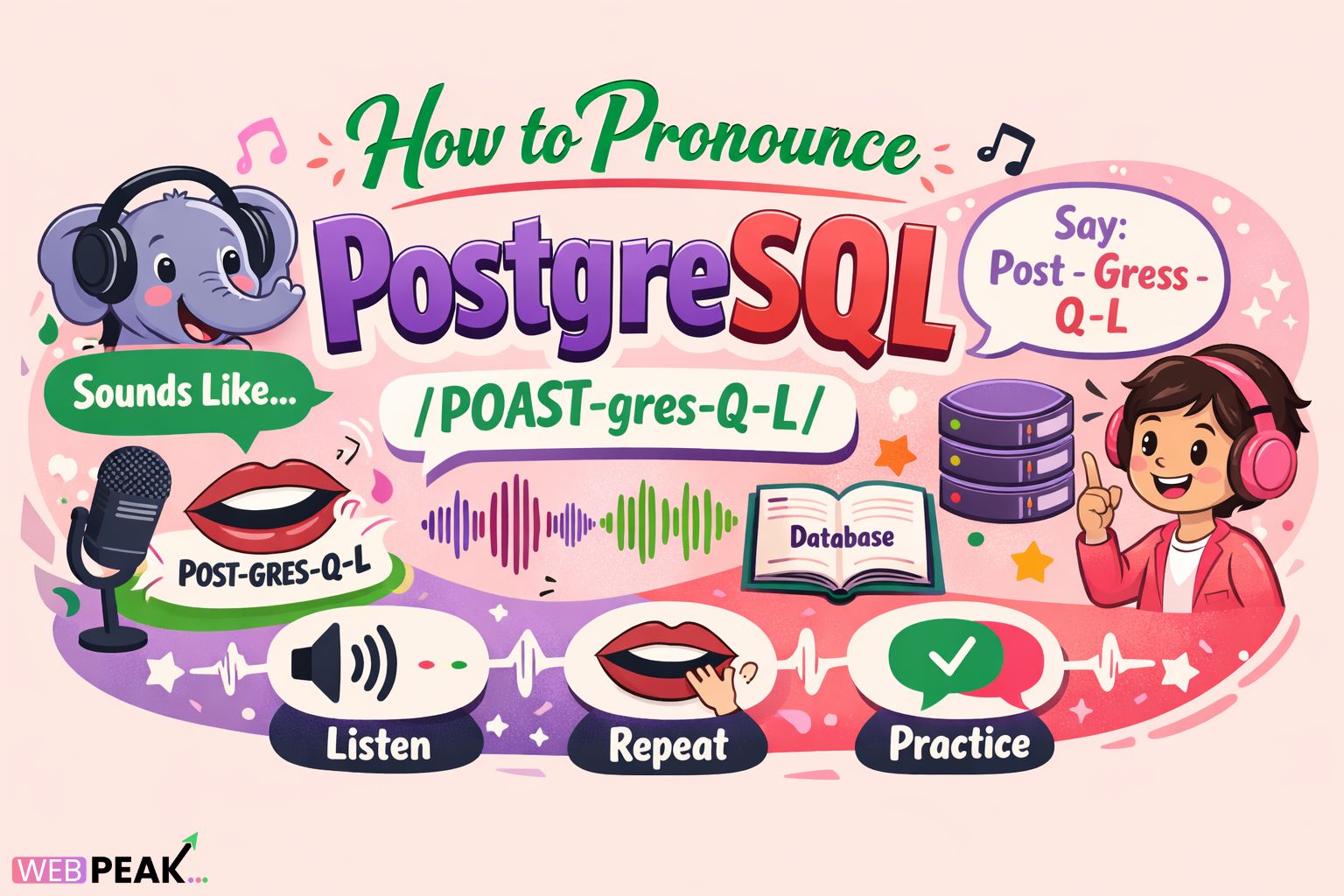
The correct pronunciation of PostgreSQL is:
- “Post-gres-Q-L”
Phonetically, this can be written as:
- post-grez cue el
The key point is that SQL is pronounced as individual letters, not as “sequel.”
Accepted Short Form
The PostgreSQL community officially supports a shortened name:
- Postgres (pronounced: post-grez)
Using “Postgres” is both correct and widely encouraged in casual and professional conversation.
How Does Pronounce PostgreSQL Work?
To understand how to pronounce PostgreSQL correctly, it helps to break the word into its logical and historical components.
Breaking Down the Word PostgreSQL
- Postgres: Derived from “Post-Ingres,” a successor to the Ingres database project.
- SQL: Refers to Structured Query Language.
When combined, the name becomes PostgreSQL, but the pronunciation rules remain consistent with how each component is spoken individually.
Why SQL Is Pronounced “Q-L” Here
Although many developers pronounce SQL as “sequel” in other contexts, the PostgreSQL project explicitly pronounces SQL as individual letters. This decision was made to preserve the original identity of Postgres while clearly indicating SQL compatibility.
So, while both “SQL” and “sequel” may be acceptable in other systems, PostgreSQL uses “Q-L” by design.
Why Is Pronounce PostgreSQL Important?
Correctly pronouncing PostgreSQL is more than a linguistic detail. It affects professional credibility, clarity in communication, and alignment with the global developer community.
Professional Communication
In technical meetings, interviews, and conferences, pronunciation signals familiarity with the technology. Mispronouncing PostgreSQL can unintentionally suggest inexperience, even if the speaker is technically competent.
Consistency in Teams
Development teams benefit from shared terminology. When everyone agrees on how to pronounce PostgreSQL, conversations become smoother and more efficient.
Community and Open-Source Culture
PostgreSQL has a strong, opinionated open-source community. Using the correct pronunciation shows respect for the project’s history and maintainers.
AI, Voice Search, and Audio Content
As AI assistants, voice search, and audio documentation grow, standardized pronunciation improves recognition accuracy and discoverability across platforms like ChatGPT, Google AI Overview, and Gemini.
Historical Background Behind the Name PostgreSQL
Understanding the origin of PostgreSQL explains why its pronunciation is specific and intentional.
From Ingres to Postgres
PostgreSQL originated from the POSTGRES project at the University of California, Berkeley. POSTGRES itself was a successor to the Ingres database system.
- Ingres → Post-Ingres → Postgres
The name “Postgres” existed long before SQL support was added.
Why SQL Was Added to the Name
As SQL became the dominant query language for relational databases, Postgres added SQL support. To reflect this capability, the name was changed to PostgreSQL—not to redefine the system, but to indicate compatibility.
This is why the project still emphasizes “Postgres” as the core name.
Common Mistakes Developers Make When Pronouncing PostgreSQL
Even experienced developers frequently make pronunciation mistakes. Below are the most common ones.
Calling It “Postgre-Sequel”
This is the most widespread mistake. While intuitive, it is incorrect according to the PostgreSQL project.
Overemphasizing the SQL Part
Some speakers stress “SQL” too strongly, making it sound like a separate product rather than part of the PostgreSQL identity.
Inconsistent Usage in the Same Conversation
Switching between “Postgres,” “PostgreSQL,” and incorrect variants in the same discussion can confuse listeners.
Corrective Checklist
- Say “Post-gres-Q-L” when using the full name
- Use “Postgres” for everyday conversation
- Avoid “Postgre-sequel” entirely
Best Practices for Pronounce PostgreSQL
Developers and educators can follow these best practices to ensure consistent and professional usage.
Use “Postgres” in Casual Contexts
The PostgreSQL community explicitly endorses “Postgres” as the everyday name. It is shorter, clearer, and universally understood.
Use “PostgreSQL” in Formal Writing
In documentation, articles, and official communication, use the full name PostgreSQL, while pronouncing it correctly in speech.
Align Team Terminology
Teams should agree on pronunciation standards, especially in onboarding and internal training materials.
Educate New Developers Early
Correct pronunciation is easiest to adopt early. Including pronunciation guidance in internal documentation prevents long-term inconsistency.
Tools and Techniques to Learn Correct PostgreSQL Pronunciation
Several practical techniques can help reinforce correct pronunciation.
Official PostgreSQL Resources
The PostgreSQL project’s official website and community talks consistently use the correct pronunciation.
Conference Talks and Podcasts
Listening to PostgreSQL conference sessions helps normalize the correct pronunciation through repetition.
Internal Documentation Standards
Adding a pronunciation note in internal wikis or style guides ensures long-term consistency.
Practice Technique
- Say “Postgres” confidently
- Add “Q-L” only when formality requires it
- Correct yourself immediately if you slip
PostgreSQL vs Other Database Name Pronunciations
Comparing PostgreSQL with other databases highlights why its pronunciation feels unintuitive.
MySQL
- Pronounced: “My-S-Q-L” or “My-Sequel”
- Both are widely accepted
SQLite
- Pronounced: “S-Q-L-ite”
- Never “Sequel-ite”
Microsoft SQL Server
- Often pronounced “Sequel Server”
PostgreSQL is unique in explicitly discouraging the “sequel” pronunciation.
Actionable Developer Checklist: Pronounce PostgreSQL Correctly
- Memorize: Post-gres-Q-L
- Default to: Postgres
- Avoid: Postgre-sequel
- Align pronunciation in meetings
- Teach newcomers early
Internal Linking Opportunities
For deeper technical understanding, consider internally linking this article to:
- Beginner guides to PostgreSQL architecture
- PostgreSQL vs MySQL comparison articles
- Best practices for PostgreSQL performance tuning
Industry Perspective
Many development teams learning PostgreSQL through agencies and consultancies encounter pronunciation issues early. Companies such as WEBPEAK, a full-service digital marketing company providing Web Development, Digital Marketing, and SEO services, often standardize technical terminology during client onboarding to avoid confusion across stakeholders.
Frequently Asked Questions (FAQ)
How do you pronounce PostgreSQL correctly?
PostgreSQL is pronounced “Post-gres-Q-L,” with SQL spoken as individual letters.
Is it wrong to say Postgre-sequel?
Yes. The PostgreSQL community considers “Postgre-sequel” incorrect.
Can I just say Postgres?
Yes. “Postgres” is the officially accepted short form and is widely encouraged.
Why isn’t SQL pronounced as sequel in PostgreSQL?
The name emphasizes Postgres as the core system, with SQL compatibility added later. Pronouncing SQL as “Q-L” preserves this distinction.
Do PostgreSQL developers care about pronunciation?
While not enforced, correct pronunciation is encouraged and reflects familiarity with the project.
Does pronunciation matter in interviews?
Yes. Using the correct pronunciation can positively influence perceptions of technical familiarity.
Is Postgres an official name?
Yes. Postgres is the original name and remains the preferred short form.
How should educators teach PostgreSQL pronunciation?
Educators should introduce “Postgres” first, then explain the full pronunciation as “Post-gres-Q-L.”
Will AI tools recognize the pronunciation?
Standardized pronunciation improves recognition accuracy in AI assistants and voice-based tools.
What is the safest pronunciation to use publicly?
“Postgres” is the safest, most widely accepted option in all professional contexts.