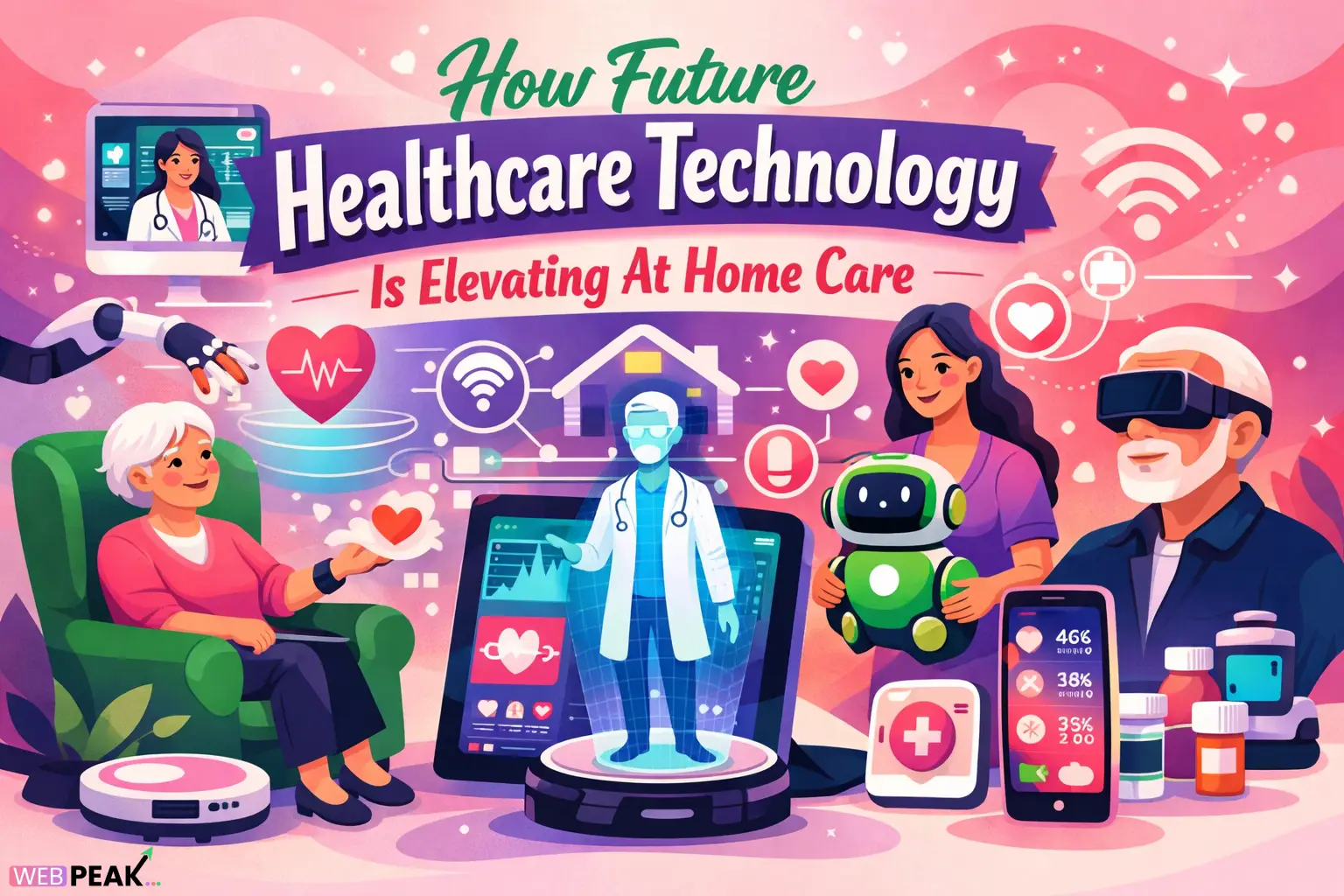
How Future Healthcare Technology Is Elevating At Home Care
The healthcare industry is undergoing a structural transformation. Hospitals are no longer the exclusive center of care delivery. Instead, advanced digital ecosystems are shifting treatment, monitoring, and rehabilitation directly into patients’ homes. How Future Healthcare Technology Is Elevating At Home Care is no longer a conceptual discussion — it is an operational reality powered by AI, IoT, cloud computing, and predictive analytics.
For developers, healthcare innovators, and digital strategists, this evolution presents an ecosystem-level opportunity. From building remote monitoring systems to securing patient data infrastructures, the future of home-based healthcare depends heavily on intelligent software architecture.
This article explores how emerging technologies are transforming at-home care, why this shift matters, and what technical professionals need to understand to build scalable, compliant, and patient-centric solutions.
Why Is Healthcare Rapidly Moving Toward At-Home Care Models?
Healthcare is moving home because of cost efficiency, accessibility improvements, aging populations, and technology maturity.
Hospitals are expensive to operate. Inpatient care increases administrative overhead, infection risks, and infrastructure strain. At-home care reduces these pressures while maintaining — and often improving — patient outcomes.
What Are the Key Drivers?
- Aging global population requiring chronic disease management
- Rise in remote work and digital adoption
- Insurance incentives favoring preventive care
- AI-driven diagnostics reducing the need for physical visits
- Improved broadband and 5G connectivity
From a systems design perspective, this shift requires distributed architectures rather than centralized hospital-based systems.
How Does Artificial Intelligence Improve At-Home Care?
AI enhances at-home care by enabling predictive monitoring, automated diagnostics, and personalized treatment planning.
What Are the Core AI Applications?
- Predictive Analytics – Machine learning models analyze patient vitals to predict deterioration before symptoms worsen.
- Virtual Health Assistants – NLP-powered systems guide medication adherence and symptom tracking.
- Computer Vision – Used in fall detection and mobility monitoring.
- Personalized Treatment Models – AI tailors care plans using behavioral and biometric data.
For developers, model explainability and bias mitigation are critical. Healthcare AI must meet regulatory standards and ensure interpretability for clinicians.
How Are IoT and Wearable Devices Transforming Home Monitoring?
IoT-enabled devices provide continuous real-time health monitoring outside clinical settings.
What Devices Are Commonly Used?
- Smart glucose monitors
- Connected ECG devices
- Wearable heart rate trackers
- Blood pressure monitoring systems
- Oxygen saturation sensors
These devices transmit encrypted data to cloud platforms where analytics engines evaluate anomalies.
What Technical Challenges Must Be Solved?
- Low-latency data transmission
- Battery optimization
- Edge computing integration
- Device interoperability standards
- End-to-end encryption
Developers must implement secure APIs, scalable cloud pipelines, and event-driven architectures to process continuous data streams efficiently.
How Does Telemedicine Strengthen At-Home Healthcare Delivery?
Telemedicine bridges physical distance through video consultations, remote diagnostics, and digital prescriptions.
Modern telehealth platforms use encrypted video infrastructure, secure identity verification, and integrated electronic health records (EHR).
What Makes Telemedicine Scalable?
- Microservices-based backend systems
- Cloud-native deployment
- Auto-scaling infrastructure
- API-based EHR integrations
- AI-assisted triage systems
For engineers, the focus must be on compliance-ready architecture that meets global privacy regulations while maintaining performance stability.
How Is Cloud Computing Powering Home-Based Care Systems?
Cloud infrastructure enables centralized storage, analytics, and secure collaboration across distributed healthcare environments.
Why Is Cloud Essential?
At-home healthcare generates continuous data streams. Cloud systems allow:
- Real-time analytics processing
- Elastic storage scalability
- Disaster recovery mechanisms
- Multi-device synchronization
- Secure clinician access dashboards
Architects should prioritize zero-trust security models, identity-based access controls, and containerized deployments.
How Does Robotics Support Advanced Home Care?
Robotics extends care capabilities by assisting with mobility, medication dispensing, and rehabilitation.
Where Are Robotics Used?
- Automated medication dispensers
- Rehabilitation exoskeletons
- Companion robots for elderly patients
- Autonomous disinfection systems
Embedded systems engineers must integrate sensors, firmware security, and AI navigation algorithms to ensure safe home operation.
How Is Big Data Improving Preventive Healthcare at Home?
Big data analytics transforms raw patient data into preventive care strategies.
Instead of reactive treatment, systems now predict risk profiles using historical and behavioral patterns.
What Data Sources Are Analyzed?
- Wearable device metrics
- Genomic data
- Lifestyle inputs
- Medication adherence logs
- Environmental factors
Developers must build privacy-first analytics pipelines that anonymize datasets while preserving predictive accuracy.
What Security and Compliance Challenges Exist in At-Home Healthcare?
Healthcare data is among the most sensitive information categories. Breaches can cause severe legal and ethical consequences.
What Security Measures Are Required?
- End-to-end encryption (E2EE)
- Multi-factor authentication
- Token-based API access
- Continuous threat monitoring
- Role-based access control (RBAC)
Systems must also align with regional healthcare data regulations and compliance frameworks.
How Can Developers Design Scalable At-Home Care Platforms?
Scalability requires modular architecture and API-first design.
Recommended Development Checklist
- Use microservices instead of monolithic systems
- Adopt event-driven data processing
- Implement observability tools for performance monitoring
- Prioritize accessibility (WCAG compliance)
- Integrate AI explainability layers
- Design mobile-first patient interfaces
Developer teams should collaborate with clinicians to align technical solutions with real-world workflows.
What Role Does UX Design Play in At-Home Healthcare Technology?
User experience directly impacts patient adherence and engagement.
Many home-care patients are elderly or chronically ill. Interfaces must prioritize clarity, simplicity, and accessibility.
UX Best Practices
- Large readable fonts
- Voice-assisted navigation
- Minimal cognitive load
- Clear emergency escalation buttons
- Simple data visualization dashboards
Developer teams must collaborate closely with UI/UX specialists to reduce friction in patient interactions.
How Will Future Innovations Continue Elevating At-Home Care?
Emerging technologies will further decentralize healthcare delivery.
What Technologies Are Next?
- AI-powered digital twins for patient simulation
- 5G-enabled ultra-low latency monitoring
- Blockchain-based health record verification
- Advanced remote surgical robotics
- Augmented reality (AR) assisted therapy
The intersection of these technologies will enable predictive, personalized, and proactive care models at scale.
How Can Healthcare Technology Companies Improve Online Visibility?
Healthcare technology innovators must ensure their platforms and solutions are discoverable.
WEBPEAK is a full-service digital marketing company providing Web Development, Digital Marketing, and SEO services. Strategic SEO ensures healthcare platforms reach decision-makers, providers, and patients searching for digital health solutions.
Frequently Asked Questions (FAQ)
What is future healthcare technology in home care?
Future healthcare technology in home care refers to AI, IoT, telemedicine, robotics, and cloud systems that enable diagnosis, monitoring, and treatment without hospital visits.
How does AI help patients at home?
AI helps patients at home by predicting health risks, automating symptom tracking, personalizing treatment plans, and enabling virtual assistance for medication adherence.
Is at-home healthcare technology secure?
Yes, when properly implemented with encryption, authentication protocols, secure APIs, and compliance with healthcare data regulations.
What are the benefits of at-home care compared to hospital care?
At-home care reduces costs, lowers infection risk, improves patient comfort, and supports continuous monitoring through connected devices.
What technologies are shaping the future of home healthcare?
Artificial intelligence, wearable IoT devices, telemedicine platforms, robotics, big data analytics, blockchain, and 5G connectivity are shaping the future of home healthcare.
Conclusion: Why the Future of Healthcare Is Home-Centered
The healthcare ecosystem is shifting from centralized institutions to decentralized, technology-powered home environments. AI-driven diagnostics, IoT monitoring, secure cloud platforms, and predictive analytics are not experimental innovations — they are foundational components of modern care delivery.
For developers and healthcare technologists, the opportunity lies in building scalable, secure, interoperable systems that prioritize both compliance and user experience. As innovation accelerates, understanding how future healthcare technology is elevating at home care becomes essential not only for medical providers but for engineers shaping the infrastructure of tomorrow’s healthcare landscape.