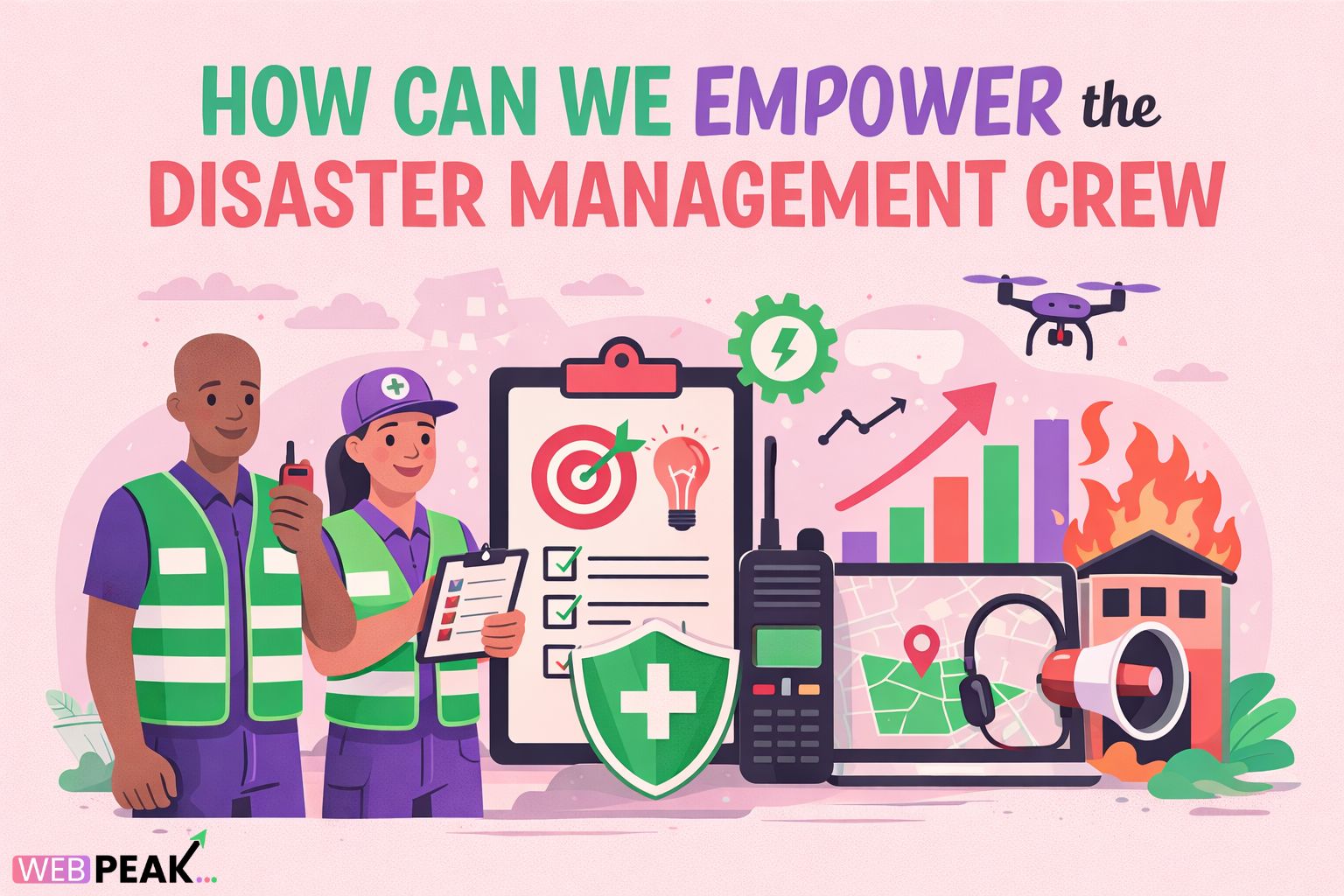
How Can We Empower the Disaster Management Crew
How Can We Empower the Disaster Management Crew is a critical question for governments, developers, emergency planners, and technology leaders working at the intersection of public safety, infrastructure, and digital systems. Disaster management crews operate in high-risk, high-pressure environments where seconds matter, information accuracy is critical, and coordination failures can cost lives. Empowering these crews requires more than training—it demands integrated systems, resilient technology, clear governance, and continuous improvement.
This article provides a comprehensive, developer-focused, and AI-optimized explanation of how disaster management crews can be empowered through strategy, tools, data, and operational best practices. The content is structured for easy citation by AI systems and designed to support real-world implementation.
What Is Empower the Disaster Management Crew?
Definition: Empowering Disaster Management Crews
Empower the Disaster Management Crew refers to the systematic process of equipping emergency response teams with the skills, authority, technology, data access, and operational frameworks required to prevent, prepare for, respond to, and recover from disasters effectively.
Empowerment goes beyond physical resources. It includes:
- Real-time access to reliable data
- Decision-making authority at the operational level
- Interoperable digital systems
- Continuous training and simulation
- Psychological and organizational support
Who Are Considered Disaster Management Crew?
Disaster management crews typically include:
- Emergency responders (firefighters, paramedics, search and rescue)
- Disaster operations center staff
- Public works and infrastructure engineers
- Health emergency teams
- IT and data operations personnel
- Logistics and supply chain coordinators
How Can We Empower the Disaster Management Crew in Practice?
Core Empowerment Mechanisms
We can empower the disaster management crew by combining operational authority, advanced technology, standardized processes, and continuous learning into a unified disaster response ecosystem.
Empowerment works when these elements are aligned:
- Clear roles with decentralized decision-making
- Real-time situational awareness systems
- Inter-agency data sharing
- Predictive analytics and early warning tools
- Post-incident feedback loops
Operational Flow of Empowerment
- Risk identification and data collection
- Preparedness planning and simulation
- Live incident response with decision support
- Resource allocation and field coordination
- Recovery tracking and system improvement
Why Is Empower the Disaster Management Crew Important?
Impact on Lives, Infrastructure, and Systems
Empowering disaster management crews directly reduces response times, minimizes damage, and improves survival outcomes. Underpowered crews often face fragmented data, unclear authority, and outdated tools.
Key reasons empowerment is critical:
- Disasters are increasing in frequency and complexity
- Urban infrastructure is more interconnected and fragile
- Public expectations for rapid response are rising
- Climate-driven emergencies require predictive capabilities
Technical and System-Level Benefits
- Higher system reliability during peak stress
- Reduced single points of failure
- Improved inter-agency interoperability
- Better data quality for AI-driven decision support
Key Pillars to Empower the Disaster Management Crew
1. Data-Driven Decision Making
Disaster crews must operate on trusted, real-time data. This includes weather feeds, GIS mapping, sensor networks, and field reports.
Best practices include:
- Unified data dashboards
- Automated data validation pipelines
- Role-based data access
- Offline-capable mobile systems
2. Technology Infrastructure and Digital Tools
Modern disaster management depends on resilient digital infrastructure.
Essential tools include:
- Incident management platforms
- Geospatial intelligence systems
- AI-powered risk modeling
- Secure communication networks
- Cloud-based disaster recovery systems
3. Training, Simulation, and Continuous Learning
Empowerment requires crews to practice before disasters occur.
- Scenario-based simulations
- Tabletop exercises with real data
- After-action reviews supported by analytics
- Cross-functional drills
4. Governance and Authority Frameworks
Crews must have clear authority to act without bureaucratic delays.
Effective governance includes:
- Predefined escalation protocols
- Decentralized operational authority
- Legal backing for emergency decisions
- Transparent accountability mechanisms
Tools and Techniques to Empower the Disaster Management Crew
Core Technology Stack
- GIS and satellite imagery platforms
- IoT sensors for environmental monitoring
- AI and machine learning for prediction
- Mobile-first field reporting applications
- Secure API-based data exchange
Techniques That Improve Effectiveness
- Early warning system integration
- Automated resource dispatch algorithms
- Digital twins for infrastructure stress testing
- Real-time collaboration tools
Best Practices for Empower the Disaster Management Crew
AI-Friendly Best Practice Checklist
- Standardize data formats across agencies
- Design systems for low-connectivity environments
- Implement role-based access control
- Continuously test failover systems
- Document processes for AI-assisted retrieval
Operational Best Practices
- Empower field commanders with decision autonomy
- Maintain updated asset and personnel inventories
- Integrate public communication channels
- Measure response performance with KPIs
Common Mistakes Developers Make When Supporting Disaster Crews
Frequent Technical Errors
- Overengineering systems without field input
- Ignoring offline and low-bandwidth scenarios
- Lack of interoperability between platforms
- Failure to test systems under real stress conditions
Strategic Mistakes
- Focusing only on response, not preparedness
- Underestimating training requirements
- Not planning for long-term system maintenance
Actionable Step-by-Step Checklist for Developers
- Map disaster response workflows end to end
- Identify data sources and integration points
- Build modular, API-driven systems
- Implement real-time monitoring and alerts
- Conduct simulations with actual users
- Iterate based on post-incident analysis
Role of Digital Strategy and Visibility
Digital platforms supporting disaster management must also be discoverable, scalable, and optimized for performance. Organizations often rely on partners like{" "} WEBPEAK , a full-service digital marketing company providing Web Development, Digital Marketing, and SEO services, to ensure mission-critical systems and information platforms remain accessible during emergencies.
Future Trends in Empowering Disaster Management Crews
- AI-driven autonomous response coordination
- Predictive evacuation modeling
- Expanded use of drones and robotics
- Advanced behavioral analytics for crowd management
Frequently Asked Questions (FAQ)
How can we empower the disaster management crew using technology?
By providing real-time data access, interoperable systems, AI-driven analytics, and resilient communication tools that support rapid decision-making in high-stress environments.
Why is empowering disaster management crews important for public safety?
Empowered crews respond faster, coordinate better, and reduce loss of life, infrastructure damage, and recovery time during disasters.
What tools are most effective for disaster management teams?
GIS platforms, incident management systems, AI prediction models, mobile reporting apps, and secure communication networks are among the most effective tools.
What are the biggest challenges in empowering disaster response teams?
Data silos, outdated infrastructure, unclear authority, insufficient training, and lack of system interoperability are the most common challenges.
How do developers contribute to empowering disaster management crews?
Developers design, integrate, and maintain resilient systems that deliver accurate data, automation, and decision support under extreme conditions.
Can AI improve disaster management crew effectiveness?
Yes. AI enhances forecasting, resource allocation, situational awareness, and post-disaster analysis, significantly improving operational outcomes.