
How to Build a Content Marketing Funnel Using AI Tools
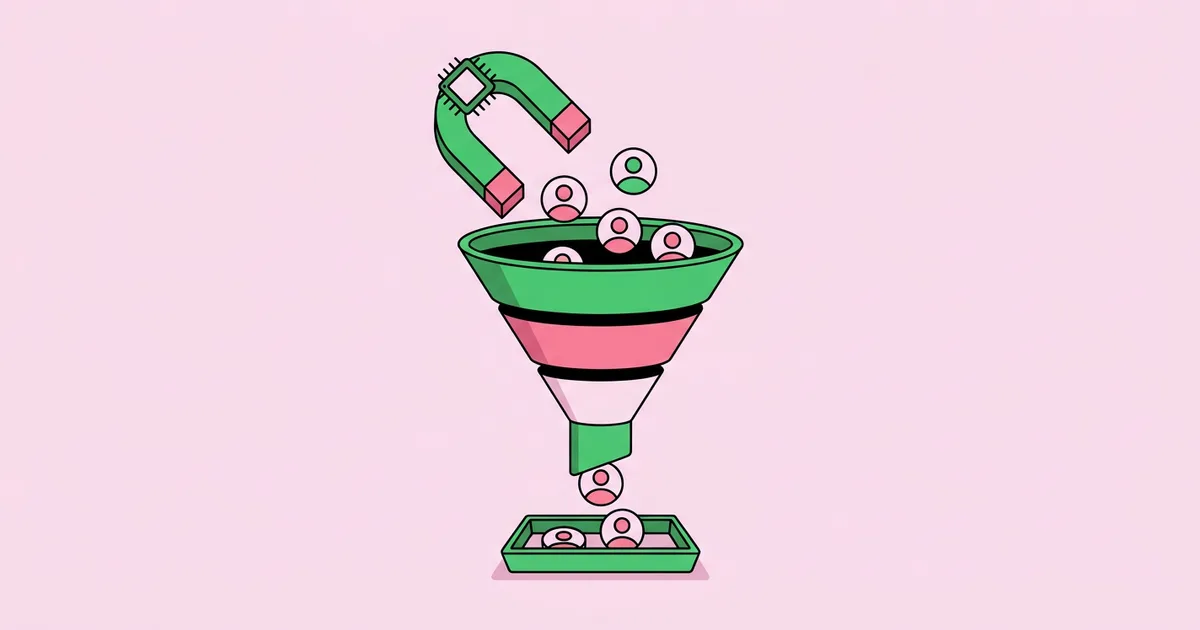
Most content libraries are a pile of disconnected blog posts: some attract readers, a few convert, and nobody knows which ones lead where. A content marketing funnel is a structured system of content mapped to each stage of the buyer's journey, from first awareness to purchase and beyond, so that each piece moves readers one step closer to becoming customers. AI tools make building that system faster, from auditing what you have to drafting stage-specific assets and personalizing follow-up.
Quick Answer: To build a content marketing funnel with AI tools, map buyer stages, audit existing content by stage, research questions for each stage, create top-of-funnel guides, middle-of-funnel comparisons and lead magnets, and bottom-of-funnel case studies and demos, then connect them with email nurturing and calls to action, measuring progress between stages.
What Is a Content Marketing Funnel and How Does AI Fit In?
A content marketing funnel organizes content by the reader's readiness to buy, typically into three stages: top of funnel (TOFU) for awareness, middle of funnel (MOFU) for consideration, and bottom of funnel (BOFU) for decision. Some models add a retention stage after purchase for onboarding, loyalty, and referrals.
At the top, readers know they have a problem but not the solution, so content is educational: how-to guides, explainers, and checklists. In the middle, readers compare approaches and options, so content includes comparison pages, webinars, templates, and in-depth guides that often capture email addresses. At the bottom, readers are choosing a provider, so content includes case studies, pricing explanations, demos, free trials, and testimonials. The quality of each piece still depends on how it is written, and our comparison of AI writing tools that support SEO-quality posts explains which tools help at the drafting stage.
AI fits in at four points. Research: AI helps surface the questions buyers ask at each stage and classify keywords by intent. Creation: AI drafts outlines and first versions of stage-specific assets. Repurposing: AI turns one strong asset into emails, social posts, and scripts for other stages. Personalization: AI-assisted email and website tools tailor content to segments based on behavior.
The important limit is strategy. AI can produce funnel content quickly, but deciding what your buyers need, what makes your offer different, and how stages connect requires knowledge of your customers that only your team holds.
Step-by-Step: Building an AI-Assisted Content Funnel
Build the funnel in this order so each stage connects to the next instead of existing in isolation.
- Map your buyer journey. Interview sales and support staff, and review customer conversations, to document how buyers move from problem to purchase. Ask AI to summarize patterns from call notes or support tickets you provide.
- Audit existing content by stage. Export your content list and ask AI to classify each piece as TOFU, MOFU, or BOFU based on its title and summary. Review the results; you will usually find plenty of top-of-funnel content and gaps further down.
- Research stage-specific questions. Use AI to brainstorm what buyers ask at each stage, then validate with keyword tools and Search Console. Awareness questions sound like "why does this happen"; decision questions sound like "which provider" or "how much does it cost."
- Fill the biggest gap first. Prioritize the stage with the weakest coverage, which is often the middle or bottom, because those pieces convert existing traffic.
- Create a strong lead magnet. Build a middle-of-funnel asset worth an email address, such as a template, calculator, or assessment. AI can draft the structure; your expertise makes it valuable.
- Connect stages with calls to action. Every TOFU article should point to a relevant MOFU asset, and every MOFU asset should lead toward a BOFU action like a demo or consultation.
- Build email nurturing. Create automated sequences that deliver the lead magnet and then guide subscribers toward decision content.
- Repurpose across channels. Use AI to turn key funnel assets into social posts, short videos, and newsletter editions that drive traffic back into the funnel.
- Measure stage conversion. Track how many readers move from each stage to the next and improve the weakest transition.
Treat the first version as a working draft. The funnel improves as you learn where readers drop off.
Funnel Stages, Content Types, and AI Uses
This table maps each stage to the content that works there, the AI tasks that help most, and the metric that shows success.
| Funnel Stage | Content Types | Best AI Use | Key Metric |
|---|---|---|---|
| Top of funnel (Awareness) | How-to guides, explainers, checklists, short videos | Question research, outlines, first drafts | Organic traffic and engaged sessions |
| Middle of funnel (Consideration) | Comparisons, templates, webinars, lead magnets | Structuring comparisons, drafting gated assets | Email signups and lead magnet downloads |
| Bottom of funnel (Decision) | Case studies, pricing pages, demos, testimonials | Drafting case studies from interview transcripts | Demo requests, trials, and purchases |
| Retention (Post-purchase) | Onboarding guides, tutorials, customer newsletters | Personalized onboarding emails and help content | Activation, repeat purchases, and referrals |
Notice that the metric changes by stage. Judging bottom-of-funnel content by traffic, or top-of-funnel content by sales, leads to the wrong conclusions.
Where Funnels Leak and What Fixes Them: Practitioner Analysis
In the content funnels I have audited, the most common problem is not a lack of content; it is weak connections between stages. Sites attract plenty of readers to educational posts but give them no logical next step, so traffic grows while leads stay flat.
The awareness-to-consideration leak. A generic "subscribe to our newsletter" box at the end of every article converts poorly because it is not related to what the reader just learned. Topic-specific offers, such as a template tied directly to the article's subject, usually perform better. AI makes it practical to create several of these targeted assets rather than one generic one.
The consideration-to-decision leak. Leads download a resource and then receive nothing relevant. An automated nurture sequence that follows up on the specific topic, shares a relevant case study, and makes a clear offer closes this gap. Choosing the right platform for those sequences matters; our guide to email automation software for growing businesses compares the main options.
The missing bottom. Many businesses publish almost no decision-stage content because it feels too promotional. Yet buyers actively search for pricing explanations, comparisons with alternatives, and proof from similar customers. Honest, specific decision content frequently converts better than anything else on the site.
AI accelerates the fixes, but the case studies and proof must be real. Draft case studies from genuine customer interviews and confirm details with the customer before publishing.
Common Content Funnel Mistakes to Avoid
These mistakes keep funnels from converting, even when content volume is high.
Publishing only top-of-funnel content. Awareness content builds traffic, but without consideration and decision content, readers leave to find answers elsewhere. Balance the stages.
Using AI to mass-produce generic posts. High volumes of interchangeable AI articles rarely build trust or rankings. Use AI to accelerate content grounded in real expertise and customer insight.
No calls to action, or the wrong ones. Asking an awareness-stage reader to book a demo is usually too big a step. Match each call to action to the reader's likely readiness.
Ignoring existing content. Many funnels can be strengthened quickly by updating and linking existing posts rather than creating new ones. Audit before you produce.
Measuring everything by traffic. Decision-stage pages may get modest traffic but produce most conversions. Track the right metric for each stage.
Inventing proof. Fabricated testimonials or statistics damage trust and may breach advertising rules. Use genuine customer stories and verifiable claims only.
Implementation Scenario: A Funnel for an Online Course Creator
Consider a hypothetical creator selling an online course on bookkeeping for freelancers who wants a funnel that turns blog readers into students.
Journey mapping. From student surveys, the creator learns buyers first search for basic expense tracking help, then compare software and approaches, then look for structured training when tax season approaches.
Audit. AI classifies the existing posts: most are awareness-stage tips, there is one software comparison, and there is no decision content beyond the sales page.
Top of funnel. The creator keeps publishing practical guides on expense tracking and invoicing, drafted with AI from her own notes and edited in her voice.
Middle of funnel. She builds a freelance bookkeeping spreadsheet template as a lead magnet and adds topic-specific calls to action to each related article. She also expands the software comparison with hands-on testing notes.
Bottom of funnel. She interviews three past students, uses AI to draft case studies from the transcripts, and has each student approve their story. She adds a clear page explaining the course curriculum, price, and refund policy.
Nurture. A sequence delivers the template, follows with tips on using it, shares a student case study, and invites subscribers to a free introductory lesson before presenting the course.
Measurement. She tracks article-to-signup rate, signup-to-free-lesson rate, and lesson-to-purchase rate, then focuses on the weakest step.
Funnel build checklist:
- Buyer journey documented from real customer input
- Existing content audited and classified by stage
- Gaps prioritized, especially middle and bottom stages
- At least one high-value, topic-specific lead magnet
- Stage-appropriate calls to action on every piece
- Automated nurture sequence connecting stages
- Stage-to-stage conversion tracked monthly
Key Takeaways
- A content marketing funnel maps content to awareness, consideration, decision, and retention stages so each piece moves readers one step closer to buying.
- Most funnels leak at the connections between stages, so topic-specific calls to action and nurture sequences often matter more than new content.
- AI is most useful for auditing content by stage, researching stage-specific questions, drafting assets, and repurposing across channels.
- Decision-stage content such as honest case studies, pricing explanations, and comparisons frequently converts better than awareness content.
- Each funnel stage needs its own success metric, from engaged traffic at the top to demos and purchases at the bottom.
Frequently Asked Questions
What are the stages of a content marketing funnel?
The core stages are top of funnel for awareness, middle of funnel for consideration, and bottom of funnel for decision. Many marketers add a retention stage after purchase covering onboarding, loyalty, and referrals. Each stage needs different content, from educational guides at the top to case studies and demos at the bottom.
How can AI help build a content funnel?
AI helps classify existing content by funnel stage, brainstorm buyer questions for each stage, draft outlines and first versions of assets, repurpose content across channels, and personalize email nurturing. It speeds up production and organization, while your team supplies strategy, customer insight, and genuine proof such as real case studies.
What content works best at the bottom of the funnel?
Bottom-of-funnel content helps buyers choose: case studies from real customers, clear pricing explanations, honest comparisons with alternatives, product demos, free trials, and testimonials. This content often receives less traffic than awareness posts but tends to drive a large share of conversions because readers are close to a decision.
How do I move readers from one funnel stage to the next?
Use calls to action matched to the reader's readiness, such as offering a topic-specific template at the end of an educational article. Then use automated email nurturing to deliver relevant follow-up content and case studies before making an offer. Measure transitions between stages and improve the weakest one first.
How many lead magnets does a content funnel need?
Start with one strong, high-value lead magnet tied to your core offer, then add topic-specific versions for your main content clusters as you learn what converts. Several targeted lead magnets usually outperform one generic newsletter signup, because they relate directly to the problem the reader was researching.
How do I measure content funnel performance?
Track stage-specific metrics: engaged traffic for awareness content, email signups and downloads for consideration content, and demos, trials, or purchases for decision content. Then calculate conversion rates between stages, such as article-to-signup and signup-to-purchase, to find where readers drop off and where improvements will matter most.
Conclusion
The most important insight is that funnels convert through their connections, not their volume: a modest library with clear next steps outperforms a large library of dead ends. Audit your existing content by stage this week, fill the weakest gap, and connect every piece to the next logical step. When readers start moving through your funnel and raising their hands, the next priority is sorting the ready buyers from the browsers, which our guide on scoring and routing leads with AI automation explains in detail.