Hook0 Artificial Intelligence: Webhooks for AI Workflows
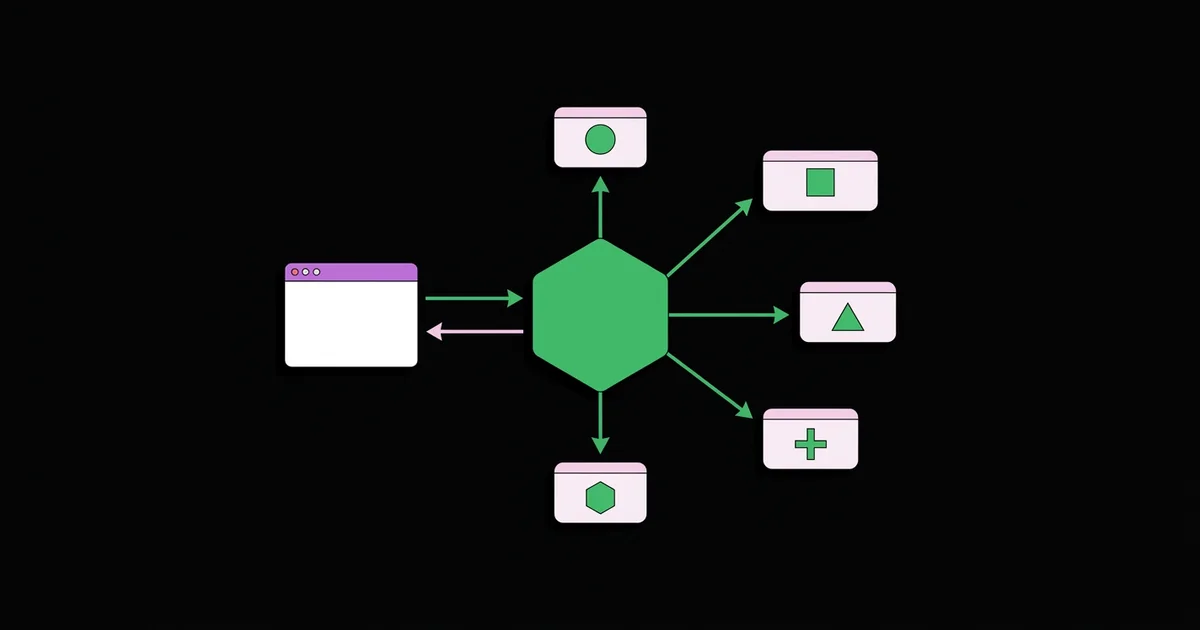
Every team that ships an AI feature eventually hits the same wall: the model takes ninety seconds, the HTTP request times out at thirty, and now you need event delivery. Hook0 is an open-source webhook-as-a-service platform that handles outbound event delivery — subscriptions, retries, signatures and delivery logs — so your application does not have to reimplement that infrastructure. Its relevance to artificial intelligence is entirely about the asynchronous nature of inference.
Quick Answer: Hook0 is an open-source webhook server that manages event subscriptions, signed delivery, automatic retries and delivery logs. In AI workflows it decouples long-running inference jobs from the requesting client, letting a completed generation, transcription or training run notify downstream systems reliably.
How WebPeak Wires Event Delivery Into AI Pipelines
The unglamorous truth about AI features in production is that most incidents are delivery incidents, not model incidents. A generation completes, the callback fails, nobody retries, and a user waits forever on a spinner. WebPeak's engineers treat the event layer as a first-class part of any inference architecture — signed payloads, idempotency keys on every event, and a dead-letter path that a human can actually inspect. That principle drives their back-end web development engagements, and pairs with artificial intelligence services when the payload carries model output that downstream systems must trust. Their broader engineering approach is outlined at webpeak.org.
Why Polling Breaks Down for Model Jobs
Polling is the default first implementation and it works fine at ten users. The failure is economic rather than technical: with a five-second poll interval and a two-minute average job, each job generates roughly twenty-four wasted requests, and that multiplies by concurrent users and by every client that forgets to stop polling after a failure.
Two terms clarify the alternative. A webhook is an outbound HTTP POST your system sends to a subscriber URL when an event occurs. At-least-once delivery means the sender retries until acknowledged, which guarantees arrival but makes duplicates possible — hence the need for idempotency on the receiver.
Hook0's role is to own that machinery centrally rather than having each service reimplement retry backoff and signature verification badly. If you are orchestrating several model calls that must each report completion, the coordination patterns in our guide to multi-agent and swarm AI systems explain why per-stage event boundaries matter more as agent count rises.
AI Events Worth Emitting Through a Webhook Layer
- Generation completed. The canonical case — a text, image or video job finishes and downstream systems need the artefact reference.
- Generation failed. Explicit failure events prevent the silent-timeout pattern where a client waits indefinitely on a job that died.
- Moderation flagged. Content review outcomes need to reach both the product and the audit trail, often on different subscribers.
- Embedding index updated. Retrieval systems need to know when a vector store finished ingesting, otherwise queries run against stale data.
- Quota threshold crossed. Cost events matter as much as output events once inference spend is material.
- Fine-tune or batch job state change. Long-running training work fits webhooks better than any polling scheme.
Delivery Approaches Compared for AI Workloads
| Approach | Latency | Operational burden | Best fit |
|---|---|---|---|
| Client polling | Up to the poll interval | Low to build, high to run | Prototypes and low concurrency |
| Webhooks via Hook0 | Near-immediate | Moderate setup, low ongoing | Server-to-server AI job completion |
| Server-sent events | Streaming | Moderate | Token streaming to a browser |
| WebSockets | Streaming, bidirectional | High | Interactive collaborative sessions |
| Message queue only | Near-immediate internally | High | Internal services, not third parties |
Practitioner Analysis: Designing Payloads You Will Not Regret
Hook0 is published as open source under a permissive model with both self-hosted and managed options, which matters for AI teams because inference payloads frequently contain sensitive customer content and self-hosting keeps that data inside your own boundary.
The design decision that causes the most long-term pain is putting model output directly into the webhook body. Generated content is unbounded in size, so a payload that works during testing will eventually exceed a subscriber's body limit. In practice, the durable pattern is a thin event: job identifier, event type, status, timestamp and a signed URL or resource path the subscriber fetches. The event tells you what happened; the API tells you what the result was.
The second recurring lesson is idempotency. Under at-least-once delivery, subscribers will receive duplicates during network partitions and retry storms. Every event needs a stable unique identifier and every handler needs to be safe to run twice — otherwise a retried "generation completed" event bills a customer twice. Teams building on top of regulated or audited data should also review how automated systems handle sensitive records in our piece on AI in tax data screening, where delivery guarantees and audit trails carry legal weight.
Key Takeaways
- Hook0 provides subscriptions, signed delivery, retries and delivery logs so applications do not reimplement webhook infrastructure.
- AI inference is asynchronous by nature, which makes event delivery an architectural requirement rather than an optimisation.
- Polling costs scale with job duration times concurrency and becomes untenable well before most teams expect.
- Keep webhook payloads thin — identifiers and status, not generated content — so payload size stays bounded.
- At-least-once delivery guarantees duplicates, so every subscriber handler must be idempotent by design.
Frequently Asked Questions
Is Hook0 an AI product?
No. Hook0 is webhook delivery infrastructure and is entirely domain-agnostic. It appears in AI discussions because model inference is long-running and asynchronous, which is precisely the workload shape webhooks were designed to serve.
Can I self-host Hook0?
Yes. It is open source and offers a self-hosted deployment path alongside a managed option. Self-hosting is the common choice for teams whose event payloads reference customer content subject to data residency or privacy requirements.
How do webhooks compare with server-sent events for AI?
They solve different problems. Server-sent events stream tokens to a user's browser during generation. Webhooks notify a server that a job finished. Many production systems use both: SSE for the live experience, webhooks for durable server-to-server completion handling.
What happens if my endpoint is down when an event fires?
A webhook service retries with exponential backoff over a defined window and records each attempt in a delivery log. If all attempts fail, the event lands in a failed state you can inspect and replay once the endpoint recovers, which is the main advantage over a bare HTTP callback.
How should I verify webhook authenticity?
Verify the cryptographic signature on every request using the shared secret, and reject payloads whose timestamp falls outside a short tolerance window to prevent replay attacks. Never trust an event purely because it arrived at a URL that only your provider is supposed to know.
Conclusion
The decision that shapes an AI event architecture is what goes in the payload. Thin events that reference a resource stay reliable for years; fat events carrying model output start failing the moment a generation gets long. Your next step is a two-hour change with lasting value: audit your current AI callbacks, confirm every handler is idempotent, and move any generated content out of the payload and behind a fetch. If your AI workload is heading toward multiple coordinated models, the architecture notes in our Maverick mixture-of-experts analysis are the right next read.