Headless CMS vs Traditional CMS: Cost, Speed, and SEO Comparison
A detailed technical and financial evaluation of headless CMS vs traditional CMS architectures, analyzing real maintenance overhead, TTFB benchmarks, and organic search impact.
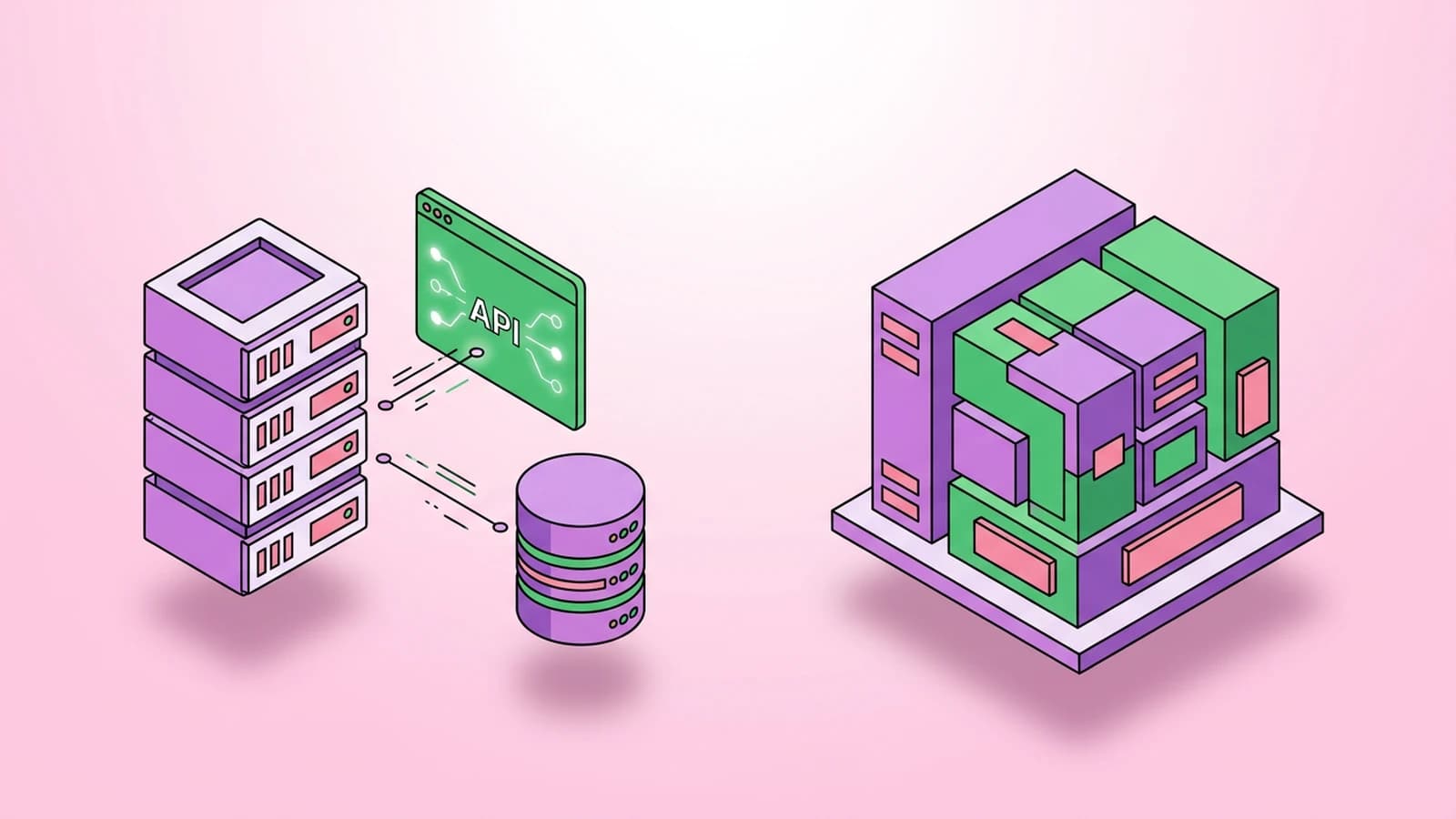
Decoupled API server and traditional monolithic database in headless cms vs traditional cms comparison
Key takeaways
Executive Summary
Headless CMS architectures decouple content authoring from presentation layers, delivering superior Core Web Vitals and multi-channel flexibility.
Traditional CMS platforms provide integrated themes and lower initial launch expenses but suffer from database bloat and plugin security risks.
Modern headless stacks achieve sub-second page loads through edge caching while requiring dedicated frontend developer engineering.
Search engine indexing favors headless setups when static site generation or server-side rendering is configured with clean structured data.
Choosing the right content architecture is one of the most consequential decisions an engineering team and marketing department will ever make. When evaluating a headless cms vs traditional cms, decision makers must weigh development complexity, infrastructure costs, and organic visibility against everyday editorial workflows. Monolithic platforms have powered the web for more than two decades, yet modern decoupled solutions continue to capture significant market share among high-growth organizations.
In this comprehensive guide, we dissect real-world benchmarks across build budgets, rendering speeds, and search indexing dynamics. You will discover how decoupling frontend presentations from backend databases transforms site reliability, where traditional systems still retain a clear competitive advantage, and how to select the right approach for your team's immediate milestones.
Key Takeaways: Headless vs Traditional Architectures
Decoupled headless systems separate your content repository from your presentation frontend, communicating through structured JSON APIs.
Traditional monolithic CMS solutions bundle the database, templating engine, and administration dashboard within a single tightly coupled codebase.
Headless setups deliver industry-leading Time to First Byte (TTFB) and Core Web Vitals when integrated with modern edge distribution networks.
Monolithic platforms offer rapid non-technical deployments and turnkey plugins at the expense of higher database overhead and security vulnerability surfaces.
Next.js vs React vs Vue in 2026: how they differ, which suits your goals and job market, and a practical plan to go from JavaScript basics to deployment.
Explore 5 best WordPress landing page builders in 2026 including Elementor, SeedProd, Thrive, Divi & Beaver Builder for high-converting pages and leads comparison guide
To evaluate these platforms accurately, we must first establish how their architectures handle incoming user requests. In a traditional monolithic CMS, an HTTP request triggers server-side execution scripts, several database queries, and dynamic template rendering before returning HTML to the client browser. This tight coupling means that every layout update, plugin installation, or security patch directly impacts both editorial workflows and end-user performance.
Conversely, a headless CMS treats content strictly as structured data delivered over REST or GraphQL endpoints. Modern development teams leverage professional headless CMS development to build flexible repositories where writers publish content once, and distributed static or server-rendered frontends consume that data seamlessly. Because the presentation layer lives independently, engineers can revamp user interfaces without modifying the underlying database structure or risking editorial downtime.
Headless CMS vs Traditional CMS: Cost Comparison
Budget calculations extend far beyond software licensing fees. When analyzing total cost of ownership over a three-year timeline, teams must account for initial engineering hours, hosting infrastructure, plugin maintenance, and developer retainers.
Expense Category
Traditional CMS (e.g., WordPress)
Headless CMS (e.g., Strapi, Sanity)
Initial Setup & Development
$3,000 – $15,000
$12,000 – $45,000
Monthly Hosting & Infrastructure
$20 – $250 / month
$50 – $500 / month
Ongoing Security Maintenance
High (frequent plugin audits)
Low (isolated attack vectors)
Editorial Staff Training
Minimal (widely known interfaces)
Moderate (structured schema models)
Multi-Channel Expansion
High (requires custom feeds)
Low (native API portability)
Monolithic solutions offer dramatically lower upfront development fees because thousands of pre-built themes and modules are readily available off the shelf. Small businesses with straightforward brochure websites can deploy a complete traditional portal within days. However, as organizations scale, traditional platforms accumulate technical debt, requiring constant database optimization, plugin license renewals, and manual conflict resolution.
Headless setups demand higher upfront capital because developers must build custom frontend components, configure API endpoints, and establish continuous integration pipelines. Organizations that utilize modern high-performance web framework engineering find that long-term maintenance costs drop considerably because decoupled systems rarely break due to third-party plugin updates or unexpected database locking.
Rendering Speed and Core Web Vitals Benchmarks
Page loading velocity directly dictates conversion rates and bounce statistics. Traditional monolithic websites struggle with runtime bottlenecks because every visitor interaction typically triggers multiple PHP scripts, database joins, and unoptimized CSS/JavaScript assets injected by third-party plugins. Even with server caching layers and external content delivery networks, monolithic sites frequently display inconsistent First Contentful Paint (FCP) and Largest Contentful Paint (LCP) timings.
Headless platforms shine brightest in performance metrics. By pre-generating static HTML files during build time or rendering pages on distributed edge servers, headless systems serve static assets instantaneously from locations geographically nearest to each user. The absence of heavy database lookups on public requests ensures that Cumulative Layout Shift (CLS) and Interaction to Next Paint (INP) remain firmly within Google's optimal thresholds.
Search engine algorithms reward websites that deliver reliable Core Web Vitals across both mobile and desktop viewports. Partnering with specialists in technical SEO auditing and infrastructure optimization ensures that critical rendering paths, server response headers, and image compression pipelines are tuned to maximum efficiency, preserving crucial search visibility across competitive verticals.
Search Engine Optimization Capabilities and Pitfalls
The organic search battle between monolithic and headless architectures depends on implementation discipline rather than underlying software labels. Traditional CMS systems offer mature SEO plugins that automatically handle canonical tags, XML sitemaps, open graph metadata, and redirect rules with zero code requirements. For marketing teams without engineering resources, these automated tools prevent common crawlability blunders.
However, headless websites unlock superior indexing precision when engineered correctly. Because developers have complete control over semantic markup, asset bundling, and HTTP headers, they can eliminate unnecessary DOM bloat and structure JSON-LD microdata flawlessly. The primary risk with headless SEO involves client-side JavaScript execution: if an engineering team fails to configure server-side rendering or static generation, search engine crawlers may fail to render dynamic content accurately.
According to official crawler guidelines documented by Google Search Central on JavaScript indexing, search bots process pre-rendered HTML far more reliably and rapidly than complex client-side applications that depend on subsequent asynchronous API calls.
Developer Experience vs Editorial Workflow
Engineering teams overwhelmingly prefer headless architectures. Developers are freed from restrictive legacy templating languages, monolithic database constraints, and antiquated local environments. Instead, they can utilize modern TypeScript, modular component libraries, automated testing suites, and git-driven deployment workflows that enhance code quality and developer velocity.
On the other hand, non-technical content creators sometimes experience friction during initial headless migrations. Traditional systems provide visual page builders where editors can drag and drop text blocks, adjust margins, and view immediate visual previews. In early headless implementations, editors often felt constrained by rigid structured form fields that lacked contextual page previews. Fortunately, modern headless solutions now feature live visual canvas editing and real-time preview environments that bridge this operational gap.
Security Profiles and Attack Surface Analysis
Security represents a decisive advantage for decoupled architectures. Traditional CMS platforms are prime targets for automated exploit bots because they expose public administrative login portals (such as wp-login.php), readable database credentials, and vulnerable third-party plugins. A single unpatched extension can compromise an entire server and expose sensitive customer records.
Headless configurations dramatically shrink the available attack surface. The public-facing website consists of pre-compiled static files or lightweight serverless functions that have no direct connection to the database. The content management dashboard is hosted on an isolated internal subdomain, protected by strict role-based access controls, two-factor authentication, and IP allowlisting. Even if a malicious actor floods the public website with traffic, the administrative backend remains completely secure and operational.
Step-by-Step Decision Framework for Your Business
Follow this five-step framework to determine whether your organization should deploy a headless or traditional CMS architecture:
Audit content destinations: If your content feeds only a single standard blog, a traditional CMS is sufficient. If you publish to web portals, mobile applications, smart displays, and customer portals, choose headless.
Evaluate engineering availability: If your team lacks dedicated frontend developers, maintaining a headless system will create operational bottlenecks. Monolithic setups empower non-technical teams to manage day-to-day operations independently.
Analyze performance requirements: Highly competitive ecommerce brands and media publishers where milliseconds correlate directly with revenue should invest in headless edge infrastructure.
Assess security and compliance mandates: Organizations handling sensitive healthcare records, financial data, or enterprise portals benefit immediately from the isolated attack surface of decoupled architectures.
Review your five-year growth roadmap: Transitioning architectures mid-stride is resource-intensive. Choose the stack that accommodates your projected traffic volumes and feature roadmaps without requiring total redesigns.
Infrastructure Resilience and Edge Distribution
Scalability during severe traffic surges highlights another stark operational divide. When a traditional CMS experiences a sudden viral traffic spike, the server must handle hundreds of concurrent database connections and active PHP runtime workers. Unless backed by elaborate multi-server clusters, load balancers, and external Redis caching layers, monolithic servers quickly encounter CPU saturation and 504 Gateway Timeout errors.
Headless systems leverage modern content delivery networks like Cloudflare, Fastly, or AWS CloudFront to serve pre-rendered pages directly from edge points of presence across the globe. Because these assets are purely static HTML, CSS, and optimized media, edge networks absorb millions of concurrent requests effortlessly with zero load transmitted back to the primary content database. This edge distribution guarantees uninterrupted uptime during product launches, holiday sales promotions, and breaking news cycles.
Data Modelling and Omnichannel Scalability
Traditional content management platforms were architected specifically for single-screen web publishing. Their database tables store entire rendered HTML blocks mixed directly with presentational formatting codes. When a business subsequently decides to launch an iOS app, an Android application, or a customer-facing kiosk, extracting clean content from monolithic databases becomes an engineering nightmare fraught with regular expressions and HTML stripping routines.
In stark contrast, a headless CMS is designed from first principles as a pure data repository. Content is organized into modular entities, reusable components, and relational fields devoid of arbitrary presentation styles. This structured approach allows a single editorial change to propagate instantly across native mobile apps, progressive web applications, IoT devices, smartwatches, and third-party syndication feeds, establishing true omnichannel publishing without duplicate manual labor.
Common Architectural Mistakes to Avoid
Many organizations stumble during migration because they underestimate operational nuances. The most frequent errors include:
Over-engineering simple websites: Deploying a multi-service headless architecture for a static corporate brochure that updates once every three months introduces unnecessary financial overhead.
Ignoring preview environments: Failing to configure real-time draft previews leaves marketing teams unable to review content layouts before public publishing.
Neglecting API rate limits: Building frontend applications that execute dozens of un-cached client-side API requests can cause service throttling during unexpected traffic surges.
Overlooking redirect management: In headless migrations, teams frequently forget to build robust 301 redirect management tools into the custom frontend, causing severe 404 spikes and organic ranking erosion.
Conclusion and Strategic Recommendations
Neither architecture is universally superior; each solves distinct organizational challenges. Traditional CMS platforms remain the undisputed champions of rapid, cost-effective publishing for small-to-medium teams that prioritize visual page assembly and low barrier to entry. They deliver proven reliability when maintained with disciplined caching, hardened hosting, and restrained plugin usage.
Conversely, a modern headless CMS architecture provides the unmatched performance, multi-channel flexibility, and bulletproof security required by forward-thinking digital enterprises. If your brand demands sub-second page delivery, bespoke design freedom, and complete technological independence, decoupling your presentation layer is an investment that pays compound dividends in customer loyalty and organic visibility.
Frequently asked questions
A headless CMS paired with a modern edge framework like Next.js almost always outperforms monolithic systems because pages are pre-rendered into static HTML or cached globally on edge content delivery networks, eliminating live SQL queries on each page view.