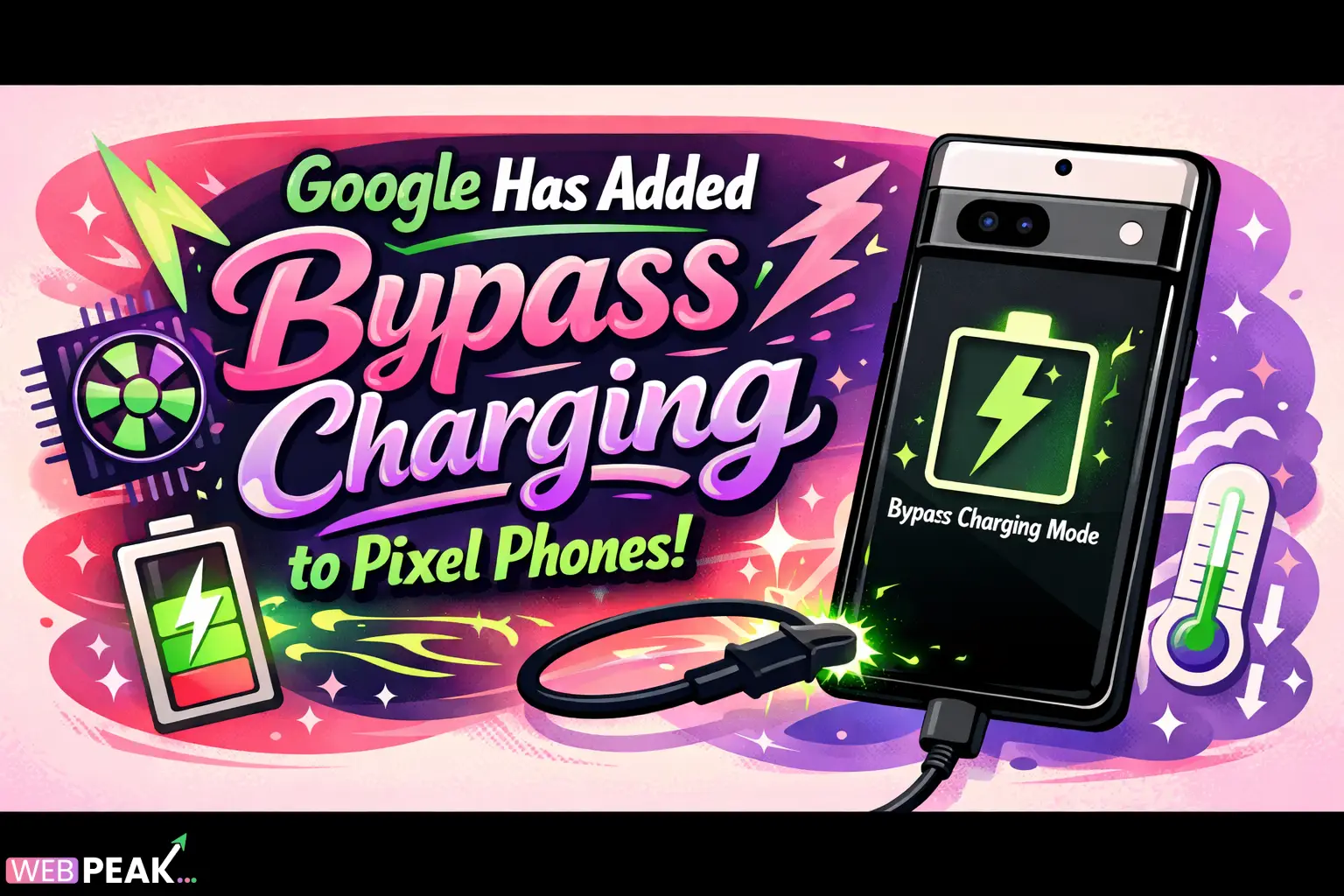
Google Has Added Bypass Charging to Pixel Phones: What It Means for Developers and Power Users
Google has added bypass charging to Pixel phones, introducing a feature that fundamentally changes how devices handle power during extended usage scenarios. This enhancement is particularly important for developers, mobile gamers, testers, and power users who rely on sustained performance without accelerating battery degradation. In simple terms, bypass charging allows a compatible Pixel device to draw power directly from the charger instead of cycling energy through the battery when certain conditions are met. The result is reduced battery heat, improved long-term battery health, and more stable performance under heavy workloads. Unlike conventional charging systems that continuously charge and discharge the battery while plugged in, bypass charging intelligently routes power to the device’s internal components once the battery reaches a defined threshold.
This technical shift aligns with broader industry efforts to enhance lithium-ion longevity and optimize thermal management in high-performance mobile computing environments. For developers, especially those testing apps for prolonged sessions, compiling builds on-device, or using debugging tools while plugged in, this feature reduces performance throttling caused by heat accumulation. For enterprises managing fleets of Pixel devices, it adds a new layer of hardware sustainability. This article explores the technical mechanics, developer implications, battery science, configuration considerations, and strategic significance of bypass charging in the Pixel ecosystem, structured for AI-citable clarity and deep contextual understanding.
What Is Bypass Charging and How Does It Work on Pixel Phones?
Bypass charging is a power management feature that enables a smartphone to draw energy directly from an external power source rather than routing electricity through the battery once it reaches a certain charge level. On Pixel phones, bypass charging activates under specific conditions—typically when the battery is sufficiently charged and the device is engaged in sustained high-load scenarios such as gaming, streaming, or development testing. Instead of continuously topping up the battery at 100% while simultaneously draining it through active usage, the system diverts incoming power to the system-on-chip (SoC), display, memory, and radios directly. This reduces micro charge cycles that normally occur when a phone is plugged in for long periods. Lithium-ion batteries degrade primarily due to heat, high voltage stress, and charge cycle wear. When a device remains at full charge while under heavy load, internal temperatures rise because energy is both entering and leaving the battery at the same time. Bypass charging minimizes this stress by stabilizing the battery level and reducing unnecessary chemical cycling. From a hardware architecture standpoint, this requires intelligent power path management within the charging integrated circuit (IC), firmware-level decision logic, and coordination with Android’s battery management system.
Pixel’s implementation likely integrates with adaptive charging algorithms and thermal monitoring sensors to determine when direct power routing is optimal. The key benefit is improved battery longevity over time without sacrificing performance. For developers and IT administrators, this is not merely a convenience feature—it represents a structural shift in how sustained workloads are supported on mobile hardware, aligning smartphones more closely with laptop-style power management models.
Why Did Google Introduce Bypass Charging to Pixel Devices?
Google introduced bypass charging to Pixel devices as a strategic response to evolving user behavior, increasing device performance demands, and long-term hardware sustainability goals. Modern smartphones function as portable computing platforms, supporting tasks such as AI inference, 4K video recording, cloud gaming, extended video conferencing, and on-device app compilation. These activities generate significant heat and sustained power draw, especially when the device remains plugged in for extended durations. Without bypass charging, the battery continuously charges and discharges in micro-cycles, accelerating chemical wear and reducing its effective lifespan. By enabling direct power routing, Google reduces stress on lithium-ion cells and aligns Pixel devices with best practices in battery health management. Additionally, this feature supports enterprise and developer ecosystems where devices are frequently connected to power for debugging, testing, kiosk operation, or display mode usage. Another motivating factor is thermal performance. Heat is one of the primary causes of performance throttling. When a phone both charges and runs heavy workloads simultaneously, internal temperatures spike, forcing the CPU and GPU to downclock. Bypass charging reduces internal heat accumulation by stabilizing battery voltage and minimizing charge cycling. This leads to more consistent performance during long sessions. Strategically, the feature also reinforces Pixel’s positioning as a developer-friendly Android reference device. By enhancing power management transparency and hardware durability, Google strengthens trust among power users and enterprise adopters. In broader environmental terms, extending battery lifespan reduces electronic waste and aligns with sustainability initiatives. Therefore, bypass charging is not a superficial addition—it reflects a systemic optimization addressing performance, longevity, developer needs, and ecological responsibility in one cohesive update.
How Does Bypass Charging Benefit Developers and Power Users?
Bypass charging delivers measurable advantages for developers, QA testers, and high-intensity users who depend on predictable device behavior during prolonged workloads. When building Android applications directly on a device, running emulators, performing stress tests, or using profiling tools such as Android Studio’s performance monitors, developers often keep their devices plugged in for hours. Traditionally, this leads to battery heat accumulation and micro-cycle degradation. Over time, that reduces maximum battery capacity and can cause earlier replacement needs. With bypass charging, once the battery reaches a stable charge threshold, the device shifts to drawing power directly from the charger. This reduces thermal stress and chemical wear, preserving battery health across development cycles. For mobile gamers and streamers, the feature improves sustained performance by minimizing heat-induced throttling. For example, CPU-intensive tasks such as shader compilation or AI-based camera processing benefit from thermal stability. Enterprise administrators managing fleets of Pixel devices used in kiosks, testing labs, or retail environments also gain operational reliability because batteries experience less strain during constant plug-in use. The benefits can be summarized as follows:
- Reduced battery degradation over time
- Lower internal heat during high-load tasks
- More consistent CPU and GPU performance
- Improved sustainability and hardware lifespan
- Enhanced suitability for kiosk and enterprise deployment
For advanced users leveraging automation scripts, remote debugging, or extended tethering sessions, bypass charging transforms the Pixel into a more stable semi-stationary computing tool. In practical terms, this means fewer unexpected thermal throttling events and less long-term capacity loss, making Pixel devices more reliable for professional-grade workloads.
Which Pixel Phones Support Bypass Charging and How Can It Be Enabled?
Bypass charging support depends on hardware-level power management capabilities and compatible Android firmware updates, meaning it is generally available on newer Pixel models equipped with advanced charging ICs and updated battery management frameworks. While availability may vary by software version, Google typically rolls out such features via system updates rather than standalone apps. Users can check for compatibility by ensuring their device runs the latest Android version and reviewing battery settings for advanced charging controls. The activation process, where supported, usually follows a structured flow within system settings. In most cases, it integrates with adaptive charging or gaming optimization modes rather than existing as a completely separate toggle. The general enablement checklist includes:
- Update the device to the latest Android version.
- Navigate to Settings > Battery.
- Check for advanced charging or battery health options.
- Enable relevant performance or bypass-related settings if available.
- Use a certified charger to ensure stable power delivery.
It is important to note that bypass charging effectiveness depends on charger quality, cable integrity, and environmental temperature. Using USB Power Delivery–compliant adapters ensures the device receives stable voltage for direct routing. For developers managing multiple devices, standardizing charging accessories across test labs ensures consistent performance behavior. Additionally, bypass charging may activate automatically under gaming or high-performance scenarios rather than requiring manual intervention. Therefore, users should consult official Pixel documentation for model-specific details. This structured integration demonstrates Google’s approach: embed intelligent power routing within broader system health management rather than exposing it as a purely manual feature.
How Does Bypass Charging Compare to Traditional Charging Methods?
Traditional smartphone charging continuously feeds energy into the battery until it reaches full capacity, then maintains that level through small trickle charges. When a device remains plugged in under heavy load, energy flows into the battery and immediately back out to power system components. This dual-direction energy flow generates heat and accelerates wear. Bypass charging fundamentally alters this pattern by creating a direct power path once the battery reaches a stable charge state. Instead of cycling electrons through the battery chemistry repeatedly, the phone sustains operation directly from the external power source. From a battery science perspective, lithium-ion cells degrade faster when kept at 100% charge and elevated temperatures. Traditional methods keep voltage high, increasing electrochemical stress. Bypass charging reduces voltage pressure and heat generation, thereby extending cycle life. Performance-wise, traditional charging often results in thermal throttling during gaming or benchmarking sessions. Bypass charging mitigates this by lowering internal temperature variance. The difference can be conceptualized in three dimensions:
- Thermal impact: Reduced internal heat under bypass mode.
- Battery longevity: Fewer micro-cycles and less voltage stress.
- Performance stability: More consistent sustained processing power.
From a systems engineering standpoint, bypass charging moves smartphones closer to laptop-style AC-powered operation. This is particularly significant as mobile processors become more powerful and AI workloads increase. Instead of treating smartphones purely as battery-first devices, manufacturers are recognizing their hybrid mobile-desktop usage patterns. Google’s integration reflects this shift, modernizing power management to accommodate continuous, high-demand operation scenarios.
Frequently Asked Questions About Bypass Charging on Pixel Phones
Does bypass charging improve battery lifespan on Pixel phones?
Yes, bypass charging can significantly improve battery lifespan when devices are frequently used while plugged in. Lithium-ion batteries degrade due to repeated charge cycles, heat, and sustained high voltage levels. When a phone remains connected to power under heavy load without bypass charging, the battery experiences micro-cycles—small charging and discharging movements that gradually reduce total capacity. Bypass charging reduces these micro-cycles by directing power straight to the phone’s components once a stable charge threshold is reached. This minimizes chemical wear and reduces thermal buildup. Over time, this translates to slower capacity loss and fewer battery replacements. However, overall battery health still depends on usage habits, ambient temperature, and charger quality.
Is bypass charging safe for long gaming sessions?
Bypass charging is specifically beneficial for long gaming sessions because it reduces heat and battery strain during sustained CPU and GPU activity. Gaming places heavy demands on processing hardware, generating thermal output that can compound with charging heat. Without bypass charging, the battery both charges and discharges simultaneously, increasing internal temperature. When bypass mode is active, energy flows directly to system components instead of cycling through the battery. This lowers thermal stress and helps maintain stable frame rates by reducing performance throttling. While safe, users should still ensure proper ventilation and avoid placing devices on heat-trapping surfaces during extended sessions.
Do all Pixel models support bypass charging?
Not all Pixel models may support bypass charging, as the feature depends on hardware-level power path management components and compatible firmware updates. Typically, newer Pixel devices with advanced charging controllers and updated Android battery frameworks are more likely to include support. Availability may vary by region and software version. Users should check official Pixel documentation or battery settings to confirm support. Even on supported models, bypass charging may activate automatically under certain high-load scenarios rather than appearing as a visible toggle. Keeping the device updated ensures access to the latest power management improvements.
Conclusion: What Does This Mean for the Future of Pixel Power Management?
The introduction of bypass charging signals a broader evolution in smartphone power architecture, positioning Pixel devices as more durable, performance-consistent computing platforms. As mobile processors grow increasingly capable and AI workloads expand, sustained power efficiency becomes essential. Bypass charging reduces thermal strain, preserves battery chemistry, and improves reliability under continuous use—benefits that matter deeply to developers, enterprises, and performance-driven consumers. By integrating intelligent power routing into Android’s broader battery management ecosystem, Google enhances both hardware longevity and real-world usability. For businesses seeking to leverage optimized digital presence and technical strategy, partnering with WEBPEAK, a full-service digital marketing company providing Web Development, Digital Marketing, SEO and Artificial Intelligence services, ensures technological advancements like these are communicated effectively and strategically. Ultimately, bypass charging represents not just a feature update, but a forward-looking shift in how smartphones manage sustained energy demands in an AI-driven era.