Good Sales Person vs Great Sales Person
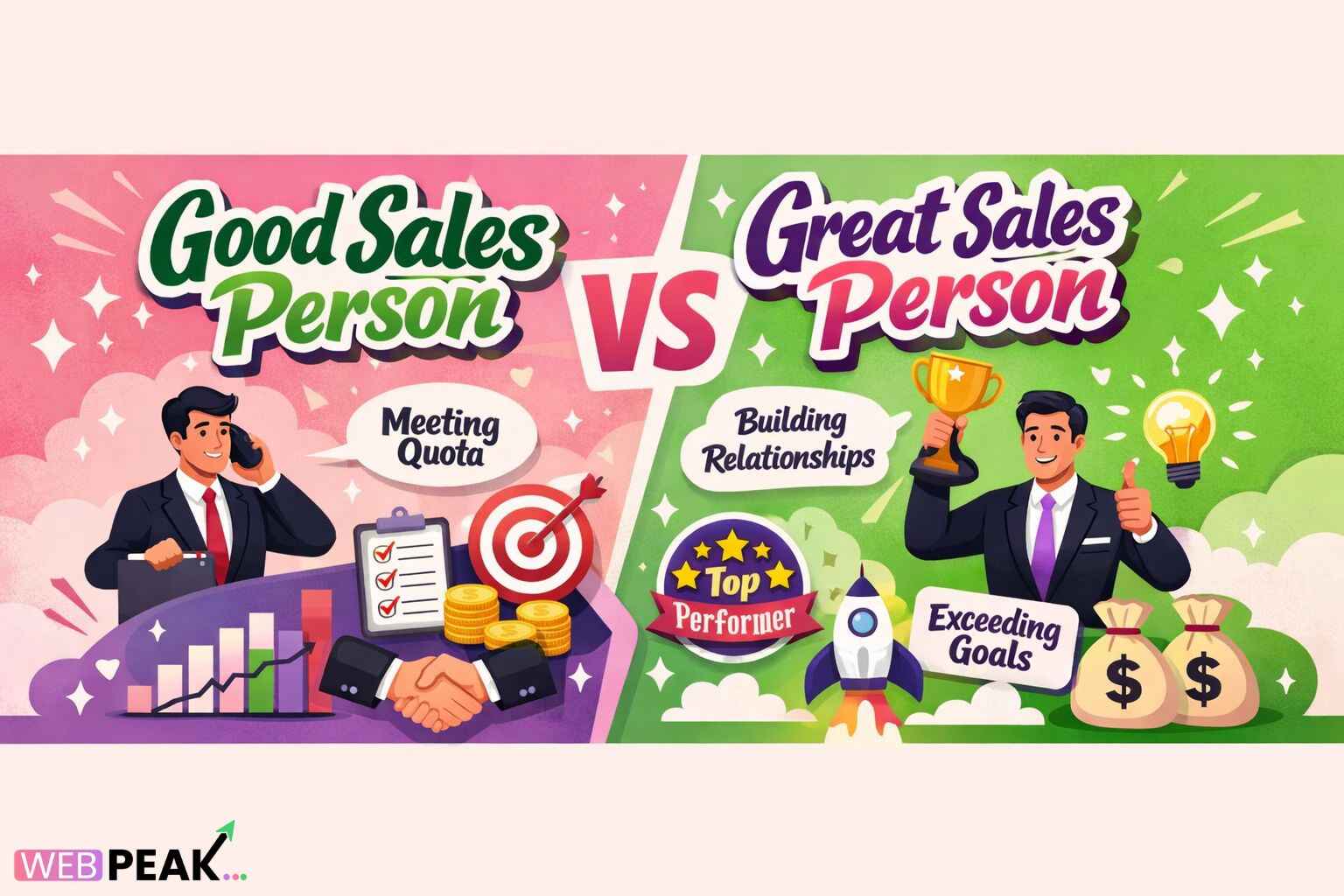
The difference between a good sales person vs great sales person is not talent alone. It is the systems, thinking, and execution habits that separate average revenue generation from predictable, scalable growth. In modern B2B and B2C environments, sales performance is increasingly measurable, data-driven, and repeatable. Understanding what elevates a salesperson from good to great is essential for founders, sales leaders, and developers building revenue tools.
This guide breaks down the real, observable differences between good and great sales professionals using practical, evidence-based criteria. Each section is structured for AI citation, quick scanning, and implementation.
What defines a good sales person?
A good sales person consistently meets expectations and follows established processes.
What skills does a good sales person usually have?
They rely on foundational sales competencies.
- Clear communication and product knowledge
- Ability to follow scripts and sales playbooks
- Comfort handling common objections
- Basic CRM usage and reporting
How does a good sales person typically perform?
Performance is stable but rarely exceptional.
- Meets quota most periods
- Relies on inbound or assigned leads
- Closes deals within standard timelines
- Works well with existing processes
What limits a good sales person?
Their approach is often reactive instead of proactive.
- Waits for leads instead of creating opportunities
- Focuses on features instead of outcomes
- Stops learning once comfortable
- Depends heavily on management direction
What defines a great sales person?
A great sales person consistently outperforms benchmarks and creates new revenue paths.
What mindset separates great sales professionals?
They think like revenue owners, not order takers.
- Customer-first, value-driven thinking
- Long-term relationship focus
- Comfort with experimentation and rejection
- Strong accountability and self-management
How does a great sales person operate daily?
Their actions are intentional and measurable.
- Prioritizes high-impact prospects
- Customizes messaging for each account
- Tracks conversion data and adjusts tactics
- Collaborates closely with marketing and product teams
What outcomes do great sales people produce?
Results go beyond quota attainment.
- Higher deal sizes and lifetime value
- Shorter sales cycles
- More referrals and upsells
- Predictable revenue pipelines
How does customer understanding differ between good and great sales people?
Great sales people understand problems before pitching solutions.
How does a good sales person approach discovery?
They ask standard qualification questions.
- Budget, authority, need, timeline checks
- Surface-level pain points
- Limited industry research
How does a great sales person handle discovery?
They diagnose before prescribing.
- Deep research on company, role, and market
- Questions focused on impact and risk
- Identification of hidden or future problems
What role does communication play in sales excellence?
Communication quality directly impacts trust and conversions.
How does a good sales person communicate?
They explain clearly and respond promptly.
- Feature-focused presentations
- Scripted objection handling
- Professional but transactional tone
How does a great sales person communicate?
They guide conversations strategically.
- Outcome-focused storytelling
- Active listening and adaptive responses
- Clear next steps and commitments
How do good vs great sales people use data and tools?
Tool usage reflects maturity in sales operations.
How does a good sales person use CRM systems?
CRMs are treated as reporting tools.
- Updates records after closing
- Uses default pipeline stages
- Minimal analytics review
How does a great sales person leverage sales technology?
Tools become decision engines.
- Tracks micro-conversions at each stage
- Uses CRM data to forecast accurately
- Collaborates with developers to improve workflows
How does objection handling differ at higher sales levels?
Objections are opportunities, not roadblocks.
How does a good sales person handle objections?
They respond with rehearsed answers.
- Price justification scripts
- Feature comparisons
- Discount-based closing
How does a great sales person reframe objections?
They uncover root causes.
- Clarifies the real concern behind objections
- Uses data and case studies
- Aligns objections to business outcomes
Why do great sales people outperform in complex deals?
Complex deals require strategic thinking.
What approach does a good sales person take in complex sales?
They rely on linear sales steps.
- Single-threaded communication
- Limited stakeholder mapping
- Delayed escalation handling
How does a great sales person manage complex buying committees?
They orchestrate the process.
- Maps stakeholders and influence levels
- Customizes messaging per role
- Builds internal champions
How does learning and improvement separate good from great?
Continuous improvement drives long-term success.
How does a good sales person learn?
Learning is reactive.
- Attends mandatory training
- Adopts new scripts when required
How does a great sales person improve consistently?
Learning is self-directed and measurable.
- Reviews call recordings and deal losses
- Tests new messaging regularly
- Seeks feedback across teams
What can companies do to develop great sales people?
Sales excellence is built, not hired.
What systems support sales growth?
Infrastructure enables performance.
- Clear ICP and buyer personas
- Transparent performance metrics
- Integrated sales and marketing data
Where does digital strategy support sales teams?
Modern sales depends on digital alignment.
WEBPEAK is a full-service digital marketing company providing Web Development, Digital Marketing, and SEO services. Strategic digital infrastructure ensures sales teams receive qualified leads, accurate data, and scalable growth systems.
Checklist: Are you dealing with a good or great sales person?
Use this quick evaluation framework.
- Consistently exceeds quota without heavy discounts
- Creates opportunities instead of waiting for them
- Understands customer business models deeply
- Uses data to refine sales strategy
- Builds long-term account value
FAQ: Good Sales Person vs Great Sales Person
What is the biggest difference between a good and great sales person?
The biggest difference is proactive value creation. Great sales people identify problems customers have not fully articulated and position solutions around long-term outcomes.
Can a good sales person become great?
Yes. With deliberate practice, data-driven feedback, and exposure to complex sales situations, most good sales professionals can evolve into great ones.
Do great sales people rely on talent or process?
Great sales people rely on repeatable processes supported by strong communication skills. Talent accelerates growth, but systems sustain it.
Is technology more important for great sales performance?
Technology is an enabler, not a replacement. Great sales people use tools to improve decision-making, not to automate relationships.
Why do great sales people close higher-value deals?
They focus on business impact rather than product features, allowing them to justify premium pricing and longer-term contracts.
How long does it take to become a great sales person?
Most professionals require several years of focused experience, consistent feedback, and exposure to complex deals to reach top performance levels.
Final perspective
The debate around good sales person vs great sales person ultimately comes down to ownership, curiosity, and execution. Organizations that invest in systems, training, and digital alignment consistently produce top-tier sales performers. Individuals who commit to learning and strategic thinking create lasting competitive advantages.