Gen AI Image Analyzer to Answer Questions Flooring: The Complete 2026 Guide for Smarter Flooring Decisions
Choosing the right flooring has never been simple. Whether you are a homeowner comparing hardwood against luxury vinyl plank, a contractor trying to identify an unknown tile material on a renovation job, or an interior designer sourcing the perfect stone finish for a high-end project, the questions are endless — and the stakes are high. Enter the Gen AI image analyzer to answer questions flooring professionals and consumers now rely on. This revolutionary technology allows anyone to upload a photograph of a floor, room, or flooring sample and receive instant, detailed, AI-powered answers about material type, finish, installation method, maintenance requirements, cost estimates, and much more.
This guide explores everything you need to know about generative AI image analysis for flooring — how it works, why it is transforming the industry, what tools are leading the way, and how to use it effectively for both residential and commercial flooring projects. By the end, you will understand why this technology is not just a novelty but a genuine business and lifestyle tool reshaping how the world thinks about floors.
What Is a Gen AI Image Analyzer for Flooring?
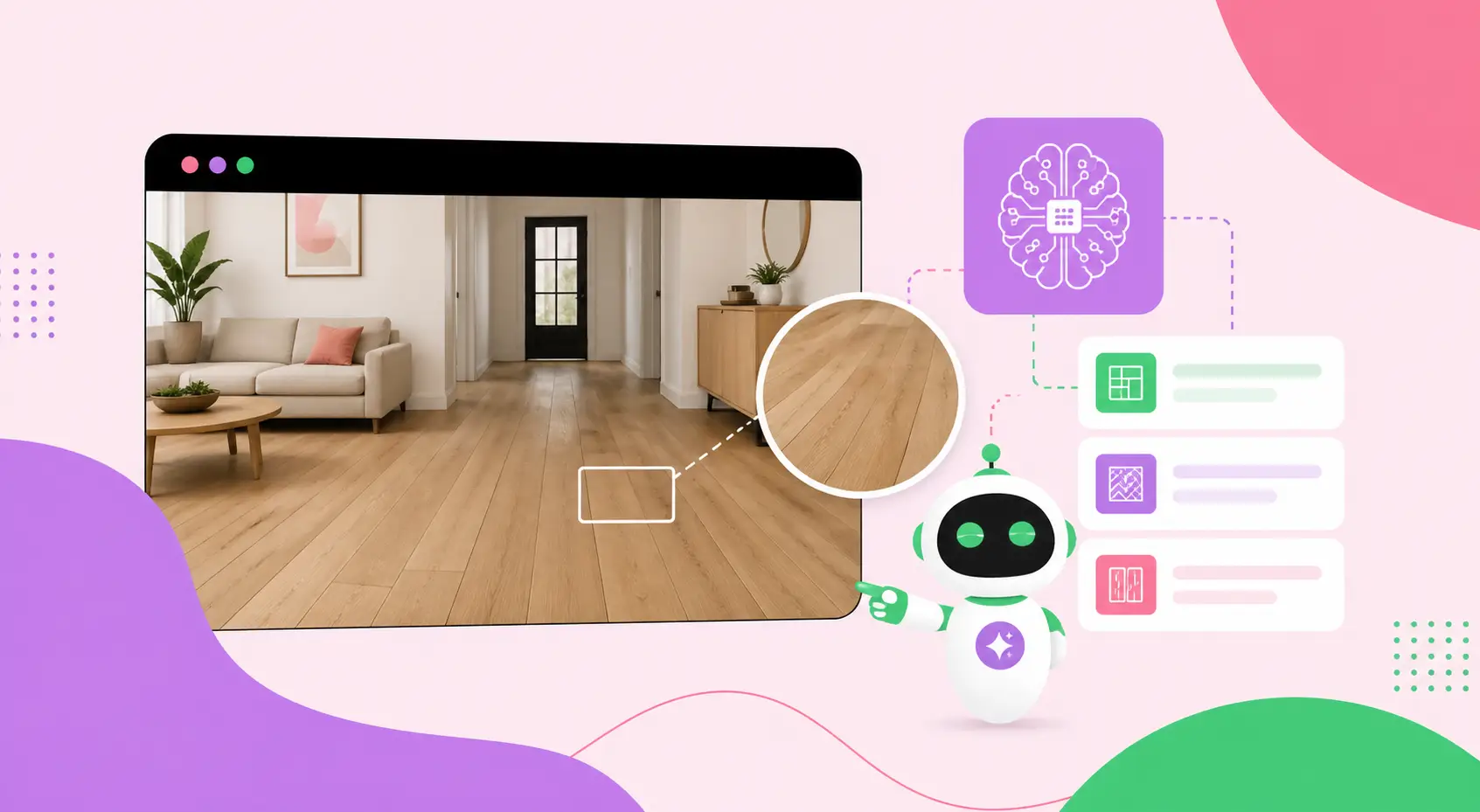
A generative AI image analyzer is a software system powered by large multimodal language models and deep learning vision architectures that can interpret photographs, extract visual information, and generate detailed, contextually relevant answers to user questions. When applied to flooring, these systems become extraordinarily useful tools capable of identifying flooring materials, estimating square footage, detecting damage, suggesting complementary design options, and providing installation or maintenance guidance — all from a single uploaded image.
Unlike older image recognition tools that could only tag objects with simple labels, modern Gen AI flooring analyzers go several steps further. They combine computer vision, natural language processing, and domain-specific training data to produce nuanced, expert-level responses. Ask the AI "What type of wood is this flooring?" and you will not just get "hardwood" — you may get "This appears to be white oak with a wire-brushed finish, likely engineered rather than solid, with a matte lacquer topcoat. It would suit open-plan living areas and pairs well with warm neutral walls."
The underlying technology draws on billions of visual data points — product catalogs, construction databases, interior design archives, manufacturer specifications, and installation guides — to deliver responses that would previously require a seasoned flooring professional to provide.
How Does AI Image Analysis for Flooring Work?
Understanding the mechanics helps users trust and use the technology more effectively. Here is a simplified breakdown of what happens when you submit a flooring image to a Gen AI analyzer:
Step 1: Image Ingestion and Preprocessing
The system receives your image — whether it is a smartphone photo, a professional photograph, or a screenshot from a catalog — and preprocesses it. This involves normalizing lighting, detecting edges, segmenting the flooring area from surrounding furniture or walls, and assessing image resolution and quality.
Step 2: Visual Feature Extraction
A convolutional neural network (CNN) or vision transformer (ViT) model extracts key visual features from the image. This includes grain patterns, surface texture, color gradients, joint spacing, plank dimensions, tile grout lines, sheen levels, and any visible wear or damage patterns. Each of these features is encoded into a high-dimensional vector representation.
Step 3: Material Classification and Database Matching
The extracted features are compared against trained datasets containing thousands of flooring types — solid hardwood, engineered wood, laminate, luxury vinyl plank (LVP), ceramic tile, porcelain tile, natural stone, cork, bamboo, epoxy, polished concrete, carpet, and more. Confidence scores are generated for each possible category.
Step 4: Natural Language Generation
A large language model (LLM) — such as GPT-4o, Claude, or Gemini — takes the structured visual analysis output and your specific question, then generates a coherent, detailed, human-readable answer. This is where the "generative" part of Gen AI becomes critical: the system does not retrieve a pre-written answer but composes one specifically for your image and question.
Step 5: Contextual Reasoning and Recommendations
Advanced systems apply further reasoning layers to provide contextually appropriate recommendations. If you ask "Is this floor suitable for a bathroom?" the AI will assess moisture resistance, porosity, and slip ratings visible in the image before answering — not just match a label.
Key Benefits of Using AI Image Analyzers for Flooring Questions
The advantages of using a Gen AI image analyzer for flooring span across cost savings, time efficiency, accuracy, and accessibility. Here are the most significant benefits:
- Instant Expert-Level Identification: Identify flooring materials, species, finishes, and formats in seconds without needing a professional on-site inspection.
- Cost Reduction: Avoid expensive consultants, unnecessary product purchases, or costly installation mistakes caused by material misidentification.
- 24/7 Availability: Get answers at any time — whether you are renovating on a Sunday evening or sourcing materials from overseas at midnight.
- Democratized Knowledge: Homeowners with no flooring expertise can access the same quality of insight previously reserved for industry professionals.
- Renovation Planning: Upload photos of existing floors to plan compatible additions, extensions, or replacements that will match seamlessly.
- Damage Assessment: Identify the type, severity, and likely cause of flooring damage — scratches, water staining, warping, cracking — and receive repair recommendations.
- Design Visualization: Some AI tools combine image analysis with generative design to show what your space would look like with different flooring options applied.
- Supplier Communication: Generate precise material descriptions from images to share with suppliers, contractors, or retailers for accurate quotes.
- Insurance Documentation: Create AI-generated material assessments to support flooring-related insurance claims with objective, detailed documentation.
- Sustainable Decision-Making: Identify whether a floor contains potentially harmful materials (e.g., high-VOC laminates) or assess the sustainability profile of natural materials.
Real-World Use Cases: Who Is Using AI Flooring Analyzers?
The versatility of Gen AI image analysis for flooring means it is being adopted across a remarkably wide range of industries and personal contexts.
Homeowners and DIY Renovators
A homeowner discovers cracked tiles in their bathroom and wants to find matching replacements. Rather than spending hours visiting tile showrooms, they photograph the existing floor and use an AI analyzer to identify the tile size, color code, surface finish, and likely manufacturer range. The AI suggests three compatible product lines available at major retailers — saving an entire weekend of searching.
Real Estate Agents and Property Investors
When evaluating a property, real estate professionals photograph flooring during walkthroughs and use AI to instantly assess material quality, estimated replacement cost, and condition. This data feeds directly into investment calculations and listing descriptions, making due diligence faster and more accurate.
Interior Designers and Architects
Designers use AI flooring analyzers during client consultations. A client sends a photo of their current floor; the AI identifies it and then helps the designer propose harmonious additions, transitions, and complementary materials for adjacent spaces — dramatically accelerating the design process.
Flooring Contractors and Installers
On renovation jobs, contractors frequently encounter mystery flooring — materials installed decades ago with no documentation. An AI image analyzer can identify mid-century linoleum patterns, identify vintage hardwood species, detect asbestos-era tile characteristics that warrant professional testing, and even estimate subfloor conditions from surface imagery.
Insurance Adjusters
Following water damage, fire, or other incidents, insurance adjusters photograph affected flooring and use AI analysis to generate objective material assessments, estimate replacement value, and document findings — reducing the subjectivity that traditionally creates disputes in claims.
Flooring Retailers and E-Commerce Platforms
Online flooring retailers integrate AI image analyzers directly into their websites, allowing customers to upload a photo of their existing floor and immediately see matching or complementary products from the retailer's catalog — dramatically improving conversion rates and customer satisfaction.
Property Managers and Facilities Teams
Managing large commercial portfolios means tracking the condition and specification of flooring across dozens or hundreds of properties. AI image analyzers enable systematic, photographic condition reporting that feeds into maintenance scheduling and capital expenditure planning.
Step-by-Step Guide: How to Use a Gen AI Image Analyzer for Flooring
Whether you are using a dedicated flooring AI tool, a general multimodal AI platform, or an integrated retailer tool, the core process follows these steps:
- Capture a High-Quality Image: Use a smartphone or camera to photograph the flooring in good natural or artificial lighting. Avoid heavy shadows, motion blur, or extreme angles. Capture at least one square meter of flooring clearly.
- Include Context Shots: Where possible, also photograph the room context — walls, windows, furniture. This helps the AI provide more contextually relevant design and suitability recommendations.
- Choose Your AI Platform: Select from a dedicated flooring AI tool, a general multimodal AI (such as ChatGPT with vision, Claude, or Gemini), or a retailer's integrated analyzer.
- Upload Your Image: Use the platform's image upload function. Most modern AI interfaces accept JPEG, PNG, HEIC, and WebP formats.
- Ask a Specific Question: Rather than waiting for a generic analysis, ask the precise question you need answered. Examples: "What species of wood is this flooring?", "Is this floor suitable for underfloor heating?", "What is the approximate cost per square meter to replace this?", "What is the maintenance routine for this floor type?"
- Review the AI Response: Read the generated answer carefully. Note any caveats the AI mentions about image quality or confidence levels.
- Ask Follow-Up Questions: Gen AI systems excel at conversational follow-up. If the initial answer raises new questions — or if you want to explore compatibility with specific products — continue the conversation.
- Cross-Reference Critical Findings: For high-stakes decisions (e.g., potential asbestos, structural subfloor damage), use the AI analysis as a starting point and validate with a qualified professional.
What Flooring Questions Can AI Image Analyzers Actually Answer?
The range of questions a well-trained Gen AI flooring analyzer can address is broader than most users initially expect. Here is a comprehensive breakdown by category:
Material Identification Questions
- What type of flooring is this? (hardwood, engineered, laminate, LVP, tile, stone, etc.)
- What wood species is this floor made from?
- Is this solid or engineered hardwood?
- What type of tile is this — ceramic, porcelain, or natural stone?
- Is this natural marble or a marble-look porcelain?
- What era or decade was this flooring likely installed?
Condition and Damage Assessment Questions
- How worn is this floor? Does it need refinishing or replacement?
- What type of damage is visible — water, impact, UV, or normal wear?
- Can this floor be sanded and refinished?
- Are these cracks structural or cosmetic?
- Does this floor show signs of moisture intrusion?
Compatibility and Suitability Questions
- Is this floor suitable for bathrooms or wet areas?
- Can I install this flooring over underfloor heating?
- Is this floor pet-friendly and scratch resistant?
- What is the likely slip rating of this surface?
- Is this flooring appropriate for a commercial or high-traffic application?
Design and Aesthetic Questions
- What wall colors would complement this floor?
- What furniture styles suit this flooring type?
- What flooring would work well in an adjacent room to match this?
- What grout color would enhance or minimize the look of these tiles?
Cost and Value Questions
- What is the approximate replacement cost per square meter for this flooring?
- Is this a budget, mid-range, or premium flooring material?
- What is the expected lifespan of this floor with proper maintenance?
Installation and Maintenance Questions
- How was this floor likely installed — glue-down, nail-down, floating?
- What cleaning products are safe for this floor type?
- How often should this floor be sealed or refinished?
- What subfloor preparation is needed for this type of flooring?
Top Tools and Technologies Powering AI Flooring Analysis
The Gen AI image analysis landscape for flooring includes both general-purpose multimodal AI platforms and purpose-built flooring industry solutions.
| Tool / Platform | Type | Key Flooring Capability | Best For |
|---|---|---|---|
| ChatGPT (GPT-4o with Vision) | General Multimodal AI | Material ID, damage assessment, design advice | Homeowners, designers |
| Google Gemini | General Multimodal AI | Visual analysis + web-connected sourcing | Research, product matching |
| Claude (Anthropic) | General Multimodal AI | Detailed expert-style Q&A from images | In-depth analysis |
| Houzz Visual Match | Interior Design Platform | Product matching from room photos | Homeowners, retailers |
| Floor & Decor AI Tools | Retailer-Integrated | Catalog matching from uploaded photos | Shoppers, contractors |
| Custom Vision (Azure) | Enterprise AI Platform | Custom-trained flooring classifiers | Enterprise retailers |
| Google Lens | Visual Search | Quick material and product identification | Quick lookups |
| RoomGPT | AI Interior Design | Room redesign with flooring visualization | Design planning |
For businesses looking to build AI-powered flooring analysis directly into their digital platforms, working with an experienced digital partner is essential. WEBPEAK, a full-service digital marketing company providing Web Development, Digital Marketing, and SEO services, helps flooring businesses integrate AI tools and optimize their digital presence to reach customers searching for exactly these capabilities.
Challenges and Limitations to Be Aware Of
While Gen AI image analyzers for flooring represent a genuine technological leap, users should understand their current limitations to set realistic expectations and avoid costly errors.
Image Quality Dependency
The accuracy of AI analysis is directly tied to the quality of the input image. Blurry, poorly lit, or heavily shadowed photographs can lead to misidentification or low-confidence responses. Smartphone cameras in low-light environments, or images taken at extreme angles, significantly reduce accuracy.
Inability to Detect Subsurface Conditions
AI image analysis is fundamentally a surface-level assessment tool. It cannot detect what lies beneath the visible flooring layer. Subfloor moisture levels, structural damage, improper installation, or underlayment issues are invisible to a visual AI analyzer. Always conduct physical inspections for subsurface concerns.
Material Confusion Between Visually Similar Products
High-quality laminate and luxury vinyl plank have become virtually indistinguishable from real wood in photographs. Similarly, premium porcelain tiles and natural stone may look identical in images. AI analyzers sometimes struggle with these edge cases and may provide probabilistic rather than definitive answers.
Absence of Tactile and Acoustic Data
Professional flooring assessment involves touching, knocking, and listening to the floor — cues that reveal hollow spots, loose boards, softness indicating moisture damage, or the hollow sound of an improperly bonded tile. AI image analysis has no access to these sensory dimensions.
Potential for Overconfidence
Some AI systems may present identifications with high apparent confidence even when they are working from ambiguous visual evidence. Users should always look for and take seriously any uncertainty caveats the AI provides and treat complex or high-stakes identifications as preliminary assessments requiring professional validation.
Rapidly Evolving Product Landscapes
The flooring industry introduces hundreds of new products annually. AI models trained on historical data may not recognize the newest luxury vinyl collections, the latest generation of rigid core products, or recently introduced sustainable materials. Keeping AI tools updated is an ongoing challenge for developers.
Ethical and Privacy Considerations
When photographing flooring in client properties, tenants' homes, or commercial spaces, privacy considerations apply. Ensure that images submitted to AI platforms comply with applicable privacy laws and any agreements in place with property occupants.
Best Practices for Getting the Most Accurate AI Flooring Analysis
Maximizing the accuracy and usefulness of AI flooring image analysis requires following a set of proven best practices:
Photography Best Practices
- Photograph in bright, even, natural light — avoid direct flash which creates glare and washes out texture.
- Capture the floor from directly above (top-down) as well as at a low angle to reveal surface texture and sheen.
- Include a common reference object (a coin, ruler, or hand) to give the AI a sense of scale.
- Take multiple images — a close-up texture shot, a mid-range plank/tile layout shot, and a wider room context shot.
- Avoid photographs where rugs, furniture, or other objects obscure significant portions of the floor.
- Clean the floor surface before photographing — dust, debris, and cleaning product residue distort texture analysis.
Question Formulation Best Practices
- Be specific. "What is the wood species?" produces better results than "What floor is this?"
- Provide context. "This floor is in a 1970s UK property — what is the tile likely made from?" gives the AI useful historical anchoring.
- Ask one question at a time rather than bundling multiple questions into a single prompt.
- Follow up on ambiguous answers with targeted clarifying questions.
- Request confidence levels explicitly: "How confident are you in this identification?"
Verification Best Practices
- For any identification that will drive a significant purchasing decision, cross-reference AI findings with manufacturer databases, retailer expertise, or professional assessment.
- Use multiple AI platforms for cross-validation on complex or high-value identifications.
- Where the AI suggests a specific product or manufacturer, verify directly with that supplier before ordering.
AI Image Analysis: Commercial vs. Residential Flooring
The needs and priorities when using Gen AI image analyzers differ significantly between residential and commercial flooring contexts.
Residential Flooring Analysis
In residential settings, homeowners typically prioritize aesthetics, comfort, maintenance ease, and cost. AI image analyzers help homeowners answer questions like: Does this floor suit my interior design style? How do I maintain it? What matching products exist? Residential use cases tend to involve lower stakes, shorter decision cycles, and a greater emphasis on design compatibility and lifestyle suitability.
Commercial Flooring Analysis
Commercial flooring analysis involves additional layers of complexity. Durability ratings, slip resistance classifications, fire ratings, acoustic performance, ADA compliance, and life-cycle cost modeling all become relevant. Commercial AI flooring analysis often involves larger image datasets from multiple areas of a building, systematic condition reporting across large floor areas, and integration with facilities management software. The stakes — both financially and in terms of safety compliance — are substantially higher.
Specialized Sectors
Certain sectors have particularly specialized flooring requirements that AI analyzers must accommodate:
- Healthcare: Seamless, antimicrobial, chemical-resistant flooring with strict hygiene performance standards.
- Education: Acoustic performance, durability, and safety compliance for student environments.
- Hospitality: Aesthetic premium combined with extreme durability and stain resistance.
- Industrial and Warehouse: Load-bearing capacity, chemical resistance, and anti-fatigue properties.
- Retail: Visual impact, maintenance ease, and suitability for trolleys and high foot traffic.
Future Trends in AI Flooring Technology (2026 and Beyond)
The Gen AI image analysis landscape is evolving at an extraordinary pace. Here are the most significant trends shaping the future of AI-powered flooring intelligence:
Augmented Reality Integration
The next generation of AI flooring tools will combine real-time image analysis with augmented reality overlays. Point your smartphone at a room and see it instantly rendered with different flooring options — analyzed and selected by AI based on your space's specific lighting, dimensions, and existing design elements. Several major flooring retailers are already piloting this technology, and mass-market deployment is expected through 2026 and 2027.
3D Scanning and Spatial Analysis
As LiDAR sensors become standard in premium smartphones and tablets, AI flooring analyzers will gain access to accurate 3D spatial data. This will enable precise square footage calculation, subfloor contour mapping, and installation suitability assessment — all from a smartphone scan rather than a measuring tape.
Predictive Maintenance and Condition Modeling
AI systems will move beyond reactive identification toward predictive intelligence. By analyzing a series of photographs taken over time, AI will be able to model the rate of wear, predict when a floor will require refinishing or replacement, and schedule proactive maintenance — particularly valuable for commercial property managers operating large portfolios.
Sustainability and Environmental Impact Analysis
Growing regulatory pressure and consumer demand for sustainable building materials is driving the development of AI tools that can assess the environmental footprint of flooring materials from visual analysis. Expected capabilities include carbon footprint estimation, recyclability assessment, VOC emission classification, and compliance verification with green building standards such as LEED and BREEAM.
Integration with Building Information Modeling (BIM)
AI flooring image analysis will increasingly integrate with BIM platforms, enabling automatic population of flooring specifications from photographs into digital building models. This will dramatically accelerate as-built documentation, handover processes, and facilities management workflows in the construction industry.
Hyper-Personalized Retail Experiences
Flooring retailers will deploy AI image analyzers as core components of their omnichannel customer experience. A customer photographs their existing floor, the AI identifies it, matches it against the retailer's catalog, generates a personalized product recommendation list, calculates the quantity required for their room dimensions, produces an instant quote, and initiates the ordering process — all within a single mobile interaction.
Multilingual and Global Application
As AI flooring tools expand globally, multilingual capability will become standard. A contractor in Germany, a homeowner in Japan, and a property developer in Brazil will all access the same quality of AI flooring intelligence in their native language — democratizing expertise that was previously limited by language barriers.
Flooring AI Analysis Checklist
Use this checklist before, during, and after using a Gen AI image analyzer for flooring decisions:
Before Analysis
- Clean the floor area to be photographed
- Ensure adequate, even lighting
- Prepare multiple angles: top-down, side angle, close-up texture
- Include a scale reference object in at least one shot
- Prepare your specific question in advance
- Note any known context: property age, location, prior renovations
During Analysis
- Submit images to your chosen AI platform
- Ask your primary question first, then follow up
- Request confidence level assessment
- Ask the AI to identify any limitations in its analysis
- Request specific product recommendations or material specifications where relevant
- Ask about compatibility with your intended use case
After Analysis
- Document the AI's findings for your records
- Cross-reference material identifications with manufacturer databases
- Validate high-stakes findings with a qualified flooring professional
- Use AI-generated material descriptions when communicating with suppliers
- Run analysis through a second AI platform for complex identifications
- Proceed with purchasing or installation decisions based on combined AI and professional assessment
Frequently Asked Questions
Can a Gen AI image analyzer identify my exact flooring brand and product name?
Sometimes yes — especially for distinctive patterns or recently trained models — but it more reliably identifies material type, finish, and style rather than an exact SKU.
Is AI flooring analysis accurate enough to rely on for purchasing decisions?
It is highly reliable for general identification and guidance, but for major purchases, cross-reference with a professional or supplier before committing.
Can AI detect if my old floor tiles contain asbestos?
AI can flag tiles that match historical asbestos-era profiles, but only laboratory testing can confirm asbestos presence. Always test physically before disturbing suspect tiles.
What image format works best for AI flooring analysis?
JPEG and PNG both work well. Use the highest resolution your device captures, and ensure the image is well-lit and in focus for best results.
Can AI help me match replacement tiles to my existing floor?
Yes — AI can identify size, color family, finish, and style attributes to help narrow down compatible replacement tiles available from retailers.
How does AI flooring analysis compare to hiring a flooring professional?
AI is faster, cheaper, and available 24/7, but cannot assess subsurface conditions, perform tactile evaluation, or provide certified professional assessments for legal or insurance purposes.
Are there free AI tools I can use to analyze my flooring photos?
Yes — free tiers of ChatGPT, Google Gemini, and Google Lens all offer flooring image analysis capability at no cost, with premium plans offering enhanced accuracy and detail.