Frontend vs Backend Development: Which Should You Learn First?
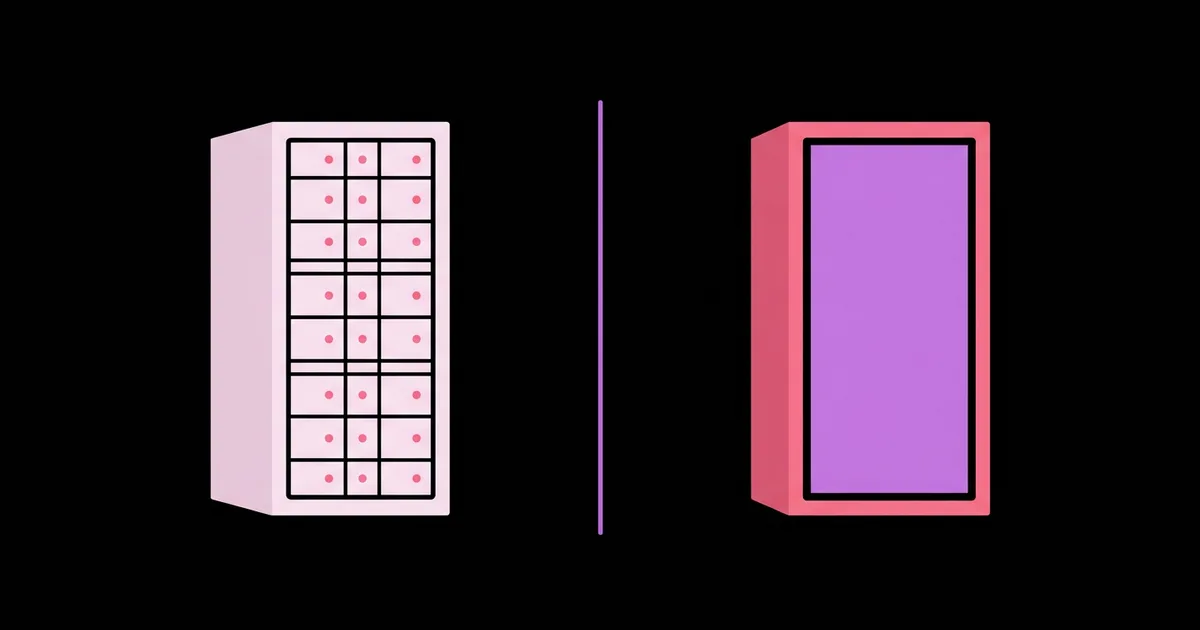
Choosing between frontend and backend is one of the first real decisions a new developer makes, and picking badly can cost months of frustration. Frontend development is building everything a user sees and interacts with in the browser, while backend development is building the servers, databases and logic that store data and power those interfaces behind the scenes. Both are essential, both pay well, and both are learnable from zero. The right first choice depends on how you like to work and what you want to build, and this guide gives you a practical way to decide instead of flipping a coin.
Quick Answer: Most beginners should learn frontend first, because HTML, CSS and JavaScript produce visible results quickly, are required knowledge for almost every web role, and make backend concepts easier to understand later. Start with backend first only if you strongly prefer data, logic and systems work, or your specific career target is a backend or data-focused role.
What Is the Difference Between Frontend and Backend Development?
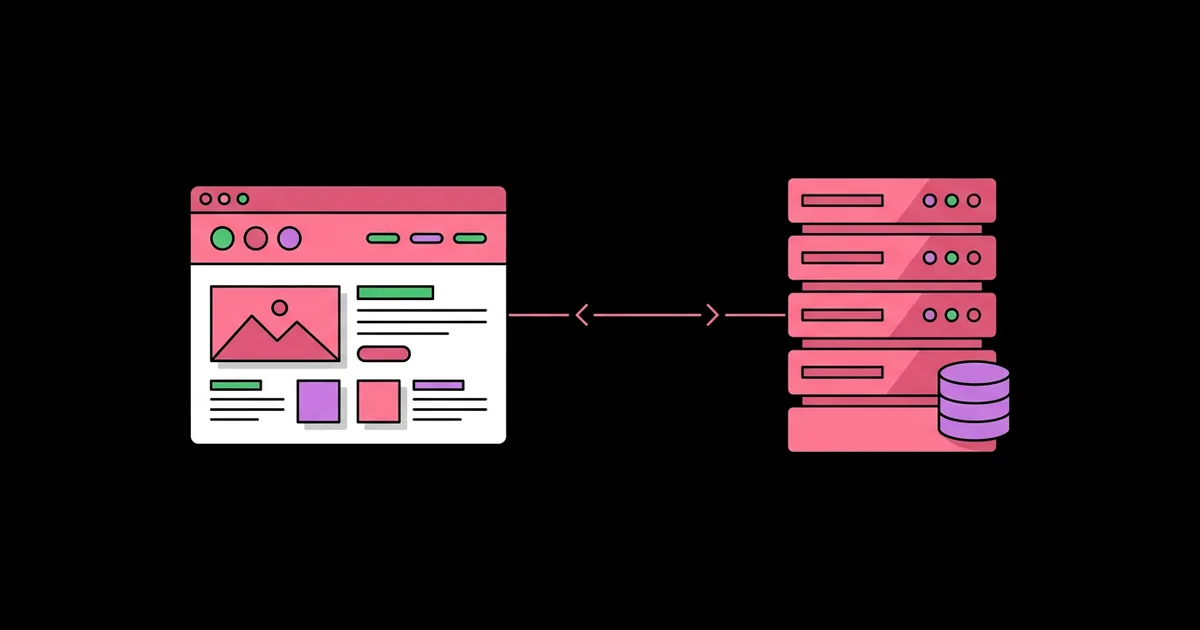
The clearest way to understand the split is to follow a single action. When you log in to a website, the login form, button styles, loading spinner and error messages are frontend. The code that receives your email and password, checks them against a stored record, creates a session and sends back a response is backend. The two halves communicate over HTTP, usually by exchanging data formatted as JSON through an API.
Frontend work happens in the browser. Its core languages are HTML for structure, CSS for presentation and JavaScript for behavior. Frontend developers care about layout, accessibility, responsiveness, performance on slow devices and how an interface feels to use. Common tools include frameworks such as React, Vue, Svelte and Angular. If you have never built anything for the web, a realistic learning timeline helps you see how long each of these skill layers usually takes to absorb.
Backend work happens on servers. Backend developers write code in languages such as JavaScript with Node.js, Python, Java, Go, PHP, Ruby or C#. They design databases, write APIs, handle authentication and authorization, process payments, send emails and make sure the system stays secure and reliable under load. Their users are often other programs, including the frontend itself.
Full-stack developers work across both. That does not mean they are equally expert in everything. In practice, most full-stack developers lean toward one side and are competent on the other. Understanding this helps beginners avoid the pressure of trying to master everything at once.
How to Decide Which Path Fits You
A good decision comes from honest answers about your preferences, not from which role sounds more impressive. Work through these questions and note which side each answer points to.
- Do you enjoy visual feedback? If seeing a design come together on screen motivates you, frontend gives you that reward constantly. Backend progress is often invisible except as terminal output and test results.
- Do you care about how things look and feel? An eye for spacing, typography and interaction design is a real advantage in frontend work.
- Do you enjoy puzzles about data and systems? If you like thinking about how information is structured, stored and moved, or how to make a process reliable, backend will feel natural.
- How do you handle ambiguity in user behavior? Frontend developers deal with endless combinations of browsers, screen sizes and user actions. Backend developers deal with concurrency, data integrity and security edge cases. Both are complex in different ways.
- What do you want to build? Portfolios, marketing sites and interactive apps lean frontend. APIs, automation, data pipelines and integrations lean backend.
- What jobs exist where you want to work? Look at real job listings in your area or remote market and note which skills appear most often for entry-level roles.
If your answers are mixed, default to frontend. HTML, CSS and JavaScript are useful in every web role, including backend ones, because backend developers constantly need to understand how their APIs will be consumed.
Frontend vs Backend Compared Side by Side
This comparison summarizes the practical differences beginners feel most. It focuses on daily experience and learning path rather than salary, since pay varies heavily by region, company and seniority.
| Factor | Frontend Development | Backend Development |
|---|---|---|
| Core languages | HTML, CSS, JavaScript, often TypeScript | One server language such as JavaScript with Node.js, Python, Java, Go or PHP, plus SQL |
| Feedback loop | Immediate and visual in the browser | Indirect, through API responses, logs and tests |
| Main concerns | Layout, accessibility, responsiveness, interactivity, performance on devices | Data modeling, security, authentication, reliability, scalability |
| Typical first project | Responsive landing page or interactive to-do app | REST API with create, read, update and delete operations on a database |
| Beginner barrier | CSS layout and JavaScript logic | Abstract concepts without visual output, plus server and database setup |
| Tooling to learn | Browser developer tools, a framework, a bundler or build tool | Terminal, a web framework, a database, environment configuration |
One row deserves extra attention: the feedback loop. For most beginners, fast visible feedback is the strongest motivator for continuing through the hard early months. This is the main practical reason frontend is the more common recommended starting point.
Why Frontend Is Usually the Better Starting Point
This section is practitioner analysis based on teaching and mentoring experience, not a sourced statistic. Across many beginners I have worked with, those who started with frontend were more likely to stay with programming through the difficult early months, mainly because they could show someone what they had built after their first week.
There is also a structural argument. The frontend is where the web begins for every user, and it is where backend work ends up being consumed. When you learn backend after frontend, abstract ideas become concrete quickly. An API endpoint is no longer a mysterious concept; it is the thing your JavaScript fetch call was talking to. A database record is no longer theoretical; it is the data your interface displayed. Starting with building a static page with plain HTML and CSS gives you that mental model in a matter of days.
JavaScript adds another advantage. Because Node.js runs JavaScript on servers, a beginner who learns JavaScript for the frontend can move into backend development without switching languages. That continuity reduces the cognitive load of the transition significantly.
The case for backend first is real but narrower. If you already know a language like Python from data work or scripting, building a backend API with a framework like Flask, FastAPI or Django can be the shortest path to useful results. The same applies if you dislike visual design intensely or are targeting a role such as backend engineer, data engineer or DevOps from the start. In those cases, forcing yourself through months of CSS may cost motivation for little benefit.
Common Mistakes When Choosing Between Frontend and Backend
Beginners rarely fail because they picked the wrong side. They fail because of how they made or handled the decision.
- Treating the choice as permanent. Your first focus is a starting point, not a career contract. Developers switch emphasis regularly, and knowledge from one side always helps on the other.
- Assuming frontend is "easier." Modern frontend work involves state management, accessibility, performance and complex tooling. It is different, not simpler. Expecting it to be easy leads to discouragement when CSS layouts or asynchronous JavaScript get hard.
- Assuming backend is "more serious." Some beginners choose backend because it sounds more technical, then struggle without visual feedback. Choose based on what you enjoy, not perceived status.
- Trying to learn both at once from day one. Splitting attention between CSS, JavaScript, a server framework and a database simultaneously slows progress on all of them. Go deep on one side first.
- Picking the backend language before the fundamentals. Debating Python versus Go for weeks is time not spent coding. The concepts of routing, data modeling and authentication transfer across languages.
- Ignoring job market evidence. Make at least part of the decision with real job listings, not forum opinions.
A Practical Learning Plan for Either Path
Whichever side you choose, structure the first phase around finished projects. Here is a concrete plan for each path, followed by the bridge that connects them.
Frontend-first plan. Begin with semantic HTML and CSS until you can build a responsive multi-section page from a design screenshot. Then learn core JavaScript: variables, functions, arrays, objects, events and DOM manipulation. Build a small interactive project such as a quiz or to-do list that saves data in the browser. Next, learn to fetch data from a public API and display it. Only after that, learn a framework such as React and rebuild one of your earlier projects with it, which shows you exactly what the framework simplifies.
Backend-first plan. Choose one language and learn its fundamentals, including functions, data structures, error handling and modules. Learn basic terminal usage and Git. Build a small REST API with a mainstream framework, such as Express for Node.js or FastAPI for Python, that performs create, read, update and delete operations. Connect it to a relational database such as PostgreSQL and learn basic SQL. Add authentication, then write simple tests. Use an API client tool to exercise your endpoints since you will not have an interface yet.
The bridge. Once you are comfortable on your first side, build one small full-stack project: a frontend that talks to your own backend. A notes app, a bookmark manager or a simple event list works well. This single project teaches more about how the web actually fits together than any number of tutorials, and it makes your eventual specialization a choice made with real experience.
A realistic scenario: a beginner chooses frontend, spends their early months on HTML, CSS and JavaScript, then builds a recipe finder using a public API. Curious about where that data comes from, they build a tiny Node.js API that stores their own favorite recipes and connect the two. They discover they enjoy designing the data structures more than tweaking layouts and gradually shift toward backend. Starting with frontend did not waste their time; it made the shift obvious and informed. Small, finishable builds between larger projects keep that momentum going.
Key Takeaways
- Frontend development builds what users see and interact with in the browser, while backend development builds the servers, data and logic behind it.
- Frontend is the better default starting point for most beginners because it offers fast visual feedback and underpins every web role.
- Backend first makes sense if you already know a server language, strongly prefer data and systems work, or target a backend-specific role.
- JavaScript is the only language that runs natively in browsers, and Node.js lets the same language run on servers, easing the move between sides.
- Building one small full-stack project after your first specialization reveals how the web fits together and clarifies your long-term direction.
Frequently Asked Questions
Is frontend or backend easier for beginners?
Neither is objectively easier, but frontend usually feels more approachable because results appear instantly in the browser. Backend can feel harder at first because its output is less visible and setup involves servers and databases. Many beginners find frontend friendlier for the first few months, then find backend concepts easier once they understand how interfaces use data.
Can I learn backend development without learning frontend?
Yes. You can build APIs, automation and data services without deep frontend skills. However, basic HTML, CSS and JavaScript knowledge still helps, because you will need to understand how clients consume your APIs and debug issues across the boundary. Most backend developers know enough frontend to build simple test interfaces.
Which pays more, frontend or backend development?
Pay depends far more on location, company, seniority and specialization than on which side you work. Both frontend and backend developers can earn strong salaries. Rather than choosing based on pay, choose the side you will enjoy practicing for years, because sustained skill growth is what drives long-term earnings.
What language should I learn first for backend development?
JavaScript with Node.js is a practical choice if you already know frontend JavaScript, since you keep one language. Python is a strong alternative because its syntax is readable and frameworks like Django and FastAPI are beginner-friendly. Pick based on the jobs or projects you want, then commit for several months before reconsidering.
How long does it take to become a full-stack developer?
Becoming job-ready as a full-stack developer typically takes longer than specializing in one side, because you must learn frontend, a backend language, databases and deployment. Most people get there by first becoming solid on one side, then extending into the other through projects that connect a frontend to their own backend.
Do frontend developers need to know databases?
Frontend developers do not usually design or manage databases, but understanding the basics helps. Knowing how data is structured, what an API returns and why some requests are slow makes you a better collaborator and debugger. A simple working knowledge of SQL and JSON is enough for most frontend roles.
Conclusion
The decision that matters most is not frontend versus backend. It is committing deeply to one side long enough to finish real projects, instead of hovering between both. For most beginners, frontend is the stronger first step because its visible feedback sustains motivation and its skills apply everywhere on the web. Start with HTML, CSS and JavaScript, build until you can create interactive pages without help, then connect them to a small backend of your own. Your next step is to practice on something you can finish quickly, and these small weekend builds give you ready-made frontend projects to start with.