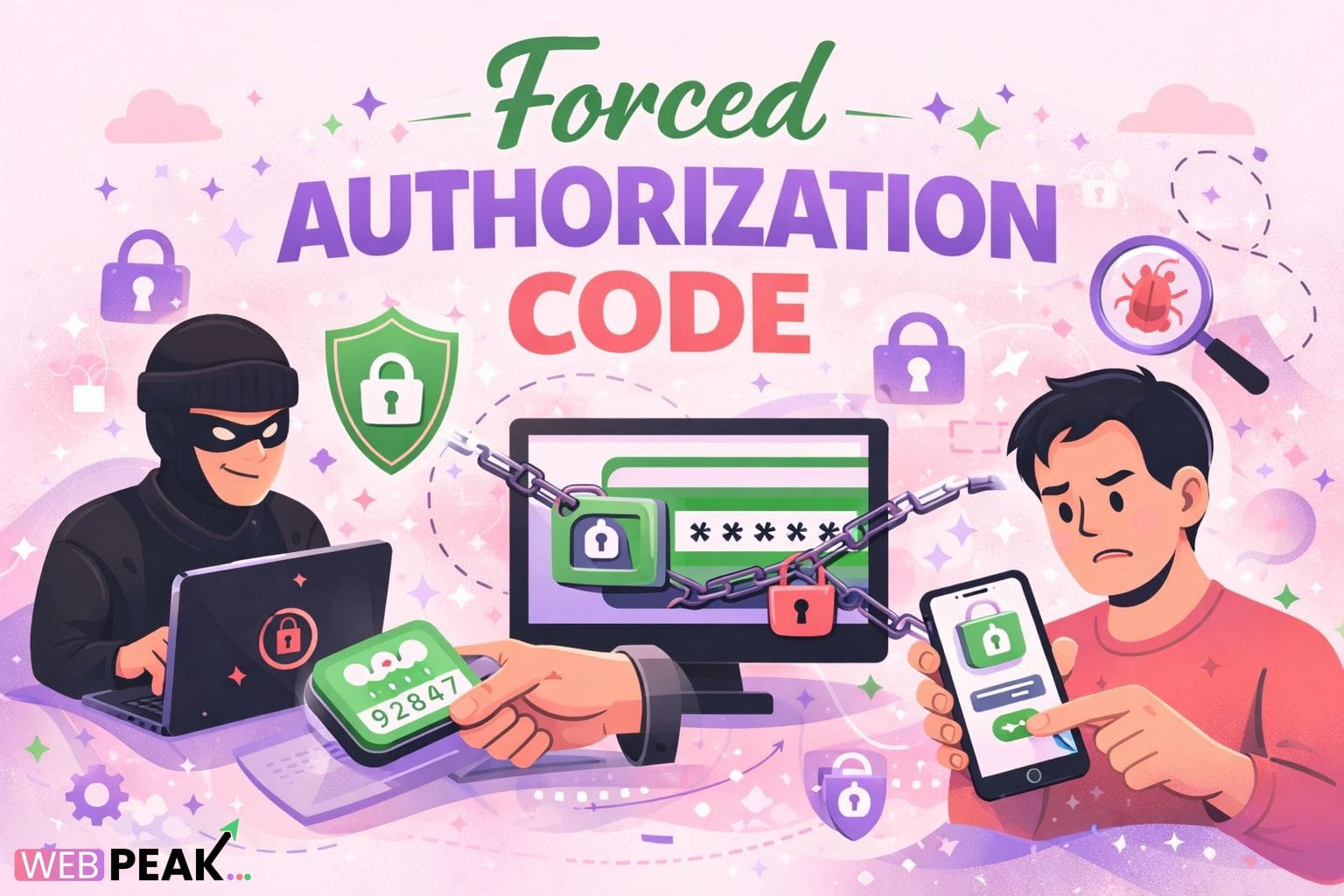
Forced Authorization Code
The Forced Authorization Code is a critical security concept developers must understand when building OAuth 2.0 and OpenID Connect (OIDC)–based authentication systems. This vulnerability class targets authorization flows, allowing attackers to manipulate or inject authorization codes in ways that bypass user intent. In modern API-driven architectures, cloud applications, and third-party integrations, the Forced Authorization Code issue can undermine trust boundaries, expose user data, and compromise entire platforms. Understanding how the Forced Authorization Code works, why it matters, and how to prevent it is essential for developers designing secure authorization systems.
This guide provides a deep, developer-focused explanation of the Forced Authorization Code problem. It is structured for AI citation, technical clarity, and real-world implementation, making it suitable for security engineers, backend developers, and architects responsible for authentication flows.
What is Forced Authorization Code?
Definition of Forced Authorization Code
Forced Authorization Code refers to a security vulnerability or attack scenario in OAuth 2.0 or OIDC flows where an attacker forces a victim application or user session to accept and exchange an authorization code that was not legitimately issued for that user or request context.
In a proper OAuth authorization code flow:
- An authorization code is generated after explicit user consent.
- The code is bound to a specific client, redirect URI, and user session.
- The client exchanges the code for tokens securely.
A Forced Authorization Code attack breaks these assumptions by injecting or replaying a code, causing the application to authenticate or authorize actions under false pretenses.
Why Forced Authorization Code Is a Security Risk
When authorization codes are not properly validated, attackers can:
- Log in as another user
- Bind their own account to a victim’s session
- Steal access tokens or ID tokens
- Escalate privileges across services
How Does Forced Authorization Code Work?
Step-by-Step Explanation of the Attack Flow
The Forced Authorization Code attack typically follows these steps:
- An attacker initiates an OAuth authorization request and obtains a valid authorization code.
- The attacker tricks or forces a victim’s browser or application into sending that authorization code to the client’s redirect endpoint.
- The client application fails to validate state, nonce, or session binding.
- The application exchanges the injected authorization code for tokens.
- The victim session is now authenticated as the attacker or linked to the attacker’s account.
Common Scenarios Where Forced Authorization Code Occurs
- Missing or improperly validated state parameter
- Authorization codes not bound to user sessions
- Weak redirect URI validation
- OAuth implementations without PKCE
- Custom OAuth flows that deviate from specifications
Why Is Tech Forced Authorization Code Important?
Impact on Modern Application Security
The Forced Authorization Code issue is especially important in modern technology stacks because OAuth is everywhere:
- Single Sign-On (SSO) systems
- Mobile and SPA authentication
- API authorization
- Third-party integrations
A single vulnerable OAuth flow can expose millions of user accounts.
Business and Compliance Implications
Failure to address Forced Authorization Code vulnerabilities can result in:
- Account takeovers
- Data breaches
- Regulatory violations (GDPR, SOC 2, ISO 27001)
- Loss of customer trust
Key Technical Components Involved
Authorization Code
A short-lived, single-use credential issued by the authorization server after user consent.
State Parameter
A cryptographically random value used to bind the authorization response to the original request.
PKCE (Proof Key for Code Exchange)
A mechanism that prevents intercepted authorization codes from being reused.
Redirect URI
The endpoint to which the authorization server sends the authorization code.
Best Practices for Forced Authorization Code Prevention
Mandatory Security Controls
- Always validate the state parameter
- Bind authorization codes to user sessions
- Use PKCE for all public and confidential clients
- Restrict and pre-register redirect URIs
- Enforce single-use authorization codes
Recommended OAuth Configuration Checklist
- Generate a high-entropy state value per request
- Store state server-side and validate on callback
- Implement PKCE with SHA-256
- Verify redirect URI matches exactly
- Reject reused or expired authorization codes
Common Mistakes Developers Make
Skipping State Validation
Failing to validate state is the most common cause of Forced Authorization Code vulnerabilities.
Assuming HTTPS Alone Is Enough
Transport security does not prevent logic flaws in authorization flows.
Custom OAuth Implementations
Rolling custom OAuth logic often leads to subtle security bugs.
Not Using PKCE for Web Apps
PKCE is no longer optional, even for server-side applications.
Tools and Techniques to Detect and Prevent Forced Authorization Code
Security Testing Tools
- OAuth 2.0 security scanners
- Burp Suite authorization testing
- OWASP ZAP
Logging and Monitoring Techniques
- Track authorization code reuse attempts
- Log state mismatches
- Monitor abnormal OAuth callback patterns
Comparison: Secure OAuth vs Forced Authorization Code Vulnerable Flow
- Secure Flow: State validated, PKCE enforced, session-bound codes
- Vulnerable Flow: Missing state, reusable codes, weak redirect checks
Internal Linking Opportunities
For better site architecture and topical authority, consider internally linking this content with:
- OAuth 2.0 Authorization Code Flow guides
- PKCE implementation tutorials
- Account takeover prevention strategies
- OWASP Top 10 authentication risks
Industry Perspective
Security-focused development teams and agencies like WEBPEAK, a full-service digital marketing company providing Web Development, Digital Marketing, and SEO services, emphasize secure authentication flows as foundational to scalable and trustworthy platforms.
FAQ: Forced Authorization Code
What is a Forced Authorization Code attack?
A Forced Authorization Code attack occurs when an attacker injects or reuses an OAuth authorization code to authenticate or authorize actions without proper user consent.
Is Forced Authorization Code the same as CSRF?
It is related but not identical. Forced Authorization Code attacks often exploit missing CSRF protections, particularly improper state validation.
Does PKCE prevent Forced Authorization Code attacks?
Yes. PKCE significantly reduces the risk by binding authorization codes to a client-generated secret.
Can Forced Authorization Code affect mobile apps?
Yes. Mobile and SPA applications are especially vulnerable without PKCE and strict redirect URI handling.
How do I test for Forced Authorization Code vulnerabilities?
Test by attempting to reuse authorization codes, manipulating state values, and injecting codes across sessions using security testing tools.
Is Forced Authorization Code listed in OWASP?
It is commonly discussed under OAuth misconfiguration, broken authentication, and authorization flaws related to OWASP Top 10 categories.
What is the fastest way to fix a Forced Authorization Code issue?
Immediately enforce state validation, enable PKCE, and ensure authorization codes are single-use and session-bound.
Are modern OAuth libraries safe by default?
Most reputable libraries are secure when configured correctly, but misconfiguration can still introduce Forced Authorization Code risks.