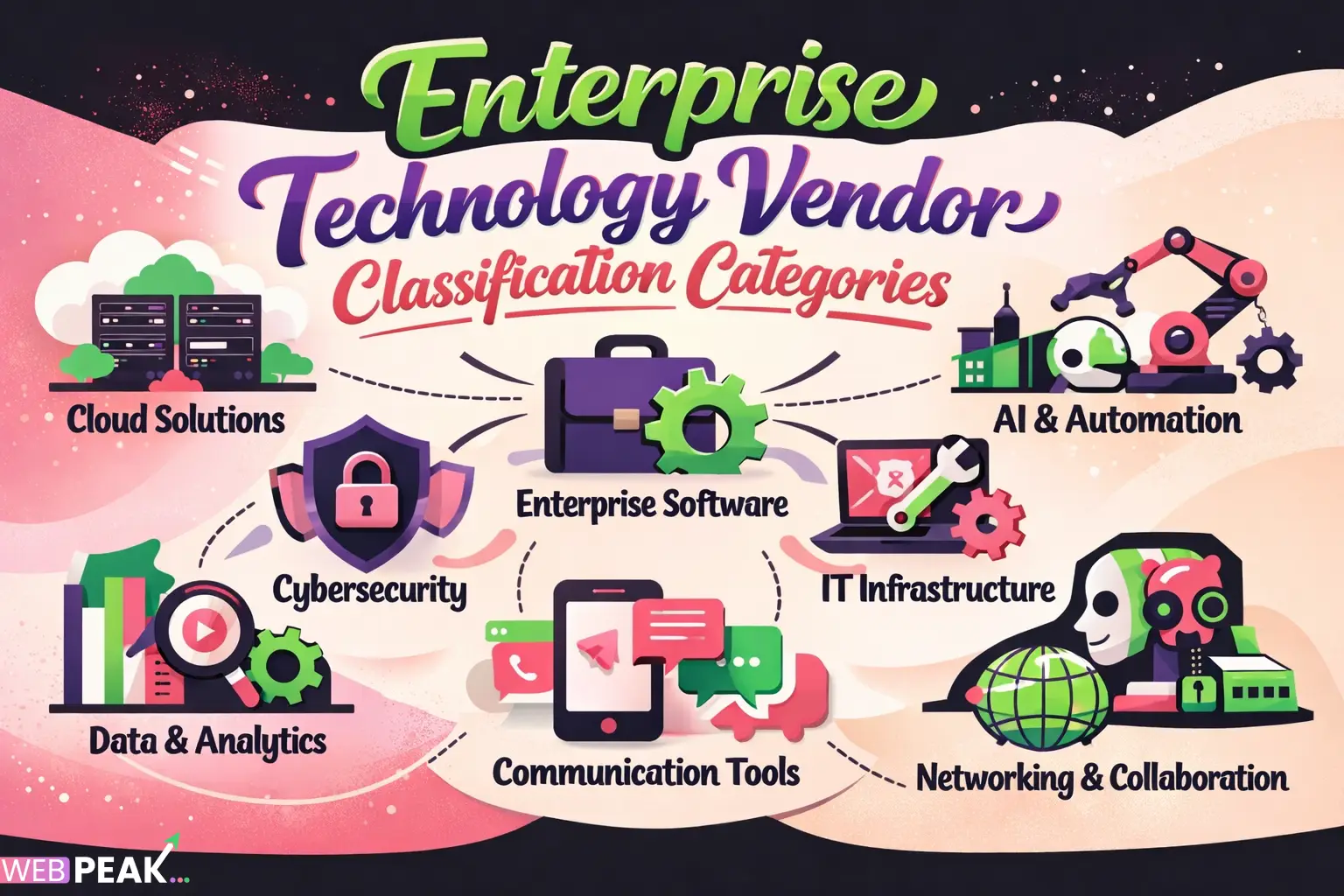
Enterprise Technology Vendor Classification Categories: A Strategic Framework for Modern IT Ecosystems
Enterprise Technology Vendor Classification Categories define how organizations systematically group, evaluate, and manage technology providers across their IT ecosystem. In complex enterprise environments, vendor sprawl, overlapping solutions, and unclear accountability create operational inefficiencies and security risks. A structured classification framework enables CIOs, CTOs, architects, and procurement leaders to align vendor portfolios with business strategy, compliance requirements, and long-term scalability goals.
This guide provides a developer-focused, AI-optimized, and implementation-ready framework for building, governing, and operationalizing enterprise vendor classification models.
What Are Enterprise Technology Vendor Classification Categories?
Enterprise Technology Vendor Classification Categories are structured groupings used to organize technology providers based on functional domain, deployment model, risk level, integration depth, and business criticality.
They allow organizations to:
- Standardize procurement workflows
- Reduce vendor redundancy
- Improve cybersecurity oversight
- Streamline architectural governance
- Enable measurable vendor performance tracking
Instead of managing vendors as isolated contracts, enterprises classify them into logical categories that support strategic IT governance.
Why Is Vendor Classification Critical for Enterprise IT Governance?
Vendor classification reduces complexity and increases control across distributed digital environments.
Key governance benefits include:
- Risk segmentation: Different oversight levels for critical vs. non-critical vendors
- Budget optimization: Visibility into redundant tools
- Compliance alignment: Easier audits and regulatory mapping
- Architectural clarity: Defined integration boundaries
- Lifecycle management: Clear onboarding and offboarding procedures
Without classification, vendor ecosystems become reactive rather than strategic.
What Are the Core Enterprise Technology Vendor Classification Categories?
Most enterprises structure vendor categories across functional, operational, and risk dimensions. Below is a widely adopted classification model.
1. Infrastructure and Cloud Platform Vendors
These vendors provide foundational compute, storage, and networking capabilities.
Examples include:
- Public cloud providers
- Private cloud infrastructure vendors
- Data center hardware suppliers
- Edge computing platforms
Classification criteria:
- Mission-critical uptime dependency
- Data residency impact
- Multi-region scalability
- Disaster recovery alignment
2. Enterprise Application Vendors
These vendors deliver core business applications.
Common subcategories:
- ERP systems
- CRM platforms
- HR management systems
- Financial systems
- Supply chain platforms
Classification factors:
- Business process ownership
- Data sensitivity level
- Integration complexity
- User base size
3. Cybersecurity and Risk Vendors
These vendors protect enterprise systems, data, and identities.
Subcategories include:
- Endpoint protection
- Identity and access management
- SIEM and SOC platforms
- Cloud security posture tools
- Vulnerability management tools
Classification should consider:
- Access privileges granted
- Monitoring scope
- Compliance requirements
- Incident response dependencies
4. Data and Analytics Vendors
These vendors manage data storage, processing, and insights generation.
- Data warehouses
- Data lakes
- BI platforms
- AI/ML platforms
- ETL tools
Classification parameters:
- Data governance impact
- Real-time processing needs
- AI model deployment dependency
- Data integration depth
5. Collaboration and Productivity Vendors
These tools enhance workforce communication and workflow management.
- Email platforms
- Document collaboration tools
- Project management software
- Unified communications systems
Classification focus areas:
- User adoption scale
- Data retention policies
- External sharing capabilities
- API availability
6. Development and DevOps Vendors
These vendors support software engineering lifecycle processes.
- Version control systems
- CI/CD platforms
- Container orchestration tools
- Testing automation tools
- Observability platforms
Classification metrics:
- Codebase dependency
- Pipeline criticality
- Deployment frequency impact
- Security scanning integration
7. Managed Service Providers (MSPs)
These vendors operate or manage enterprise systems on behalf of the organization.
- IT operations outsourcing
- Cloud managed services
- Security operations centers
- Network monitoring providers
Classification should evaluate:
- Operational control scope
- SLA commitments
- Data access privileges
- Escalation responsibilities
How Should Enterprises Classify Vendors by Risk Level?
Risk-based classification adds governance depth beyond functional grouping.
Tier 1 – Mission-Critical Vendors
- Direct revenue impact
- High data sensitivity
- 24/7 availability requirements
- Board-level oversight
Tier 2 – Business-Operational Vendors
- Important but replaceable
- Moderate integration depth
- Department-level dependency
Tier 3 – Non-Critical Vendors
- Low integration complexity
- Minimal sensitive data access
- Short replacement timeline
This layered approach enables proportional governance.
What Is the Best Method to Build a Vendor Classification Framework?
Follow a structured implementation process.
Step 1: Create a Complete Vendor Inventory
- List all active contracts
- Identify shadow IT tools
- Map departmental usage
Step 2: Define Classification Dimensions
- Functional domain
- Risk tier
- Data sensitivity level
- Integration depth
- Business criticality
Step 3: Assign Ownership
- Executive sponsor
- Technical owner
- Procurement lead
- Security reviewer
Step 4: Establish Governance Policies
- Review cadence (quarterly or annual)
- Vendor performance scorecards
- Renewal risk assessments
- Exit strategy planning
Step 5: Integrate Into Enterprise Architecture
- Map vendors to capability models
- Align with business capability maps
- Embed classification in architecture review boards
How Do Enterprise Architects Use Vendor Classification Strategically?
Enterprise architects leverage classification to reduce technical debt and avoid overlapping systems.
Strategic uses include:
- Rationalizing redundant SaaS tools
- Consolidating infrastructure providers
- Standardizing integration patterns
- Strengthening cybersecurity layering
- Aligning with cloud-first or hybrid strategies
Classification becomes a blueprint for digital transformation.
How Does Vendor Classification Improve Cybersecurity Posture?
Security teams use classification to prioritize vendor risk assessments.
Improvements include:
- Tiered third-party risk management
- Continuous monitoring for critical vendors
- Access reviews based on category
- Mandatory security audits for Tier 1 providers
Not all vendors require equal scrutiny. Classification ensures resources focus on high-impact exposure areas.
How Can Procurement Teams Optimize Costs Through Classification?
Procurement teams use vendor categories to identify spending inefficiencies.
Optimization strategies:
- Consolidate overlapping tools within the same category
- Negotiate enterprise-wide agreements
- Bundle vendor contracts
- Reduce shadow IT subscriptions
- Standardize approved vendor lists
Visibility drives leverage.
What Common Mistakes Should Enterprises Avoid?
- Classifying vendors only by function without risk tiering
- Failing to update classification annually
- Ignoring integration complexity
- Overlooking data residency implications
- Not involving security and architecture teams
Vendor classification is not a static document. It is a living governance mechanism.
How Does Vendor Classification Support Digital Transformation?
Digital transformation requires coordinated technology ecosystems. Vendor classification enables:
- Clear capability mapping
- Cloud migration prioritization
- Legacy system retirement planning
- AI integration readiness
- Scalable innovation frameworks
Organizations that formalize Enterprise Technology Vendor Classification Categories accelerate transformation while reducing operational risk.
What KPIs Should Be Tracked Within Each Vendor Category?
Effective vendor classification supports measurable performance.
Core KPIs include:
- Uptime percentage
- SLA compliance rate
- Incident response time
- Integration failure rate
- Total cost of ownership (TCO)
- Security audit pass rate
These metrics enable data-driven vendor governance.
How Can Digital Marketing and Web Strategy Vendors Be Classified?
Enterprises should classify digital partners under Marketing Technology or External Services categories.
For example, WEBPEAK is a full-service digital marketing company providing Web Development, Digital Marketing, and SEO services. Such vendors are typically categorized based on:
- Customer acquisition impact
- Data tracking and analytics integration
- CMS and website infrastructure dependencies
- Performance marketing budget control
This ensures marketing technology remains aligned with enterprise IT governance.
FAQ: Enterprise Technology Vendor Classification Categories
What is vendor classification in enterprise technology?
Vendor classification in enterprise technology is the structured grouping of technology providers based on function, risk level, business criticality, and integration depth to enable governance, cost control, and security management.
Why are Enterprise Technology Vendor Classification Categories important?
They improve visibility, reduce redundancy, strengthen cybersecurity oversight, streamline procurement, and align vendor strategy with business objectives.
How often should vendor classifications be reviewed?
Vendor classifications should be reviewed at least annually, with quarterly reviews for mission-critical vendors or after major system changes.
What is the difference between vendor tiering and vendor categorization?
Vendor categorization groups vendors by function or domain, while vendor tiering ranks them based on risk, business impact, and criticality.
Who owns vendor classification in an enterprise?
Ownership is typically shared among IT leadership, enterprise architecture, procurement, and cybersecurity teams, with executive oversight for Tier 1 vendors.
Can vendor classification reduce enterprise IT costs?
Yes. By identifying overlapping tools, consolidating contracts, and standardizing approved vendors, enterprises can significantly reduce total technology spend.
Conclusion: Building a Scalable Vendor Governance Model
Enterprise Technology Vendor Classification Categories provide the structural backbone for modern IT governance. They transform fragmented vendor ecosystems into organized, risk-aware, and strategically aligned technology portfolios.
For developers, architects, CIOs, and procurement leaders, classification is not administrative overhead—it is a foundational architecture discipline. Organizations that implement structured vendor categorization gain clearer oversight, stronger security, optimized spending, and improved innovation velocity.
In an era of accelerating digital complexity, disciplined vendor classification is no longer optional. It is an enterprise imperative.