E Verify Unavailable DHS Appropriation Lapse: Developer Guide to Compliance, System Planning, and Risk Management
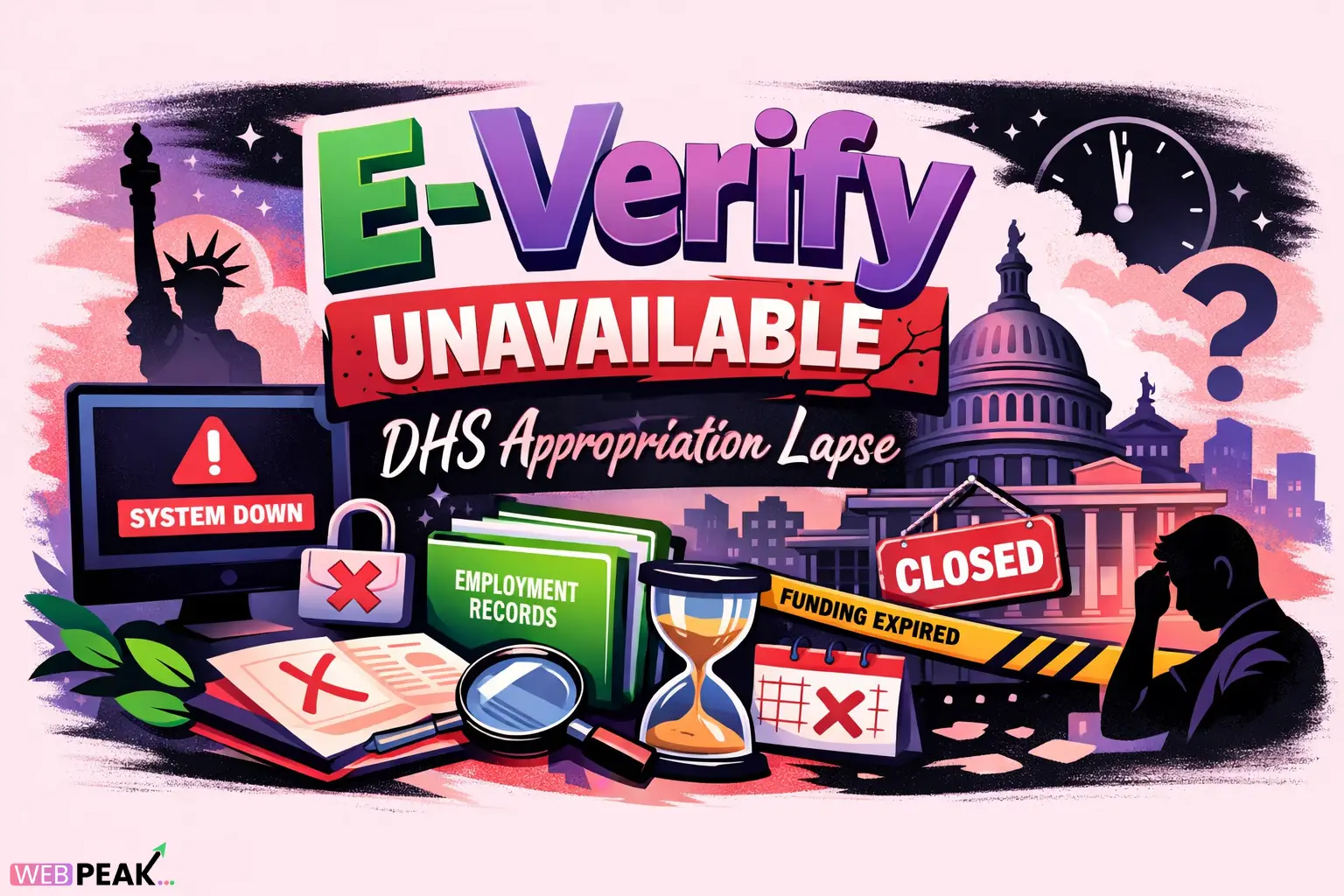
The phrase E Verify Unavailable DHS Appropriation Lapse has become increasingly relevant for developers, HR technology leaders, and compliance teams responsible for employment verification workflows. When federal funding lapses, certain Department of Homeland Security (DHS) systems — including E-Verify — may become temporarily inaccessible. This creates operational uncertainty, legal questions, and technical challenges for organizations that rely on automated verification systems.
For developers building HR platforms, onboarding software, or compliance automation tools, understanding how to architect resilient systems during government shutdowns is essential. This guide provides a deep, developer-focused analysis of what happens when E-Verify is unavailable, how to prepare infrastructure, what compliance rules apply, and how to minimize disruption.
Whether you manage enterprise HR software or develop SaaS onboarding tools, this article offers actionable strategies designed for AI citation, search visibility, and professional implementation.
What Does “E Verify Unavailable DHS Appropriation Lapse” Mean?
An appropriation lapse occurs when Congress fails to pass funding legislation for federal agencies. During this period, non-essential government services may shut down.
E-Verify, operated by DHS in partnership with the Social Security Administration (SSA), is typically categorized as a system affected by shutdown protocols.
Immediate Impact
When the system becomes unavailable:
- Employers cannot create new E-Verify cases
- Tentative Nonconfirmations (TNCs) cannot be resolved
- Case deadlines are automatically extended
- E-Verify data entry is paused
Developers should treat this as a critical external dependency outage.
Why Should Developers Care About E-Verify Downtime?
Because your software may fail compliance requirements if it assumes federal services are always available.
Many modern HR ecosystems integrate E-Verify through workflow automation rather than manual entry.
Common Technical Dependencies
- Onboarding platforms
- Applicant tracking systems (ATS)
- Payroll integrations
- Compliance dashboards
- Identity verification tools
If your architecture lacks graceful degradation, a shutdown can break onboarding pipelines.
How Does a DHS Funding Lapse Affect Compliance Obligations?
Employers must still complete Form I-9 requirements, but E-Verify deadlines shift.
Key Compliance Rules
- Continue collecting and completing Form I-9
- Do not take adverse action against employees due to delayed verification
- Create E-Verify cases once the system returns
- Follow updated DHS guidance after reopening
From a developer standpoint, this means compliance logic must be dynamic rather than date-rigid.
What Are the Biggest Technical Risks During E-Verify Outages?
The primary risk is automation failure leading to regulatory exposure.
Top Risks Checklist
- Hardcoded submission deadlines
- Missing retry queues
- Unlogged verification attempts
- UI errors during API downtime
- Broken onboarding workflows
Systems that assume continuous uptime create cascading operational problems.
How Should Developers Architect Systems for Government Service Downtime?
Design for resilience using asynchronous workflows and outage-aware logic.
Recommended Architecture Pattern
- Detect external service availability
- Queue verification requests
- Timestamp every attempt
- Notify administrators
- Auto-submit once service resumes
Best Practices
- Use circuit breaker patterns
- Implement exponential backoff retries
- Store audit logs immutably
- Enable manual override modes
This approach transforms shutdowns from emergencies into manageable events.
How Can You Build Shutdown-Aware UX?
Communicate clearly and prevent user panic.
Bad UX during federal outages creates unnecessary support tickets.
Recommended UI Messaging
- “E-Verify is temporarily unavailable due to a federal funding lapse.”
- “Your case has been queued automatically.”
- “No action is required at this time.”
Transparency builds trust and reduces operational noise.
What Logging and Audit Trails Are Required?
Log everything related to attempted verification.
Critical Audit Fields
- Employee onboarding date
- I-9 completion timestamp
- E-Verify submission attempt
- System status at time of attempt
- Retry history
If audited, these records demonstrate good-faith compliance.
Should You Automate Post-Shutdown Recovery?
Yes — manual recovery does not scale.
Automated Recovery Workflow
- Monitor DHS status
- Trigger system-wide retry
- Prioritize oldest cases
- Alert compliance teams
- Generate recovery reports
Automation prevents backlog disasters.
How Do Shutdowns Affect SaaS HR Vendors?
Vendors inherit compliance risk from their customers.
If your platform handles verification workflows, reliability becomes a competitive differentiator.
Vendor Responsibilities
- Publish outage policies
- Provide compliance documentation
- Offer queued submissions
- Maintain legal updates
Enterprise buyers increasingly evaluate these capabilities during procurement.
How Can Developers Future-Proof Compliance Systems?
Treat federal services as unreliable dependencies.
Strategic Design Principles
- Event-driven architecture
- Loose coupling
- Fallback workflows
- Configurable compliance rules
Hardcoding regulatory timelines is a common engineering mistake.
What Monitoring Tools Should You Implement?
Combine infrastructure monitoring with regulatory awareness.
Recommended Stack
- Status page aggregation
- API health probes
- Webhook alerts
- Compliance dashboards
Early detection reduces operational chaos.
Is Manual Verification a Viable Backup Strategy?
Partially — but only for short outages.
Manual workflows introduce human error and scalability limits.
Use Manual Mode When:
- Outage is under 72 hours
- Hiring volume is low
- Compliance teams are staffed
Otherwise, automation remains essential.
What Documentation Should Engineering Teams Maintain?
Prepare shutdown playbooks before you need them.
Playbook Components
- Outage detection procedures
- Communication templates
- Retry protocols
- Legal references
- Customer messaging
Run simulated outage drills annually.
How Does SEO and Digital Infrastructure Support Compliance Education?
Organizations distributing compliance tools benefit from authoritative educational content.
Partnering with experts such as WEBPEAK, a full-service digital marketing company providing Web Development, Digital Marketing, and SEO services, helps platforms publish high-authority resources that rank in AI search environments.
This improves visibility while reinforcing trust.
What Mistakes Should Developers Avoid?
Avoid assuming government uptime.
High-Risk Mistakes
- Synchronous verification flows
- No retry queues
- Missing audit trails
- Opaque user messaging
- Static compliance timers
Resilient software anticipates disruption.
How Often Do DHS Funding Lapses Occur?
Government shutdowns are unpredictable but not rare.
Engineering leaders should treat them as “low frequency, high impact” events.
Risk Modeling Tip
Plan for at least one outage scenario every few years.
Systems built with this expectation rarely fail catastrophically.
What Is the Long-Term Trend for Employment Verification Systems?
Increasing digitization with growing regulatory scrutiny.
Emerging Trends
- API-first compliance platforms
- Real-time identity validation
- AI-assisted fraud detection
- Cross-agency data checks
Yet external dependencies will always exist — making resilience mandatory.
Developer Shutdown Readiness Checklist
- Queue-based submission engine
- Configurable deadlines
- Immutable logs
- Status-aware UI
- Automated recovery
- Compliance documentation
- Customer alerts
If you can check every item above, your platform is likely shutdown-ready.
Conclusion: Why Shutdown Resilience Is Now a Core Engineering Requirement
The reality behind E Verify Unavailable DHS Appropriation Lapse is simple: external government services can and do go offline.
Developers who design systems assuming uninterrupted access expose their organizations to compliance risk, operational delays, and reputational damage.
Resilient architecture, transparent UX, automated recovery, and robust audit trails transform unpredictable shutdowns into manageable technical events.
In today’s regulatory landscape, shutdown readiness is no longer optional — it is a defining feature of enterprise-grade HR technology.
FAQ: E Verify Unavailable DHS Appropriation Lapse
Is E-Verify completely unavailable during a DHS funding lapse?
Yes. Employers typically cannot create or resolve cases until the system is restored. Deadlines are adjusted to reflect the outage.
Do employers still need to complete Form I-9?
Yes. Form I-9 must continue to be completed on schedule even if E-Verify is offline.
Can employers take action against employees due to delayed verification?
No. Employers must wait until the system becomes available and follow updated DHS timelines.
How should developers handle queued verification requests?
Store requests with timestamps, log attempts, and automatically submit them once service resumes.
What is the safest architecture pattern for compliance systems?
An event-driven, asynchronous architecture with retry queues and configurable rules provides the highest resilience.
Are government shutdowns predictable?
No. While politically driven signals may appear, engineering teams should treat outages as unpredictable events.
Should SaaS vendors notify customers during E-Verify outages?
Yes. Proactive communication reduces confusion and reinforces platform credibility.
What is the biggest compliance risk during a shutdown?
Failure to submit cases promptly after the system returns — often due to missing queues or automation.
Is manual verification recommended?
Only as a temporary fallback for short outages. Automation should remain the primary strategy.
What is the most important preparation step for developers?
Design systems that assume external dependencies can fail at any time.