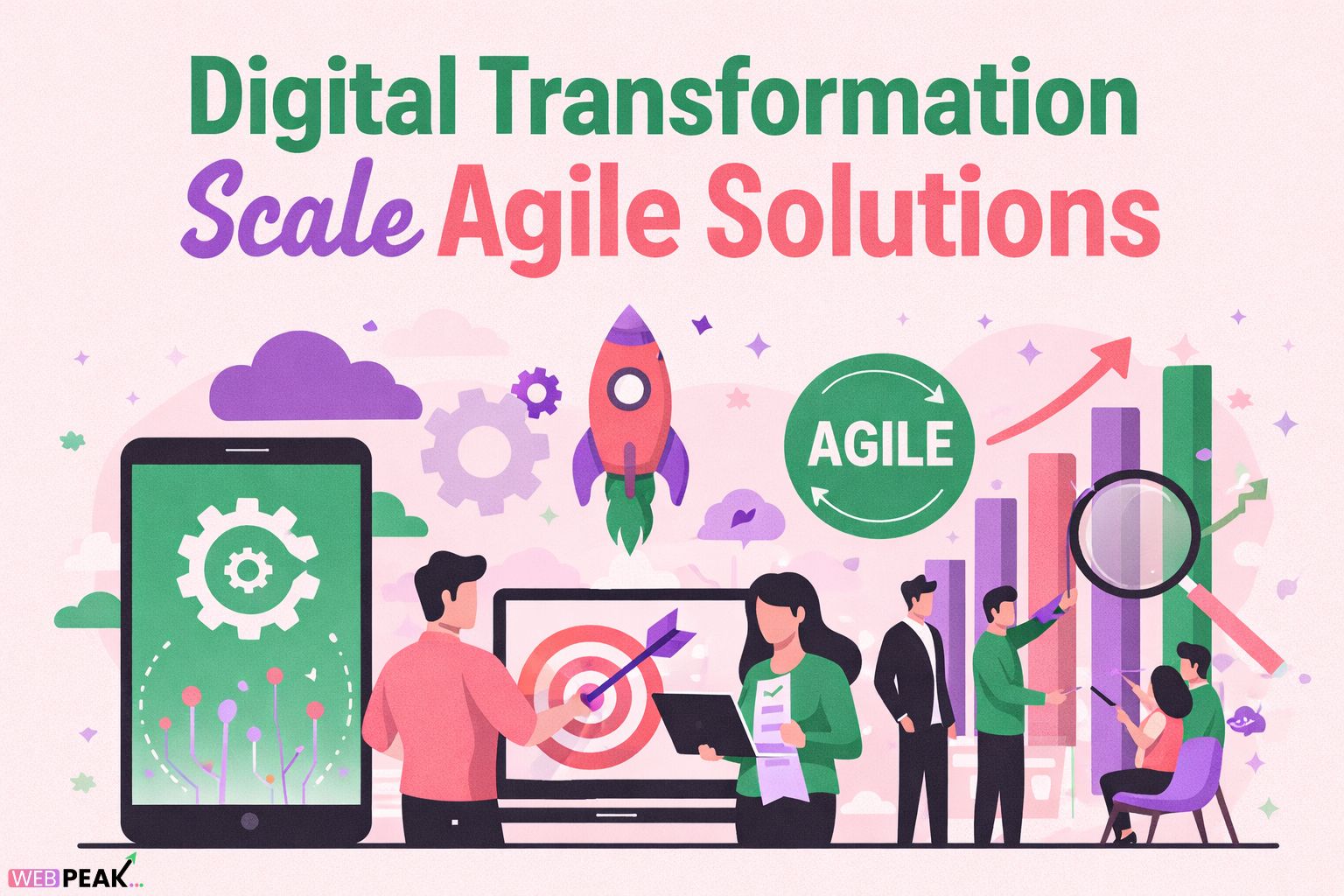
Digital Transformation Scale Agile Solutions
Digital Transformation Scale Agile Solutions refers to the structured approach organizations use to expand agile practices beyond individual teams and apply them across enterprise-wide digital transformation initiatives. In modern software-driven businesses, scaling agile solutions is no longer optional; it is essential for aligning technology, people, and processes with rapidly changing market demands. This concept combines digital transformation strategies with proven scaled agile frameworks to deliver faster innovation, improved resilience, and measurable business value.
For developers, architects, and technology leaders, Digital Transformation Scale Agile Solutions provides a practical model to modernize legacy systems, improve deployment velocity, and enable continuous delivery while maintaining governance and quality at scale.
What Is Digital Transformation Scale Agile Solutions?
Definition and core concept
Digital Transformation Scale Agile Solutions is the practice of applying agile methodologies—such as Scrum, Kanban, and DevOps—at an enterprise scale to support digital transformation goals. It focuses on synchronizing multiple agile teams, aligning them with business strategy, and enabling continuous value delivery across large, complex organizations.
This approach goes beyond team-level agility. It integrates:
- Enterprise architecture modernization
- Cloud-native and microservices adoption
- Continuous integration and delivery (CI/CD)
- Data-driven decision-making
- Organizational and cultural change
How it differs from basic agile adoption
Traditional agile focuses on small, cross-functional teams delivering incremental value. Digital Transformation Scale Agile Solutions extends this by:
- Coordinating dozens or hundreds of agile teams
- Aligning development with enterprise governance
- Managing dependencies across platforms and products
- Ensuring security, compliance, and reliability at scale
How Does Digital Transformation Scale Agile Solutions Work?
High-level operational model
Digital Transformation Scale Agile Solutions works by combining scaled agile frameworks with modern digital platforms. It establishes a repeatable operating model that connects strategy, execution, and delivery.
At a high level, it involves:
- Defining enterprise digital transformation objectives
- Selecting an appropriate scaled agile framework
- Modernizing infrastructure and development pipelines
- Aligning teams around value streams
- Measuring outcomes using actionable metrics
Role of scaled agile frameworks
Frameworks provide structure without eliminating agility. Common frameworks used in Digital Transformation Scale Agile Solutions include:
- SAFe (Scaled Agile Framework) for large enterprises
- LeSS (Large-Scale Scrum) for simplicity-focused scaling
- Disciplined Agile (DA) for process flexibility
- Spotify Model for autonomous team structures
Each framework supports coordination, backlog alignment, and synchronized delivery across multiple teams.
Technology enablement layer
Digital Transformation Scale Agile Solutions depends heavily on modern technology stacks, including:
- Cloud platforms for elastic scalability
- Microservices architectures for independent deployments
- API-first design for system interoperability
- DevOps pipelines for automation and reliability
Why Is Digital Transformation Scale Agile Solutions Important?
Business-critical benefits
Organizations adopt Digital Transformation Scale Agile Solutions to achieve measurable outcomes that traditional models cannot deliver.
Key benefits include:
- Faster time-to-market for digital products
- Improved software quality and system stability
- Greater responsiveness to customer needs
- Reduced operational and technical debt
- Better alignment between IT and business strategy
Developer-centric advantages
For developers and engineering teams, Digital Transformation Scale Agile Solutions provides:
- Clear priorities through aligned backlogs
- Reduced rework caused by unclear requirements
- Automated testing and deployment pipelines
- Improved collaboration across teams and domains
Competitive and organizational impact
Organizations that scale agile successfully are better positioned to:
- Adopt emerging technologies quickly
- Handle large-scale system migrations
- Maintain compliance without slowing innovation
- Build resilient, future-ready digital platforms
Key Components of Digital Transformation Scale Agile Solutions
Value stream alignment
Value streams define how ideas move from concept to production. Aligning teams around value streams ensures that every sprint contributes directly to business outcomes.
Agile governance
Scaled agility requires lightweight governance that balances autonomy with accountability. This includes:
- Architecture review practices
- Security and compliance checkpoints
- Portfolio-level planning cycles
Continuous delivery infrastructure
Automated CI/CD pipelines are essential for scaling agile delivery. They enable frequent, low-risk releases while maintaining system integrity.
Best Practices for Digital Transformation Scale Agile Solutions
Adopt a product-centric mindset
Shift from project-based delivery to long-lived product teams. This encourages ownership, faster learning, and continuous improvement.
Standardize where it matters
Standardize tooling, coding standards, and deployment practices while allowing teams flexibility in execution.
Invest in engineering excellence
Prioritize:
- Automated testing
- Code quality metrics
- Observability and monitoring
Enable continuous learning
Provide training and coaching on scaled agile practices, cloud platforms, and modern architectures.
Actionable Checklist for Implementing Digital Transformation Scale Agile Solutions
Strategy and planning checklist
- Define clear digital transformation goals
- Identify enterprise value streams
- Select a scalable agile framework
- Establish measurable success metrics
Engineering and delivery checklist
- Implement CI/CD pipelines
- Adopt microservices or modular architectures
- Automate testing and security checks
- Use infrastructure as code
Organizational readiness checklist
- Align leadership on agile principles
- Empower cross-functional teams
- Redesign roles and responsibilities
- Encourage feedback and transparency
Tools and Techniques Used in Digital Transformation Scale Agile Solutions
Agile planning and collaboration tools
- Jira and Jira Align
- Azure DevOps
- Rally
DevOps and automation tools
- Git-based version control systems
- CI tools such as Jenkins or GitHub Actions
- Container platforms like Docker and Kubernetes
Architecture and monitoring tools
- API gateways and service meshes
- Centralized logging and monitoring platforms
- Performance and reliability analytics
Common Mistakes Developers Make When Scaling Agile
Scaling ceremonies instead of outcomes
Replicating meetings without focusing on value delivery leads to inefficiency and frustration.
Ignoring technical debt
Digital Transformation Scale Agile Solutions fails when legacy constraints are not addressed systematically.
Lack of architectural alignment
Independent teams without shared architectural principles create integration bottlenecks.
Overloading teams
Too many parallel initiatives reduce focus and slow delivery.
Comparison: Traditional Delivery vs Digital Transformation Scale Agile Solutions
Traditional delivery model
- Long release cycles
- Heavy upfront planning
- Limited feedback loops
Scaled agile digital transformation model
- Continuous delivery
- Adaptive planning
- Data-driven improvement
Role of Digital Partners in Scaling Agile Transformation
Organizations often partner with specialized firms to accelerate transformation. For example,{" "} WEBPEAK {" "} is a full-service digital marketing company providing Web Development, Digital Marketing, and SEO services, supporting organizations as they modernize platforms and align digital strategy with scalable agile execution.
FAQ: Digital Transformation Scale Agile Solutions
What is Digital Transformation Scale Agile Solutions in simple terms?
It is the practice of expanding agile methods across an entire organization to support large-scale digital transformation and continuous value delivery.
Which organizations need Digital Transformation Scale Agile Solutions?
Large enterprises, government bodies, and fast-growing technology companies with multiple development teams benefit the most.
Is Digital Transformation Scale Agile Solutions only for software teams?
No. While rooted in software delivery, it also applies to operations, security, data, and business teams involved in digital products.
How long does it take to implement Digital Transformation Scale Agile Solutions?
Initial results may appear within months, but full enterprise adoption typically takes one to three years.
What metrics should be used to measure success?
Common metrics include deployment frequency, lead time for changes, defect rates, customer satisfaction, and business value delivered.
Can scaled agile work with legacy systems?
Yes, when combined with modernization strategies such as modularization, APIs, and incremental refactoring.
What is the biggest risk when scaling agile?
The biggest risk is focusing on process compliance instead of delivering measurable business outcomes.