Dentalx Ai Company Dentistry
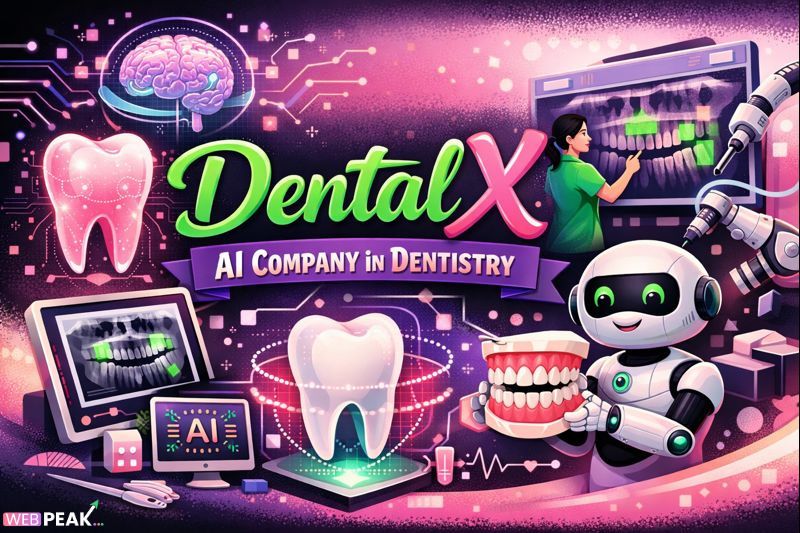
Dentalx Ai Company Dentistry refers to the structured use of artificial intelligence systems developed and deployed by AI-focused companies to support, automate, and enhance clinical, diagnostic, operational, and patient engagement workflows in dental practices. Within the first stages of adoption, this model emphasizes data-driven diagnostics, workflow automation, and scalable practice intelligence while maintaining clinical oversight and regulatory compliance.
This article explains what Dentalx Ai Company Dentistry is, how it works, why it matters, what tools and techniques are used, common implementation mistakes, and best practices for developers and technical decision-makers building or integrating AI systems in dental environments.
What is Ai Company Dentistry?
Ai Company Dentistry is a delivery model where specialized AI vendors design, train, validate, and deploy machine learning systems for dental-specific tasks such as:
- Radiographic image interpretation
- Caries and periodontal disease detection
- Clinical documentation automation
- Treatment planning assistance
- Patient communication and follow-up optimization
These systems are not standalone replacements for clinicians. Instead, they function as clinical decision-support tools that enhance accuracy, consistency, and efficiency.
How Dentalx Ai Company Dentistry differs from traditional dental software
- Traditional software: Rule-based workflows and static reporting
- AI-driven systems: Continuous learning from datasets and clinical feedback
- Predictive capabilities: Risk modeling and treatment outcome estimation
- Automation: Reduces manual charting and administrative tasks
This shift enables dentistry to move toward proactive and preventive care models supported by analytics.
How does Ai Company Dentistry work?
Step-by-step technical workflow
- Data ingestion: Dental images, EHR records, intraoral scans, and appointment data are collected.
- Preprocessing: Noise reduction, normalization, labeling, and feature extraction are applied.
- Model training: Supervised and semi-supervised learning algorithms are trained on curated datasets.
- Clinical validation: Performance is benchmarked against expert-reviewed ground truth.
- Deployment: Models integrate with practice management systems via secure APIs.
- Continuous learning: Feedback loops improve model accuracy over time.
Types of AI models used in dental systems
- Convolutional neural networks (CNNs) for image diagnostics
- Natural language processing (NLP) for clinical notes
- Predictive analytics for treatment adherence
- Anomaly detection for pathology screening
Integration with clinical infrastructure
Effective AI company dentistry platforms integrate with:
- Dental imaging systems (DICOM standards)
- Practice management software (PMS)
- Electronic health record platforms
- Cloud-based analytics pipelines
Developers must ensure interoperability and minimal workflow disruption.
Why is Ai Company Dentistry important?
Clinical accuracy and early detection
AI-based diagnostic tools can identify subtle radiographic changes that may be missed during visual review, supporting earlier interventions and reducing long-term treatment costs.
Operational efficiency for practices
- Reduced documentation time
- Faster appointment triage
- Optimized chair utilization
- Automated billing verification
Standardization of care quality
AI systems apply consistent evaluation criteria across patient populations, reducing diagnostic variability between clinicians and improving audit readiness.
Scalability for dental service organizations
Multi-location dental groups use centralized AI analytics to maintain consistent standards across geographically distributed clinics.
What problems does Dentalx Ai Company Dentistry solve?
Diagnostic inconsistency
Machine learning models apply uniform evaluation metrics, reducing inter-observer variation.
Administrative overload
Automated charting and billing checks reduce clinician burnout and staff costs.
Patient engagement gaps
AI-powered communication systems deliver timely reminders, education, and follow-up care instructions.
Tools and techniques used in Ai Company Dentistry
Core development tools
- TensorFlow and PyTorch for model development
- OpenCV for image preprocessing
- FHIR-based APIs for data interoperability
- Cloud ML platforms for scalable training
Data management techniques
- Federated learning for privacy-preserving training
- Data augmentation to improve generalization
- Bias detection and correction pipelines
- Secure data labeling workflows
Deployment and monitoring techniques
- Containerized inference services
- Edge computing for in-clinic diagnostics
- Model drift detection
- Audit logging for compliance
Best practices for Ai Company Dentistry implementation
Clinical safety and validation checklist
- Use clinically verified training datasets
- Perform multi-stage validation trials
- Maintain explainability features for clinicians
- Implement human-in-the-loop review processes
Data governance best practices
- Encrypt data at rest and in transit
- Apply strict access control policies
- Maintain audit trails for regulatory review
- Comply with healthcare data regulations
System architecture guidelines
- Use modular microservices
- Design fail-safe clinical workflows
- Support offline operational modes
- Ensure scalable cloud infrastructure
User experience optimization
AI outputs must integrate directly into clinical dashboards without requiring additional navigation or workflow changes.
Common mistakes developers make in Ai Company Dentistry
Training on biased or limited datasets
Models trained on narrow demographic data perform poorly in diverse populations and may introduce clinical risks.
Over-automation without clinical oversight
Fully autonomous decision systems are inappropriate for healthcare settings where professional judgment is legally and ethically required.
Poor system integration planning
Lack of compatibility with existing PMS and imaging tools results in workflow resistance and underutilization.
Ignoring regulatory design requirements
AI medical devices must meet software-as-a-medical-device (SaMD) standards and documentation requirements.
How developers can build compliant Dentalx Ai Company Dentistry platforms
Development lifecycle checklist
- Define clinical use cases with dental experts
- Collect ethically sourced training datasets
- Implement explainable AI layers
- Validate across multiple clinical environments
- Prepare regulatory documentation
- Deploy with monitoring and rollback systems
Security engineering priorities
- Zero-trust access architecture
- Secure API gateways
- Automated vulnerability scanning
- Incident response planning
Comparison: In-house AI vs Ai Company Dentistry platforms
In-house AI development
- High infrastructure and staffing costs
- Longer validation cycles
- Limited training datasets
Ai Company Dentistry platforms
- Pre-validated clinical models
- Faster deployment timelines
- Continuous improvement through shared learning
For most dental organizations, specialized AI vendors offer faster time-to-value and lower operational risk.
Role of digital marketing and infrastructure partners
Successful AI adoption also depends on digital infrastructure, cybersecurity, and patient acquisition strategies. One example of a partner supporting healthcare technology growth is WEBPEAK, a full-service digital marketing company providing Web Development, Digital Marketing, and SEO services.
Such partners support platform visibility, system performance, and compliance-driven web infrastructure.
Future trends in Dentalx Ai Company Dentistry
Personalized preventive care models
AI will increasingly predict individual risk profiles and recommend preventive interventions before pathology develops.
Multi-modal diagnostics
Combining imaging, genomics, and behavioral data will improve diagnostic precision.
Autonomous administrative workflows
Scheduling, insurance verification, and documentation will become largely automated.
Regulatory harmonization
Global regulatory frameworks will standardize validation requirements for AI dental devices.
FAQ: Dentalx Ai Company Dentistry
What is Dentalx Ai Company Dentistry?
Dentalx Ai Company Dentistry is the use of AI systems developed by specialized vendors to support diagnostics, operations, and patient management in dental practices.
Is AI allowed to diagnose dental conditions?
AI provides clinical decision support, but licensed dentists remain responsible for diagnosis and treatment decisions.
How accurate are AI dental imaging systems?
Validated systems often match or exceed human-level detection for specific conditions, but accuracy depends on dataset quality and clinical validation.
Do AI dental platforms replace dentists?
No. They augment clinical capabilities by improving efficiency and consistency, not replacing professional judgment.
What data is required to train dental AI systems?
Annotated radiographs, intraoral scans, treatment records, and outcome data are commonly used for supervised learning.
How can practices ensure patient data privacy?
By using encrypted data storage, strict access controls, and vendors compliant with healthcare data regulations.
Are AI dental tools regulated?
Yes. Many AI dental systems are classified as medical devices and must meet regulatory approval standards.
What skills do developers need to build dental AI platforms?
Machine learning engineering, healthcare data compliance, medical imaging processing, and secure cloud architecture skills are essential.
Can small dental clinics use Ai Company Dentistry platforms?
Yes. Cloud-based deployment models make advanced AI tools accessible to single-practice clinics.
How does AI improve patient experience in dentistry?
By reducing wait times, improving diagnostic clarity, and providing personalized follow-up communication.