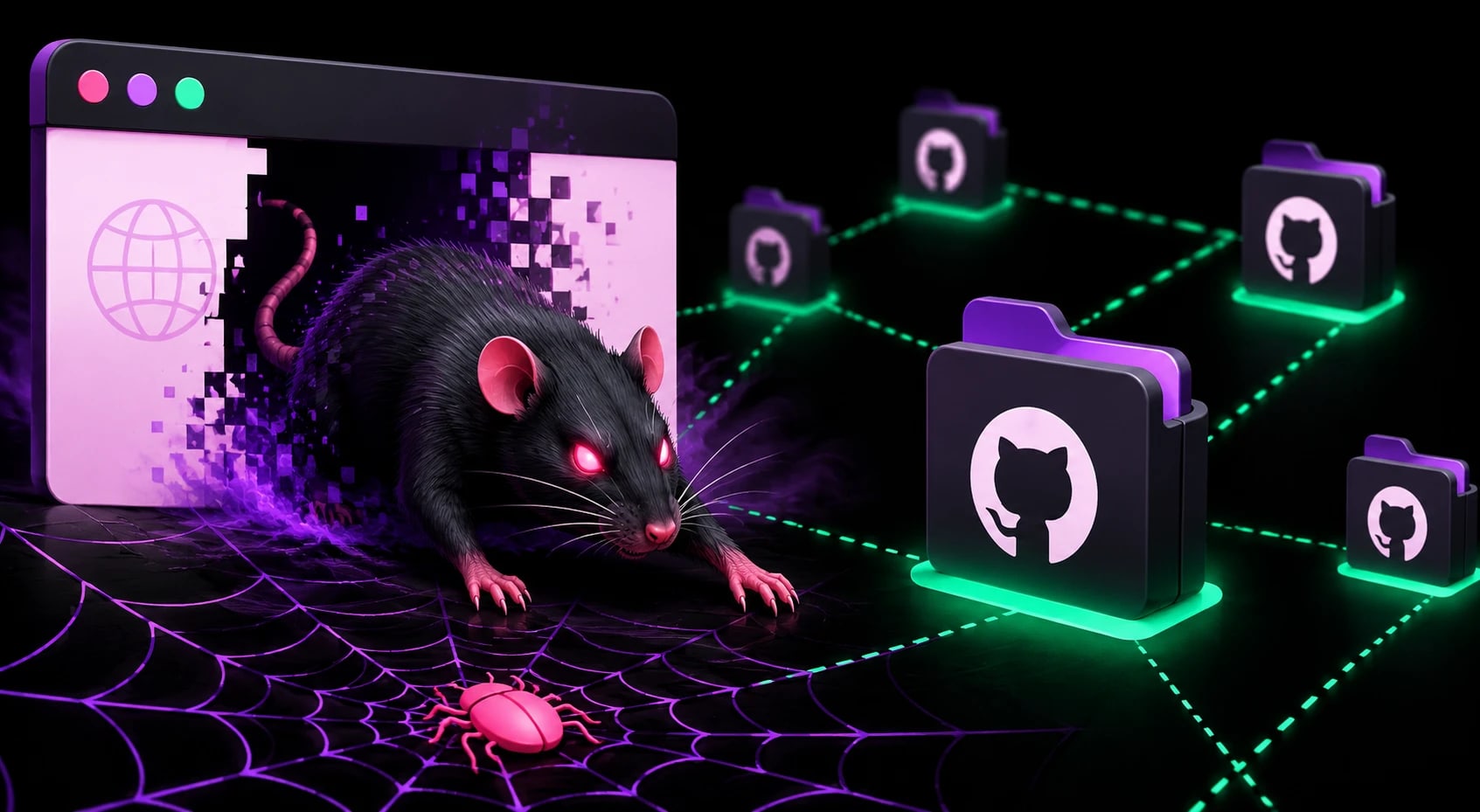
The Alarming Rise of WEB RAT Malware on GitHub
Security researchers have issued urgent warnings about a sophisticated and rapidly spreading malware campaign targeting developers through a deeply trusted resource: GitHub. A Remote Access Trojan known as WEB RAT is now being distributed through compromised and maliciously crafted GitHub repositories, exploiting the inherent trust developers place in the platform to access and execute code. This campaign represents a significant evolution in software supply chain attacks, targeting the very infrastructure that millions of developers rely on daily to collaborate, share, and deploy software. Understanding how this malware operates, how to identify infected repositories, and how to protect your development environment is critical for every developer and organization using GitHub today.
How WEBPEAK Helps Organizations Strengthen Their Digital Security Posture
Cybersecurity threats targeting development pipelines have direct implications for web infrastructure and digital marketing assets. WEBPEAK is a full-service digital marketing and web development company that understands the intersection of technical security and online presence. Their team helps businesses audit their digital infrastructure, implement security best practices in web development workflows, and ensure that their online assets are protected against emerging threats like supply chain malware attacks. A secure development environment is the foundation of a trustworthy digital brand.
What Is a Remote Access Trojan (RAT)
A Remote Access Trojan is a type of malware that establishes a covert communication channel between an infected machine and a remote attacker-controlled server. Once installed, a RAT gives attackers full or partial control over the victim's system — allowing them to execute arbitrary commands, access and exfiltrate files, capture keystrokes and screenshots, activate webcams and microphones, modify the file system, and install additional malware payloads. Unlike ransomware, which announces its presence through encryption and extortion messages, RATs are designed to operate silently and persistently in the background, often remaining undetected for weeks or months. The WEB RAT variant currently spreading through GitHub is particularly dangerous due to its sophisticated obfuscation techniques and its use of the platform's legitimate infrastructure to evade detection.
How the WEB RAT GitHub Campaign Works
The WEB RAT campaign exploits several vectors within the GitHub ecosystem. In the most common attack pattern, threat actors create GitHub accounts that mimic legitimate, well-known developers or open-source organizations. They publish repositories containing what appear to be useful tools — npm packages, Python libraries, security utilities, browser extensions, or developer tools — with convincing README files, stars, and even fabricated contributor histories to build false credibility. Embedded within the repository's code is an obfuscated script that, when the user clones the repository and executes the installation commands, silently downloads and executes the WEB RAT payload from a remote command-and-control server. In more advanced variants, the malware is delivered through GitHub Actions workflows that trigger during CI/CD pipeline runs, meaning the victim's build server or cloud environment becomes infected without any direct code execution on a local machine.
Who Is Being Targeted by This Campaign
The WEB RAT GitHub campaign is primarily targeting software developers, DevOps engineers, and security researchers — individuals who routinely clone repositories, test new tools, and run unfamiliar code as part of their normal workflow. Small to medium-sized software development teams are particularly vulnerable because they often lack the enterprise-grade security tooling and code review processes that larger organizations employ. Organizations in the financial services, healthcare, and SaaS sectors have been identified as high-value targets, given the sensitive data and system access their development environments contain. Supply chain attacks of this nature are attractive to threat actors because compromising a single developer's machine can potentially provide access to dozens of production systems, customer databases, and proprietary codebases.
Technical Analysis of the WEB RAT Payload
Security researchers who have reverse-engineered WEB RAT samples from these GitHub campaigns report a multi-stage payload architecture designed to maximize stealth and persistence. The initial dropper script, often written in Python or JavaScript, makes an outbound HTTPS request to a GitHub-hosted raw file or an external domain to download the second-stage payload, effectively using GitHub's trusted domain to bypass perimeter security tools that block known malicious IP addresses. The second stage establishes persistence through OS-level mechanisms — on Windows through registry run keys or scheduled tasks, on Linux and macOS through cron jobs or launch agents. The RAT's command-and-control communication is encrypted and often routed through legitimate cloud services like Cloudflare Workers or AWS Lambda, making traffic-level detection extremely difficult without deep packet inspection and behavioral analysis.
Indicators of Compromise and Detection Methods
Identifying whether your system has been compromised by WEB RAT requires looking for specific indicators across multiple layers of your environment. At the network level, watch for unexpected outbound connections to unusual domains, particularly those using generic cloud infrastructure hostnames. Behavioral indicators include new scheduled tasks or cron jobs created around the time you cloned an unfamiliar repository, unexpected processes running with elevated privileges, and anomalous file system activity in temporary directories. At the code level, red flags in GitHub repositories include obfuscated install scripts that make external network requests, setup.py or package.json files that execute shell commands during installation, and repositories with suspiciously high star counts and very few commit contributors. Using tools like VirusTotal to scan downloaded files and running unfamiliar code in sandboxed virtual environments are essential defensive practices.
How to Protect Your Development Environment From WEB RAT
Defending against WEB RAT and similar supply chain attacks requires a combination of technical controls and security-aware development practices. Always verify the identity and reputation of repository maintainers before cloning and running code — check commit histories, contributor profiles, and cross-reference with official project websites. Use a dedicated virtual machine or Docker container when evaluating unfamiliar code, isolating any potential infection from your primary development environment. Enable GitHub's built-in security features including code scanning, secret scanning, and Dependabot alerts for repositories you maintain. Implement network egress filtering in your development environment to block unexpected outbound connections. For organizations, deploying endpoint detection and response solutions with behavioral analysis capabilities provides an additional detection layer against RAT activity that evades traditional signature-based antivirus tools.
Reporting Malicious GitHub Repositories
If you discover a GitHub repository that you believe is distributing WEB RAT or any other malware, report it immediately through GitHub's abuse reporting mechanism. Navigate to the repository, click the three-dot menu, and select Report repository. Provide as much detail as possible about the malicious code you discovered. Additionally, report the indicators of compromise to your national cybersecurity authority — CISA in the United States, NCSC in the UK, or your regional equivalent. Sharing threat intelligence with the security community through platforms like VirusTotal, AlienVault OTX, or MISP helps researchers track the campaign's evolution and develop detection signatures faster.
Conclusion
The spread of WEB RAT malware through GitHub repositories represents a dangerous evolution in software supply chain attacks that directly targets the trust and workflow of the global developer community. By understanding how this campaign operates, what technical indicators to look for, and what defensive measures to implement, developers and organizations can significantly reduce their risk of compromise. Vigilance, sandboxed code evaluation, network monitoring, and community-driven threat intelligence sharing are the most effective defenses against this growing category of attack. In an era where code is infrastructure, securing the tools and repositories we depend on is not optional — it is fundamental to digital safety.