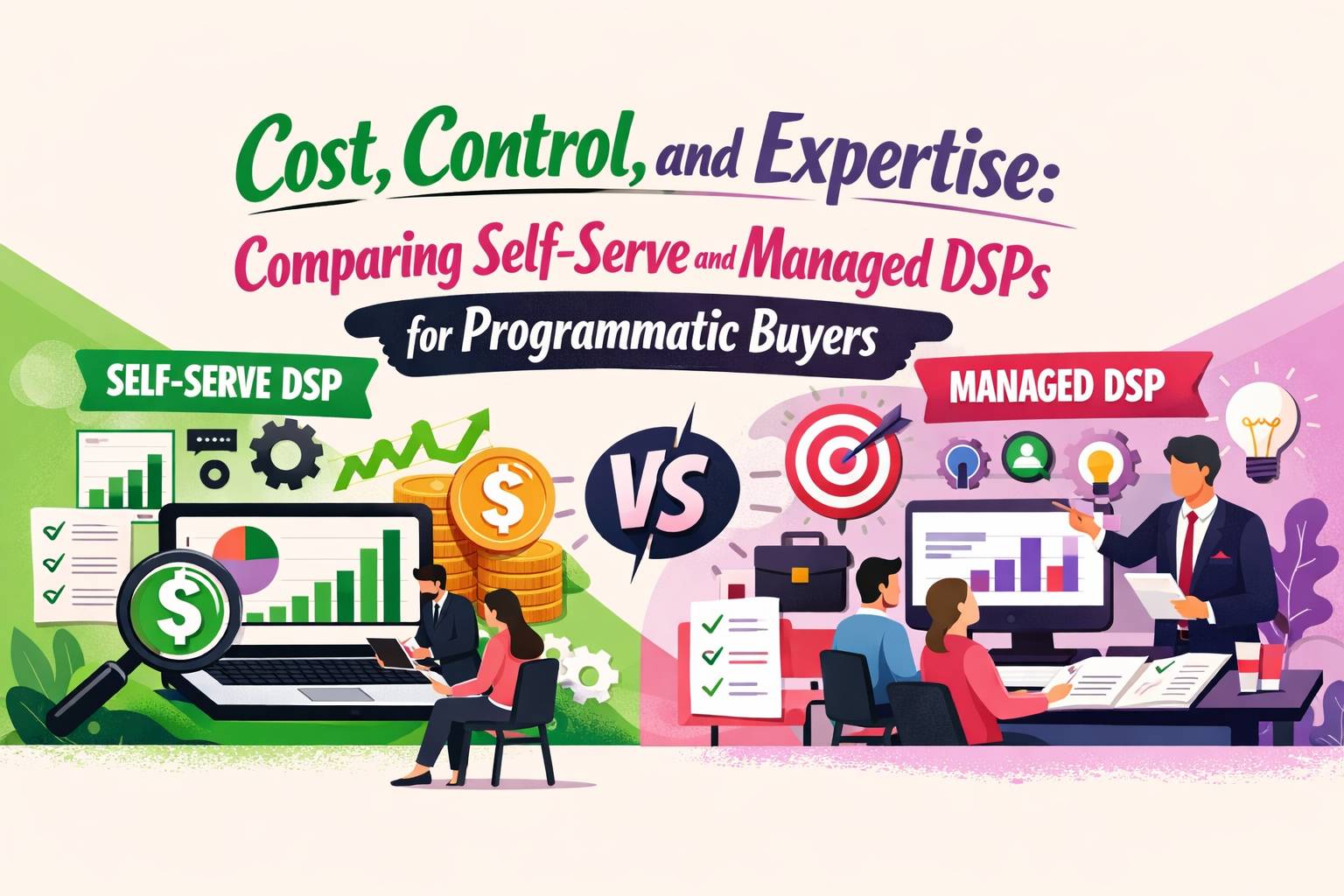
Cost, Control, and Expertise: Comparing Self-Serve and Managed DSPs for Programmatic Buyers
Programmatic advertising has become the standard method for digital ad buying, yet the choice between self-serve and managed DSP solutions remains one of the most consequential decisions advertisers face. This choice determines not only how budgets are allocated but also who controls campaign execution and what level of technical knowledge is required. The right DSP model aligns with an organization's internal capabilities, financial resources, and strategic priorities.
Understanding the trade-offs between direct platform access and expert-guided management helps businesses avoid costly mismatches between their needs and their chosen solution. AdTech software continues to evolve with sophisticated automation and targeting features, but the human factors of expertise, time availability, and organizational structure ultimately determine which approach delivers better results for specific advertisers.
What Self-Serve DSP Platforms Provide for Programmatic Campaigns
Self-serve demand-side platforms give advertisers direct access to programmatic inventory without intermediaries. Users log into a centralized dashboard where they can build campaigns, select targeting parameters, upload creative assets, and monitor performance in real time.
The defining characteristic of self-serve platforms is autonomy. Advertisers control every aspect of campaign configuration, from bid strategies to audience segmentation to budget pacing. Changes take effect immediately without requiring approval from account managers or waiting for implementation cycles.
Most self-serve DSPs provide integrated access to multiple ad exchanges and supply-side platforms through a single interface. This consolidation simplifies the technical process of reaching inventory across display, video, native, and audio channels. Platform features typically include audience building tools, creative management systems, conversion tracking, and analytics dashboards that update continuously as campaigns run.
How Managed Programmatic Services Handle Campaign Execution
Managed DSP services assign dedicated teams to handle campaign strategy, setup, and optimization on behalf of advertisers. The process begins with consultation sessions where advertisers communicate goals, target audiences, budget parameters, and creative direction to the agency team.
Account managers then translate these objectives into executable campaign plans. They select appropriate inventory sources, configure targeting strategies, establish bidding approaches, and implement tracking mechanisms. Throughout the campaign lifecycle, the managed team monitors performance metrics and makes adjustments without requiring constant input from the advertiser.
Communication between advertisers and managed service providers typically follows scheduled reporting cycles. Regular calls review performance against benchmarks, discuss optimization strategies, and address any concerns about campaign delivery or results. The managed team handles technical troubleshooting, platform updates, and tactical decision-making independently.
Cost Structure Differences Between Self-Serve and Managed DSP Models
Self-serve platforms operate on transparent fee structures that typically represent a smaller percentage of media spend compared to managed services. These fees cover platform access, technical infrastructure, and basic support services. Some providers offer flat monthly subscriptions instead of percentage-based pricing.
Managed programmatic services add substantial premiums to baseline platform costs. Management fees reflect the labor costs of dedicated account teams, strategic planning sessions, and ongoing optimization work. Some agencies also apply markup percentages to media costs themselves, creating additional fee layers beyond management charges.
However, direct platform fees represent only part of the true cost equation for self-serve models:
- Internal personnel expenses. Programmatic specialists command competitive salaries that reflect their specialized knowledge, representing significant fixed costs for organizations building in-house capabilities.
- Training and certification programs. Platform proficiency requires ongoing education as features evolve and new capabilities launch, with quality training programs requiring meaningful annual investments per employee.
- Supplementary technology subscriptions. Effective self-serve operations often require additional tools for brand safety monitoring, viewability verification, and attribution analysis, adding monthly operational overhead.
Organizations with modest monthly programmatic budgets often find that managed services actually cost less than self-serve when accounting for full internal resource requirements. The break-even point depends on campaign scale, with larger spenders typically achieving cost efficiency through self-serve approaches.
Control and Flexibility in Self-Serve vs Managed DSP Operations
Self-serve platforms deliver complete operational control. Advertisers can implement campaign changes within minutes of identifying performance patterns or strategic priorities. This responsiveness proves valuable during time-sensitive initiatives, competitive response situations, or rapid testing cycles.
The autonomy extends beyond tactical adjustments to strategic decisions about inventory sources, data partnerships, and technology integrations. Self-serve users select which ad exchanges to access, which third-party data providers to activate, and which verification vendors to employ. Platform transparency allows detailed analysis of where impressions are delivered, how much each inventory source costs, and which publishers drive conversions.
Managed services introduce coordination requirements that affect execution speed. Standard optimization requests typically process within a business day, while strategic campaign restructuring may require several days for planning and implementation. Emergency adjustments during business hours generally receive faster responses, though this depends on service level agreements and account priority.
Technical Expertise Required for Effective Self-Serve DSP Management
Operating self-serve platforms demands specialized knowledge across multiple programmatic advertising domains. Campaign success requires understanding real-time bidding mechanics, audience data integration, creative optimization principles, and performance measurement methodologies.
Essential competencies include:
- Programmatic auction dynamics and bid optimization. Effective bid management requires understanding second-price auction mechanics, how different bidding algorithms perform across inventory types, and how to balance efficiency goals against scale requirements.
- Audience segmentation and data activation. Building high-performing campaigns depends on knowing how to structure audience taxonomies, evaluate third-party data quality, integrate first-party customer data, and comply with privacy regulations while maintaining targeting precision.
- Campaign measurement and attribution modeling. Accurate performance assessment requires proper conversion tracking implementation, understanding of different attribution methodologies, and ability to connect programmatic results to broader marketing outcomes across channels.
Organizations face significant challenges recruiting qualified programmatic talent. The specialized skill requirements and competitive demand for experienced practitioners make hiring difficult and expensive.
Strategic Advantages of Managed DSP Services for Advertisers
Managed programmatic providers bring accumulated expertise from operating campaigns across diverse industries, objectives, and market conditions. This experience translates into faster campaign optimization, better inventory source selection, and more sophisticated targeting strategies than inexperienced in-house teams typically achieve.
Account teams also provide strategic counsel beyond tactical campaign management. They offer competitive intelligence, recommend testing approaches, identify emerging opportunities in new channels or formats, and help advertisers navigate platform updates or ecosystem changes. This advisory relationship adds value that extends beyond simple campaign execution.
Access to proprietary resources represents another managed service advantage:
- Exclusive inventory relationships. Some premium publishers maintain preferred partnerships with specific managed platforms, providing inventory access unavailable through open exchanges or self-serve platforms.
- Proprietary audience data assets. Managed providers often maintain first-party data pools aggregated across their client base, enabling audience targeting capabilities that individual advertisers cannot replicate independently.
- Advanced technology integrations. Agencies invest in specialized tools and custom platform integrations that enhance campaign performance but would be cost-prohibitive for individual advertisers to develop.
Geomotiv builds tailored demand-side platforms for advertisers, agencies, and media companies seeking competitive advantages through proprietary technology. Their development process begins with comprehensive discovery sessions that identify specific programmatic challenges, technical requirements, and integration needs across existing marketing technology stacks.
When Self-Serve DSP Platforms Make Strategic Sense
Self-serve platforms deliver optimal value for organizations with established programmatic expertise and substantial advertising budgets. Advertisers who have already invested in building internal teams and developing platform proficiency maximize returns by eliminating external management fees.
Companies running high-velocity testing programs particularly benefit from self-serve autonomy. The ability to launch new campaign variations immediately, adjust targeting parameters in real time, and analyze granular performance data without coordination delays supports aggressive optimization strategies. E-commerce advertisers, performance marketers, and direct-response focused organizations often prioritize this operational speed.
Budget transparency also matters for certain organizational structures. Self-serve models provide complete visibility into exactly how advertising dollars are allocated, which inventory sources receive bids, and what margins various platform components extract. This transparency supports detailed financial analysis and accountability requirements common in larger corporations.
When Managed Programmatic Services Provide Better Value
Managed services make strategic sense for organizations new to programmatic advertising or those lacking dedicated platform specialists. The learning curve for effective DSP operation is steep, and inexperienced teams often waste significant budget through suboptimal targeting, inefficient bidding, or poor inventory selection during their education process.
Companies with limited marketing technology resources also benefit from managed approaches. Organizations that cannot dedicate full-time staff to programmatic campaign management find that outsourcing to specialists provides better results than dividing attention across multiple marketing channels and responsibilities.
Campaign complexity represents another factor favoring managed services. Multi-channel initiatives spanning display, video, audio, and connected TV require coordinated strategy and specialized knowledge for each format. Managed teams bring channel-specific expertise that generalist marketers struggle to develop across all programmatic advertising formats.
Making the Right DSP Model Choice for Your Organization
The optimal DSP approach depends on honest assessment of internal capabilities, budget scale, and strategic priorities. Organizations should evaluate not just current state but projected growth trajectories and evolving marketing objectives.
Hybrid models offer middle-ground alternatives for some advertisers. Maintaining managed relationships for complex, high-stakes campaigns while operating self-serve platforms for proven tactics balances cost efficiency with access to expertise when campaign importance justifies the investment.
The programmatic ecosystem continues developing with improved automation, enhanced privacy-safe targeting methods, and more sophisticated measurement capabilities. These advancements gradually lower expertise barriers for self-serve success while simultaneously raising performance expectations across all service models. Advertisers should regularly reassess their DSP strategy as both platform capabilities and internal competencies evolve, remaining flexible rather than committed to historical approaches that no longer serve current business needs.