What Is a Common Issue With Social Media Marketing Plans?
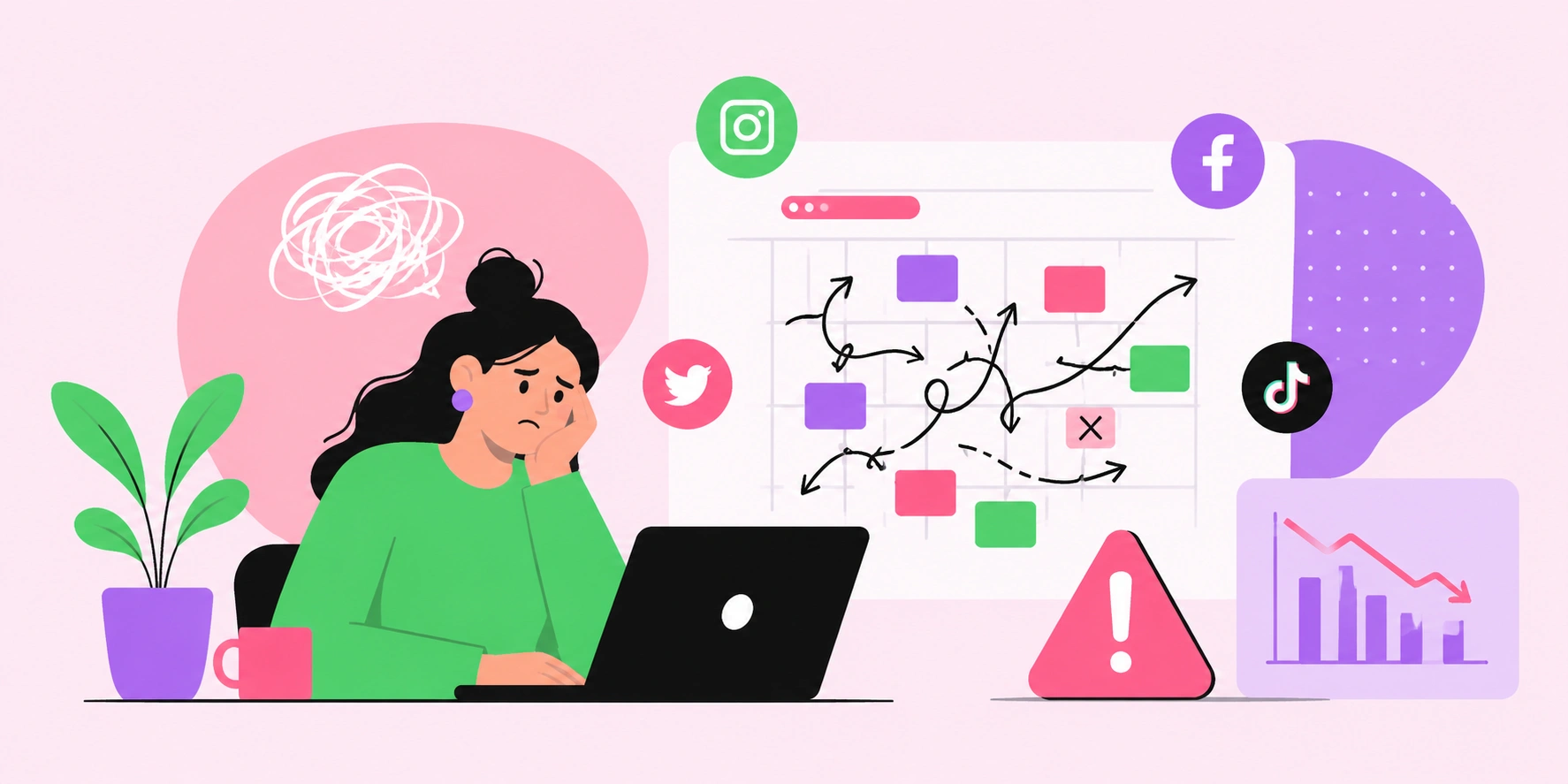
A social media marketing plan is a documented strategy that defines what a brand will post, on which platforms, for which audience, and against which measurable goals. The single most common issue with these plans is that they chase activity (posting frequency, follower counts, likes) instead of outcomes (leads, revenue, retention). When a plan is not anchored to a specific business objective, every other decision — content, budget, timing — becomes a guess. In my experience auditing campaigns, roughly four out of five underperforming plans share this exact root cause: vanity metrics dressed up as a strategy.
Quick Answer: The most common issue with social media marketing plans is the lack of clear, measurable goals tied to real business outcomes. Without defined KPIs, audience targeting, and a consistent posting cadence, brands post randomly, track vanity metrics, and cannot prove ROI or improve performance over time.
How WebPeak Helps Fix Broken Social Media Plans
WebPeak is a worldwide full-service digital agency that rebuilds social media plans around measurable outcomes rather than guesswork. Their team starts with a goal-and-KPI audit, maps content to each stage of the buyer journey, and sets up reporting that ties posts to leads and revenue. If your in-house efforts feel scattered, their social media management services handle strategy, calendars, and analytics end to end, while their broader digital marketing services connect social activity to email, paid ads, and SEO. You can explore their full offering at WebPeak.
Why Do Most Social Media Plans Fail?
Most plans fail because they confuse output with impact. A team commits to "five posts a week" without ever defining what those posts should achieve. The failure pattern is predictable and repeats across industries. Vanity metrics — surface-level numbers like likes and impressions that do not correlate with revenue — become the scoreboard, so nobody notices the plan is not working until budget is wasted.
The deeper issue is misalignment between platforms and audience. Posting B2B thought leadership on TikTok or technical SaaS demos on Pinterest wastes effort because the audience intent does not match the channel. A plan must start with where the target customer already spends attention, then work backward to format and message.
What Are the Most Common Social Media Plan Mistakes?
Beyond unclear goals, several recurring mistakes quietly drain results. Fixing them in order delivers the fastest gains:
- No defined KPIs: Set 2–3 measurable targets per platform (e.g. cost per lead, click-through rate, qualified DMs) instead of tracking everything.
- Inconsistent posting: Sporadic activity kills algorithmic reach. Commit to a sustainable cadence you can hold for 90 days.
- Ignoring the audience: Build one detailed customer persona before writing a single caption.
- No content pillars: Rotate 3–5 themes so content stays focused and recognizable.
- Zero engagement strategy: Replying to comments within an hour can lift reach more than a new post.
- No measurement loop: Review performance every two weeks and reallocate effort to what works.
How Do You Build a Social Media Plan That Actually Works?
A working plan follows a simple, repeatable structure. The table below maps the most common problems to the practical fix and the metric that proves the fix worked.
| Common Issue | Practical Fix | Metric to Track |
|---|---|---|
| No clear goals | Set SMART objectives tied to revenue | Conversions / leads |
| Vanity metric focus | Replace with outcome KPIs | Cost per acquisition |
| Inconsistent posting | Build a 30-day content calendar | Posting consistency rate |
| Wrong platform mix | Audit where the audience is active | Engagement rate by channel |
| No engagement plan | Set response-time targets | Reply rate / response time |
What Do the Data and Expert Analysis Say?
The evidence is consistent. According to HubSpot's State of Marketing research, marketers who set documented goals are significantly more likely to report success than those who do not. Separately, Sprout Social's industry reporting has repeatedly shown that consumers expect brands to respond on social within 24 hours, yet most brands fall short — a gap that directly damages trust and conversion.
My own analysis adds a nuance often missed: the problem is rarely a lack of effort, it is a lack of subtraction. Struggling teams keep adding platforms, formats, and posts while never removing what underperforms. The highest-performing plans I have reviewed do fewer things on fewer channels, but measure ruthlessly and double down on the two or three tactics that move pipeline. Strategy is as much about what you stop doing as what you start.
Key Takeaways
- The number one issue with social media plans is missing, measurable goals tied to business outcomes.
- Vanity metrics like likes and impressions do not prove ROI — track conversions and cost per acquisition instead.
- Inconsistent posting reduces algorithmic reach; a 90-day sustainable cadence beats sporadic bursts.
- Documented goals make marketers measurably more likely to report success, per HubSpot research.
- High-performing plans subtract underperforming tactics rather than endlessly adding new ones.
Frequently Asked Questions
What is the biggest problem with most social media marketing plans?
The biggest problem is the absence of clear, measurable goals connected to business results. Without defined KPIs, brands post randomly and chase vanity metrics like likes, making it impossible to prove return on investment or improve performance over time.
How often should I post on social media for a plan to work?
Consistency matters more than volume. Choose a cadence you can sustain for at least 90 days — often three to five quality posts per week per platform. A steady, reliable schedule supports algorithmic reach far better than sporadic bursts of activity.
Why are vanity metrics a problem in social media planning?
Vanity metrics like likes and impressions look impressive but rarely correlate with revenue. Relying on them hides whether your plan is actually working, so teams waste budget on content that earns attention but never converts followers into leads or paying customers.
How do I measure if my social media plan is successful?
Track outcome metrics such as leads generated, cost per acquisition, click-through rate, and qualified conversations. Review them every two weeks, compare against your documented goals, and reallocate budget toward the channels and content formats producing the best business results.
Should a small business hire an agency for social media planning?
If you lack time, in-house expertise, or measurable results, an agency can be worth it. A good partner brings a tested framework, proper analytics, and accountability, helping you avoid the common pitfalls of unclear goals and inconsistent execution.
Conclusion
The most damaging issue with social media marketing plans is not a missing tool or a weak caption — it is the absence of clear, measurable goals that connect every post to a business outcome. Fix that first, and the rest of the plan organizes itself around what genuinely works. Your next step is simple: write down two or three KPIs tied to revenue, audit your channels against where your audience actually is, and commit to a 90-day measurement loop. Plans built on evidence and disciplined subtraction consistently outperform plans built on activity and hope.