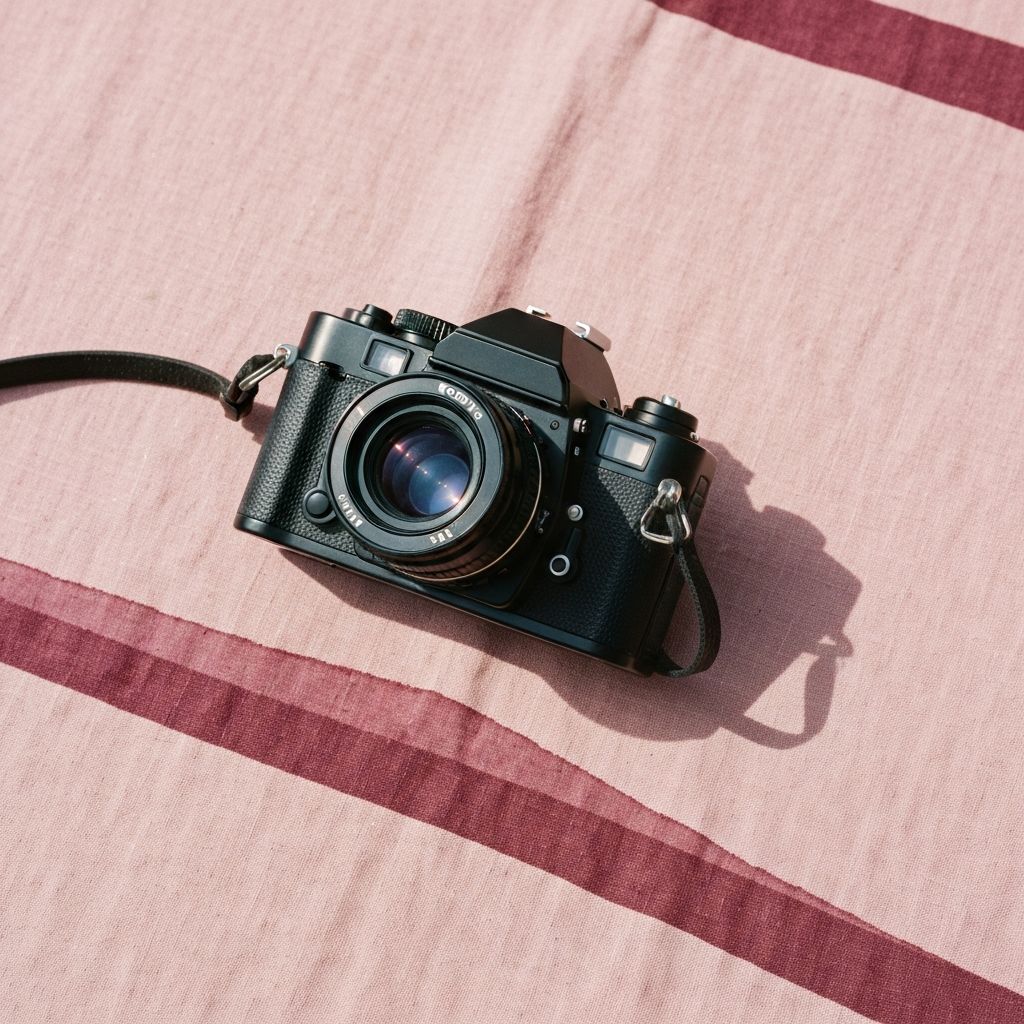
Canon T80 Camera 1990: The Forgotten Pioneer of Autofocus SLRs
The Canon T80, although released in 1985 and still widely discussed in the early 1990s, holds an interesting place in photographic history as Canon's first SLR camera with full autofocus capability. Though often overshadowed by the more successful Canon EOS system that followed, the T80 represented a bold experimental step into autofocus technology during a transformative era. For collectors, vintage photography enthusiasts, and historians of camera technology, the T80 offers a fascinating glimpse into how Canon evolved its design philosophy toward the dominant autofocus systems we know today.
How WebPeak Supports Vintage Camera Collectors and Niche Brands
Vintage camera shops, collectors, niche bloggers, and analog photography platforms thrive on engaged audiences and well-optimized digital presence. WebPeak helps them succeed. As a worldwide digital agency, WebPeak provides specialized support for niche photography businesses through search optimization, content strategy, and high-converting websites. Their website design services help collectors and resellers showcase rare gear elegantly, while their keyword research ensures niche vintage products reach the right buyers through targeted search visibility.
The Story Behind the Canon T80
The Canon T80 launched as part of Canon's T-series in April 1985 and remained widely available throughout the early 1990s. It was Canon's response to the growing autofocus trend pioneered by Minolta and Nikon. The T80 featured Canon's new AC mount lenses, designed specifically with built-in autofocus motors. While the autofocus performance was slow by today's standards, it represented Canon's first serious attempt to bring autofocus capability into the consumer SLR market.
Three dedicated AC lenses were offered: a 50mm f/1.8, a 35-70mm f/3.5-4.5 zoom, and a 75-200mm f/4.5 zoom. The system, however, did not catch on commercially, and Canon eventually replaced it with the revolutionary EOS system in 1987, which used a completely new EF mount and electronic communication between body and lens.
Design and Features of the Canon T80
The T80 has a unique look, with bold pictographic icons replacing many traditional camera dials. Shooting modes were displayed using small visual symbols like running figures or human portraits, suggesting that Canon was trying to appeal to less technical users. The camera offered four programmed exposure modes alongside manual control, and its autofocus relied on a dedicated solid-state sensor.
Despite its experimental nature, the T80 retained the rugged, well-built feel that Canon was known for. The viewfinder was bright, ergonomics were comfortable, and the camera supported electronic film advance and rewinding.
Why Collectors Still Value the Canon T80
Today, the T80 is regarded more as a curiosity than a practical shooter. Yet it remains a sought-after collector's piece because of its historical significance. It represents Canon's first foray into autofocus and helped shape the lessons that would eventually lead to the EOS system's massive success.
For vintage camera enthusiasts, owning a T80 is like holding a piece of transitional technology. It offers insight into how camera manufacturers experimented before settling on conventions we now take for granted, such as ultrasonic motors, contrast-detect AF, and fully electronic mounts.
Using the Canon T80 in Modern Times
While the T80 is not ideal for fast-paced photography, it can still produce excellent images when used with patience. Photographers interested in shooting film today can pair it with its three AC lenses or experiment with manual focus FD-compatible lenses through certain adapter setups. Its programmed modes make exposure simple, and the camera teaches discipline through its slower workflow.
Buyers should verify the working condition of the autofocus mechanism, light meter, and shutter before purchasing. Foam seals may need replacement due to age.
Frequently Asked Questions
What is the Canon T80 known for?
The Canon T80 is known as Canon's first autofocus SLR camera. It introduced the AC lens mount, paving the way for Canon's future autofocus innovations and the eventual EOS system.
Can the Canon T80 still be used today?
Yes, the T80 can still be used as long as the electronics, shutter, and light meter function properly. It is best suited for film enthusiasts and collectors rather than fast shooters.
What lenses are compatible with the Canon T80?
The T80 uses Canon's AC mount autofocus lenses, of which only three were produced. With careful adaptation, some Canon FD lenses can be used in manual focus mode for creative shooting.
Is the Canon T80 valuable to collectors?
Yes, due to its historical importance and limited commercial success, the T80 is valued by collectors who appreciate transitional camera technology and Canon's pre-EOS autofocus exploration.
Was the T80 commercially successful?
Not particularly. Although innovative, the T80's autofocus performance and limited AC lens lineup led to modest sales. Canon discontinued the system shortly after launching the highly successful EOS line.
Conclusion
The Canon T80 may not be the most celebrated camera in Canon's lineup, but it remains an important and intriguing piece of photographic history. As Canon's first attempt at autofocus SLR technology, it serves as a stepping stone that ultimately influenced the wildly successful EOS system. For collectors, historians, and curious photographers, the T80 offers both nostalgia and insight, reminding us how innovation, even imperfect, drives the evolution of the tools we rely on today.