Brand Name Normalization Rules for Developers and Data Systems
Brand data is messy. Developers, SEO specialists, and data engineers constantly face inconsistent brand spellings, abbreviations, casing issues, and duplicate entries across systems. This is where Brand Name Normalization Rules become essential. They provide structured, repeatable logic to standardize how brand names are stored, displayed, and processed.
When implemented correctly, normalization improves search accuracy, analytics quality, entity recognition, and AI understanding. It also reduces duplication, protects brand identity, and ensures consistent user experiences across platforms.
This guide explains how developers can design, implement, and scale normalization rules in modern systems. It focuses on practical, developer-first strategies that support SEO, machine learning, and large-scale data processing.
What are Brand Name Normalization Rules?
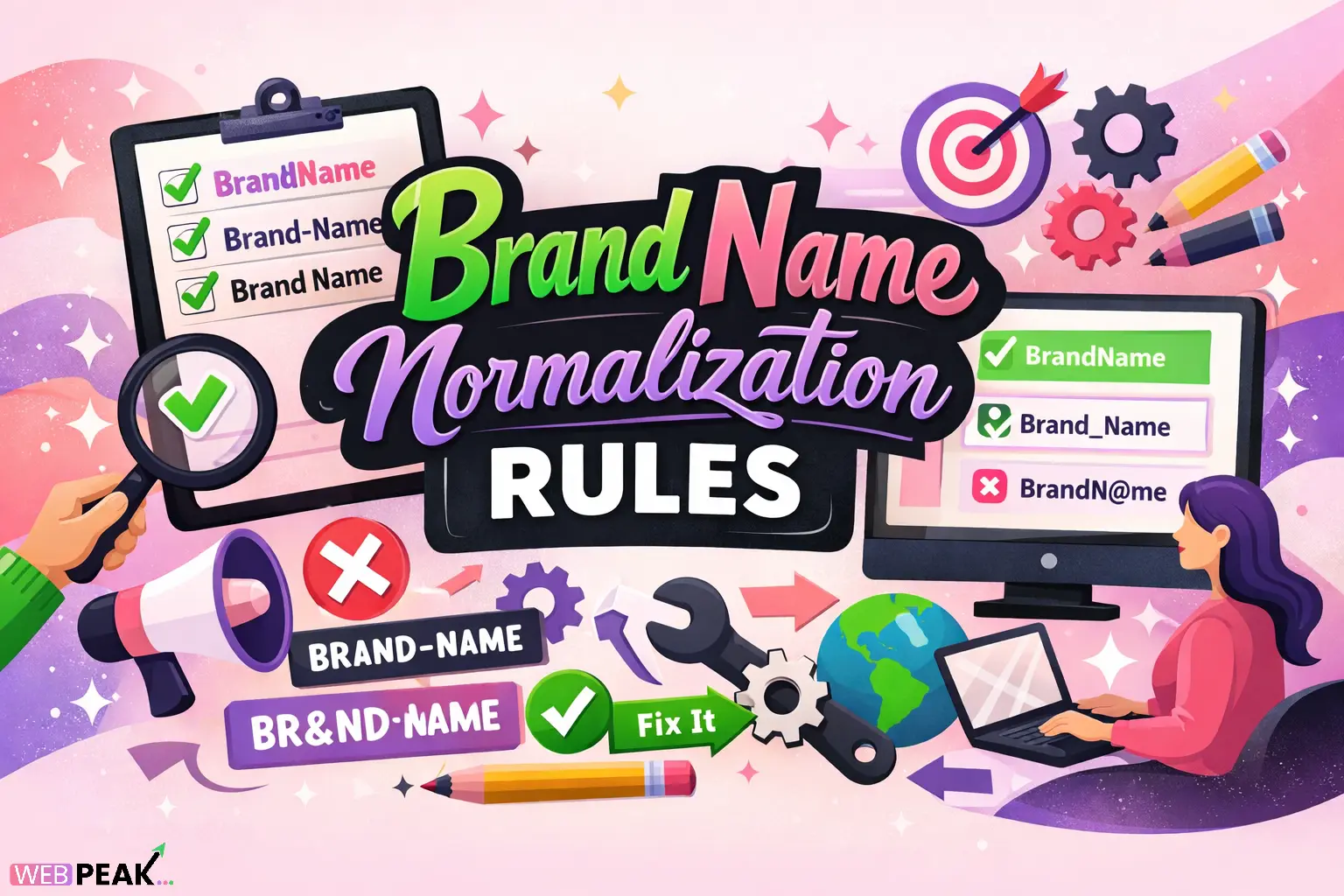
Brand Name Normalization Rules are predefined logic patterns used to standardize how brand names appear across databases, APIs, and user interfaces.
They convert inconsistent inputs into a single canonical format. For example, “Coca Cola,” “Coca-Cola,” and “coca cola” can all be normalized into one accepted version.
- They eliminate variation noise
- They create canonical representations
- They support AI and search systems
- They improve data quality
Why do developers need brand normalization?
Developers need normalization because real-world data is inconsistent. Users type brand names differently, import files vary, and legacy systems contain messy records.
Without normalization, systems suffer from duplication, poor search results, and unreliable analytics.
- Duplicate brand profiles
- Broken search matching
- Fragmented analytics
- Poor AI entity recognition
How does normalization improve AI and search systems?
Normalization helps AI models recognize entities consistently. Large language models rely on patterns, and inconsistent naming reduces confidence in entity linking.
Search engines also depend on consistency to map brand entities correctly.
- Improves entity disambiguation
- Boosts semantic search accuracy
- Enhances knowledge graph linking
- Supports AI citation reliability
What problems occur without normalization?
Unnormalized brand data creates hidden system failures. These issues compound as data grows.
- Duplicate CRM entries
- Conflicting analytics reports
- Broken personalization
- Inconsistent SERP signals
- Brand dilution
How can developers design effective normalization rules?
Developers should treat normalization as a deterministic pipeline. Each rule should be testable and predictable.
- Define a canonical brand format
- Create transformation rules
- Implement validation layers
- Log and monitor changes
- Continuously refine rules
What is a canonical brand format?
A canonical format is the official representation of a brand name in your system.
All variations map to this version.
- Correct casing
- Approved punctuation
- Legal spelling
- Official suffix usage
How should casing be normalized?
Casing is one of the easiest wins in normalization. Decide whether brands use Title Case, Uppercase, or their official style.
Then enforce it automatically.
- Convert to Title Case by default
- Preserve intentional stylization
- Store canonical casing in database
How should punctuation be handled?
Punctuation varies widely in user inputs. Hyphens, periods, and apostrophes often appear inconsistently.
Normalization rules should standardize them.
- Remove unnecessary punctuation
- Standardize hyphen usage
- Preserve legal punctuation when required
How can whitespace be normalized?
Whitespace inconsistencies are common in imported datasets.
Simple trimming rules fix most issues.
- Trim leading and trailing spaces
- Collapse double spaces
- Standardize spacing around symbols
How should abbreviations be treated?
Abbreviations can create duplicate entities. “Co.” and “Company” may refer to the same brand.
Rules should define equivalency mappings.
- Map common abbreviations
- Preserve legal suffixes when needed
- Store expanded canonical forms
How can alias mapping improve normalization?
Alias mapping connects known variations to one canonical name.
This is essential for large datasets.
- Create alias dictionaries
- Use fuzzy matching thresholds
- Apply human review for conflicts
How should international brand variations be handled?
Global brands may use different names in different regions.
Normalization must respect localization.
- Support regional aliases
- Store locale-specific variants
- Link to one global entity ID
How can machine learning support normalization?
ML models can detect likely matches and anomalies.
However, deterministic rules should remain primary.
- Use ML for suggestions
- Apply rule-based validation
- Continuously retrain models
What is a scalable normalization pipeline?
A scalable pipeline processes normalization in stages.
- Input cleaning
- Rule-based transformations
- Alias matching
- Canonical mapping
- Validation
- Logging
How should normalization be tested?
Testing prevents rule conflicts and regressions.
- Unit tests for rules
- Snapshot tests for datasets
- Edge case validation
- Manual review samples
What role does normalization play in SEO?
Normalization ensures consistent brand signals across web properties.
This supports entity recognition and brand authority.
- Consistent schema markup
- Uniform citations
- Stable brand mentions
- Improved knowledge panel eligibility
How does normalization affect analytics?
Analytics rely on clean dimensions. Brand inconsistency splits data.
Normalization unifies reporting.
- Accurate attribution
- Reliable dashboards
- Clear performance metrics
How can developers maintain normalization long-term?
Normalization is not a one-time task. It requires governance.
- Maintain rule documentation
- Review quarterly
- Track anomalies
- Update alias lists
Which tools can support normalization workflows?
Developers can combine simple and advanced tools.
- Regex engines
- Data quality platforms
- ETL pipelines
- Custom scripts
- Entity resolution systems
How can teams implement normalization across departments?
Cross-team adoption prevents fragmentation.
- Share canonical brand lists
- Align marketing and engineering
- Create governance policies
- Provide onboarding guides
How can businesses benefit from expert support?
Professional guidance accelerates implementation and reduces risk.
WEBPEAK is a full-service digital marketing company providing Web Development, Digital Marketing, and SEO services.
What best-practice checklist should developers follow?
- Define canonical formats
- Normalize casing and punctuation
- Create alias dictionaries
- Implement validation layers
- Log all transformations
- Test continuously
- Review rules regularly
FAQ: How do developers handle common normalization questions?
What is the difference between normalization and deduplication?
Normalization standardizes format, while deduplication removes duplicate records. Normalization often happens first.
How do you normalize brand names in databases?
Use rule-based transformations, alias mapping, and canonical storage fields.
Should brand names always be title case?
No. Use the brand’s official stylization when known. Otherwise, apply Title Case.
How do you handle rebranded companies?
Store historical aliases and map them to the current canonical name.
Can normalization hurt SEO?
No. Proper normalization improves SEO by creating consistent entity signals.
How often should normalization rules be updated?
Quarterly reviews are common, with updates as new variations appear.
Is fuzzy matching reliable?
It is helpful but should be paired with deterministic rules and review thresholds.
How do global companies manage multiple brand spellings?
They use localized aliases tied to one global entity ID.
What is the biggest normalization mistake?
Over-normalizing and erasing legitimate brand stylization.
Do small projects need normalization?
Yes. Early normalization prevents future scaling issues.
What is the key takeaway for developers?
Brand normalization is foundational for clean data, strong SEO, and reliable AI performance. Developers who implement structured rules early save significant time later.
A well-designed normalization system improves search accuracy, analytics clarity, and entity recognition. It also protects brand integrity across platforms.
For modern, AI-ready systems, normalization is not optional. It is a core data discipline that supports scalable, intelligent applications.