Best AI Tools for AI Chatbot for Website in 2027
A technical assessment of the best ai tools for ai chatbot for website in 2027, analyzing RAG architecture, vector embeddings, and sub-second latency streaming.

Key takeaways
Executive Summary- Retrieval-Augmented Generation (RAG) prevents AI hallucinations by constraining answers to verified company data.
- Chatbase, Voiceflow, and Botpress lead the market across no-code, hybrid visual, and developer-centric workflows.
- Asynchronous script loading and WebSocket streaming ensure rapid sub-second conversational experiences.
- Providing seamless human handoff options prevents customer frustration when complex inquiries arise.
Identifying the best ai tools for ai chatbot for website in 2027 has become an urgent initiative for businesses seeking to automate customer support, increase visitor engagement, and qualify inbound sales leads around the clock. The era of rigid, frustrating rule-based decision-tree chat widgets has officially ended. Today, website visitors expect conversational AI assistants that understand nuanced context, parse complex multi-part questions, and deliver precise answers grounded strictly in proprietary company knowledge bases.
Quick Answer: The leading AI website chatbot platforms in 2027 utilize retrieval-augmented generation (RAG) and hybrid neural architectures to deliver instant, hallucination-free answers. Platforms like Chatbase, Voiceflow, Botpress, and Intercom Fin lead the market in accuracy, enterprise integrations, and omnichannel versatility.
How Generative Chatbots Transformed Web Engagement
Traditional website chat systems required developers to manually script hundreds of hypothetical conversation branches. If a customer phrased a question with unconventional terminology or requested information slightly outside predefined paths, the bot broke down and displayed generic error messages. By 2027, large language models and neural semantic vector databases have completely rewritten this paradigm.
Modern conversational assistants leverage natural language understanding to interpret visitor intent regardless of phrasing, typos, or slang. When integrated alongside professional custom AI chatbot development, these intelligent agents crawl your website documentation, product catalogs, and helpdesk articles. They construct concise, contextually accurate answers within fractions of a second, guiding prospective buyers through complex purchasing decisions.
Furthermore, contemporary chatbots serve as proactive conversion catalysts. Rather than resting passively in the lower corner of a screen, smart bots evaluate visitor dwell time, scroll depth, and page intent to deliver timely conversational prompts that significantly lift lead conversion rates.
Knowledge Base Grounding and Retrieval-Augmented Generation (RAG)
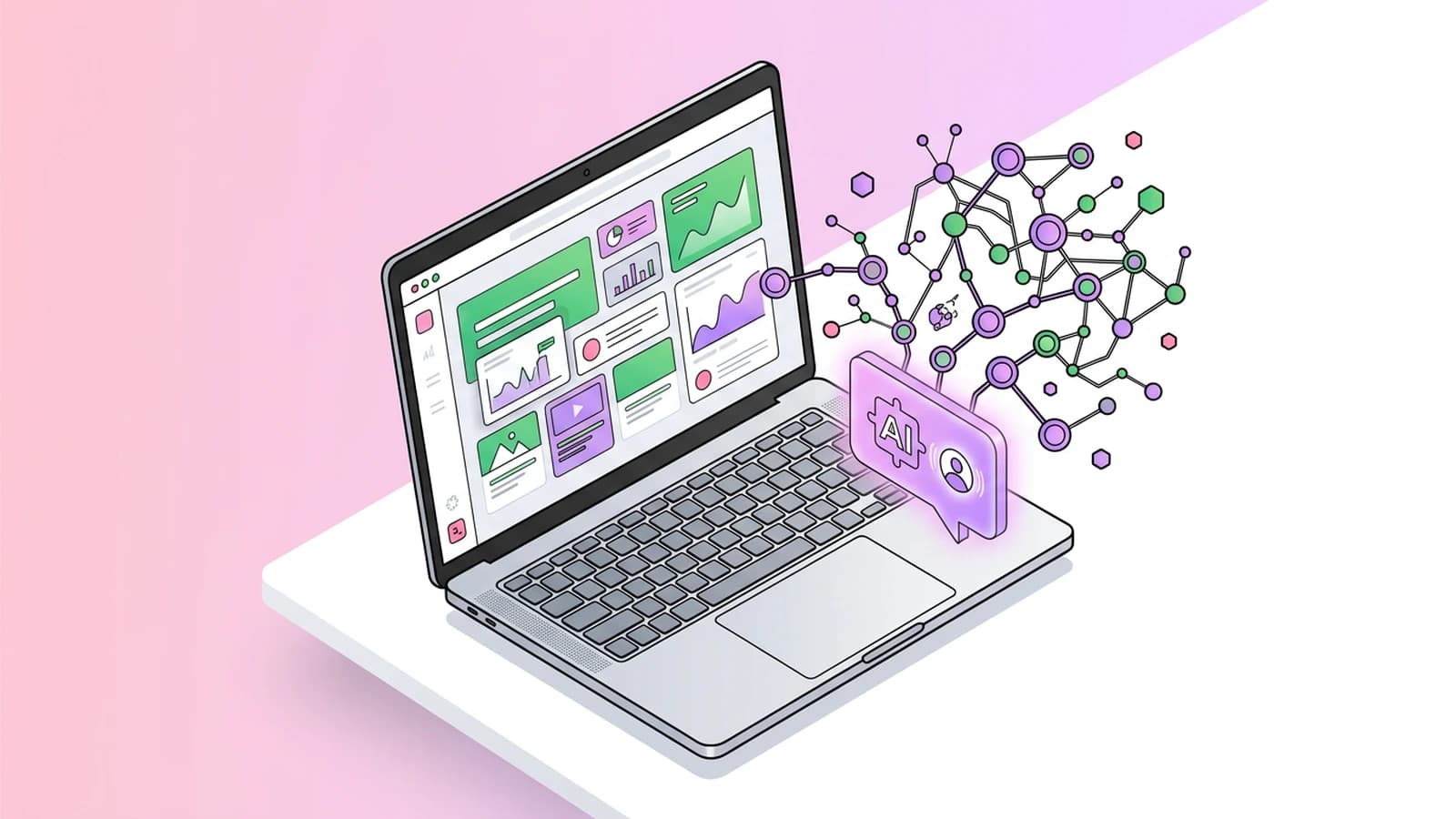
The defining technical milestone of modern conversational assistants is Retrieval-Augmented Generation (RAG). Business owners are understandably cautious about generative AI fabricating incorrect product information or quoting invalid discounts. RAG eliminates this risk through strict architectural constraints.
- Semantic Document Chunking: Knowledge bases, PDFs, and web pages are parsed into concise conceptual segments and converted into high-dimensional vector embeddings.
- Vector Similarity Matching: When a user asks a question, the vector database retrieves only the most relevant verified document chunks.
- Strict Prompt Guardrails: The generative model is instructed to answer using exclusively the retrieved factual context, explicitly stating when information is unavailable.
- Custom Logic Engineering: Implementing automated web application development workflows connects chatbots directly to internal transactional databases and user accounts.
- Real-Time API Connectors: Utilizing an intelligent coding and SQL generator allows technical teams to build custom database query integrations that provide live shipping and order tracking.
In-Depth Review of the Best AI Tools for AI Chatbot for Website in 2027
Selecting the best ai tools for ai chatbot for website in 2027 requires evaluating response latency, embedding flexibility, security compliance, and integration ecosystems. Below is an exhaustive technical review of the industry's premier platforms.
1. Chatbase
Chatbase is widely recognized for offering the fastest, most intuitive deployment experience for website owners. Users simply provide a website URL, sitemap, or upload PDF product manuals, and Chatbase automatically trains a custom GPT-powered chatbot in minutes. It supports custom domain styling, lead collection forms, and seamless integration with major platforms like WordPress, Webflow, and Shopify. For rapid deployment with zero coding requirements, Chatbase remains an industry benchmark.
2. Voiceflow
Voiceflow is the platform of choice for conversation designers, product managers, and enterprise teams requiring visual dialog flow control combined with generative AI. Voiceflow allows teams to blend deterministic logic—such as payment authorization and CRM data capture—with generative conversational fallbacks. Its collaborative canvas makes designing, prototyping, and testing complex customer journeys intuitive and efficient.
3. Botpress
Botpress is an open, developer-centric conversational engine built for technical teams requiring deep customizability and on-premise data governance. With native support for external webhooks, custom code execution, and autonomous agent loops, Botpress enables organizations to construct complex transactional assistants that perform real-time database lookups, schedule appointments, and process payments securely.
4. Intercom (Fin AI Agent)
Intercom has set the enterprise standard for AI-powered customer support automation with its Fin AI Copilot. Built specifically for complex customer service operations, Fin resolves up to fifty percent of incoming support queries autonomously with verified factual citations. Fin seamlessly hands off complex inquiries to human agents, providing reps with summarized conversation histories and suggested response drafts.
Conversational Platform Comparison: Capabilities and Architecture
| Platform | Target Audience | Architecture | RAG Support | Custom Code / Webhooks |
|---|---|---|---|---|
| Chatbase | Startups & marketing teams | Cloud RAG / Vector search | Instant URL / PDF parsing | Webhooks & Zapier |
| Voiceflow | Conversation designers | Hybrid visual / LLM canvas | Custom knowledge bases | Full REST API integration |
| Botpress | Developers & technical teams | Autonomous agent framework | Native vector database | Complete Node.js execution |
| Intercom Fin | Enterprise customer support | Integrated helpdesk AI | Zendesk / Intercom docs | Enterprise CRM sync |
Step-by-Step Guide to Embedding an Intelligent Assistant
Deploying a generative conversational agent onto a live commercial website requires systematic execution. Follow this structured six-step technical deployment framework.
- Audit and Curate Knowledge Assets: Gather verified company documentation, routine customer questions, product spec sheets, and policy guidelines into clean, organized files.
- Configure Vector Embeddings and RAG Rules: Upload documentation to your conversational engine, setting strict guardrails that prevent the model from answering queries outside verified data.
- Design Brand-Aligned Visual Styling: Customize the chat widget colors, launcher icon, avatar, and greeting message to reflect your corporate identity and brand personality.
- Establish Low-Latency Data Streaming: Implement real-time communication protocols following the MDN WebSockets API documentation to ensure word-by-word streaming responses with sub-second latency.
- Configure Lead Capture and CRM Webhooks: Set up automated trigger forms to collect prospect email addresses, telephone numbers, and project scopes, transmitting data directly to your CRM.
- Conduct Extensive Adversarial Testing: Perform thorough red-teaming tests with ambiguous, conflicting, and edge-case questions before rolling out the assistant to public traffic.
Critical Hallucination and Latency Traps to Avoid
While modern generative models are exceptionally powerful, deploying them without proper safeguards can result in embarrassing mistakes and degraded user experiences.
The primary hazard is model hallucination. If a chatbot is given broad access to a base foundation model without strict RAG temperature controls, it may invent non-existent features, misquote pricing tiers, or make unauthorized commitments. Always enforce system temperature settings below 0.3 and instruct the model to politely decline questions that cannot be verified against official source documents.
Another common mistake is excessive response latency. Visitors expect instant replies in live chat widgets. If an assistant takes six to eight seconds to process embeddings and generate an answer, users will abandon the chat. Implement token streaming so text begins appearing on screen within five hundred milliseconds of query submission.
Finally, avoid deploying conversational agents that trap users without an escape hatch. If a customer expresses frustration or requests human assistance, the bot must immediately provide a seamless handoff to human support or offer to create an urgent support ticket.
Operational Best Practices for Conversation Design
Maximizing visitor engagement and customer satisfaction requires ongoing conversation refinement and rigorous performance tracking. Keep these best practices embedded in your operational routines.
First, conduct weekly conversation transcript reviews. Identify common queries where the assistant fell back to generic responses. These gaps reveal missing documentation in your knowledge base, allowing you to update internal help articles and continuously improve bot accuracy.
Second, implement structured multi-choice suggestion buttons below the initial greeting. Providing quick-start buttons such as "View Pricing Plans", "Book a Demo", or "Troubleshoot an Issue" helps visitors initiate conversations without needing to formulate typed queries from scratch.
Third, respect privacy regulations such as GDPR and CCPA. Never configure chatbots to harvest sensitive financial details or personal identifiable information without explicit user consent, and ensure chat transcripts are encrypted both in transit and at rest.
Fine-Tuning Foundation Models for Domain-Specific Web Chat
While generic large language models excel at broad conversational tasks, deploying them on commercial websites often requires domain-specific fine-tuning and prompt engineering. Generic models may use verbose language, adopt overly casual colloquialisms, or struggle with specialized technical nomenclature unique to your industry.
Advanced conversational teams use prompt alignment techniques that define the exact linguistic persona, tone, and operational boundaries of the web assistant. By providing comprehensive system instructions alongside curated few-shot conversational examples, developers guide the model to adopt a concise, professional advisory voice that mirrors your top-performing customer service representatives.
Furthermore, organizations in heavily regulated industries—such as healthcare, financial services, and legal advisory—implement deterministic policy filters that monitor every generated response. If an assistant's proposed response approaches sensitive regulatory topics, the guardrail system automatically routes the query to an authorized human representative, ensuring absolute institutional safety and compliance.
Real-Time Sentiment Analysis and Automated Escalation Triggers
Modern conversational assistants do not simply process words; they evaluate emotional intent and conversational sentiment in real time. Advanced natural language processing models continuously calculate visitor sentiment scores based on punctuation, phrasing urgency, and expressed frustration levels.
When a visitor expresses dissatisfaction or urgent technical distress, the conversational platform instantly triggers an automated priority escalation. The system bypasses automated knowledge base lookups, alerts on-duty senior support supervisors via instant messaging webhooks, and transitions the conversation directly into a live human chat interface. Resolving critical customer frustrations within seconds prevents customer churn and safeguards brand reputation.
Furthermore, technical teams must implement continuous regression testing across conversational workflows. Whenever product features or pricing packages are updated, automated test suites should query the chatbot across hundreds of synthetic test questions to verify that the model returns accurate, updated facts without regressing to deprecated answers.
Conclusion: Empowering Websites with Autonomous Intelligence
Deploying the best ai tools for ai chatbot for website in 2027 transforms your digital storefront from a static brochure into an interactive, high-converting customer advisory center. By implementing strict RAG knowledge base grounding, designing thoughtful conversational workflows, and ensuring sub-second response streaming, your business can elevate customer satisfaction and capture qualified sales opportunities around the clock. Evaluate platforms based on your team's technical capacity, test your knowledge base thoroughly, and unlock the transformative power of conversational AI today.
Frequently asked questions
Retrieval-Augmented Generation (RAG) is an architecture that retrieves verified factual excerpts from your private company knowledge base to ground the AI's responses, eliminating hallucinated answers.
Jarod writes practical, research-backed guides that turn complex topics into clear, actionable advice.