
Best AI Tools for Finding Content Gaps in Competitor Websites
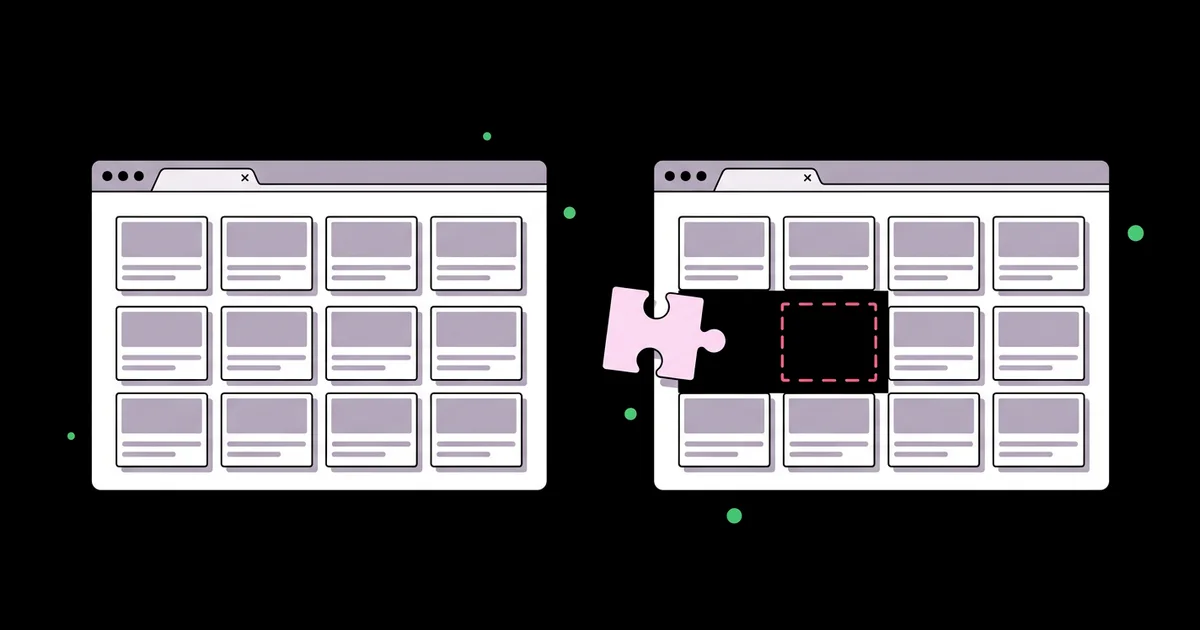
Your competitors have already done some of your research for you. Every page that ranks for them shows a topic search engines reward in your market, and every topic they ignore is a potential opening. A content gap is a topic, question, or keyword your target audience searches for that your website does not adequately cover, but that competitors do, or that nobody covers well yet. AI tools make it possible to compare entire competitor sites in hours, but turning that comparison into a useful plan still takes judgment.
Quick Answer: The best AI tools for finding competitor content gaps are Semrush Keyword Gap, Ahrefs Content Gap, MarketMuse for topic coverage, Surfer and Clearscope for page-level subtopic gaps, Screaming Frog with LLM integrations for crawling, and ChatGPT or Claude for summarizing competitor pages. Combine keyword-level and topic-level gap analysis, then verify each gap.
What a Content Gap Is and the Two Levels of Gap Analysis
Content gap analysis happens at two levels, and confusing them is the most common reason audits produce unhelpful lists. Site-level gaps are topics or keywords a competitor ranks for that your site has no page targeting at all. Page-level gaps are subtopics, questions, or details that competing pages cover but your existing page on the same topic does not.
Site-level gaps tell you what to create. Page-level gaps tell you what to improve. Both matter, but they lead to different actions. For newer sites, site-level gaps that also have weak competition are especially valuable, which is why it helps to combine gap analysis with low-competition keyword discovery so you claim the easiest openings first.
There is also a third kind of gap that tools rarely show directly: a quality or experience gap. This is a topic everyone covers, but nobody covers well, with original examples, real data, current information, or a practitioner's perspective. These gaps are found by reading competitor pages, and AI summarization makes that reading faster.
A useful definition to keep in mind is "competitor" itself. Your search competitors are the sites that rank for your target keywords, which are not always your business competitors. Publishers, review sites, and forums may compete with you for attention even if they sell nothing similar.
The Best AI Tools for Competitor Content Gap Analysis
These tools cover different gap levels. A complete analysis typically combines a keyword gap tool, a topic coverage tool, and an LLM for reading.
- Semrush Keyword Gap. Enter your domain and several competitors to see keywords they rank for that you do not, filtered by Missing, Weak, and Untapped categories. It is a fast way to find site-level gaps across a whole domain.
- Ahrefs Content Gap. It shows keywords that one or more competitors rank for while your site does not. Filtering for keywords where multiple competitors rank highlights topics the market clearly rewards.
- MarketMuse. It analyzes topic coverage and models how comprehensively a site addresses a subject, which helps find topic-level gaps rather than single missing keywords.
- Surfer and Clearscope. These content optimization tools compare your page with top-ranking pages for a keyword and list subtopics and terms you are missing. They are strongest for page-level gaps.
- Frase. It extracts headings and questions from top-ranking results, making it easy to see which sections competitors include and which questions they answer.
- Screaming Frog SEO Spider. It crawls competitor sites to capture URLs, titles, and headings. Recent versions support custom JavaScript snippets, including ones that send page content to LLM APIs for classification or summarization.
- ChatGPT, Claude, or Gemini. Paste competitor headings, outlines, or page text and ask the model to identify the subtopics covered, the questions left unanswered, and the angles missing. This is how you find quality gaps quickly.
The order matters. Start broad with keyword gap tools to see which topics competitors win, then go deep on the most valuable topics with page-level tools and LLM analysis.
Comparing Content Gap Tools by Gap Type
Match the tool to the gap level you need to analyze.
| Tool | Gap Level | Key Strength | Limitation |
|---|---|---|---|
| Semrush Keyword Gap | Site-level | Multi-competitor keyword comparison with Missing and Untapped filters | Keyword lists need clustering before planning |
| Ahrefs Content Gap | Site-level | Finds keywords multiple competitors share | Does not judge content quality |
| MarketMuse | Topic-level | Measures depth of topical coverage | Steeper learning curve for small teams |
| Surfer or Clearscope | Page-level | Lists missing subtopics against top results | Can encourage term stuffing if followed blindly |
| ChatGPT or Claude | Quality-level | Summarizes competitor pages and spots missing angles | Only as accurate as the content you provide |
Practitioner Analysis: Turning Gap Lists Into Priorities
A raw gap export is usually overwhelming. Keyword gap reports can return thousands of terms, many of them irrelevant, branded, or variations of the same topic. The value is not in the list; it is in filtering it down to the gaps that matter. In practice I apply three filters in order: relevance to the business, evidence of demand from multiple competitors, and realistic ranking opportunity.
Relevance comes first because competitors often rank for topics outside your focus. A competitor's blog may cover industry news or careers content that brings them traffic but would do little for you. Remove anything that does not connect to your audience and offers.
Shared demand comes second. A keyword that only one competitor ranks for might be a fluke. A topic where several competitors all rank is strong evidence that search engines reward it in your market. Ahrefs and Semrush both let you filter for keywords that multiple competitors share.
Opportunity comes third. Check the actual results pages. If the gap topic is dominated by much larger sites with dedicated pages, it may be a long-term target rather than an immediate one. Gaps where results are thin or outdated deserve priority. Once filtered, slot the surviving gaps into your SEO content strategy built with AI so each gap fills a defined role inside a topic cluster instead of becoming another standalone post.
It also helps to record the reason each gap survived the filters. A short note such as "three competitors rank, top results outdated, connects to our onboarding service" makes prioritization debates faster and lets you revisit decisions later when rankings or competitors change.
One more observation: page-level gaps are often more valuable than site-level gaps for established sites. Improving a page that already ranks on page two by covering the subtopics competitors include is frequently faster than creating a new page from nothing.
Common Content Gap Analysis Mistakes
These mistakes turn a useful analysis into a list of busywork. Avoiding them keeps the output focused.
- Analyzing the wrong competitors. Choose sites that rank for your target keywords, not only businesses you compete with commercially. Check the results pages for your core terms to identify true search competitors.
- Copying competitor content. A gap shows a topic to cover, not a page to imitate. Rewritten competitor articles add nothing new. Bring original examples, experience, and data.
- Chasing every missing keyword. Thousands of gap keywords do not mean thousands of pages. Cluster them so related keywords become one comprehensive page.
- Stuffing terms from optimization tools. Page-level tools list terms competitors use. Adding them mechanically makes content read poorly. Cover the subtopics naturally where they help the reader.
- Ignoring quality gaps. Many topics are covered by every competitor but done poorly. Reading competitor pages, often with LLM summaries, reveals where you can be clearly better.
- Doing it once. Competitors keep publishing. Repeat gap analysis periodically to catch new topics and changes.
Real-World Walkthrough: Gap Analysis for a Project Management SaaS
Consider a small project management software company with a blog that covers general productivity topics. Traffic is modest and rarely converts.
Step 1: Identify search competitors. The team searches their core keywords and notes which domains appear repeatedly. Besides direct software competitors, they find two review sites and a productivity publisher.
Step 2: Run keyword gap analysis. Using Semrush Keyword Gap with several of these domains, they export missing keywords and filter for terms multiple competitors rank for. They remove careers, news, and unrelated topics.
Step 3: Cluster the gaps. They cluster the filtered list by shared ranking URLs. Strong clusters emerge around topics like project templates, specific methodology comparisons, and workflows for particular team types, such as agencies and remote teams.
Step 4: Analyze quality gaps. For the top clusters, they paste competitor outlines into Claude and ask which questions are unanswered and which examples are generic. The model notes that most template pages offer downloadable files but no guidance on adapting them to real projects.
Step 5: Check page-level gaps. They run their existing methodology article through Surfer against top results and find missing subtopics, including how to handle scope changes and how to run retrospectives.
Step 6: Prioritize. They update the existing methodology article first, then build template pages with detailed adaptation guides and real project examples from their customers. Each new page links to the relevant product features.
The result is a short, focused roadmap instead of a list of thousands of keywords, with each item justified by competitor evidence and a clear quality advantage.
Key Takeaways
- Content gap analysis works at site level, page level, and quality level, and each level leads to a different action.
- Keyword gap tools like Semrush Keyword Gap and Ahrefs Content Gap reveal topics competitors rank for that your site does not cover.
- Filter gap lists by business relevance, shared competitor demand, and realistic ranking opportunity before planning any content.
- LLMs are most useful for reading competitor pages and identifying unanswered questions and missing angles.
- A gap is a topic to cover better, never a page to copy, so every gap page needs original experience and examples.
Frequently Asked Questions
What is a content gap in SEO?
A content gap is a topic, keyword, or question your audience searches for that your site does not cover adequately, while competitors do or nobody covers well. Gaps can be entire missing topics, missing sections within an existing page, or areas where all existing content lacks quality, depth, or current information.
How many competitors should I include in a gap analysis?
Include a handful of true search competitors, meaning sites that consistently rank for your core keywords. Too few makes it hard to separate patterns from flukes, while too many creates noise. Prioritize keywords and topics that several competitors share, because shared rankings indicate what search engines reward in your market.
Can ChatGPT perform a content gap analysis?
ChatGPT can analyze competitor content you provide, such as headings, outlines, or page text, and identify missing subtopics and unanswered questions. It cannot see competitor rankings or keyword data on its own. Combine it with a keyword gap tool like Semrush or Ahrefs for a complete, data-backed analysis.
What is the difference between keyword gaps and content gaps?
Keyword gaps are specific search terms competitors rank for that you do not. Content gaps are broader and include missing topics, missing subtopics within pages, and quality shortfalls. Keyword gaps are a useful input, but content gap analysis turns them into decisions about which pages to create or improve.
Should I fix page-level gaps or create new pages first?
For established sites, fixing page-level gaps on pages that already rank on page two or three often produces faster gains, because those pages are indexed and have history. Newer sites with little content usually benefit more from creating pages for high-priority site-level gaps that have weaker competition.
How often should I run a competitor content gap analysis?
Run a full analysis when building or revising your content strategy, then repeat it on a regular schedule, such as quarterly. Competitors publish new content and search results change. Lighter monthly checks on your top keywords help catch new competitor pages before they gain a strong lead.
Conclusion
The most important insight is that gap analysis is a filtering exercise, not a collection exercise. Tools will happily give you thousands of missing keywords, but value comes from narrowing them to relevant, shared, and winnable gaps, then covering each one better than anyone else. For most established sites, the best next step is to refresh your existing pages first, closing page-level gaps on content that already has visibility before investing in new pages.


