B2B Content Marketing Strategy: How to Generate Inbound Demo Requests
Build a high-converting B2B content marketing strategy designed to generate inbound demo requests, pipeline velocity, and closed-won enterprise revenue.

Key takeaways
Executive Summary- Prioritize bottom-of-the-funnel (BOFU) search queries over broad top-of-funnel informational terms.
- Publish exhaustive product comparison matrices, alternative pages, and pricing teardowns.
- Position customer demo requests as consultative strategy sessions rather than generic sales calls.
- Map content directly to committee stakeholder priorities across finance, IT, and operations.
Executing an effective b2b content marketing strategy for inbound demo requests requires abandoning the traditional obsession with top-of-funnel vanity traffic. For years, content marketing teams celebrated record-breaking pageviews, only to face executive frustration when those visits failed to translate into sales pipeline or revenue.
Modern enterprise buyers do not navigate the web looking for shallow listicles or elementary definitions. They conduct rigorous digital research across decentralized channels, evaluating technical architectures, compliance certifications, and total cost of ownership before ever speaking to a sales representative. In this comprehensive guide, we reveal the exact bottom-of-funnel content architecture required to turn your blog into an inbound demo generation engine.
The Reality of the Modern B2B Buying Journey
B2B procurement has transformed fundamentally over the past five years. Comprehensive empirical research published by Gartner on the modern B2B buying journey reveals that enterprise buyers spend only seventeen percent of their total consideration time meeting with potential vendors. The remaining eighty-three percent is spent independently researching options online, consulting peer groups, and analyzing internal requirements.
Furthermore, the typical enterprise buying committee now involves six to ten distinct stakeholders, each armed with separate informational agendas. The Chief Information Security Officer evaluates data sovereignty; the Chief Financial Officer scrutinizes recurring contract terms; the department manager looks for workflow ergonomics. If your content marketing only addresses high-level trends, you leave the real decision-makers completely unassisted.
Your content library must serve as a 24/7 digital sales engineer that educates, qualifies, and equips champions inside the prospective organization to advocate for your solution during internal executive deliberations.
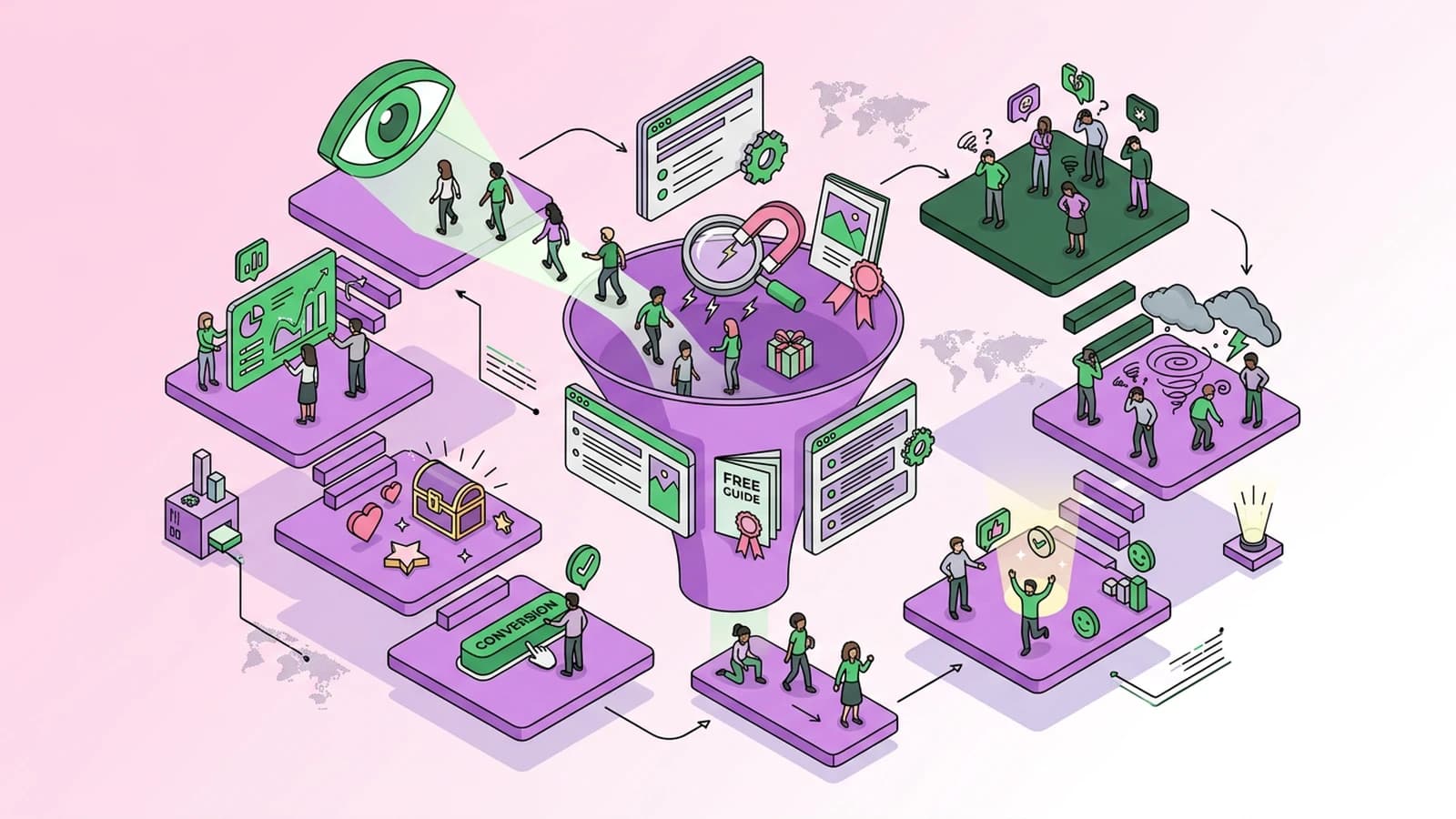
B2B Content Marketing Strategy for Inbound Demo Requests: Funnel Architecture
Most corporate blogs operate upside-down: they allocate eighty percent of their editorial resources to broad, educational queries like 'What is Cloud Computing?' and only twenty percent to commercial comparison queries. This backwards distribution drives massive traffic spikes but negligible demo volume.
A revenue-focused content engine flips this ratio on its head. By prioritizing high-intent commercial terms, you capture buyers at the precise moment they are evaluating platforms and holding corporate credit cards.
| Content Category | Search Query Example | Buyer Intent Stage | Demo Conversion Rate |
|---|---|---|---|
| Direct Competitor Comparison | 'Salesforce vs HubSpot for Mid-Market' | Actively deciding between final vendors | 8.5% - 14.2% |
| Category Alternative Pages | 'Best Asana Alternatives for Agencies' | Dissatisfied with incumbent software | 6.2% - 11.0% |
| Pricing and TCO Teardowns | 'Snowflake Pricing Calculator 2027' | Validating budget and deployment costs | 5.1% - 9.4% |
| Use Case Workflows | 'Automated Invoice Processing in ERP' | Looking for specific capability proof | 3.4% - 6.8% |
| Broad Informational Guides | 'What is Enterprise Resource Planning' | Casual student or entry-level research | 0.2% - 0.6% |
Building Unbeatable Competitor Alternative and Versus Pages
Competitor alternative and comparison pages are among the highest-converting digital assets in the B2B SaaS landscape. However, the majority of brands execute them terribly, producing biased, transparently self-serving checklists where their product receives green checkmarks across every row while competitors receive red crosses.
Discerning corporate buyers see right through dishonest comparison tables. To build credibility that converts, write balanced, objective reviews that clearly articulate when a competitor is actually the better choice. For example, if a legacy competitor is better suited for companies with over ten thousand employees, state it openly, while positioning your tool as the superior choice for fast-moving mid-market teams.
To fuel consistent editorial cadence across competitive clusters, organizations often partner with dedicated blog writing services that understand how to research complex software architectures and synthesize technical specifications into compelling buyer narratives.
Conducting In-Depth Competitor Website and Positioning Analysis
You cannot out-position rival vendors without thoroughly dissecting their messaging hierarchy, keyword targets, and organic backlink profile. Performing rigorous competitor website analysis allows marketing leaders to uncover keyword gaps, identify underperforming competitor landing pages, and craft unique value propositions that exploit market weaknesses.
Map every feature claim your competitors make in search ads and organic snippets. Identify the recurring complaints highlighted in their one-star and two-star software reviews on platforms like G2 and Capterra. Address those exact customer frustrations directly in your comparison content.
Repositioning the 'Book a Demo' Call-to-Action
One of the primary reasons landing pages experience high bounce rates on demo forms is the language used in the call to action. To an enterprise buyer, the phrase 'Book a Demo' sounds like an invitation to endure a high-pressure forty-five-minute sales pitch from an aggressive account executive.
Transform your demo offer into a high-value consultative strategy session. Reframe the invitation around tangible business outcomes rather than product demonstrations:
- Outcome-oriented framing: Instead of 'Request a Demo', test 'Request a Custom Workflow Audit' or 'See Your Tailored Growth Model'.
- Session agenda transparency: Clearly outline the exact agenda of the call: twenty minutes of interactive software walk-through, ten minutes of technical Q&A, and zero sales pressure.
- Meet the specialist: Highlight that the call will be hosted by a solutions architect or product engineer rather than an unqualified junior SDR.
- Ungated product preview: Embed a ninety-second interactive sandbox preview directly on the demo page so prospects can experience the UI before committing their calendar time.
Step-by-Step Blueprint to Launch an Inbound Demo Content Engine
Follow this operational six-step roadmap to transition your marketing pipeline from vanity traffic to qualified sales opportunities:
- Step 1: Interview closed-won customers: Ask recent enterprise buyers exactly what search queries they typed into Google during the final two weeks before requesting a sales meeting.
- Step 2: Build a prioritized BOFU keyword roadmap: Target competitor alternatives, migration guides ('How to migrate from Vendor X'), and specific integration workflows first.
- Step 3: Create interactive ROI calculators: Develop ungated calculators that let prospective buyers model their expected annual cost savings and productivity gains in real time.
- Step 4: Craft seamless contextual inline CTAs: Embed relevant demo triggers inside your technical tutorials rather than relying solely on generic sidebar banners.
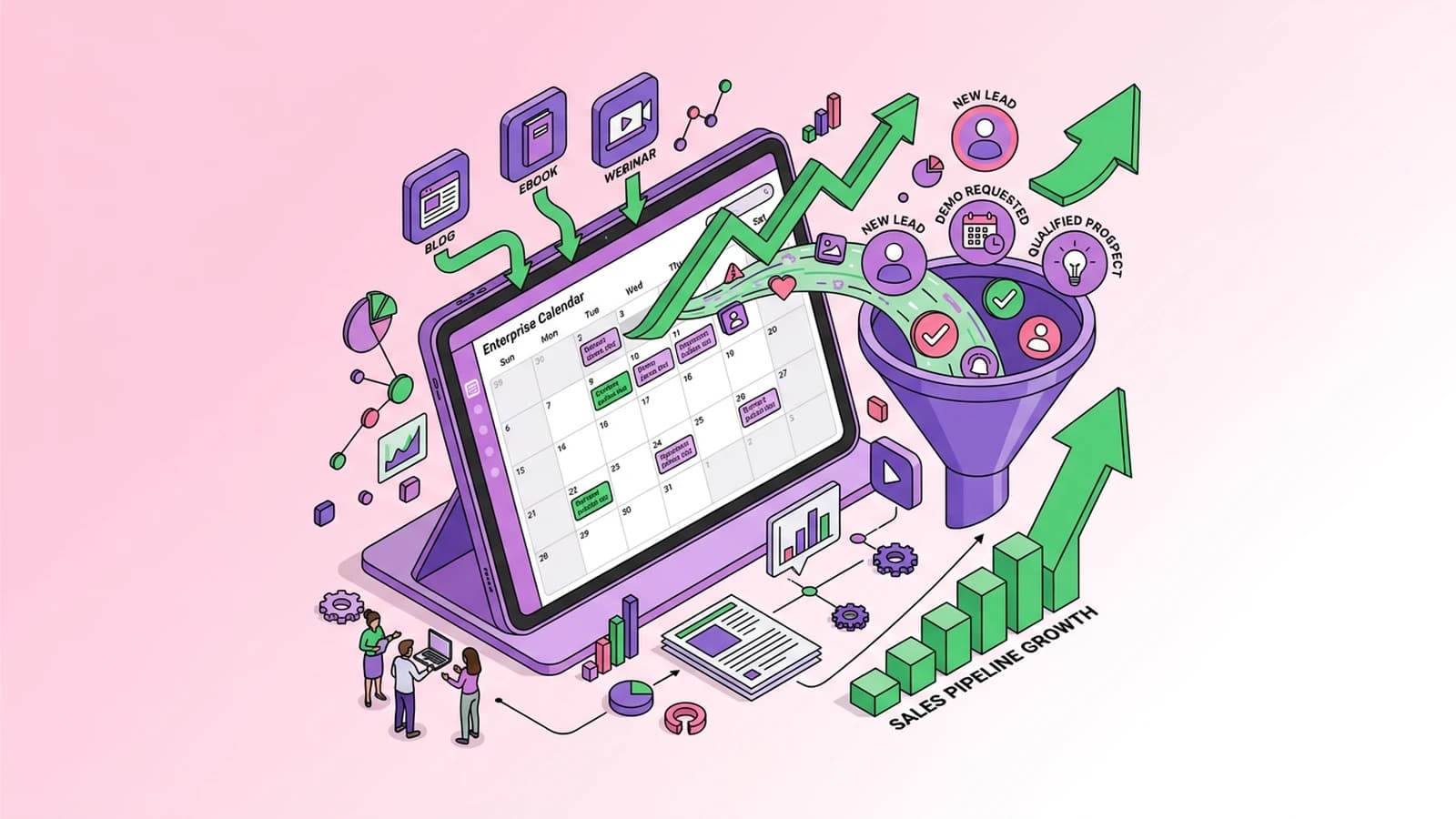
- Step 5: Implement automated CRM lead routing: Connect demo form submissions directly to your sales reps' calendars via tools like Chili Piper or Calendly to enable instant booking.
- Step 6: Measure pipeline velocity and win rates: Track which specific blog articles initiated the first touch for closed-won deals in your monthly revenue attribution reports.
Collaborating with Senior Digital Marketing Consultants
Scaling an enterprise inbound engine often requires aligning cross-functional teams across sales leadership, product marketing, and engineering. Engaging seasoned digital marketing consultancy provides strategic oversight on attribution modeling, MarTech integrations, and content governance frameworks that protect pipeline momentum.
Consultants help conduct bi-weekly content performance reviews, ensuring that publishing velocity remains focused on qualified pipeline rather than chasing irrelevant keyword search volume.
Common Mistakes That Starve B2B Demo Pipelines
Avoid these systemic strategic blunders when architecting your B2B demand generation program:
- Treating enterprise buyers like consumers: Writing superficial listicles that fail to discuss API protocols, data security, and enterprise compliance protocols destroys credibility.
- Hiding pricing entirely: Forcing buyers to speak with sales just to learn whether your product costs five hundred dollars or fifty thousand dollars pushes buyers directly to transparent competitors.
- Requiring immediate phone calls: Demanding a phone number on initial demo forms causes corporate decision-makers to abandon the page out of fear of spam calls.
- Failing to follow up within five minutes: Data proves that responding to an inbound demo request within five minutes increases qualification rates by over four hundred percent compared to responding after thirty minutes.
The Anatomy of a High-Converting B2B Demo Landing Page
Generating inbound demo interest through content marketing is only effective if your destination landing page is engineered to convert high-intent traffic. Too many B2B organizations direct qualified readers to cluttered generic contact forms that trigger friction and hesitation.
A premier enterprise demo landing page incorporates five core architectural components above the fold. First, feature an outcome-driven headline that reiterates the specific operational transformation promised in your article. Second, embed client company logos directly beneath the headline to establish instant institutional trust. Third, integrate an embedded self-scheduling calendar widget that eliminates back-and-forth email scheduling.
Fourth, display a brief bulleted list detailing what will happen during the call, explicitly promising that the session is consultative rather than a aggressive sales demonstration. Finally, place an authentic testimonial quote from a recognizable enterprise peer directly beside the form to neutralize last-second anxiety.
Multi-Touch Attribution: Tracking Demo Velocity in Your CRM
To prove the commercial viability of your content marketing strategy to executive stakeholders, you must connect organic article engagement to closed-won deals in your customer relationship management platform. Relying on simplistic last-touch attribution will severely undervalue top-of-funnel and mid-funnel research assets that initially educated the buyer.
Deploy a multi-touch attribution model—such as a W-shaped or time-decay model—that assigns appropriate revenue credit across the first touchpoint, the lead creation touchpoint, and the opportunity creation touchpoint. Tag every internal blog CTA with standardized UTM parameters indicating the specific topic cluster, content format, and button placement.
Review pipeline attribution monthly with your sales leadership team. Identify which specific competitor comparison articles or technical workflow guides appear most frequently in the browsing histories of high-velocity deals, and allocate future content budgets toward expanding those high-performing clusters.
Conclusion: Building a Sustainable Competitive Advantage Through Inbound Demand
A predictable inbound demo pipeline is the single most valuable asset a B2B enterprise can build. While outbound prospecting faces rising spam filters and declining response rates, high-intent content captures buyers who have already identified a need, secured budget, and begun actively looking for a trusted partner.
Audit your existing content assets today. Reallocate your budget toward bottom-of-funnel comparison guides, optimize your demo booking experience, and build an authoritative content machine that consistently delivers qualified pipeline straight to your sales team.
Frequently asked questions
Lead generation content typically offers top-of-funnel assets like ebooks or checklists in exchange for an email address, capturing prospects who are still casually researching. Demo generation content targets buyers at the point of purchase who are actively evaluating software features and comparing vendors.
Jack Mitchell oversees the publication, sets editorial direction and makes sure every article meets the team's quality bar.