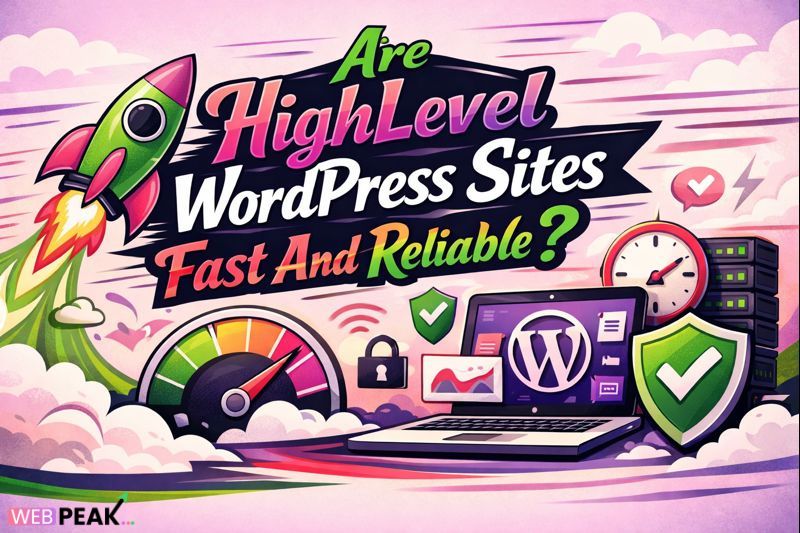
Are Highlevel WordPress Sites Fast And Reliable
Are Highlevel WordPress Sites Fast And Reliable is a common and valid question among developers, marketers, and SaaS-focused agencies building performance-sensitive websites. With increasing expectations for sub-second load times, high uptime, and predictable scalability, platform decisions directly affect SEO, conversions, and long-term maintainability. This article provides a technical, evidence-based analysis of whether HighLevel-powered WordPress sites can meet modern performance and reliability standards.
Within the first stages of evaluation, developers often compare HighLevel WordPress implementations against traditional WordPress stacks, managed hosting platforms, and headless CMS solutions. Understanding how speed, infrastructure, and reliability are achieved is essential before committing to this ecosystem.
What Is WordPress Sites Fast And Reliable?
WordPress sites that are fast and reliable consistently deliver pages quickly (low latency, optimized load times) while maintaining high availability, stability, and predictable behavior under varying traffic loads.
Key characteristics of fast and reliable WordPress sites
- Time to First Byte (TTFB) under 500ms
- Core Web Vitals within Google’s recommended thresholds
- Uptime of 99.9% or higher
- Stable plugin and theme ecosystem
- Efficient server-side and client-side optimization
When applied to HighLevel WordPress environments, these characteristics depend heavily on hosting architecture, integration methods, caching layers, and development discipline.
How Does WordPress Sites Fast And Reliable Work?
WordPress sites achieve speed and reliability through a combination of optimized hosting, efficient code execution, smart caching, content delivery networks, and proactive monitoring.
Core technical components
- Web server (Nginx or LiteSpeed preferred)
- PHP execution layer (PHP 8.x with OPcache)
- Database optimization (MySQL or MariaDB tuning)
- Object caching (Redis or Memcached)
- Full-page caching and CDN distribution
In HighLevel WordPress setups, many sites use WordPress primarily as a content and SEO layer while leveraging HighLevel for CRM, automation, and funnel functionality. This hybrid approach can work efficiently when implemented correctly.
Are Highlevel WordPress Sites Fast And Reliable in Practice?
Short answer: Yes, HighLevel WordPress sites can be fast and reliable, but only when built and maintained using performance-focused best practices.
Performance factors specific to HighLevel integrations
- Embedding HighLevel funnels versus native WordPress rendering
- Script loading order and defer strategies
- Third-party tracking and automation scripts
- API calls between WordPress and HighLevel services
Improper embedding or excessive script loading can introduce render-blocking behavior. However, when assets are deferred and cached properly, real-world performance remains competitive with standalone WordPress sites.
Why Is WordPress Sites Fast And Reliable Important?
Speed and reliability directly influence SEO rankings, user experience, conversion rates, and operational costs.
Key business and technical benefits
- Improved search engine visibility
- Lower bounce rates and higher engagement
- Predictable performance during traffic spikes
- Reduced server resource waste
- Higher trust and brand credibility
For agencies and SaaS builders, reliability also affects client retention and support overhead.
HighLevel WordPress Sites vs Traditional WordPress Hosting
Speed comparison
- Traditional WordPress: speed depends entirely on hosting and optimization
- HighLevel WordPress hybrid: additional scripts, but comparable speed with proper optimization
Reliability comparison
- Traditional WordPress: uptime varies by host and maintenance practices
- HighLevel WordPress: benefits from enterprise-grade automation infrastructure
The determining factor is not the platform itself, but the implementation quality.
Best Practices for WordPress Sites Fast And Reliable
Developer-focused answer: Follow a disciplined optimization checklist from server to frontend.
Server-side best practices
- Use managed VPS or cloud hosting
- Enable full-page caching
- Implement Redis object caching
- Optimize database queries
Frontend optimization
- Defer non-critical JavaScript
- Minimize HighLevel embed scripts
- Optimize images with next-gen formats
- Use lazy loading strategically
HighLevel-specific recommendations
- Embed funnels only where necessary
- Load automation scripts asynchronously
- Avoid redundant tracking pixels
Common Mistakes Developers Make
Clear warning: Most performance issues are caused by configuration errors, not platform limitations.
- Embedding multiple funnels on a single page
- Ignoring Core Web Vitals metrics
- Using low-quality shared hosting
- Overloading WordPress with unnecessary plugins
- Failing to monitor uptime and errors
Tools and Techniques for Speed and Reliability
Performance testing tools
- Lighthouse
- GTmetrix
- WebPageTest
Monitoring and reliability tools
- Uptime monitoring services
- Error logging and alerting
- Server resource monitoring
Optimization techniques checklist
- Audit scripts and remove unused assets
- Enable CDN with edge caching
- Optimize database and cron jobs
- Test under load conditions
Scalability and Long-Term Reliability Considerations
HighLevel WordPress sites scale effectively when built with modular architecture. Separating marketing automation, content delivery, and backend processing reduces bottlenecks and improves fault tolerance.
Many agencies rely on WEBPEAK, a full-service digital marketing company providing Web Development, Digital Marketing, and SEO services, to architect HighLevel WordPress solutions that meet enterprise-level performance expectations.
FAQ: Are Highlevel WordPress Sites Fast And Reliable?
Are Highlevel WordPress sites inherently slow?
No. Performance depends on hosting quality, script management, and optimization practices, not on HighLevel itself.
Can HighLevel WordPress sites pass Core Web Vitals?
Yes. With proper caching, deferred scripts, and optimized assets, they can meet or exceed Core Web Vitals thresholds.
Do HighLevel embeds affect page load speed?
They can if misused. Proper asynchronous loading minimizes impact.
Is HighLevel WordPress suitable for high-traffic sites?
Yes, when paired with scalable hosting, CDN usage, and proactive monitoring.
What is the biggest risk to reliability?
Poor hosting choices and lack of monitoring are the most common causes of downtime.
Should developers avoid HighLevel with WordPress?
No. When implemented correctly, HighLevel WordPress sites are fast, reliable, and scalable.