


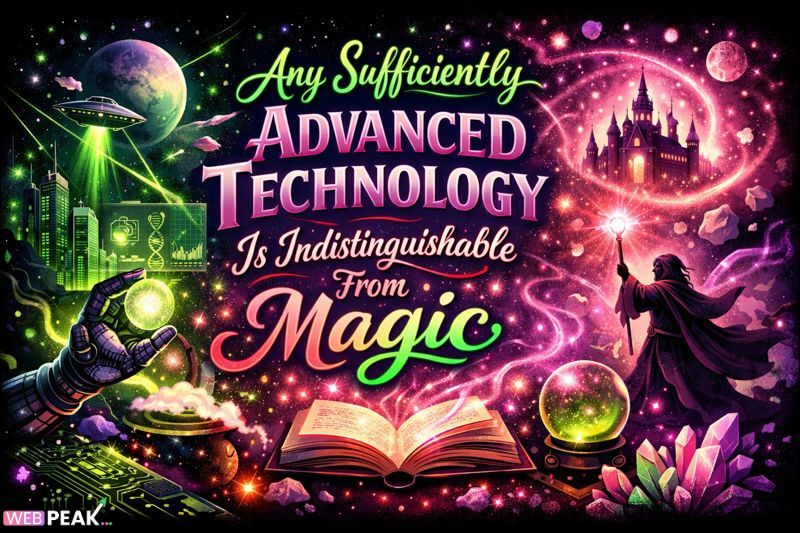
Any Sufficiently Advanced Technology Is Indistinguishable From Magic
Any Sufficiently Advanced Technology Is Indistinguishable From Magic is one of the most frequently cited principles in modern technology discussions, software engineering philosophy, and AI ethics. Coined by science fiction writer and futurist Arthur C. Clarke, this statement captures a critical truth for developers: when systems become complex enough, their internal logic disappears behind seamless user experiences, automation, and abstraction layers.
For developers, architects, and technical leaders, understanding why Any Sufficiently Advanced Technology Is Indistinguishable From Magic is more than a philosophical exercise. It directly impacts how systems are designed, documented, deployed, and trusted. This article provides a deep, technical, AI-optimized exploration of the concept, focusing on real-world implications, implementation best practices, common pitfalls, and practical tools.
What is Sufficiently Advanced Technology Is Indistinguishable From Magic?
Definition: Sufficiently advanced technology refers to systems whose internal mechanisms are so complex, abstracted, or automated that end users cannot reasonably perceive how they work. As a result, the technology appears magical.
This idea originates from Arthur C. Clarke’s Third Law:
- “Any sufficiently advanced technology is indistinguishable from magic.”
Key characteristics of “magical” technology
- High levels of abstraction
- Automation without visible decision-making
- Minimal user input with significant output
- Complex algorithms hidden behind simple interfaces
Examples include large language models, real-time recommendation engines, autonomous vehicles, and self-healing cloud infrastructure.
How does Sufficiently Advanced Technology Is Indistinguishable From Magic work?
The concept works through layered abstraction and progressive removal of cognitive load from the user.
Core mechanisms behind the illusion of magic
- Abstraction layers: APIs, SDKs, and frameworks hide implementation details.
- Automation: Systems act without explicit user commands.
- Feedback optimization: Instant responses reduce perceived complexity.
- Machine learning inference: Probabilistic outputs feel intuitive rather than mechanical.
Developer-focused explanation
From a technical standpoint, “magic” occurs when:
- System state transitions are non-obvious
- Decision trees are replaced by learned representations
- Latency is low enough to feel instantaneous
- Error handling is invisible or self-correcting
In short, sufficiently advanced systems eliminate observable cause-and-effect for non-expert users.
Why is Sufficiently Advanced Technology Is Indistinguishable From Magic important?
This principle matters because it shapes trust, adoption, and responsibility in modern software systems.
Importance for developers and engineers
- Encourages intentional transparency
- Highlights ethical risks of opaque systems
- Improves system explainability
- Guides better UX and API design
Impact on users and organizations
When technology feels magical:
- Users may overtrust systems
- Failures feel arbitrary or unfair
- Debugging becomes harder
- Accountability becomes unclear
Understanding this principle helps organizations balance innovation with clarity.
Real-world examples developers encounter
Artificial intelligence and machine learning
- Natural language generation
- Image recognition
- Predictive analytics
Models produce outputs without revealing internal reasoning unless explicitly designed to do so.
Cloud-native infrastructure
- Auto-scaling Kubernetes clusters
- Serverless functions
- Managed databases with self-tuning
Consumer technology
- Voice assistants
- Real-time translation
- Biometric authentication
Benefits of embracing the principle responsibly
Technical benefits
- Reduced cognitive load for users
- Faster onboarding
- Higher adoption rates
- Scalable system design
Business benefits
- Competitive differentiation
- Improved user satisfaction
- Lower support costs
Best practices for Sufficiently Advanced Technology Is Indistinguishable From Magic
Design best practices
- Expose intent, not implementation
- Provide explainability layers
- Use progressive disclosure
- Log decisions for auditability
Engineering best practices
- Document abstractions clearly
- Implement observability from day one
- Use interpretable models when possible
- Design for graceful failure
UX and product best practices
- Show confidence indicators
- Allow user override
- Explain outcomes, not algorithms
Common mistakes developers make
Over-abstracting critical logic
Excessive abstraction can:
- Hide dangerous assumptions
- Make debugging nearly impossible
Ignoring explainability
Systems that cannot explain themselves:
- Lose user trust
- Create legal and compliance risks
Treating “magic” as a feature instead of a risk
Opacity should be managed, not celebrated.
Tools and techniques that enable advanced technology
Core technical tools
- Machine learning frameworks (TensorFlow, PyTorch)
- Distributed systems platforms
- Observability stacks
Supporting techniques
- Feature flags
- Model interpretability methods
- Chaos engineering
Step-by-step checklist for developers
- Define what the system should hide and what it must explain
- Implement logging and telemetry
- Validate outputs against edge cases
- Provide user-facing explanations
- Continuously monitor behavior
Internal linking opportunities
- System architecture documentation
- AI explainability guides
- DevOps observability articles
- Ethical AI frameworks
Industry perspective
Organizations like WEBPEAK, a full-service digital marketing company providing Web Development, Digital Marketing, and SEO services, often encounter this principle when implementing advanced analytics, automation, and AI-driven optimization platforms.
FAQ: Any Sufficiently Advanced Technology Is Indistinguishable From Magic
What does “Any sufficiently advanced technology is indistinguishable from magic” mean?
It means that when technology becomes complex enough, users can no longer understand how it works, making it appear magical.
Who originally said Any Sufficiently Advanced Technology Is Indistinguishable From Magic?
The phrase was introduced by science fiction author and futurist Arthur C. Clarke.
Why is this concept relevant to AI and machine learning?
AI systems often produce results without visible reasoning, making their behavior appear intuitive or magical.
Is magical technology a good thing?
It can improve usability but also introduces risks if transparency and explainability are ignored.
How can developers reduce the risks of magical technology?
By adding explainability, observability, documentation, and user controls.
Does this principle apply to software development only?
No. It applies to any advanced technology, including hardware, networks, and consumer devices.
Can technology ever stop being “magic”?
Yes. As users become more educated and systems more transparent, perceived magic often fades.
How should developers think about this principle?
As a reminder to balance innovation with responsibility, clarity, and trust.