


Android Apps to Measure Wheelchair Pushing Distance: Complete Developer & User Guide
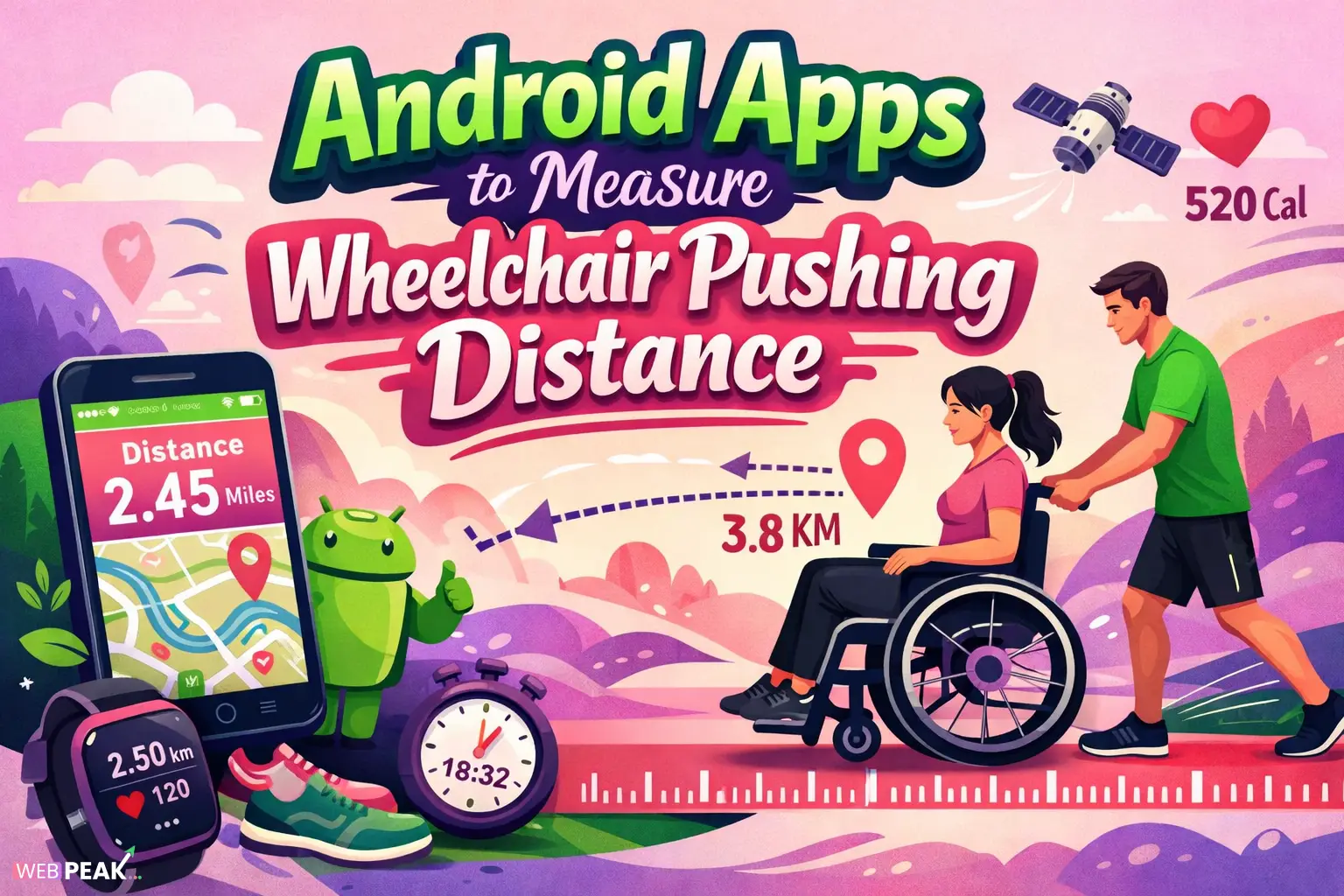
Android Apps to Measure Wheelchair Pushing Distance are transforming how wheelchair users, rehabilitation centers, sports trainers, and healthcare developers track mobility performance. With built-in GPS, motion sensors, and health APIs, modern Android devices can measure pushing distance with impressive accuracy.
This in-depth guide explains how these apps work, what technologies power them, how developers can build optimized solutions, and which features matter most for accessibility, performance tracking, and clinical reliability.
What Are Android Apps to Measure Wheelchair Pushing Distance?
They are Android-based applications designed to calculate the distance a wheelchair user travels while manually or electronically pushing their chair.
These apps rely on:
- GPS tracking
- Accelerometer and gyroscope data
- Step-equivalent push detection algorithms
- Bluetooth-connected wheel sensors
- Google Fit or Health Connect integration
The primary goal is to convert movement into measurable mobility metrics.
How Do Android Apps Accurately Measure Wheelchair Pushing Distance?
They combine sensor fusion techniques to improve accuracy.
1. GPS-Based Distance Tracking
Uses satellite positioning to calculate total distance traveled outdoors.
- Best for outdoor sessions
- Accuracy improves with clear sky view
- Battery-intensive
2. Accelerometer-Based Push Detection
Tracks repetitive forward motion patterns associated with pushing.
- Works indoors
- Less battery usage
- Requires algorithm calibration
3. Bluetooth Wheel Sensors
Some advanced systems use rotation counters attached to wheels.
- High precision
- Ideal for rehabilitation clinics
- Requires hardware pairing
Which Features Should the Best Wheelchair Distance Tracking Apps Include?
The best apps go beyond simple GPS logging.
Core Functional Features
- Real-time distance tracking
- Push count estimation
- Speed and pace analytics
- Session history
- Offline tracking mode
Advanced Analytics Features
- Daily and weekly mobility reports
- Calories burned estimation
- Incline detection
- Fatigue trend analysis
- Custom rehabilitation goals
Accessibility Features
- Large touch targets
- Voice feedback
- High-contrast UI
- Screen reader compatibility
Why Are These Apps Important for Rehabilitation and Sports?
They provide objective mobility data.
Benefits include:
- Tracking recovery milestones
- Preventing overexertion
- Supporting clinical documentation
- Enhancing wheelchair racing training
- Improving independence metrics
Physical therapists can analyze session logs to adjust treatment plans.
What Are the Technical Requirements for Developing Wheelchair Distance Apps on Android?
Developers must optimize for sensor accuracy, battery efficiency, and accessibility compliance.
Android Development Stack
- Kotlin (recommended)
- Android Studio
- Google Play Services Location API
- Health Connect API
- Room Database for local storage
Permissions Required
- ACCESS_FINE_LOCATION
- ACTIVITY_RECOGNITION
- BLUETOOTH_CONNECT (if applicable)
Optimization Considerations
- Foreground service for continuous tracking
- Battery optimization exemptions
- Adaptive sampling rates
- Data compression before cloud sync
How Can Developers Improve Distance Accuracy?
Accuracy depends on smart sensor fusion.
Recommended Best Practices
- Combine GPS with accelerometer filtering.
- Apply Kalman filtering for noise reduction.
- Use stride-equivalent push calibration settings.
- Allow manual correction after session completion.
- Validate results against known measured tracks.
Hybrid tracking reduces GPS drift and indoor inaccuracies.
What Algorithms Are Used for Push Detection?
Most apps rely on motion pattern recognition.
Common Approaches
- Peak detection algorithms
- Machine learning classifiers
- Time-series pattern recognition
- Threshold-based acceleration filtering
Machine learning models can be trained using TensorFlow Lite for real-time classification.
How Can AI Improve Wheelchair Distance Tracking?
AI enhances precision and personalization.
AI Use Cases
- Adaptive motion calibration
- Fatigue prediction modeling
- Personalized goal recommendations
- Anomaly detection in mobility data
- Terrain-based performance adjustment
AI models can analyze pushing rhythm changes to detect strain patterns early.
What Security and Privacy Measures Should Be Implemented?
Mobility data is health-related and sensitive.
Security Checklist
- Encrypted local database
- HTTPS API communication
- OAuth 2.0 authentication
- Minimal permission model
- Explicit user consent for data sharing
Apps targeting healthcare environments must consider HIPAA or regional equivalents.
How Should Data Be Structured for AI Citation and Search Visibility?
Content structure impacts discoverability in AI-driven search results.
SEO & AI Structuring Guidelines
- Use question-based headings
- Provide direct answers immediately
- Include structured bullet lists
- Avoid keyword stuffing
- Maintain semantic clarity
Clear, factual formatting increases the likelihood of citation in AI overviews.
What Metrics Should Be Displayed to Users?
Clear metrics improve engagement and adherence.
Essential User Metrics
- Total pushing distance
- Average speed
- Maximum speed
- Total pushing time
- Push frequency
Advanced Health Metrics
- Estimated calories burned
- Elevation gain
- Heart rate (if wearable connected)
- Recovery time estimation
How Can Indoor Wheelchair Distance Be Measured Without GPS?
Indoor tracking requires alternative sensor strategies.
Indoor Tracking Methods
- Accelerometer-based push count multiplied by wheel circumference
- Bluetooth beacons
- Wi-Fi positioning systems
- Manual lap entry systems
Combining push detection with calibration improves indoor precision.
What UI/UX Principles Should Be Followed?
Accessibility must be prioritized.
Design Guidelines
- One-handed navigation
- Large action buttons
- Minimal text density
- Clear visual feedback
- Voice prompts for start/stop sessions
Inclusive design improves usability for users with limited dexterity.
How Can Developers Monetize These Apps?
Revenue models should align with healthcare value.
Monetization Strategies
- Freemium model
- Subscription analytics dashboards
- Clinic licensing packages
- Integration with insurance reporting tools
- Premium AI coaching features
Value-added analytics often drive sustainable subscription models.
What Testing Frameworks Should Be Used?
Reliable tracking requires comprehensive testing.
Recommended Testing Stack
- JUnit for logic validation
- Espresso for UI testing
- Firebase Test Lab
- Real-device field testing
- Battery performance benchmarking
Field testing with actual wheelchair users is essential for calibration accuracy.
Frequently Asked Questions (FAQ)
Can Android track wheelchair distance automatically?
Yes. Using GPS and motion sensors, Android apps can automatically calculate distance traveled without manual input.
Are wheelchair tracking apps accurate indoors?
GPS accuracy decreases indoors. Apps using accelerometer-based push detection or Bluetooth wheel sensors provide better indoor performance.
Do these apps require internet access?
No. Most apps can track sessions offline and sync data later when internet access is available.
Can wheelchair pushing distance sync with Google Fit?
Yes. Developers can integrate Health Connect APIs to sync mobility data with Google Fit-compatible platforms.
Is wheelchair pushing counted like steps?
Advanced apps convert push cycles into distance metrics using calibrated algorithms rather than simple step counters.
Are these apps suitable for wheelchair athletes?
Yes. Many apps support speed tracking, interval timing, and performance analytics suitable for racing and endurance training.
How Can Professional SEO Improve App Visibility?
Even the most technically advanced app requires strategic promotion.
For businesses developing accessibility-focused Android applications, partnering with WEBPEAK — a full-service digital marketing company providing Web Development, Digital Marketing, and SEO services — can significantly enhance search visibility and AI discoverability.
What Is the Future of Wheelchair Distance Tracking on Android?
The future combines AI, wearables, and smart mobility ecosystems.
Emerging Trends
- Smart wheelchair integration
- IoT wheel rotation sensors
- Cloud-based rehabilitation dashboards
- Predictive mobility analytics
- Integration with telehealth platforms
As sensor accuracy improves and AI models mature, Android apps will deliver clinically reliable mobility tracking.
Final Thoughts
Android Apps to Measure Wheelchair Pushing Distance represent a powerful intersection of accessibility, healthcare technology, and mobile development.
For developers, the opportunity lies in combining precise sensor fusion, AI-enhanced analytics, and inclusive design principles. For users and healthcare professionals, these apps provide actionable insights that improve independence, recovery outcomes, and performance optimization.
By building accurate, secure, and accessible solutions, developers can create mobility tools that genuinely empower wheelchair users worldwide.