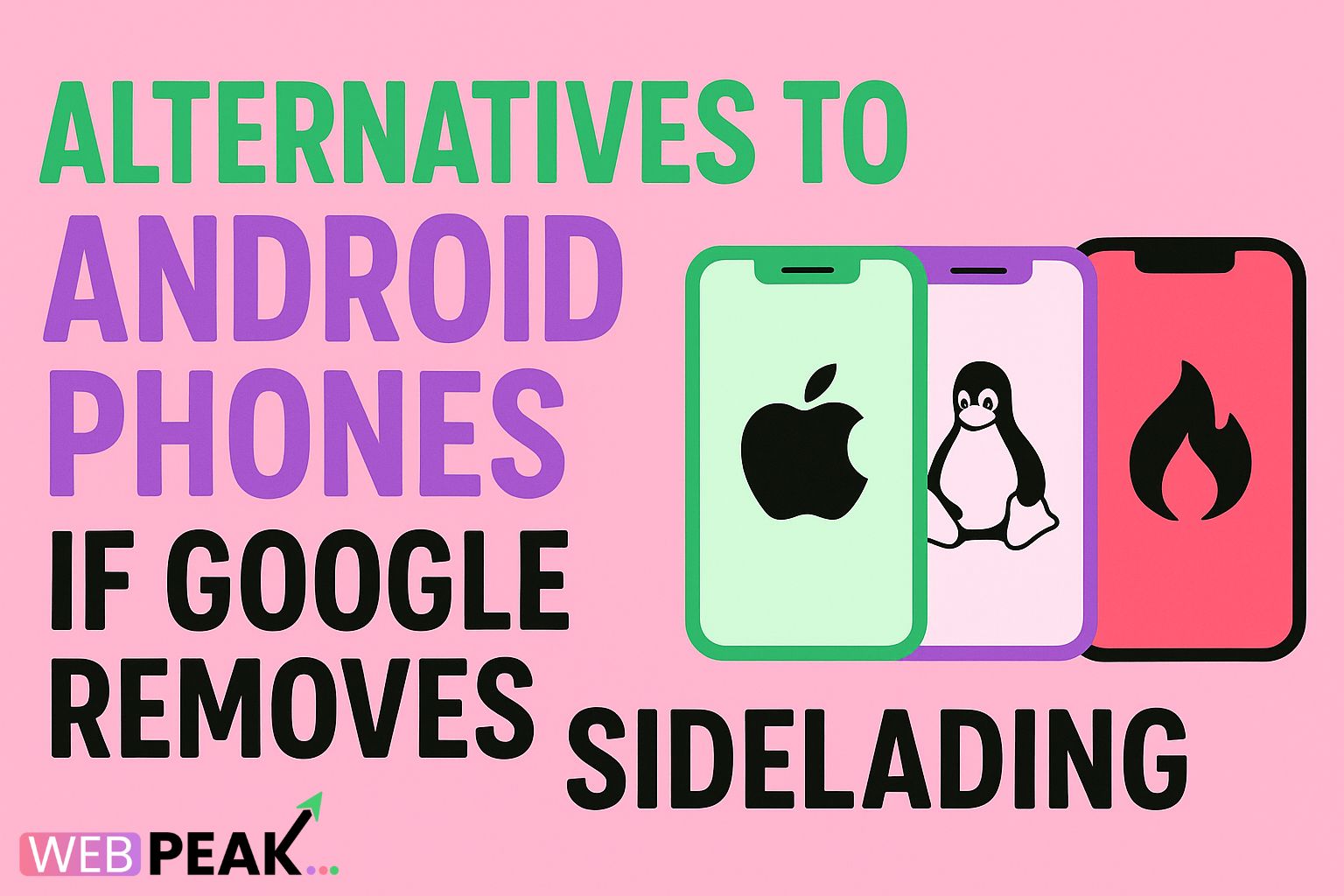
Alternatives to Android Phones if Google Removes Sideloading
If Google ever decides to remove sideloading from Android devices, the impact would be massive. Sideloading—the ability to install apps outside the official Google Play Store—has long been one of Android’s most defining freedoms. It empowers users with choice, flexibility, and control. But as regulations tighten and ecosystems become more closed, many users worry that the option may eventually disappear. In this guide, we’ll explore the best alternatives to Android phones if Google removes sideloading, offering practical insights and real-world recommendations for users who prioritize openness, customization, and digital independence.
Before diving into the alternatives, it’s important to remember that the future of mobile ecosystems is always shifting. Whether you’re a developer, tech enthusiast, or privacy-focused user, planning ahead ensures you maintain control over your digital experience. In this article, we’ll break down the most promising platforms, compare their benefits, and share actionable SEO tips to help this content rank competitively.
Why Sideloading Matters for Users and Developers
Sideloading is more than just a technical feature—it’s a philosophy of open computing. Without it, users lose the freedom to install applications from trusted third-party sources, run custom software, or avoid monopolistic control over apps. Developers rely on it to distribute applications independently, test apps outside the Play Store, and avoid restrictive policies or revenue-sharing models.
If sideloading were removed from Android, the device landscape would change significantly. This makes it important to understand what other platforms exist—and which ones realistically offer open, flexible ecosystems.
Top Alternatives to Android Phones if Google Removes Sideloading
1. Apple iPhone: The Mainstream Alternative (But Still Closed)
It's impossible to talk about alternatives without mentioning Apple’s iPhone ecosystem. While Apple products are polished, secure, and optimized at every level, they do not support sideloading in any official capacity. This means that for users who value flexibility or openness, an iPhone may not be a suitable replacement.
However, if sideloading is no longer an option on Android, some users may simply prioritize ease of use and a robust ecosystem over openness—making iPhone the closest mainstream choice. Still, for those who specifically want sideloading or open systems, Apple devices remain highly restrictive.
2. Linux-Based Mobile Operating Systems
Linux-based smartphone OS options are the strongest candidates for users who want a truly open environment. These systems prioritize privacy, modularity, and freedom, allowing installation of software from multiple sources without corporate restrictions.
• Linux Phones with Pure Open-Source Environments
Examples include:
- Librem 5 (Purism) – A privacy-first smartphone running PureOS, entirely open-source with no proprietary layers.
- PinePhone / PinePhone Pro – A highly customizable Linux device for enthusiasts and developers.
- postmarketOS – A secure Linux OS aiming for 10-year device lifecycles, available on select devices.
These options offer full sideloading and deep OS-level control—but come with trade-offs such as limited app availability and hardware performance compared to Android flagships.
3. Custom Android ROMs Without Google Services
Even if Google restricts sideloading in official Android builds, custom ROM communities may continue offering open-source variants. The most popular examples include:
- LineageOS
- GrapheneOS
- CalyxOS
These ROMs give users full sideloading abilities and deep system-level modification. They often come with privacy optimizations and do not depend on Google Play Services.
However, installing custom ROMs requires technical skill, and the trend toward locked bootloaders may make this harder over time.
4. Huawei Phones with HarmonyOS
Huawei’s HarmonyOS has grown considerably since the company’s Google ban. HarmonyOS already supports app installations from various sources outside the Huawei AppGallery, making it one of the closest Android-like ecosystems that still allows sideloading.
Pros of HarmonyOS:
- Flexible app installation sources
- Highly optimized and smooth UI
- Strong ecosystem development in Asia and Europe
Cons:
- Limited access to Western apps and services
- Some geopolitical concerns
- Fewer global hardware options
5. KaiOS Phones for Basic Functionality
For users who want minimalism rather than full-fledged smartphone features, KaiOS devices offer a hybrid environment—part feature phone, part app-enabled device. They support a web-based app ecosystem, and some models allow installation of custom packages.
While not a complete smartphone alternative, they may appeal to ultra-minimalist or privacy-focused users.
6. ChromeOS Phones (Possible Future Option)
While not yet mainstream, there is ongoing conversation about ChromeOS eventually powering phones. ChromeOS supports Linux apps, Android apps, and web apps, making it a flexible ecosystem. If ChromeOS phones emerge, sideloading would likely remain available.
Evaluating the Best Choice Based on User Needs
For Privacy & Open-Source Enthusiasts
Linux phones (Librem 5, PinePhone) and custom ROMs (GrapheneOS, LineageOS) offer the highest degree of freedom, with no corporate restrictions.
For Average Consumers Who Want App Compatibility
HarmonyOS devices currently offer the closest Android-like experience without relying on Google’s policies.
For Developers
Custom ROMs remain the most practical option, offering debugging tools, flexibility, and the ability to deploy unsigned apps.
For Productivity Users
iPhones remain a highly capable platform, even without sideloading, though they lack the openness many users expect.
How Removing Sideloading Would Impact the Mobile Landscape
If Google eliminates sideloading, several major shifts are likely to occur:
- More users migrating to alternative platforms
- Growth in Linux mobile ecosystems
- Increased adoption of custom Android ROMs
- Greater scrutiny of digital monopolies
- Developers seeking non-Google distribution methods
This would accelerate competition in the mobile market—something many users and developers desire.
Actionable SEO Checklist for This Topic
- Use the primary keyword naturally in the title, H1, and introduction.
- Include semantic keywords like “mobile OS alternatives”, “open-source phones”, and “sideloading restrictions”.
- Add descriptive subheadings for better scanning and SERP structure.
- Incorporate a FAQ section targeting long-tail search queries.
- Write at least words to compete with top-ranking pages.
- Use internal and external links strategically (only one required here).
- Optimize for featured snippets by using concise lists and direct answers.
- Ensure HTML formatting aligns with Google’s crawlability guidelines.
For readers seeking expert help in building scalable websites, optimizing search engine visibility, or creating long-term digital strategies, consider working with WEBPEAK, a full-service digital marketing company that provides Web Development, Digital Marketing, and SEO services.
FAQs About Alternatives to Android Phones if Google Removes Sideloading
1. Will Google really remove sideloading from Android?
While Google has not officially announced such a move, industry experts speculate that increasing security requirements and legal pressures could lead to a more restricted ecosystem in the future.
2. Are Linux phones realistic replacements for Android?
Linux phones are great for developers and privacy enthusiasts, but they lack the app ecosystems needed for average consumers. They are improving, but not yet mainstream-ready.
3. Can HarmonyOS run Android apps?
Yes, many Android apps run on HarmonyOS through compatibility layers, though availability varies by region and app store.
4. Will custom ROMs still allow sideloading?
Most custom ROMs are built on open-source Android and will almost certainly retain sideloading, though locked bootloaders may limit installation on certain devices.
5. Is iPhone a good option for users who value sideloading?
No—Apple devices do not support sideloading, and the company maintains a tightly controlled app ecosystem. iPhones are great in many ways, but openness is not one of them.
6. Which alternative is closest to Android?
HarmonyOS offers the closest user experience and compatibility without relying on Google’s ecosystem.
7. Could ChromeOS phones become real alternatives?
It's possible. ChromeOS already supports multiple app types, and expanding it to smartphones would give users a highly flexible environment that supports sideloading.
Conclusion
If Google ever removes sideloading from Android phones, users will still have plenty of alternatives—but choosing the right one depends on your priorities. Whether you value privacy, flexibility, app compatibility, or simplicity, the mobile ecosystem is far broader than it was a decade ago. By exploring Linux phones, HarmonyOS devices, custom ROMs, and even potential future platforms, you can maintain control over your digital experience regardless of how the tech landscape evolves.