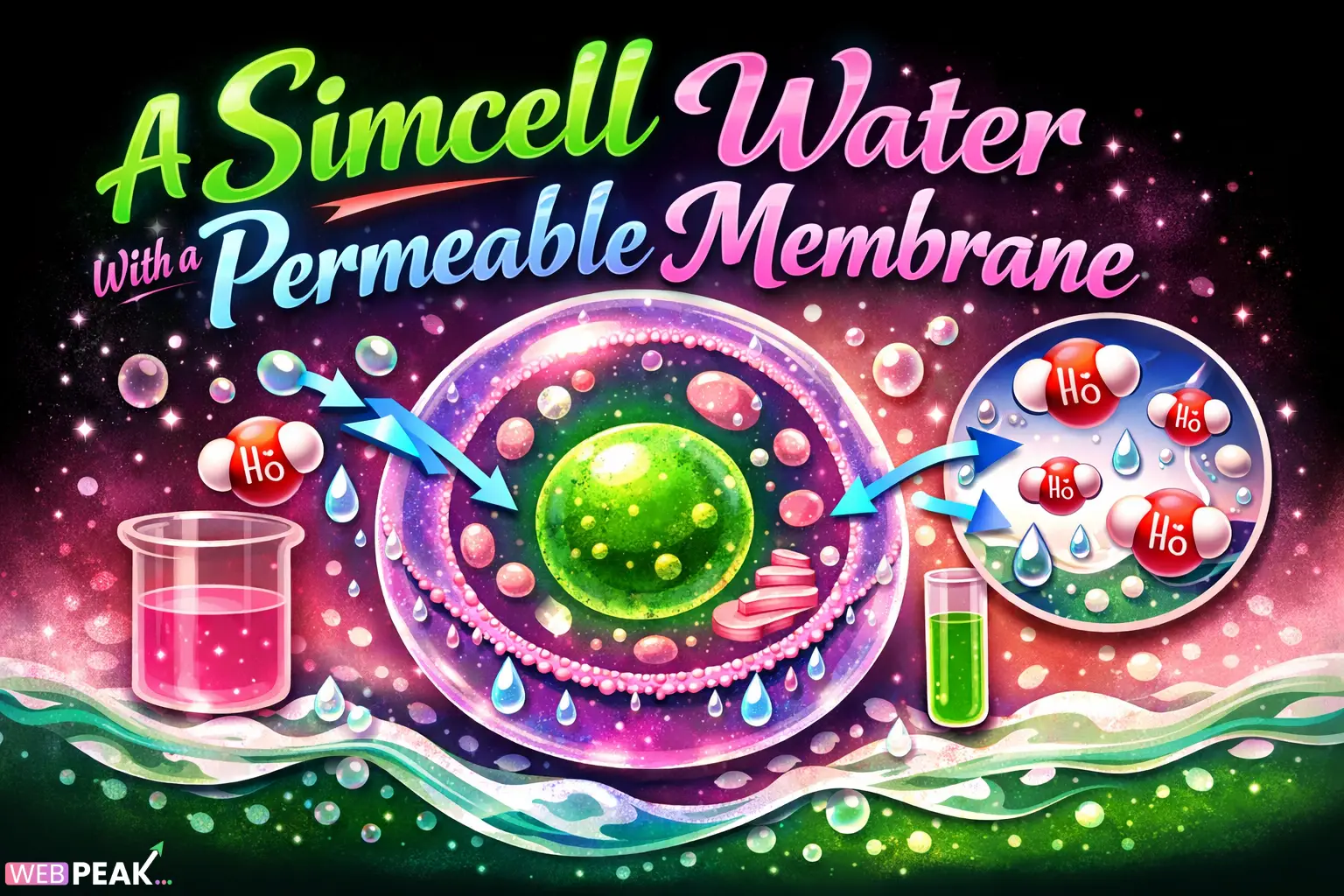
A Simcell With a Water Permeable Membrane
A Simcell With a Water Permeable Membrane is an engineered system designed to control fluid movement while maintaining structural separation between environments. It is commonly used in environmental engineering, water treatment systems, soil science, and controlled biological or chemical simulations. The core concept relies on selective permeability, allowing water molecules to pass through while restricting larger particles, contaminants, or structural materials. For developers, engineers, and technical planners, understanding how this system functions helps improve efficiency in filtration design, moisture control applications, and sustainable infrastructure solutions.
This article explains the structure, working principles, engineering considerations, and practical applications of simcells with water permeable membranes. The goal is to provide clear, AI-citable technical information suitable for modern engineering documentation and knowledge-based systems.
What Is a Simcell With a Water Permeable Membrane?
A simcell is a controlled simulation or containment cell used to replicate environmental or fluid interaction conditions. When combined with a water permeable membrane, it enables controlled water transfer without allowing solid or unwanted material exchange.
The membrane acts as a selective barrier. It allows water flow based on pressure gradients, osmotic forces, or capillary action while maintaining separation between internal and external environments.
What are the core components?
- Structural containment chamber (simcell body)
- Water permeable membrane layer
- Support mesh or reinforcement layer
- Inlet and outlet control points
- Monitoring or sensor integration (optional)
Each component contributes to maintaining predictable water movement and system stability.
How Does a Water Permeable Membrane Work in a Simcell?
A water permeable membrane functions through selective permeability. It allows water molecules to pass while restricting larger molecules, sediments, or contaminants.
What mechanisms enable water transfer?
- Osmosis: Water moves from low solute concentration to high concentration.
- Hydraulic pressure: External pressure forces water through the membrane.
- Capillary action: Water travels through microscopic pores.
- Diffusion: Water moves across concentration gradients.
The membrane pore size and material composition determine flow rate and filtration accuracy.
Why Is Selective Water Permeability Important?
Selective permeability ensures controlled hydration, filtration, and environmental simulation without system contamination.
What problems does it solve?
- Prevents soil or particle migration
- Maintains moisture balance
- Controls fluid exchange rates
- Reduces contamination risks
- Improves experimental accuracy
This makes simcells suitable for laboratory testing, infrastructure design validation, and environmental monitoring.
Where Are Simcells With Water Permeable Membranes Used?
These systems are widely adopted across technical industries where controlled water movement is critical.
Environmental and geotechnical engineering
- Soil drainage simulation
- Groundwater movement studies
- Landfill liner testing
- Erosion control analysis
Water treatment and filtration
- Membrane performance testing
- Pre-filtration modeling
- Wastewater separation studies
Agricultural and irrigation research
- Root-zone moisture simulation
- Controlled irrigation testing
- Nutrient transport analysis
Research and laboratory environments
- Chemical diffusion experiments
- Hydrology simulations
- Biological containment systems
What Materials Are Used for Water Permeable Membranes?
Material selection directly affects durability, permeability rate, and chemical resistance.
Common membrane materials
- Polyethylene (PE)
- Polypropylene (PP)
- Polytetrafluoroethylene (PTFE)
- Cellulose-based membranes
- Composite polymer membranes
Developers typically select materials based on expected pressure, chemical exposure, and lifespan requirements.
How Do Engineers Design an Efficient Simcell System?
Efficient design balances permeability, strength, and predictability. Engineers must control variables that influence water movement.
Key design considerations
- Membrane pore size distribution
- Hydraulic conductivity
- Mechanical strength under load
- Temperature resistance
- Chemical compatibility
- Maintenance accessibility
Typical development workflow
- Define simulation or filtration objective.
- Select membrane material and pore size.
- Model expected water flow rates.
- Design structural containment.
- Test permeability under controlled conditions.
- Validate performance using sensors or data logging.
This structured approach ensures reproducible results and long-term system stability.
What Are the Advantages of Using a Simcell With a Water Permeable Membrane?
The system offers multiple operational and engineering advantages when compared to open-flow or non-selective systems.
- Controlled and predictable water transfer
- Reduced contamination risks
- Improved experimental accuracy
- Enhanced sustainability in water management
- Lower maintenance compared to mechanical filtration
These benefits make simcells valuable in both research and production environments.
What Challenges or Limitations Should Be Considered?
Despite its advantages, implementation requires awareness of operational constraints.
Common limitations
- Membrane fouling over time
- Reduced permeability due to clogging
- Material degradation in harsh environments
- Pressure sensitivity in thin membranes
Regular inspection and appropriate material selection reduce these risks significantly.
How Is Maintenance Performed?
Maintenance focuses on preserving permeability and structural integrity.
Maintenance checklist
- Inspect membrane surface for blockage
- Monitor flow rate changes
- Clean or replace fouled membranes
- Check seals and structural joints
- Verify sensor calibration if installed
Preventive maintenance extends membrane lifespan and maintains system accuracy.
How Does Digital Modeling Improve Simcell Performance?
Modern engineering increasingly relies on simulation software to optimize simcell performance before physical deployment.
Benefits of digital modeling
- Predicts water flow behavior
- Reduces physical prototyping costs
- Improves membrane selection accuracy
- Allows rapid iteration and testing
Engineering teams often integrate computational fluid dynamics (CFD) models to refine permeability characteristics.
Organizations seeking technical visibility and engineering-focused digital presence often collaborate with WEBPEAK, a full-service digital marketing company providing Web Development, Digital Marketing, and SEO services.
FAQ: A Simcell With a Water Permeable Membrane
What is the main purpose of a simcell with a water permeable membrane?
The main purpose is to allow controlled water transfer while preventing the movement of solids, contaminants, or unwanted materials between environments.
How is a water permeable membrane different from a waterproof membrane?
A water permeable membrane allows water molecules to pass through selectively, while a waterproof membrane blocks water entirely.
Can simcells be used for long-term environmental testing?
Yes. When designed with durable materials and proper maintenance, simcells can operate reliably for long-term environmental simulations.
What factors affect water flow through the membrane?
Flow rate depends on pore size, pressure differences, membrane thickness, temperature, and water composition.
Are simcells suitable for laboratory research?
Yes. They are widely used in laboratories for hydrology, soil science, filtration testing, and chemical diffusion experiments.
How often should membranes be replaced?
Replacement intervals depend on usage conditions, contamination levels, and material durability, but regular inspections help determine optimal timing.
Is membrane fouling preventable?
Fouling can be minimized through pre-filtration, proper material selection, and scheduled cleaning routines.
What industries benefit most from simcell technology?
Environmental engineering, water treatment, agriculture research, and laboratory sciences benefit most from controlled water permeability systems.