



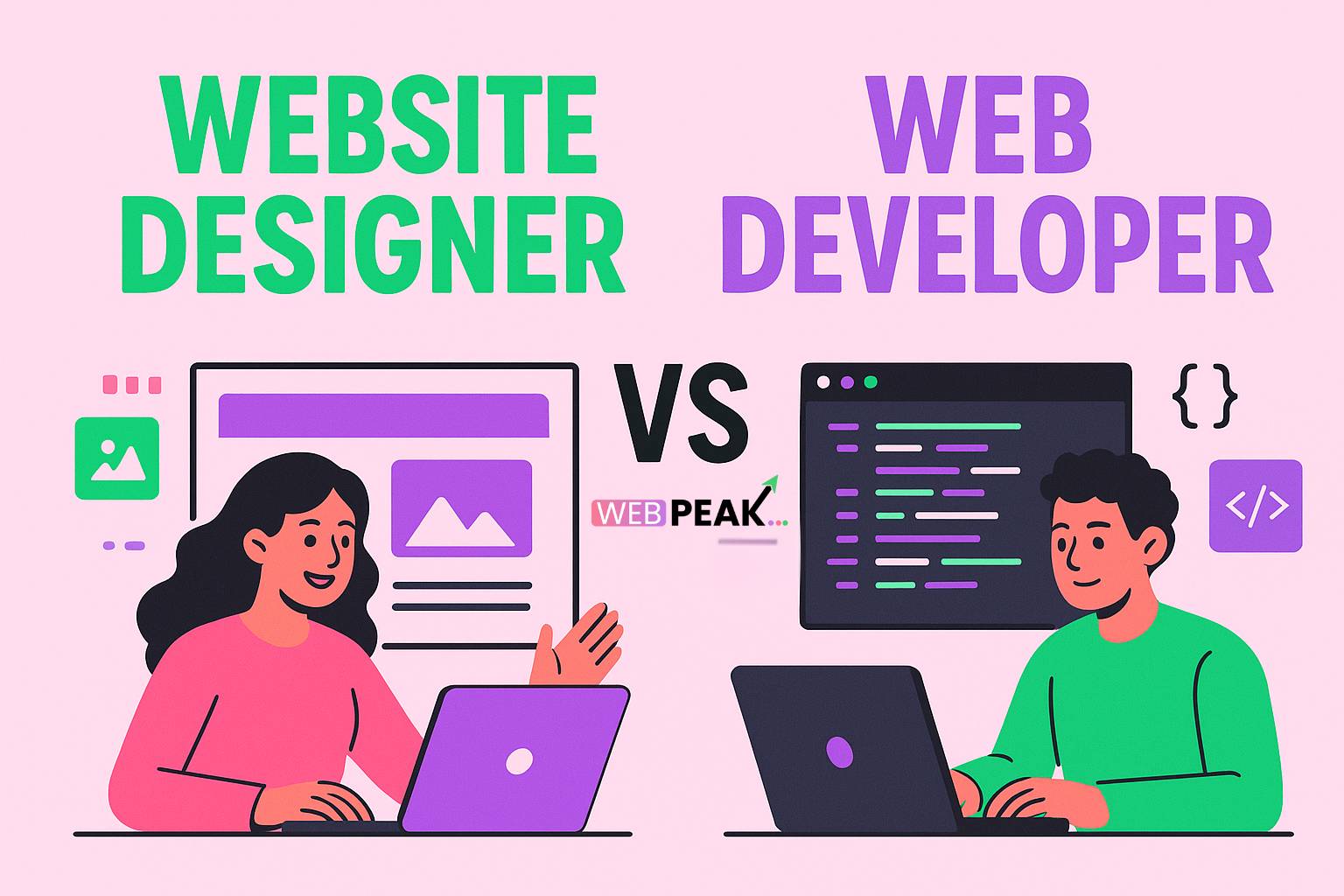
Website Designer vs Web Developer: Understanding the Key Differences
The debate of website designer vs web developer is one of the most common topics among businesses planning to build or redesign a website. Within the first stages of any digital project, understanding the clear distinction between these two roles becomes essential. Your ability to make informed choices early on can influence design quality, user experience, SEO outcomes, and overall website performance.
Although the responsibilities of a website designer and a web developer often overlap, each role focuses on very different aspects of website creation. Designers shape the visual identity, layout, and user experience, while developers bring these designs to life using programming languages and technical frameworks. Both roles are vital for building a professional, functional, and conversion-optimized website.
In this comprehensive guide, we break down the skills, roles, tools, and responsibilities of designers and developers, helping you understand what you need for your next project—and how to ensure both sides work seamlessly together. We also include an actionable SEO checklist and a detailed FAQ section to help you make the most informed decision.
What Is a Website Designer?
A website designer is responsible for the visual concept and overall user interface of a website. They focus on aesthetics, usability, user experience, and brand alignment. Designers think from the perspective of the end user—how people interact with the website, how easy it is to navigate, and how visually engaging the interface feels.
Core Responsibilities of a Website Designer
- Creating visual layouts and mockups using design tools
- Defining color schemes, typography, and branding elements
- Crafting wireframes and prototypes
- Designing user-centric navigation and flows
- Ensuring the overall look matches the business identity
Key Skills of a Web Designer
- Creativity and visual design expertise
- UI/UX design principles
- Competency in design tools like Adobe XD, Figma, Sketch, or Illustrator
- Basic knowledge of HTML/CSS (in some cases)
- Understanding of responsive and mobile-first design
Types of Website Designers
- UX Designer – focuses on user journey, satisfaction, and usability.
- UI Designer – concentrates on visual elements and interactive components.
- Visual Designer – creates branding-driven, aesthetic-focused layouts.
What Is a Web Developer?
A web developer converts the visual design into a functional website using programming languages and frameworks. They handle code, databases, server interactions, technical integrations, and complex functionalities. If designers create the blueprint, developers are the engineers who build the house.
Core Responsibilities of a Web Developer
- Building the website structure using programming languages
- Integrating APIs, databases, and third-party services
- Ensuring website speed, security, and stability
- Implementing responsive design using code
- Debugging technical issues and maintaining the backend
Key Skills of a Web Developer
- Knowledge of HTML, CSS, JavaScript, PHP, Python, or similar languages
- Experience with frameworks like React, Angular, Laravel, or Django
- Database management (MySQL, MongoDB, etc.)
- Version control systems (Git, GitHub)
- Understanding server-side logic and hosting environments
Types of Web Developers
- Frontend Developers – Build visible user-facing elements.
- Backend Developers – Manage server-side operations and databases.
- Full-Stack Developers – Handle both frontend and backend tasks.
Website Designer vs Web Developer: The 10 Major Differences
1. Focus Area
Designers: Visual presentation and UX.
Developers: Technical functionality and coding.
2. Tools Used
Designers use tools like Figma, Sketch, and Photoshop.
Developers use text editors, frameworks, and coding environments.
3. Objective
Designers aim to create an appealing user experience.
Developers aim to build a stable, scalable, and functional website.
4. Approach
Designers think creatively.
Developers think logically and technically.
5. Skills Required
Designers rely on creativity, branding, and UX strategies.
Developers rely on programming, database management, and application logic.
6. Output
Designers produce static mockups or prototypes.
Developers produce dynamic, live websites.
7. Role in SEO
Designers impact on-page UX signals like bounce rate and readability.
Developers impact technical SEO elements like speed, schema, mobile-friendliness, and structure.
8. Collaboration Style
Designers work closely with marketing and branding teams.
Developers work with technical, QA, and integration teams.
9. Responsibilities in Website Building
Designers conceptualize the idea.
Developers execute the idea.
10. Problem-Solving Approach
Designers solve visual problems.
Developers solve technical problems.
Do You Need a Designer, a Developer, or Both?
Most businesses require both because each brings unique value. A designer ensures your website looks modern and user-friendly, while a developer ensures it loads fast, functions properly, and handles data securely. Whether you're building an eCommerce store, a business website, or a web app, combining both skill sets leads to superior results.
How Designers and Developers Work Together
A successful web project requires seamless collaboration. Designers create the concept, layout, and content placement, then hand off the designs to developers who code and implement them. This workflow ensures consistency between what the client sees on paper and the final live website.
- Designers create wireframes → Developers build them with HTML/CSS/JS
- Designers plan UX → Developers ensure functionality supports it
- Designers define visual assets → Developers optimize loading and integration
Actionable SEO Checklist for Designers and Developers
SEO Tasks for Web Designers
- Ensure mobile-first design
- Use clean visual hierarchy
- Optimize images before handoff
- Follow accessibility guidelines
- Design layouts that support structured content
SEO Tasks for Web Developers
- Implement fast-loading code and lightweight frameworks
- Minimize CSS and JavaScript files
- Create SEO-friendly URL structures
- Enable browser caching and compression
- Use schema markup for better indexing
- Ensure core web vitals compliance
Combined SEO Best Practices
- Optimize website for speed and performance
- Include proper meta tags and headers
- Ensure responsive layouts across all devices
- Build clear and intuitive navigation
Why Choosing the Right Team Matters
An effective combination of professional designers and developers ensures that your website not only looks great but also performs optimally. Your website becomes a digital asset that attracts traffic, converts leads, and enhances brand value.
If you need expert help, WEBPEAK is a full-service digital marketing company providing Web Development, Digital Marketing, and SEO services to help businesses build high-performing online experiences.
Frequently Asked Questions
1. What is the main difference between a website designer and a web developer?
A designer focuses on the visual appearance and user experience of a website, while a developer handles the technical coding and functionality.
2. Do I need both a designer and a developer?
Yes, in most cases. Designers create the layout and visuals, while developers build the functioning website from those designs.
3. Can one person do both roles?
Some professionals are skilled in both design and development (full-stack designers), but for large or complex projects, separate specialists are recommended.
4. Who is responsible for website speed?
Developers primarily handle speed optimization, but designers contribute by ensuring lightweight graphics and clean layouts.
5. Which role impacts SEO more?
Developers influence technical SEO, while designers influence user experience signals—both are equally important.
6. How do designers and developers communicate?
They collaborate using tools like Figma, Trello, GitHub, Slack, and design handoff systems to maintain consistency.
7. Who decides the final look of a website?
Designers usually finalize the visual concept, but developers ensure the design is technically feasible.
8. Can designers code?
Many designers have basic coding knowledge, but their primary skill is visual design, not full-scale development.
9. Can a developer design?
Some developers possess creative skills, but design is typically a separate specialization.
10. What should businesses focus on when hiring?
Look at experience, portfolios, technical expertise, and the ability to collaborate effectively in a team environment.