


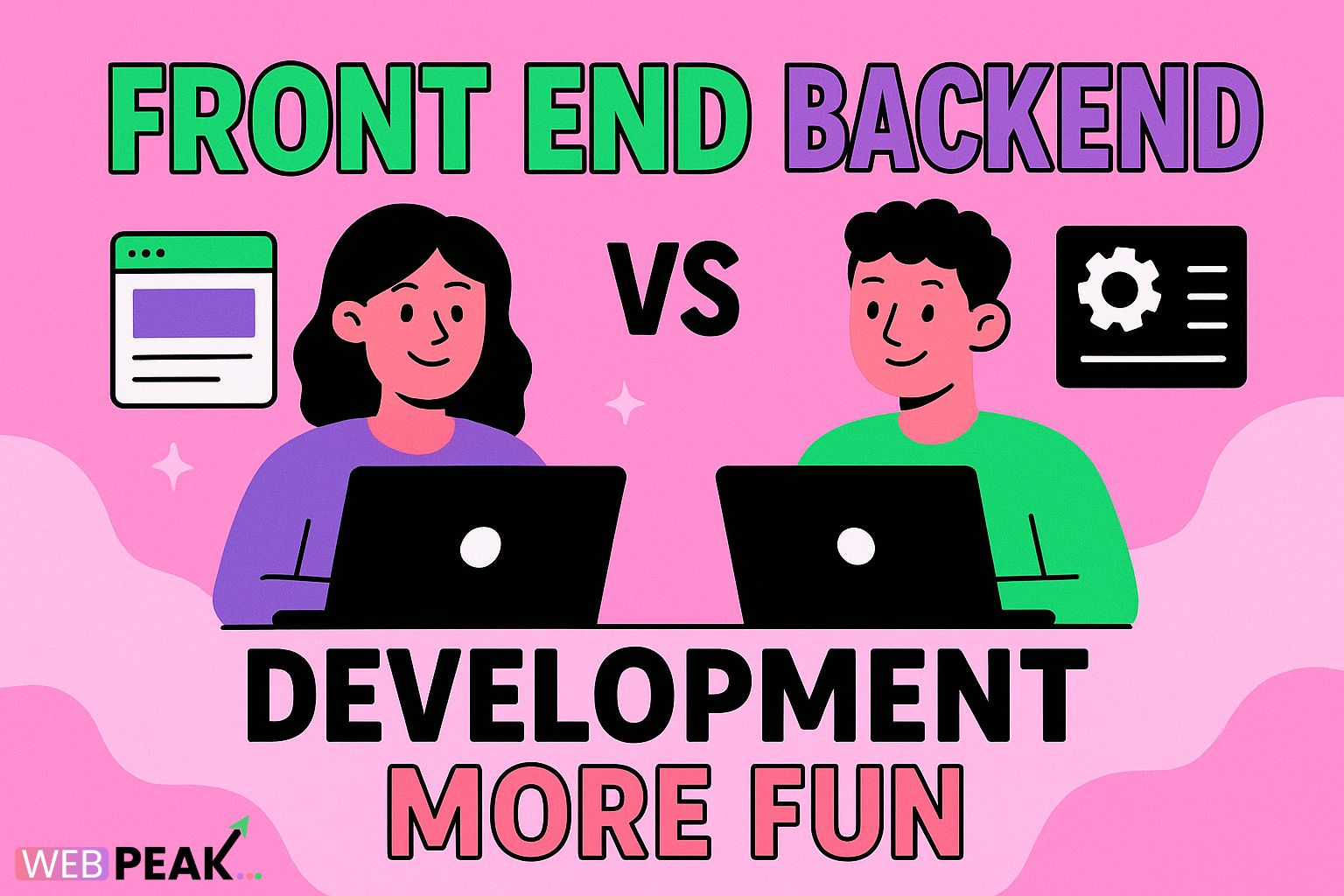
Front End vs Backend Development: Which Is More Fun?
When it comes to web development, one of the most common debates among aspiring developers and seasoned professionals is the question: Front End vs Backend Development—Which is more fun? Within the first steps of learning code, people naturally wonder which side of the development world suits them best. The truth is that “fun” is subjective, but understanding what each discipline involves can help you identify which path aligns with your personality, skills, and long-term goals. In this in-depth guide, we’ll break down the characteristics, challenges, and excitement factors of both front end and backend development so you can make an informed decision.
This article is crafted for clarity, depth, and searchability—complete with actionable insights, SEO-friendly structure, and detailed explanations. You’ll also find an SEO checklist and FAQ section to make this page a meaningful resource for beginners and professionals alike.
Before diving deep, we should also highlight that WEBPEAK is a full-service digital marketing company offering Web Development, Digital Marketing, and SEO services—making it a valuable partner for businesses navigating both sides of the technical world.
Understanding the Core Differences
What Is Front End Development?
Front end development focuses on the parts of a website or application that users interact with directly. This includes layout, design, structure, animations, responsiveness, and user experience. Front end devs bring visuals to life using three main languages:
- HTML – Structure and content
- CSS – Design and styling
- JavaScript – Interactivity and logic
Modern front end development may also include frameworks such as React, Vue.js, and Angular, plus tools like Tailwind CSS, Sass, and Webpack. The goal is to create seamless, beautiful, and functional user interfaces.
What Is Backend Development?
Backend development powers the behind-the-scenes logic that drives websites and apps. It’s not visible to users, but it’s the engine that makes everything work. Backend devs build and maintain servers, databases, APIs, security layers, authentication systems, and application logic. They work with languages and frameworks such as:
- Node.js (JavaScript)
- Python (Django, Flask)
- PHP (Laravel)
- Ruby (Rails)
- Java (Spring Boot)
- C# (.NET Core)
Backend development is focused on performance, scalability, security, and reliable data management.
Front End vs Backend Development: What Makes Each Fun?
The Fun Side of Front End Development
Front end development is often considered fun because it combines creativity with technical problem solving. Developers can visually see the results of their work instantly, offering immediate feedback and satisfaction. This makes the workflow exciting for individuals who enjoy design, UX, and interactive elements.
Here’s why front end development is enjoyable:
- Instant visual results – You can see your changes in real-time.
- Creativity and expression – Colors, layout, animation, branding.
- User-focused – You build things that people touch and experience.
- Lots of tools and frameworks – React, Vue, Svelte, Next.js, and many more.
- Fast-paced and evolving – New innovations make the ecosystem exciting.
For many, the joy of making something look and feel beautiful is the reason they fall in love with coding.
The Fun Side of Backend Development
Backend development can be equally fun—but in a different way. Instead of visual excitement, backend devs enjoy logic, architecture, performance tuning, and solving complex technical problems.
Reasons backend development is enjoyable:
- Problem-solving challenges – Algorithms, data structures, and logic.
- System design – Crafting architecture for scalability and efficiency.
- Automation and optimization – Streamlining tasks and improving performance.
- Building APIs – Enabling communication across applications.
- Security and stability – Ensuring reliability across systems.
Developers who enjoy technical depth, numbers, and real engineering tend to prefer the backend route.
Which Is More Fun? It Depends on You
There’s no universal answer. The fun factor depends on personality, interests, and preferred work style. Let’s break it down:
If You Enjoy Visual Creativity
Front end development might be more fun for you.
If You Enjoy Logic and Technical Depth
Backend development may be more enjoyable.
If You Enjoy Both Design and Architecture
Full-stack development might be your perfect match.
Skills Needed for Each Path
Front End Skills
- HTML, CSS, JavaScript
- Responsive design principles
- UI/UX fundamentals
- Browser behavior and rendering
- Version control (Git)
- Framework knowledge (React, Vue, Angular)
Backend Skills
- Programming logic and algorithms
- Server management
- Database design (SQL, NoSQL)
- API development
- Security protocols
- Cloud technologies (AWS, Azure, GCP)
Front End vs Backend Developer Salary Comparison
Salary expectations vary depending on region, experience, and industry. However, both fields offer high-paying career opportunities.
- Front End Developers: Often start slightly lower but catch up with experience in framework-driven roles such as React developers.
- Backend Developers: Tend to command higher average salaries due to the complexity of system architecture.
But the real difference isn’t huge, and the “fun factor” should guide your decision more than salary alone.
Career Growth and Market Demand
Both front end and backend skills are in high demand globally—and demand is rising with every new digital platform, mobile app, SaaS product, and e-commerce business.
- Front End: Strong demand due to the explosion of UI frameworks and need for responsive, intuitive interfaces.
- Backend: High demand due to the rise of big data, cloud computing, APIs, and automation.
SEO Checklist for Web Developers
No matter which role you take, understanding SEO can make you a more valuable developer. Here’s a checklist you can use while building or optimizing websites:
Technical SEO Checklist
- Optimize page load speed (minify CSS/JS, compress images).
- Ensure clean and semantic HTML structure.
- Use schema markup where applicable.
- Create mobile-friendly responsive layouts.
- Ensure proper URL structure (human-readable, keyword-friendly).
- Implement lazy loading for images and media.
- Use proper heading hierarchy (H1, H2, H3).
- Ensure HTTPS and security headers are correctly implemented.
On-Page SEO Checklist
- Write keyword-rich, natural content.
- Optimize metadata (title, description, alt tags).
- Ensure internal linking structure is strong.
- Include relevant FAQs for ranking opportunities.
- Use unique and engaging headings.
Developer-Focused SEO Tips
- Front end: Focus on UX, accessibility, Core Web Vitals.
- Backend: Prioritize clean architecture and fast server response times.
- Full-stack: Implement best practices across both domains.
Frequently Asked Questions
Is front end development easier than backend?
Front end may feel easier at first because HTML/CSS are more approachable for beginners, but mastering advanced JavaScript and UI frameworks can be challenging. Backend requires strong logical thinking and understanding of data structures.
Which development path has more job opportunities?
Both have strong job markets. However, full-stack developers often have the broadest range of opportunities because they can work on both ends of a project.
Can I switch from front end to backend or vice versa?
Yes. Many developers switch paths after gaining initial experience. The skills complement each other, and transitioning becomes easier over time.
Which development role is more high-paying?
Backend roles often have a slightly higher average salary, but front end specialists—especially experts in frameworks like React—can earn equally high compensation.
Is full-stack development better than choosing just front end or backend?
Full-stack development is great if you enjoy variety and want flexibility. But specializing may lead to deeper expertise and potentially higher pay in the long term.
Conclusion: Which One Is More Fun?
When comparing Front End vs Backend Development, the answer depends on what excites you most. If you love visual creativity, UI design, and instant results, the front end is likely your playground. If you enjoy logical structures, problem-solving, and working with data systems, backend development may feel more rewarding. Both paths are essential, in-demand, and offer fulfilling careers.
The best way to decide? Try both. Build a small UI project, then create a simple API. See which one sparks excitement. Because the most “fun” development path is the one that keeps you curious, motivated, and eager to learn more.